
Affiliate Disclosure: This post contains affiliate links. If you make a purchase through these links, I may earn a small commission at no extra cost to you. As an Amazon Associate, I earn from qualifying purchases. Thank you for supporting CozyClan!
Your toddler smeared yogurt across the highchair tray again this week, and you’re wondering if that counts as anything other than a mess. It does.
Sensory play for toddlers gets thrown around a lot in parenting content, usually next to a photo of a rainbow rice bin, without much explanation of what it actually does for your child or why it matters more than a regular toy.
Here’s the plain version. Sensory play is any activity that engages your toddler’s senses on purpose, and it plays a real role in how their brain, body, and language develop during these early years. You don’t need a Pinterest perfect setup or a drawer full of specialty bins to make it happen.
Finish this and you’ll know what sensory play actually means, why it matters for a toddler’s development, what real benefits to expect, and which types of activities are worth trying first. No fluff, no guesswork, just what actually works.
Table of Contents
#1: (Foundation): What Is Sensory Play, Exactly?
Sensory play is any activity that lets your toddler explore through touch, sight, sound, smell, taste, or movement, instead of just sitting and watching.
A toddler squishing playdough, banging a pot with a wooden spoon, or splashing bath water is doing sensory play already, no labeled toy required.
It doesn’t need to hit all six senses at once. Stacking two or three into one activity, like a warm bath with scented soap and a squeaky duck, tends to hold a toddler’s attention longer than one that only uses one sense.
#2: Why Sensory Play Matters for Toddler Development
A toddler’s brain is still wiring itself, and sensory experience is a big part of how that wiring happens. Every time your toddler feels a new texture, hears an unfamiliar sound, or tastes something new, their brain builds connections tied to that experience.
The pathways that get used often grow stronger, and the ones that don’t tend to fade.
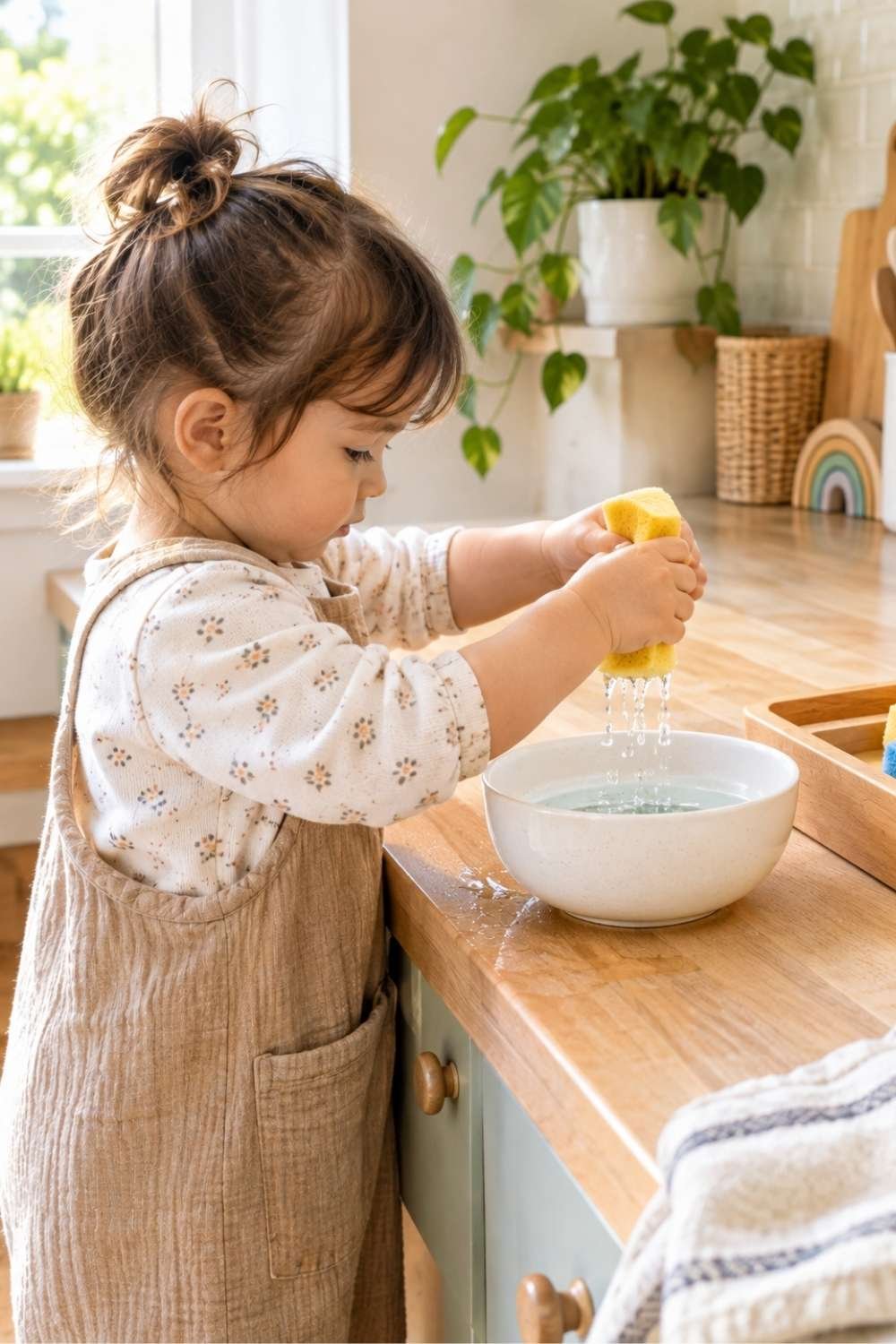
This is also where a lot of early language, movement, and problem solving gets built. A toddler figuring out that squeezing a sponge makes water come out is doing real cause and effect learning, not just making a mess.
The tradeoff is that sensory play is slower and messier than handing over a screen, but that slowness is where the learning actually happens.
#3: What Benefits Can You Actually Expect?
Not every benefit shows up right away, and some are easier to notice than others. Fine motor skills tend to show first, since squeezing, pouring, and pinching are physical and visible within weeks of regular practice.
Language and social skills take longer, because they build on dozens of small repeated experiences rather than one activity.
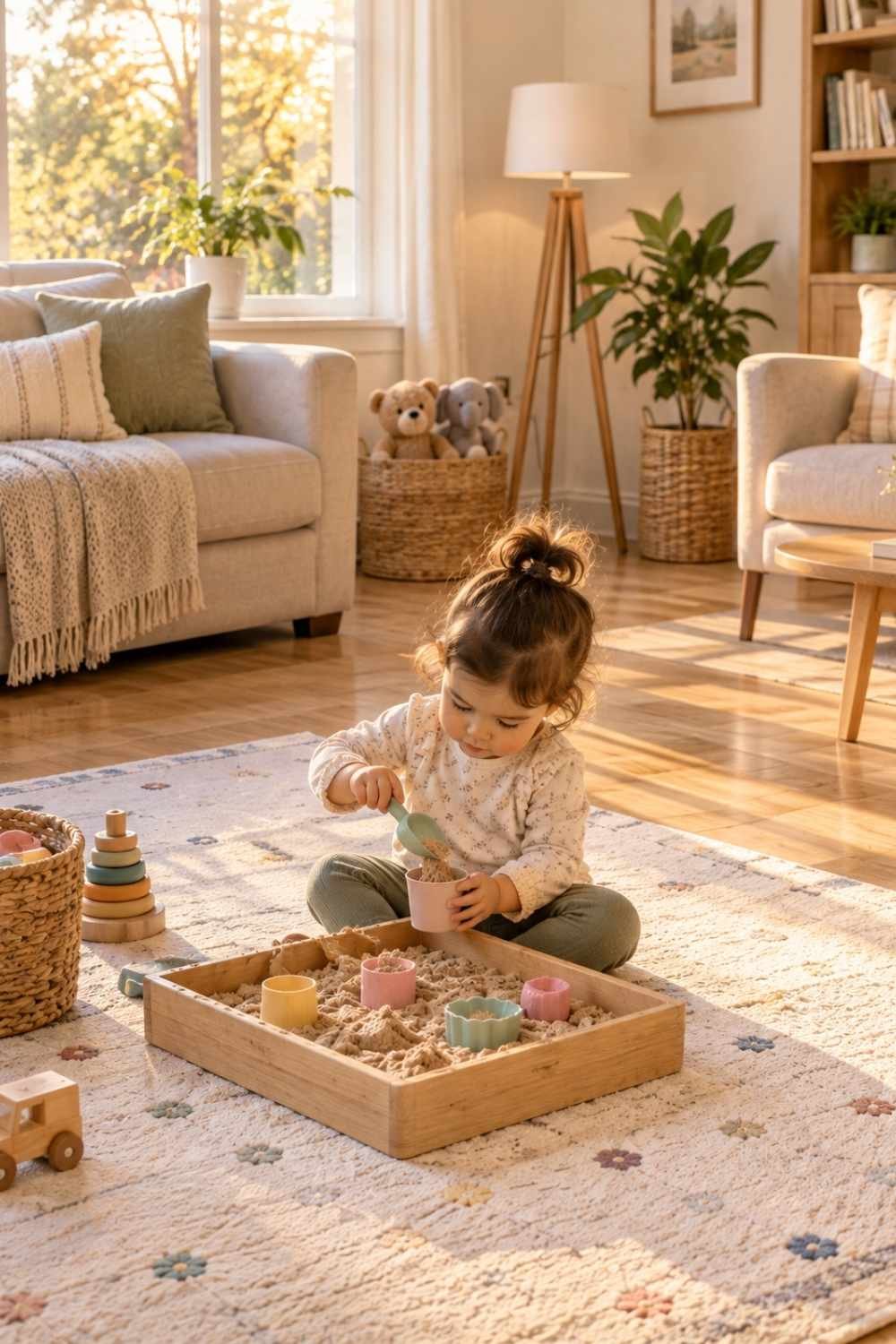
The benefit parents notice most is calmer behavior during and right after a session. A toddler who was climbing the furniture ten minutes ago will often settle into focused, quiet play once their hands are busy with sand or water.
That shift is one of the clearest, fastest signs that sensory play is doing its job, even before you see any bigger developmental gains.
#4: Tactile Play: Sensory Activities Through Touch
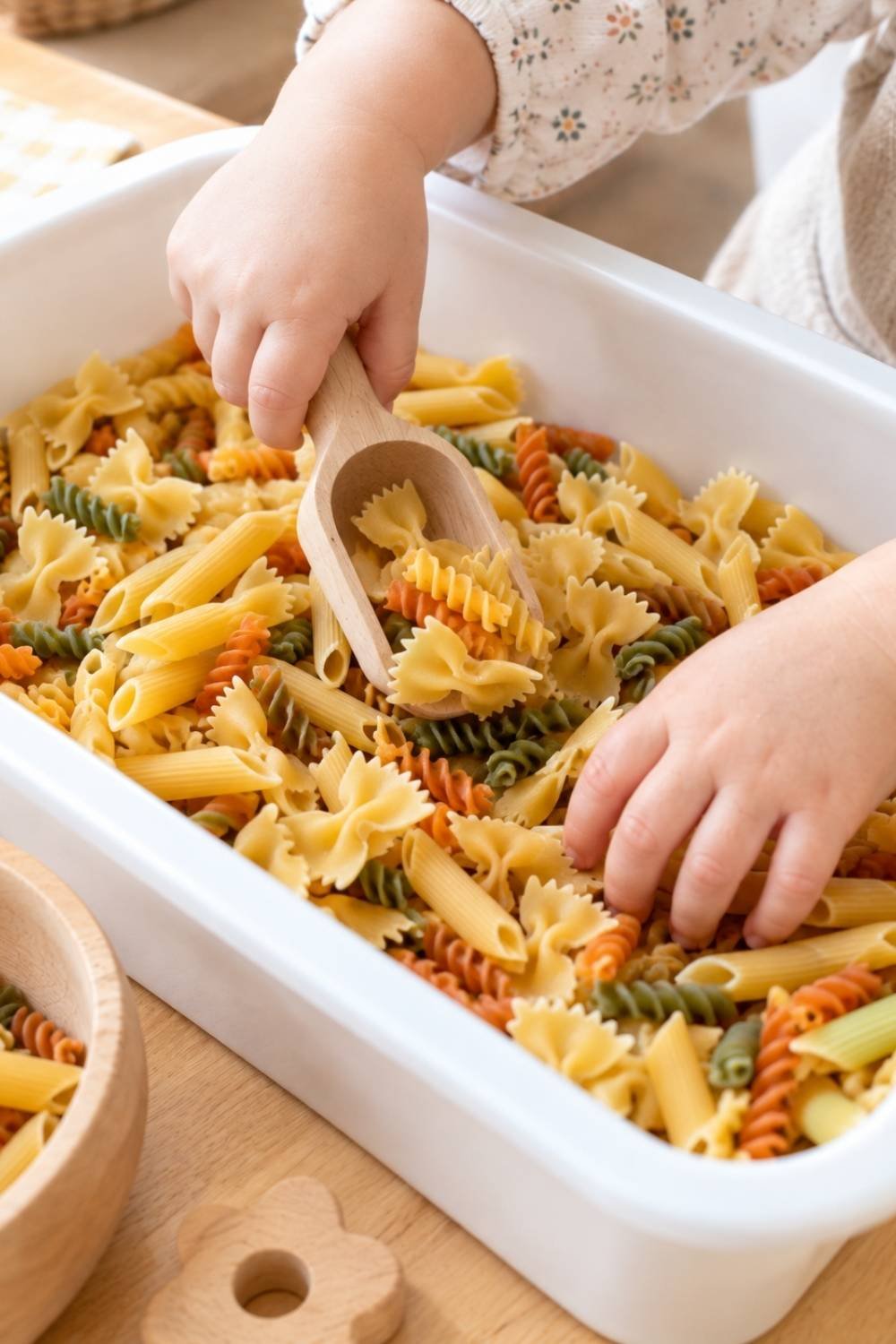
Touch is the easiest sense to build activities around because almost anything textured works. A simple rule: if it is edible or easy to wipe down, it is fair game for a toddler under three. That covers cooked pasta, dry oats, shredding paper, or squishing a bag of hair gel sealed shut with tape.
Rotate between dry and wet textures so your toddler is not doing the same feel every day. Dry sensory bins are easier for a quick cleanup between naps, while wet play, like a tub of water with cups and a sponge, tends to hold attention longer and is worth saving for when you have a few extra minutes to mop up after.
📖 Related Guide: Sensory Bin Fillers for Toddlers: What Works, What’s Safe, and What to Skip).
#5: Visual Play: Sensory Activities Through Sight
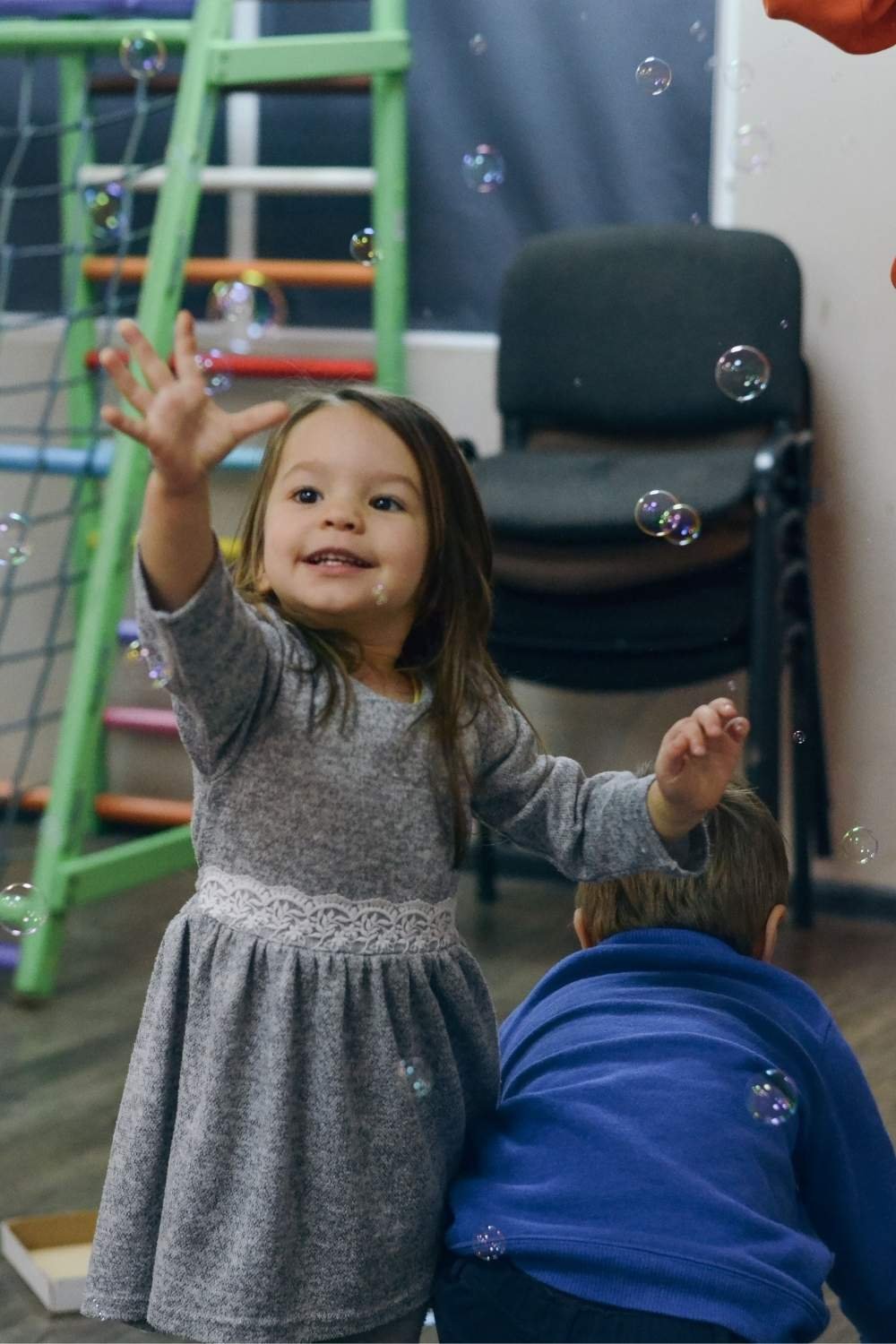
Flashing lights and a propped up tablet are not visual sensory play, even though that is an easy assumption to make.
Passive watching, even of something colorful, does not count because nothing is actually being explored or manipulated. Real visual play needs your toddler doing something with what they see.
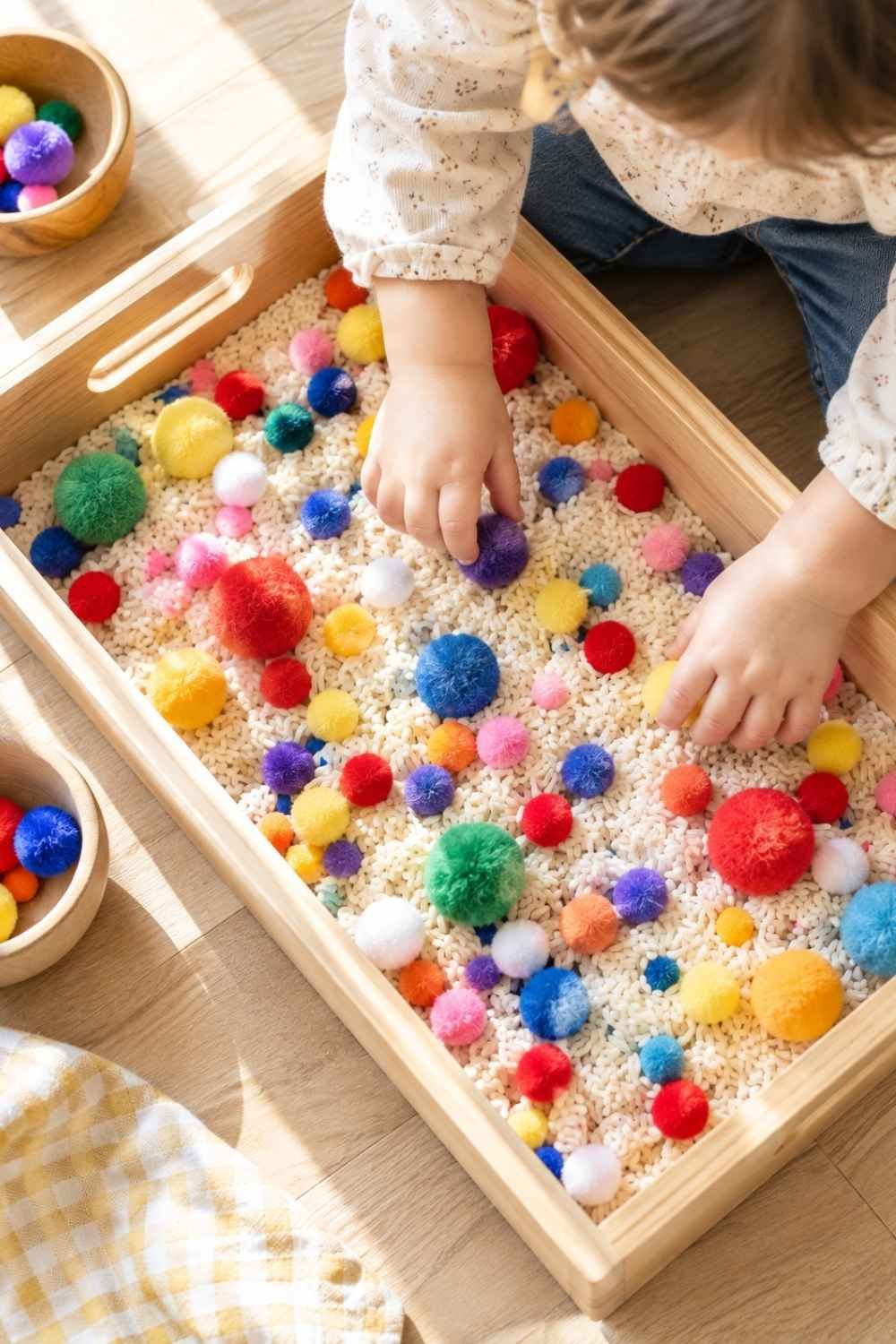
Simple color sorting with cups and pom poms, a shape hunt around the living room, or watching a homemade shadow puppet on the wall all count, because your toddler is tracking, comparing, or reaching for something.
Toddlers are especially drawn to contrast and opposites right now, so pairing big and small, or light and dark, tends to hold interest longer than a single color alone.
#6: Auditory Play: Sensory Activities Through Sound
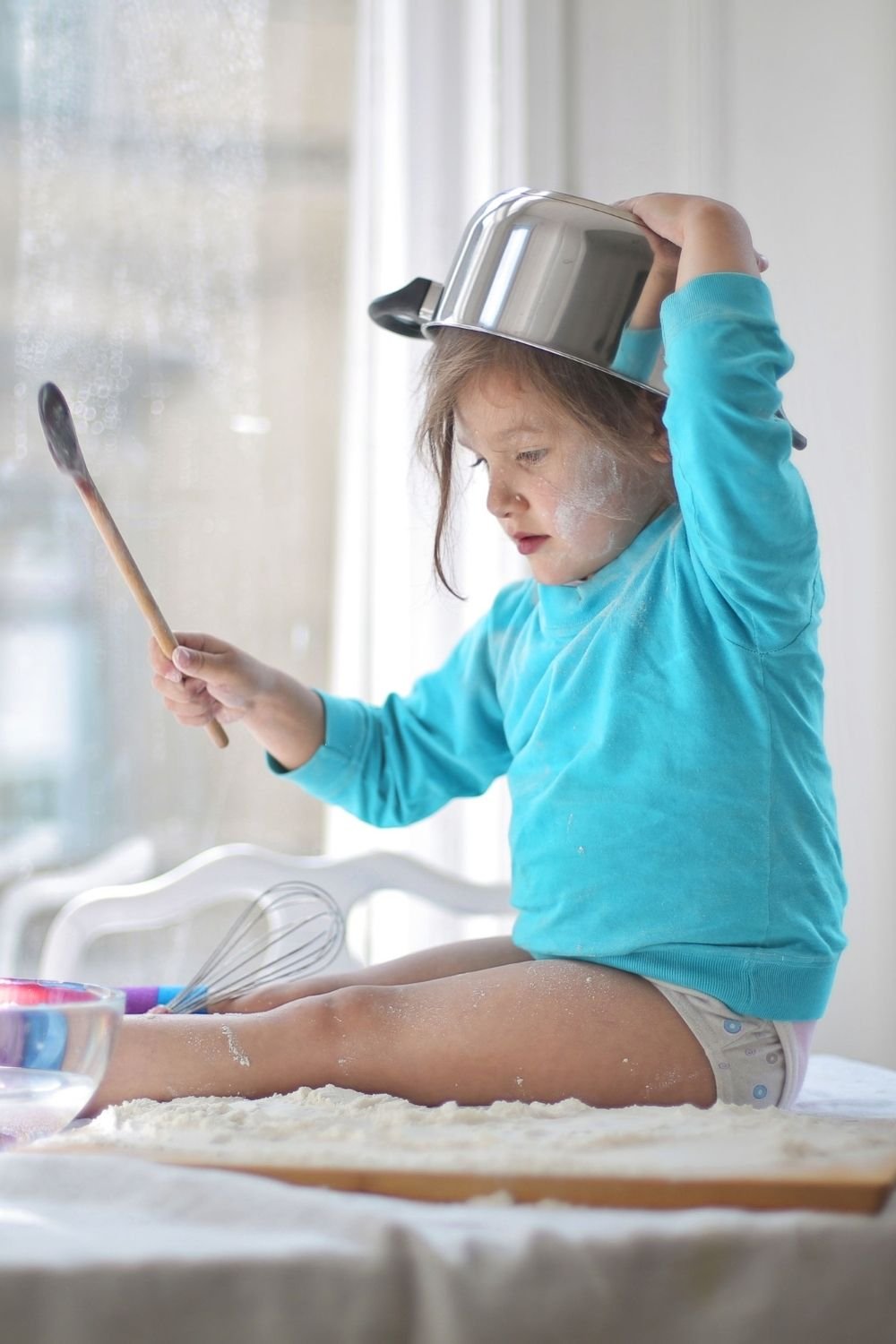
Sound based sensory play covers more ground than most parents realize, from the simplest shake of a rattle to full call and response singing games.
Start simple if your toddler is easily overwhelmed by noise. A jar of dried beans with the lid taped shut, or two pot lids to bang together, gives them control over the sound they are making, which matters more than the sound itself.
Once that is comfortable, layer in songs with actions, like Itsy Bitsy Spider or Pat a Cake, where your toddler learns to anticipate a sound or movement before it happens.
That anticipation is actually a memory and prediction skill, not just fun. Watch for toddlers who cover their ears or turn away, since that is a sign to lower the volume or switch to a quieter activity instead of pushing through.
#7: Smell & Taste: The Overlooked Senses
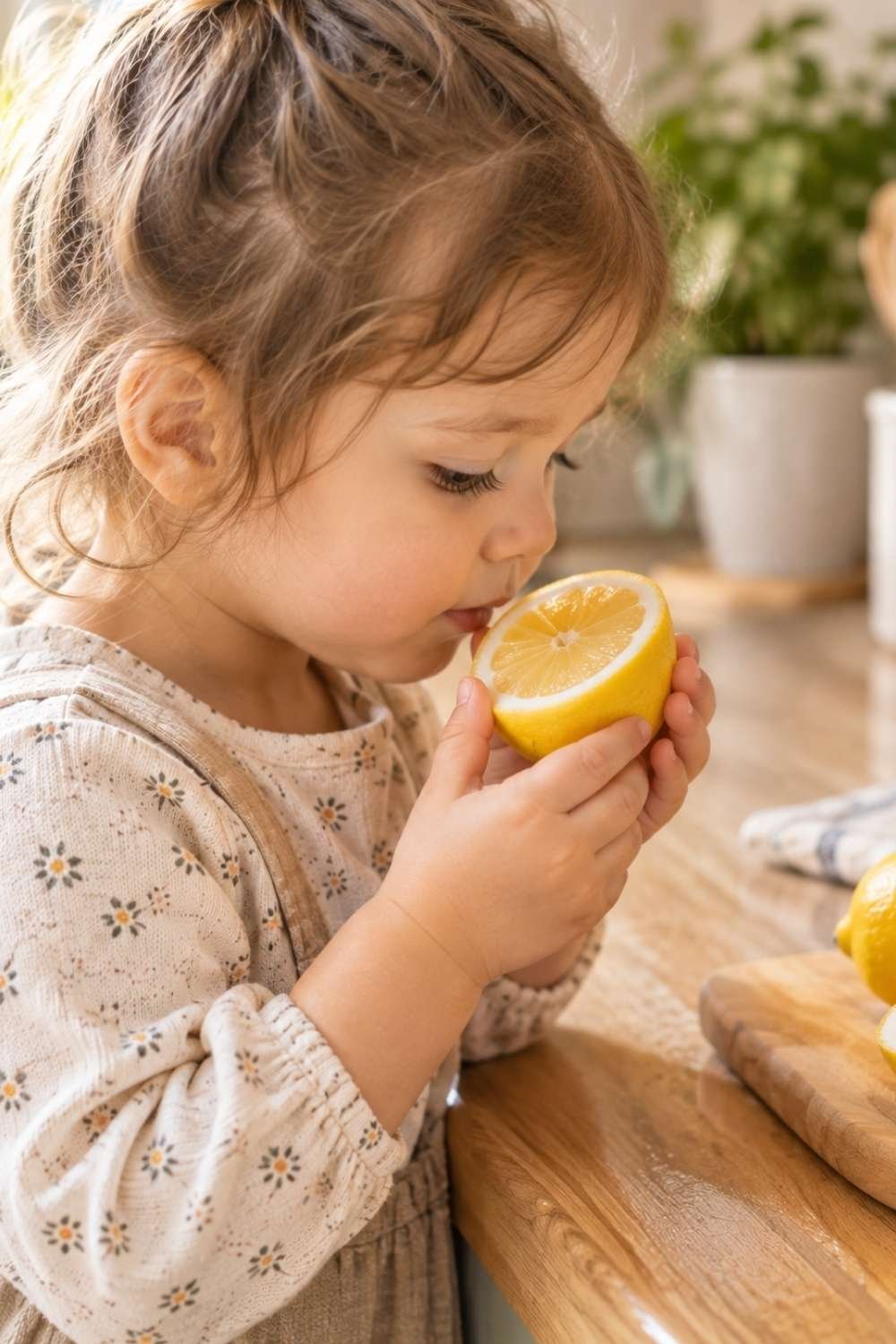
If it would be safe enough to end up in your toddler’s mouth, it is safe enough to use for smell and taste play.
That one rule matters more than any specific activity idea, since toddlers explore through their mouths well into this stage regardless of what you intended.
Smell is easier to work with on its own. Let your toddler sniff cinnamon, coffee grounds, or a cut lemon while you name the smell out loud, and skip anything with essential oils or strong chemical scents since toddler noses are more sensitive than adults realize.
For taste, cooking together beats a dedicated taste activity almost every time. Letting your toddler smell and lick spices while you cook does the same sensory work without adding another mess to clean up later.
#8: Movement & Balance: Vestibular and Proprioceptive Play
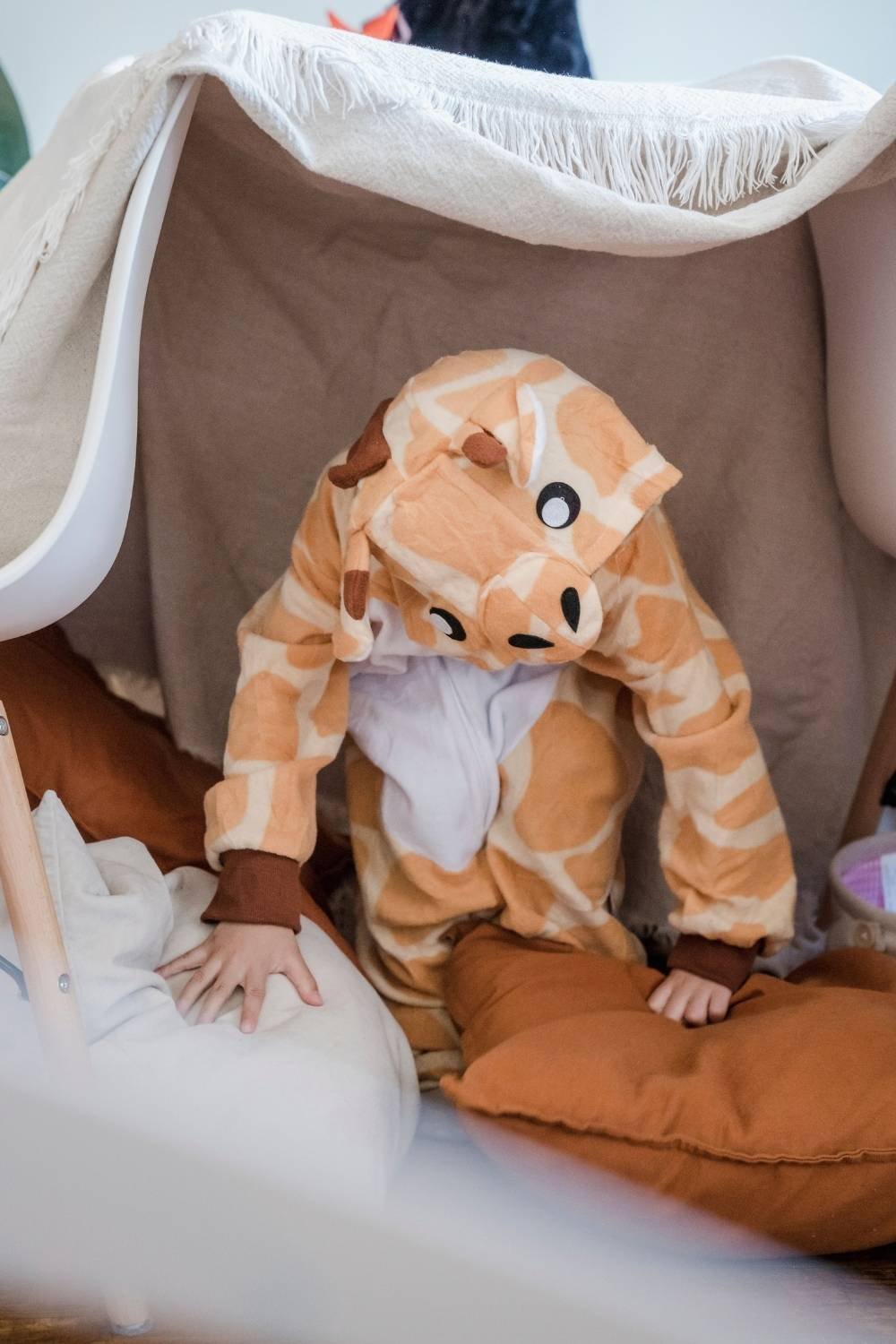
Vestibular play works on balance and where your body is in space, through things like spinning, swinging, or hanging upside down over the couch arm.
Proprioceptive play works on body awareness through pushing, pulling, or carrying something heavy, like a toddler dragging a laundry basket across the room because you let them help.
Both matter more than most parents expect, especially for toddlers who seem to need constant motion or who crash into furniture on purpose.
That crashing is not clumsiness, it is often a toddler seeking the deep pressure their body is asking for. A short burst of heavy work, like carrying a stack of books to another room, tends to settle that restless energy faster than asking them to sit still and calm down.
#9: Simple Sensory Play Ideas to Try This Week
Pick one idea and actually do it this week, rather than saving a board of forty activities for someday.
Toddlers do not need variety as much as they need consistency, so repeating the same two or three activities across several days does more for their development than a new activity every single time.
Start with whatever matches your energy level that day. A rushed morning calls for something with almost no setup, like handing over a wooden spoon and a stack of plastic bowls.
A slower afternoon leaves room for water play or a textured tray. The goal is getting something sensory into most days, not building an elaborate activity you only pull off once.
#10 (Safety): Sensory Play Safety: What to Watch For
The biggest risk with sensory play for toddlers is choking, not mess. Anything small enough to fit through a toilet paper tube, like dried beans, pasta, or pom poms, is a real hazard for a toddler who still puts things in their mouth, and that stage often runs longer than parents expect.
Stick to large, food based fillers like cooked pasta or oats until you are confident your toddler has moved past mouthing objects, usually somewhere around age three, though every child moves at their own pace.
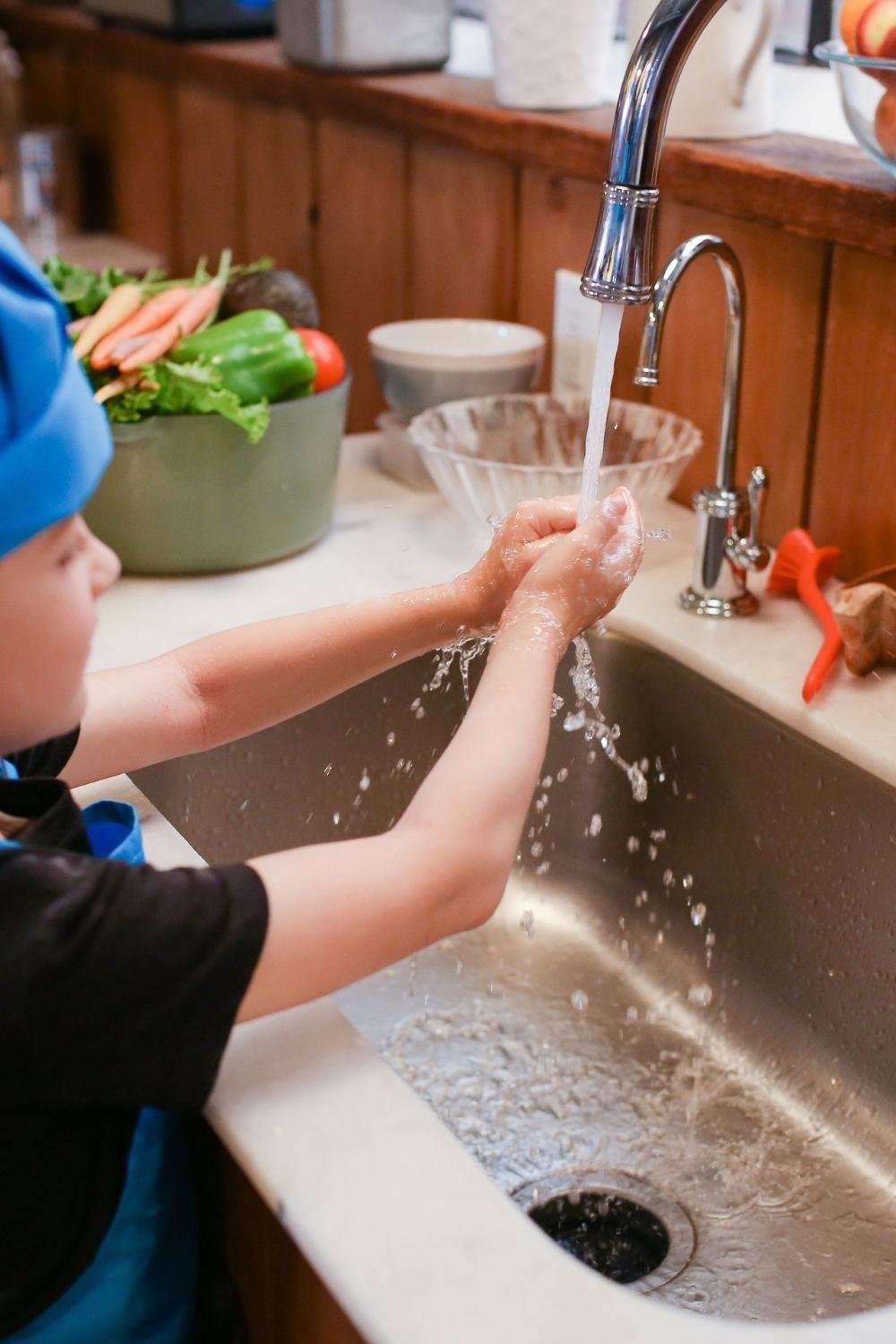
Water play needs the same close attention. A few inches of water is enough for a small child to be at risk, so stay within arm’s reach the entire time, even for a quick sink activity. Never treat sensory play as a moment to step away and check your phone.
#11 (FAQ): Sensory Play Questions Parents Often Ask
These are the questions that come up most once parents actually start trying sensory play at home.
Conclusion
Sensory play for toddlers does not need a special day, a stocked craft cabinet, or a spotless kitchen table. It needs a few minutes, a texture or sound your toddler has not tried yet, and someone close enough to keep an eye on the smaller pieces.
Start with whatever feels manageable today, even if that is just handing over a wooden spoon and a mixing bowl.
The single rule worth remembering is that repetition beats variety. A toddler who revisits the same water tray three times this week is building more than one who tries ten different activities once each.
Save this guide so it is there the next time you need a quick, safe idea to reach for.
Remember: “When introducing sensory bins, safety is key. Make sure you select age-appropriate fillers by reviewing our guide on safe sensory bin fillers for toddlers.“