
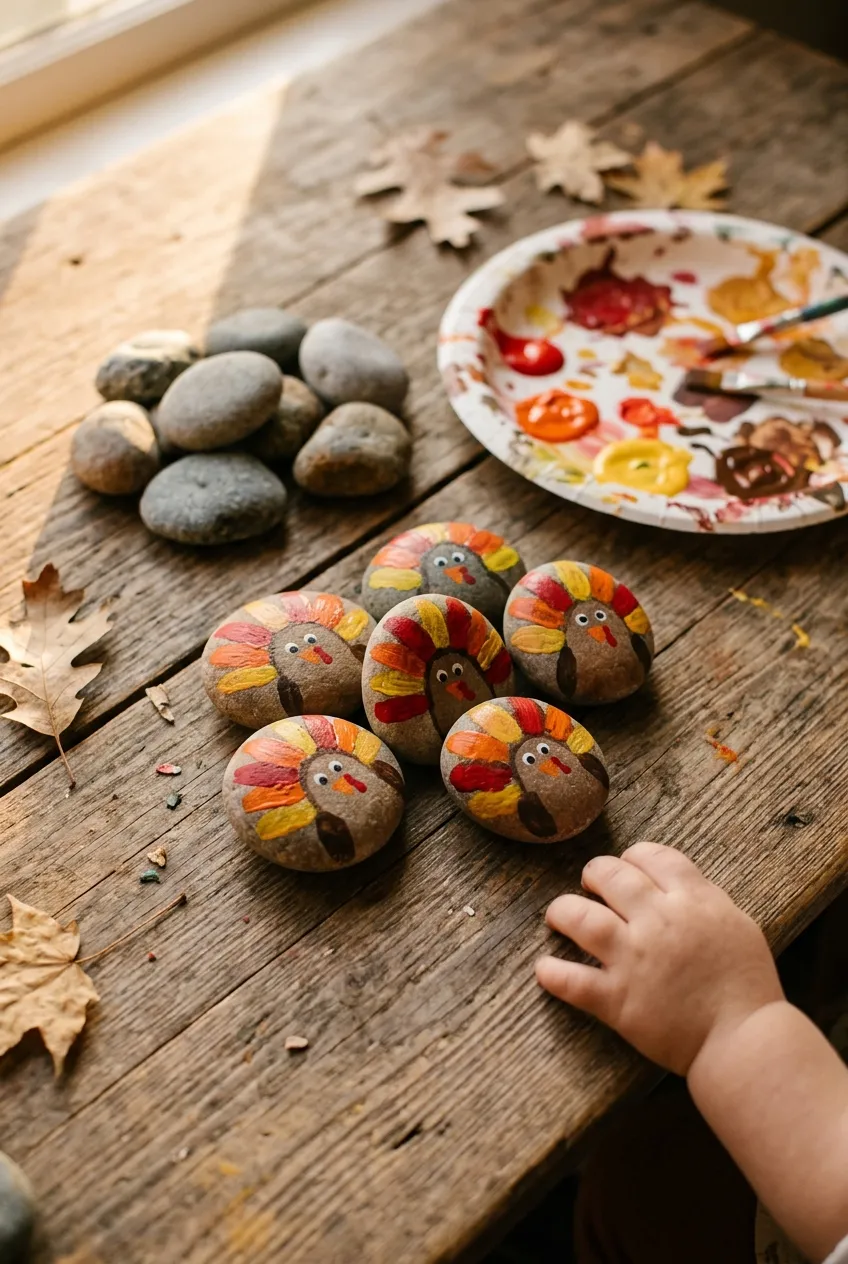
Kids collect rocks. They come home in pockets, in shoes, in the bottom of the stroller basket. A turkey rock craft gives that pile a job, and it costs nothing but paint.
Rocks also hold up better than paper. A painted rock survives being carried around the house, handed to grandma, and parked on the table for a week.
Below are 12 ways to turn plain rocks into turkeys, roughly easiest first. Some need nothing but dot stickers. Others use real leaves, a paper tail, or a marker and a steady hand.
Each idea names the age it suits, what to set out, and where an adult has to step in. Rock size is the safety piece, so read the next section before the paint comes out.
Nothing here needs a template, a printable, or a trip to the craft store.
Before You Start: Picking Rocks That Are Safe
Size is the only rule that really matters. Use rocks bigger than your child’s whole fist, with no pebbles anywhere on the table. Anything small enough to fit in a mouth does not belong in this craft.
Smooth, flat rocks hold paint best. Scrub them with a brush and let them dry completely, since paint slides off damp stone.
Set one boundary out loud before you begin: rocks stay on the tray. Kids who are still throwing are better off with Thanksgiving crafts for toddlers under 2, which skip hard objects altogether.
Use non-toxic, washable kids’ paint, and stay within arm’s reach for ages 2 and 3.
- Bigger than your child’s whole fist
- Flat on at least one side
- Smooth surface, few deep pits
- Scrubbed and fully dry
- Pebbles and gravel of any size
- Sharp edges or flaking stone
- Rocks from a fish tank or garden bed
- Anything still damp
1. Thumbprint Feather Turkey
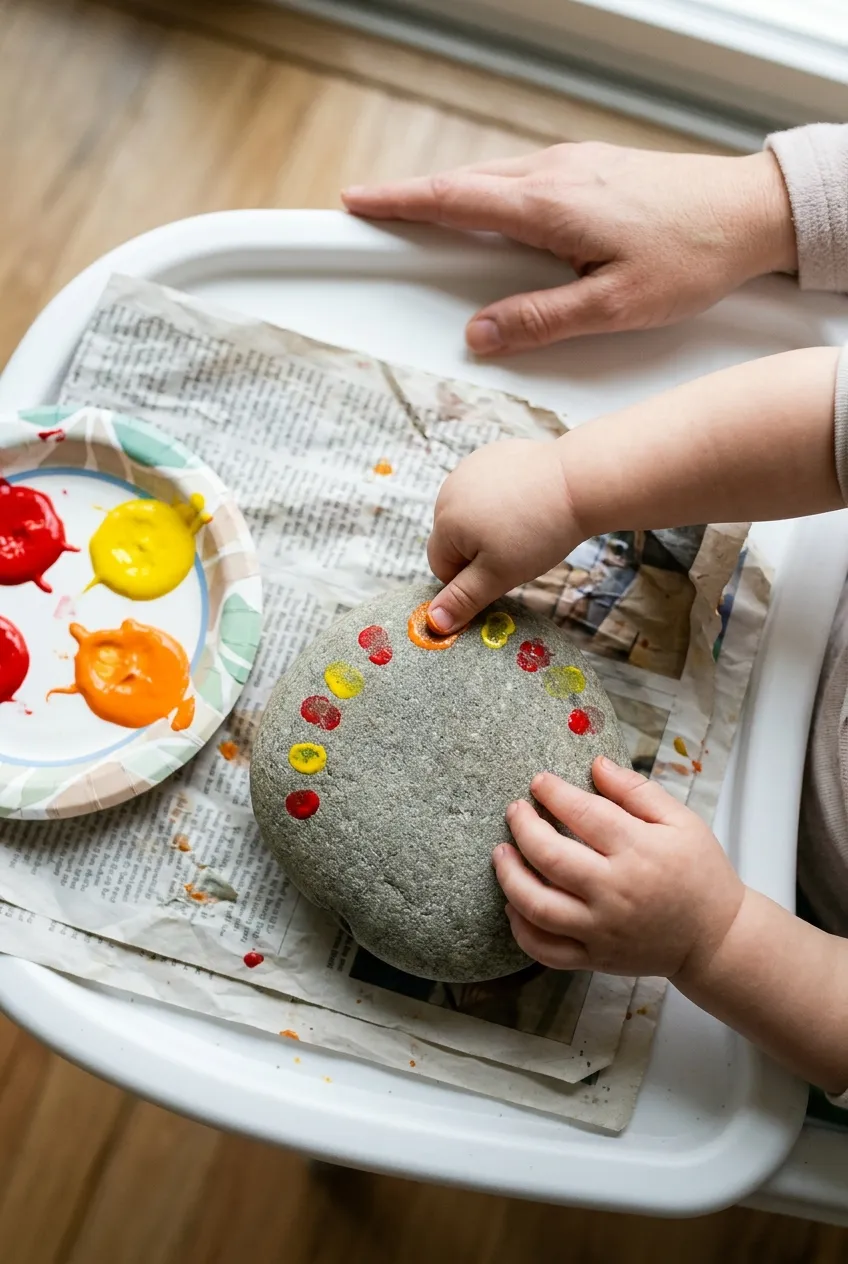
Paint goes on a paper plate, one color at a time. Your child presses a thumb in the paint, then stamps a curve of dots around the top half of the rock. Those dots become the tail.
Add a second and third color once the first ring is down. Overlapping dots look more like feathers than a tidy row does.
The body and face go on last, after the dots set for a few minutes: a brown oval, two white eyes, an orange beak dabbed with a cotton swab.
Thumbprints suit ages 2 and up because the motion is press and lift. Kids who prefer to smear still end up with a turkey, just a softer one. The same stamping control shows up in cookie cutter stamp painting if your child is new to paint.
2. Fork-Dragged Tail Feathers
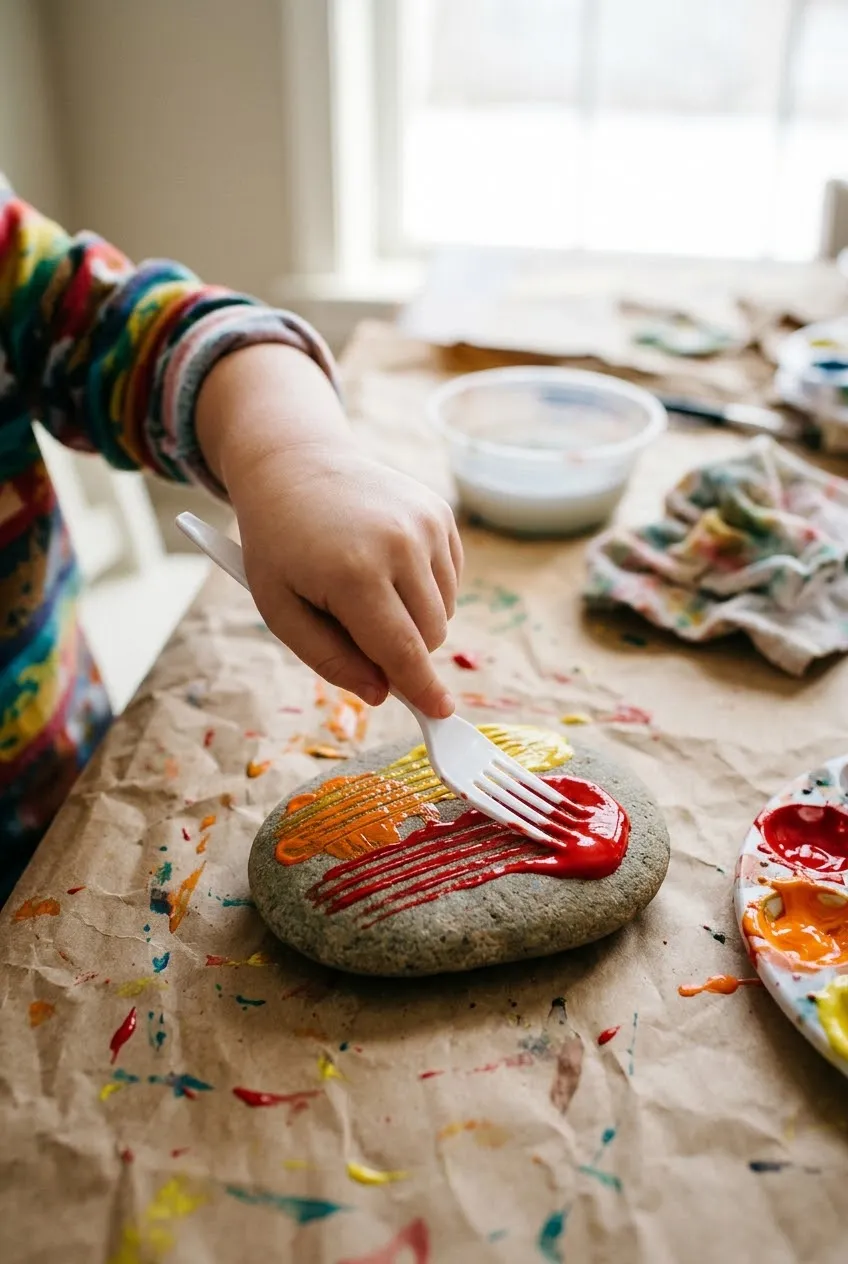
The tail comes out striped and feathery, and the tool doing it is a plastic fork.
Spread a thick blob of paint on a plate. Press the back of the tines into it, then drag them outward from the top of the rock in short pulls. Each pull leaves four thin lines.
Red, orange, and yellow side by side read as feathers with no blending needed.
Forks ask for a bit of wrist control, so ages 3 and up get the cleanest fan. For a younger child, hold the rock steady while they drag. Wash the forks right away, because paint sets fast between the tines.
3. Dot Sticker Turkey (No Paint at All)

Some afternoons there is no room for paint. Dot stickers from the office supply aisle solve it.
Your child peels dots and sticks them in an arc around the rock’s top edge, then adds two small white ones for eyes. Peeling backing paper is real finger work and keeps hands busy longer than the craft looks like it should.
Draw the beak and feet with a marker, or leave them off. A sticker turkey still reads as a turkey.
No drying time means this one fits in the ten minutes before dinner. For a fully mess-free paper version, your sticky turkey art project covers the same ground with contact paper.
Loose dots peel off rocks and end up in mouths. Keep the sheet in your hand, hand over a few dots at a time, and collect strays before a younger sibling joins the table.
4. Handprint Turkey Rock Keepsake

A handprint turkey with the year on the bottom becomes the rock nobody is allowed to throw.
Pick the flattest, widest rock you own. Brush paint onto your child’s palm and fingers rather than dipping, which most kids tolerate far better. Press the hand down once with fingers fanned, then lift straight up.
Fingers turn into feathers. The palm becomes the body. The face goes on after it dries.
Expect a partial print on curved stone, and expect to redo it. Paint two rocks so the first try does not carry all the pressure. If keepsakes are your thing, the salt dough method in your toddler handprint ornaments post gives a cleaner print.
5. Real Leaf Print Feathers
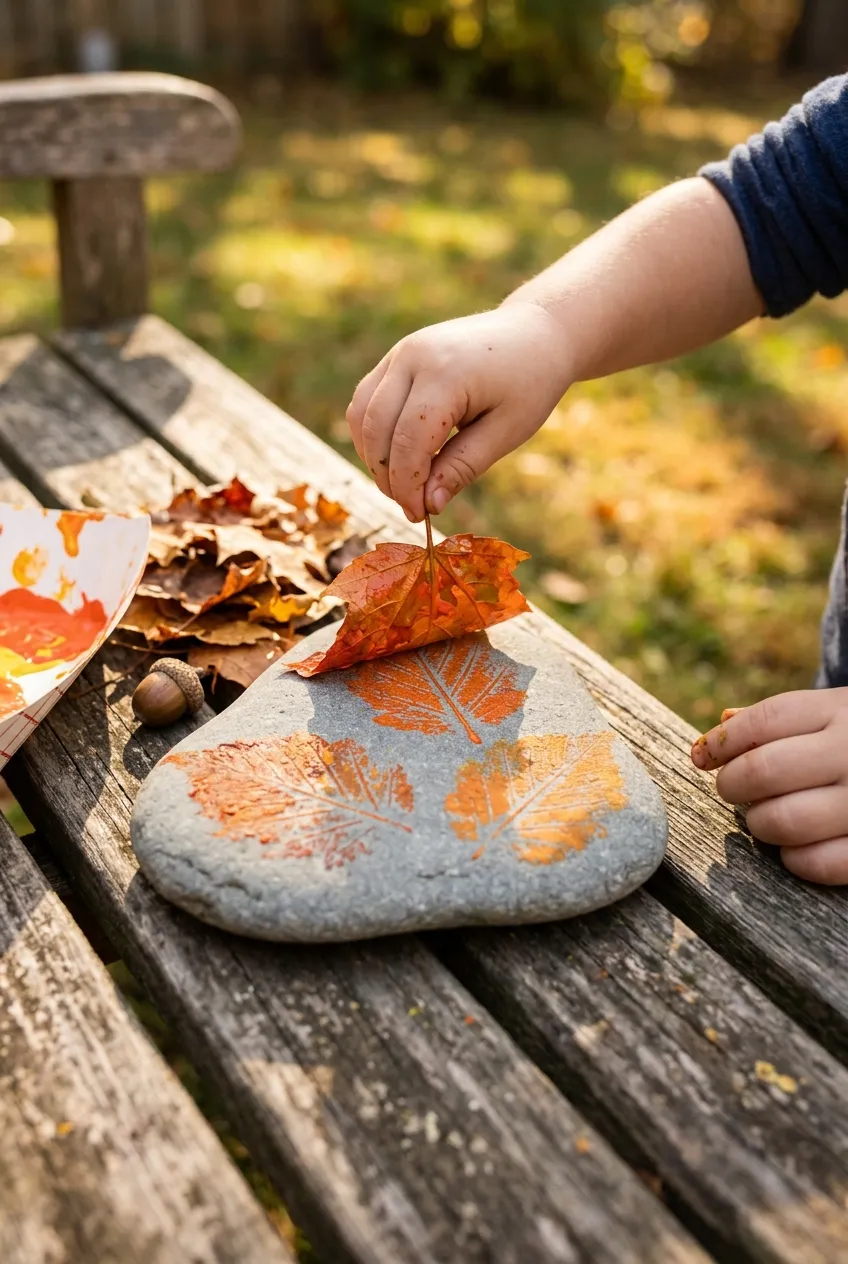
The walk home from the park is the supply run. Small flat leaves with clear veins print best, and slightly dry leaves beat fresh green ones.
Paint the back of a leaf, press it onto the rock, then peel it off slowly. The vein pattern transfers and looks remarkably like a feather.
Three prints fanned around the top is plenty. More than that and the shapes stop reading as feathers.
Ages 4 and up manage the peel without smudging. For younger kids, you press while they choose leaves and colors. Collecting is half the activity, and your outdoor backyard activities post has more ways to stretch a supply hunt.
6. Tape-Resist Stripe Turkey
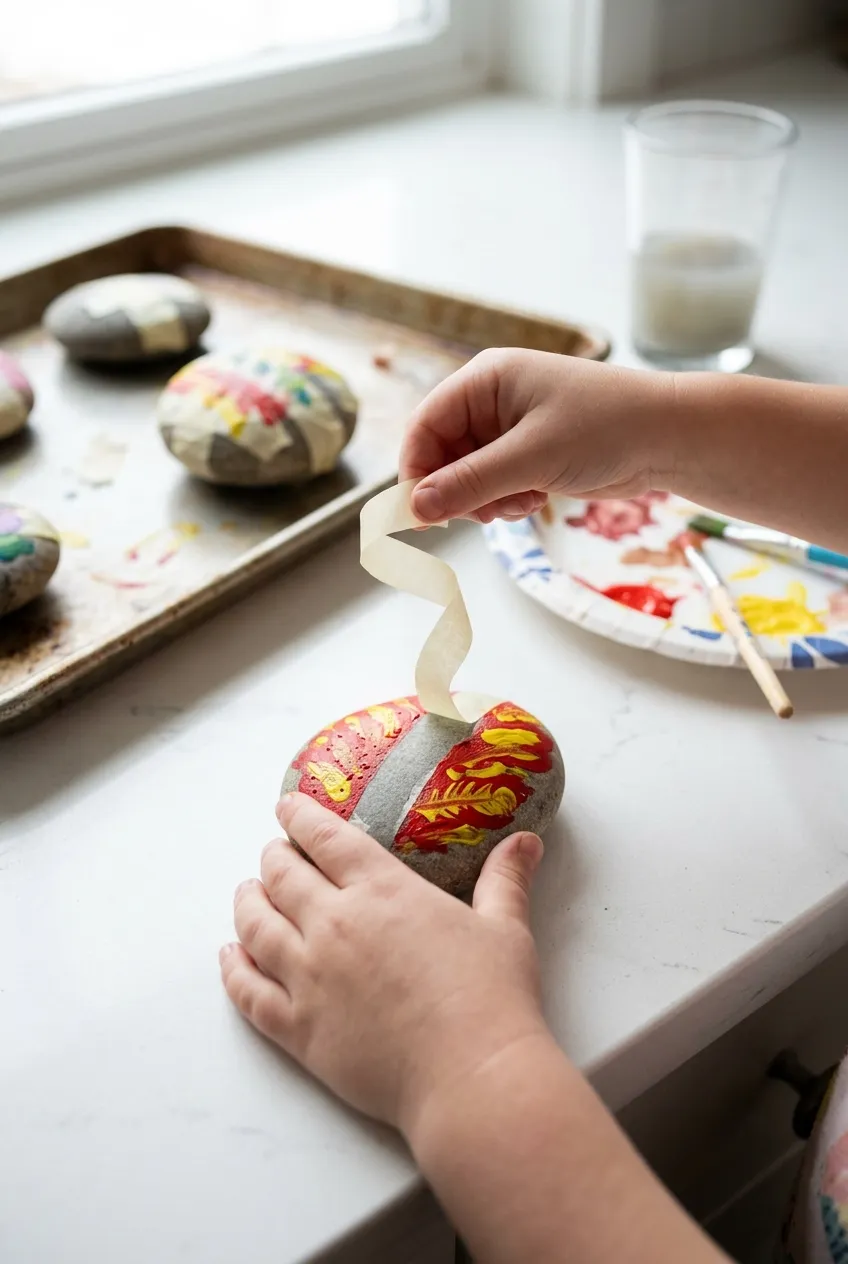
One rule makes tape resist work: press every edge down hard.
Lay short strips of masking tape across the rock in a fan shape. Your child paints over the whole top, tape included, in any colors they like. Once it dries, peel the tape to reveal bare stone stripes between painted feathers.
The reveal is the best part, and most kids want a second rock immediately.
Taping is an adult job. Painting over tape works from age 2. Thin washi tape peels cleanest, while wide packing tape can lift paint with it.
7. Paper Fan Tail Rock That Stands Up
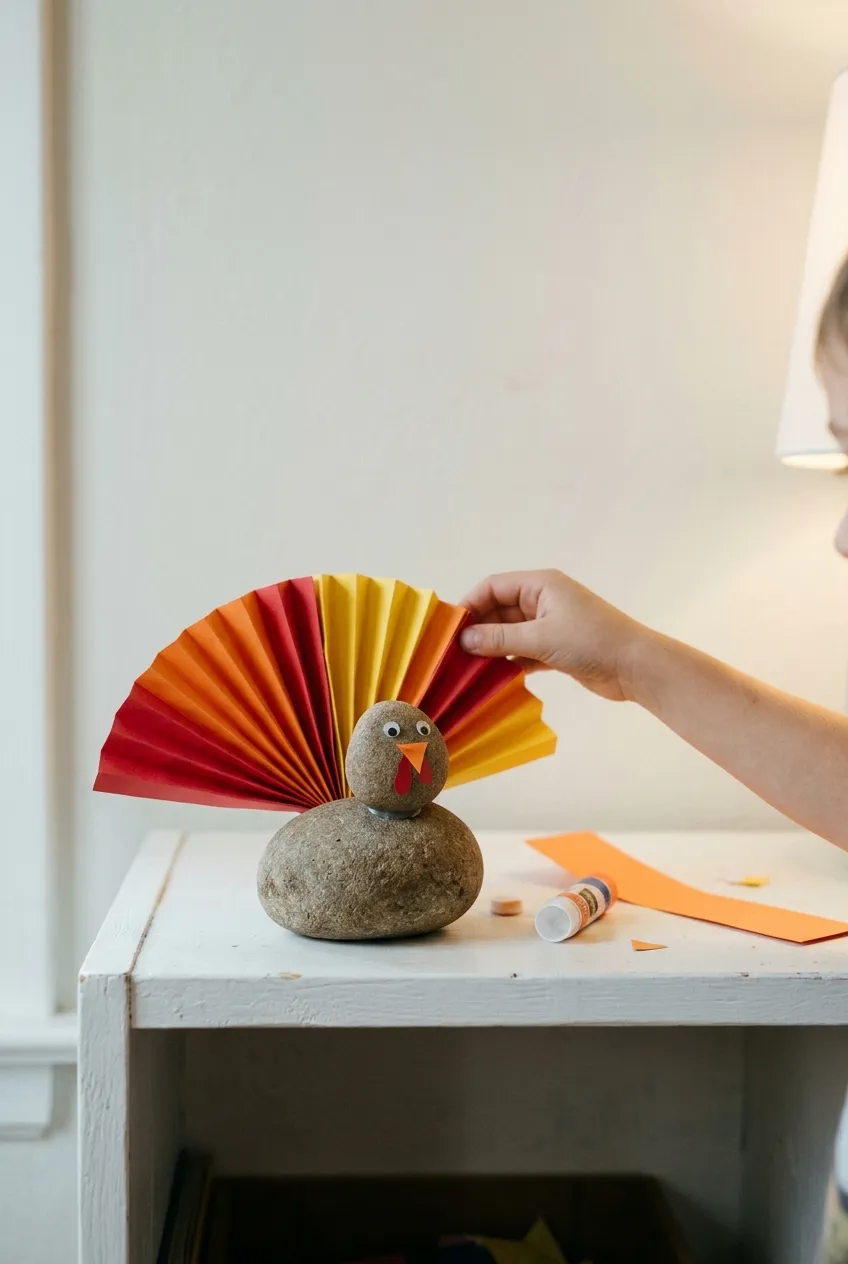
A painted tail stays flat. A paper tail stands up, which turns the rock from a decoration into a little character.
Fold a strip of cardstock back and forth like a fan, pinch the bottom, and attach it behind the rock. Your child colors the strip before it gets folded and paints the rock as the body.
Hot glue holds best and stays in adult hands only. School glue works if you prop the fan against something overnight.
Ages 3 and up fold well once you start the first crease. The finished turkey balances well enough to sit on a shelf.
8. Thankful Word Turkey Rocks
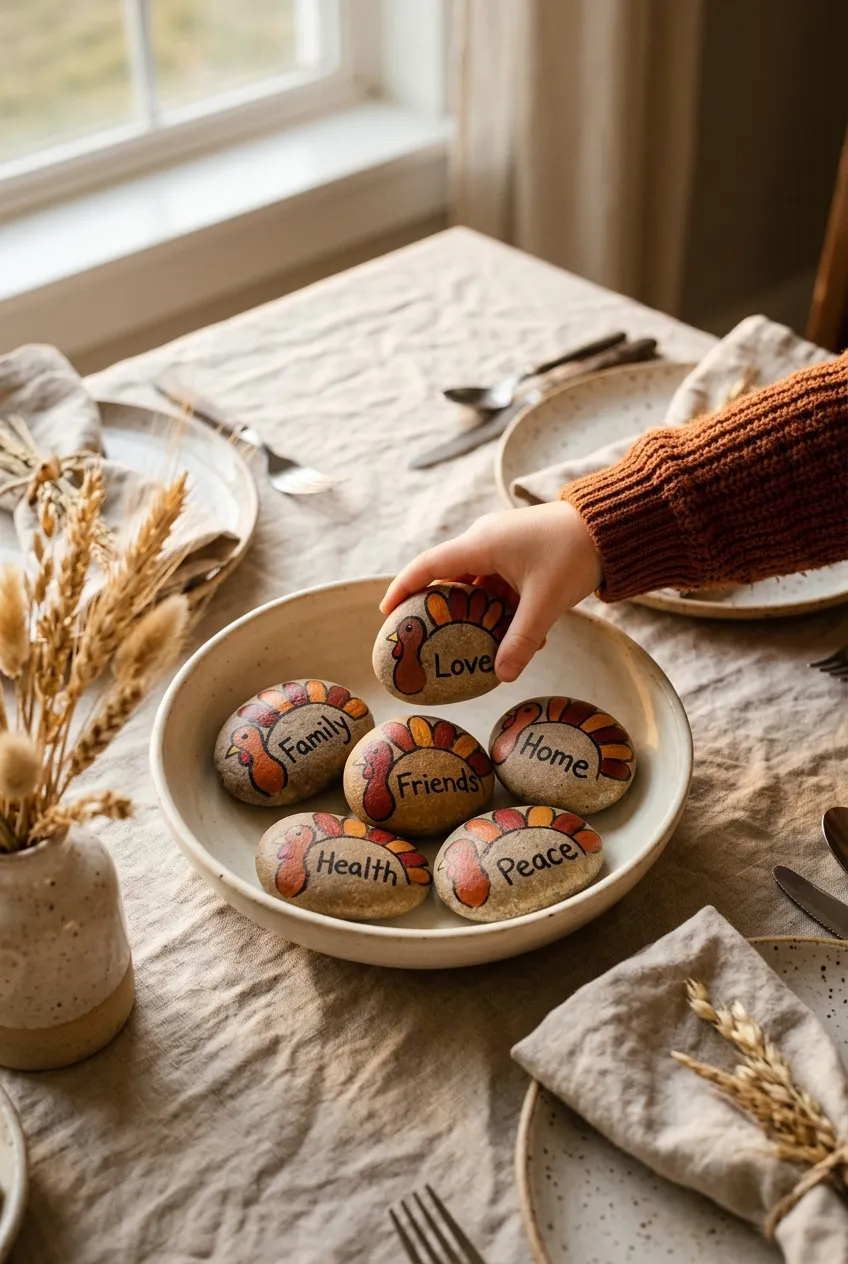
Younger kids rarely sit through a gratitude conversation. They will happily name one thing per rock.
Everyone at the table paints a turkey, then names something they are thankful for. An adult writes the word across the body in marker, and a 5 year old can copy the letters.
Six rocks in a shallow bowl becomes the centerpiece, and the words give guests something to ask about.
Keep it to one or two words per rock, because sentences disappear on a curved surface. Store the set in a jar and add to it next November.
9. Turkey Rock Family Lineup
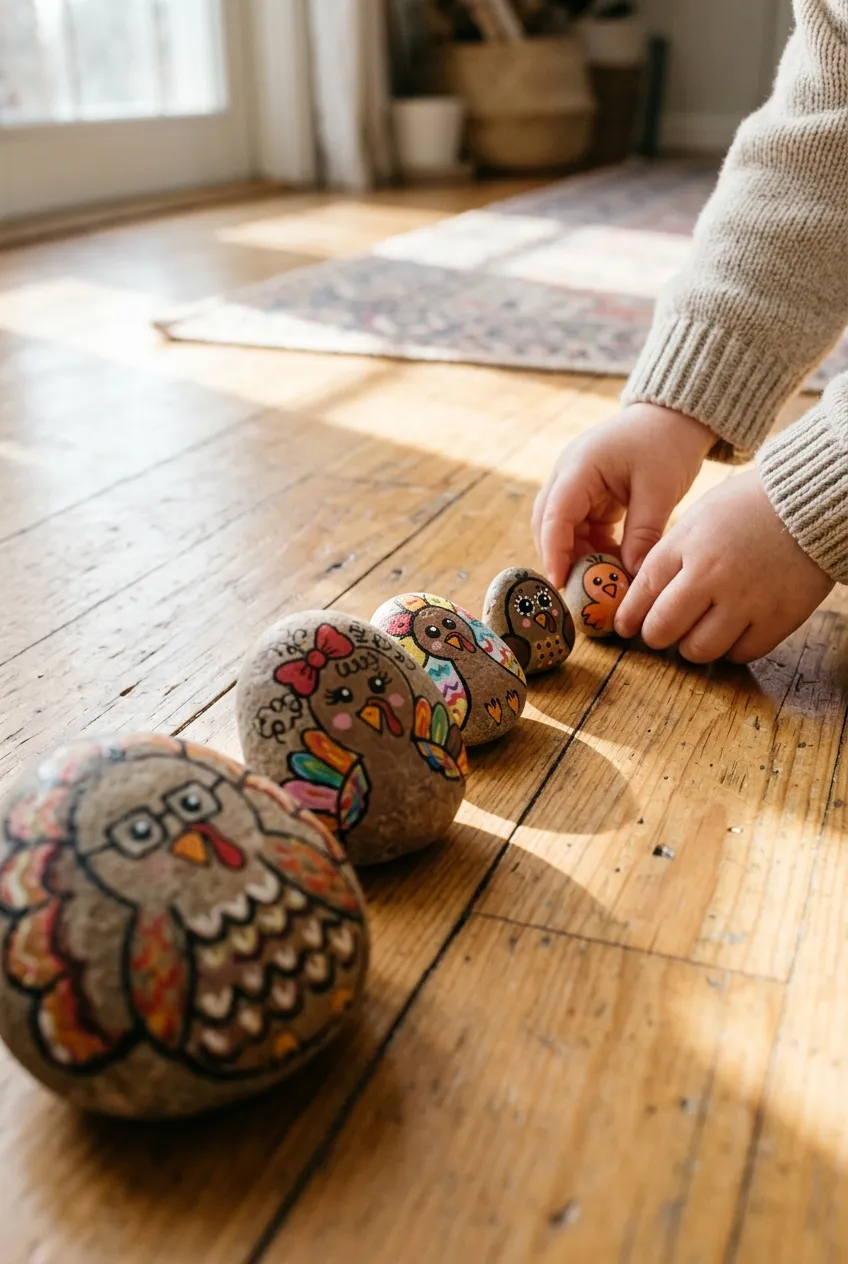
What you need: one rock per family member, sorted by size, plus one for the pet.
Line the rocks up biggest to smallest before any paint appears. Your child decides which rock is which person, which takes longer than you expect and is half the fun.
Each turkey gets matching details: glasses, a beard, a bow, curly marker hair.
Sorting by size is early math nobody notices doing. Comparing, ordering, and matching all happen while they argue over who gets the big one. Ages 2 and up, with an adult on marker duty for the youngest.
| Rock size | Best for | Detail that fits |
|---|---|---|
| Two palms wide | Grown-ups | Glasses, beard, full tail |
| One palm wide | Big kids | Hair color, bow, name letter |
| Fist-sized | Little siblings | Eyes and a beak only |
| Smaller than a fist | Nobody | Choking risk, leave it outside |
10. Marker Detail Turkey for Ages 5 and 6
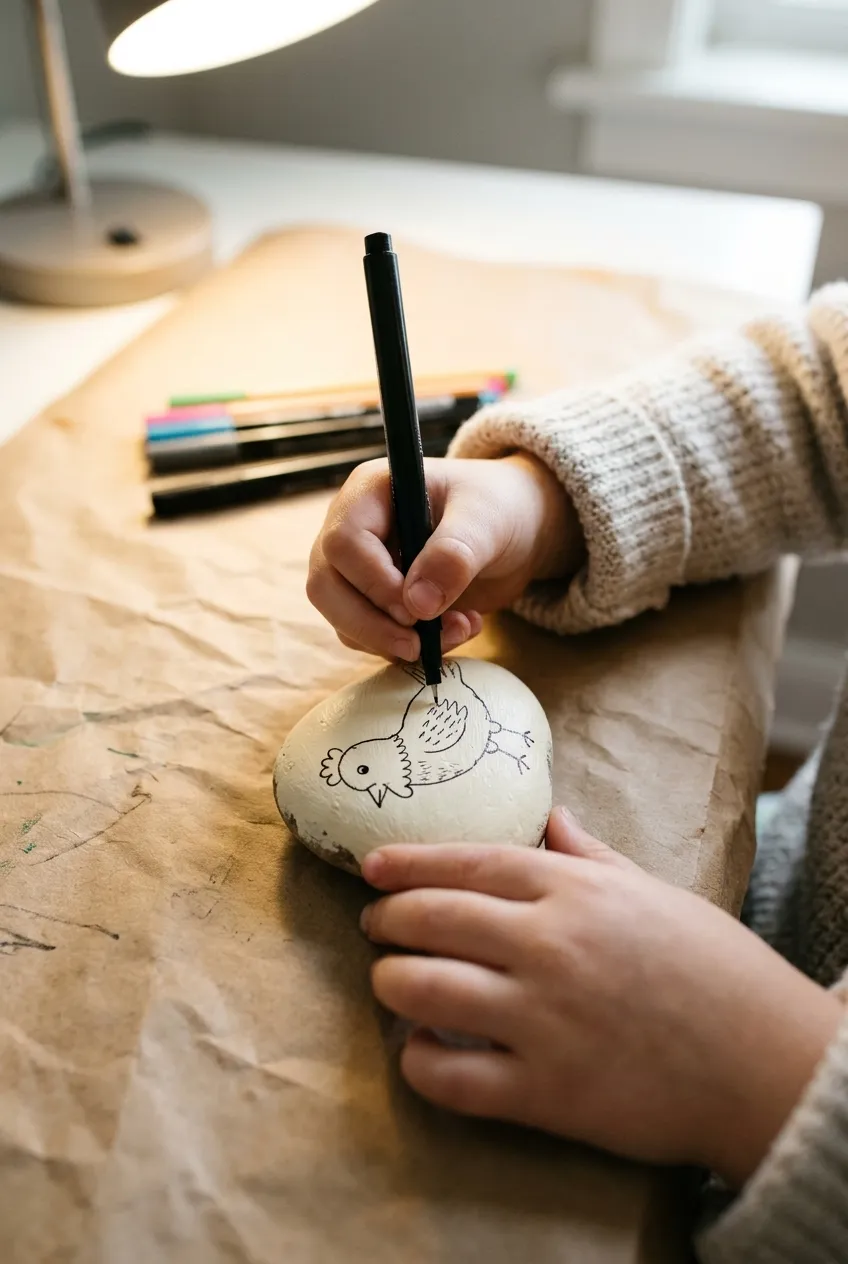
Older kids often get handed the toddler version of a craft, then wander off after four minutes. The fix is detail work, not more paint.
Base-coat the rock in one brown or cream color and let it dry fully. Hand over fine-tip markers, and the child draws feather lines, a patterned wattle, feet, and small eyes.
Dry paint matters here, since markers skip and bleed on anything tacky.
Permanent markers stain clothes and tables, so cover the surface and push sleeves up. Expect twenty focused minutes, which is longer than most painting steps hold them. Your alphabet painting activity works the same way for this age.
11. Turkey Rock Place Cards for the Table
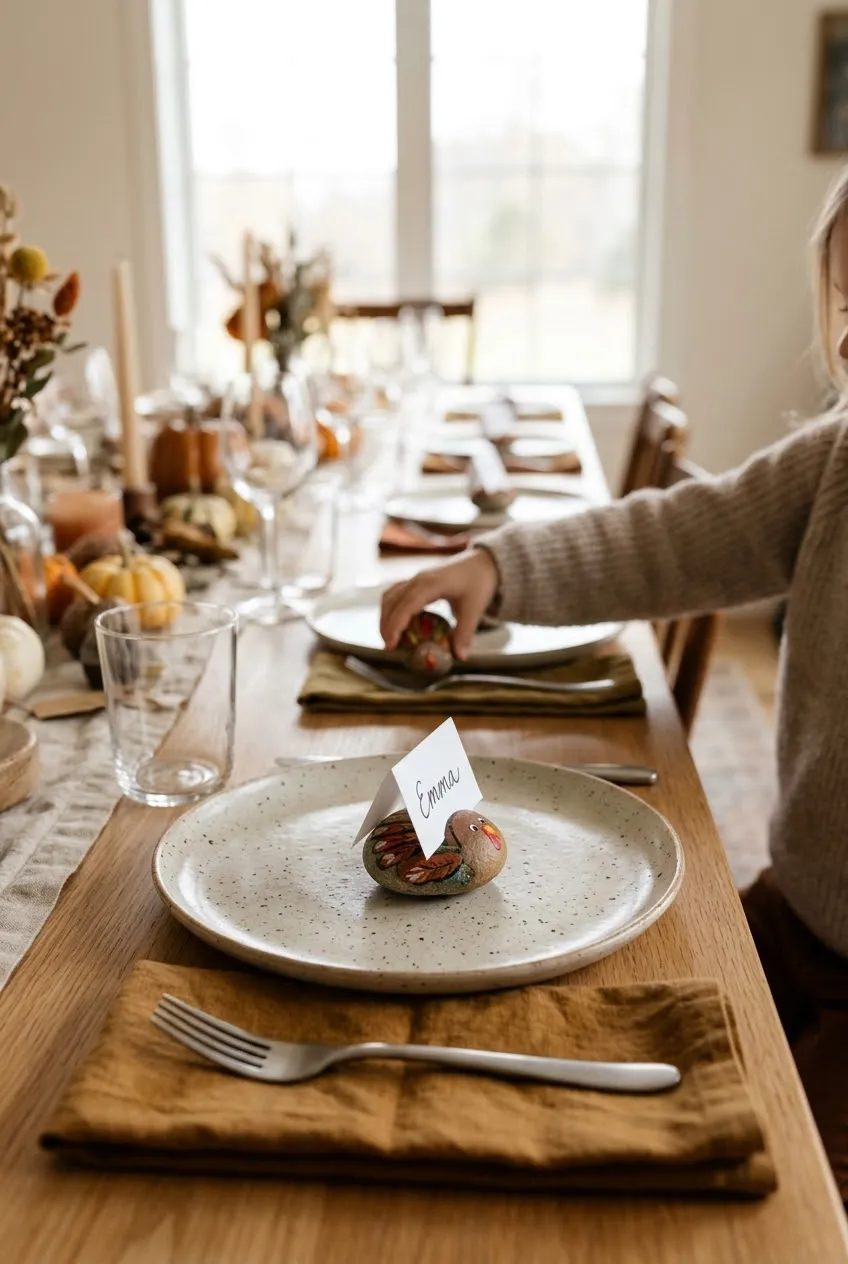
Small painted turkeys hold down name cards and keep the table from blowing around outdoors.
Paint a simple turkey on a palm-sized rock. Cut a slit in a folded index card, write a guest name on it, and lean the card against the rock.
Your child paints and sorts. You write the names, unless you have a writer who wants the job.
Make one spare blank rock for the guest nobody counted. Skip toothpicks, wire, and floral picks if there is a crawling baby in the house.
12. Backyard Turkey Rock Hunt

Painted rocks earn a second use the next morning. Hide them and send the kids out.
Three steps: hide six finished turkeys around the yard at child height, say how many are out there, and let them go. Finding all six turns yesterday’s craft into a fresh activity.
Hide rocks on open grass and in plain sight, not inside bushes or flower beds where hands reach into things nobody can see.
Toddlers need rocks visible from standing height. Ages 4 and up enjoy a spoken clue for the last one. Count them all back in, since a lost painted rock reappears under the lawn mower.
Sealing, Displaying, and Storing Painted Rocks
Craft paint rubs off bare stone within a week. A coat of brush-on matte sealer fixes that, applied by an adult in a room the kids are not in, then left to cure fully. Skip spray sealers around children altogether.
Keepsake rocks do better on a shelf than in a toy basket. Display rocks in a shallow bowl, and store the rest in a labeled jar with the year on the lid.
Rocks that go back outside need no sealing at all. They weather, which is part of the appeal.
Questions Parents Ask
What age can start a turkey rock craft?
Two, with a fist-sized or larger rock and an adult beside them. Under 2, rocks are not the right material. Use paper and sticky-surface crafts instead.
What paint works best on rocks?
Non-toxic washable kids’ paint or craft acrylic. Acrylic covers stone in one coat but stains clothes, so washable paint is the safer pick for toddlers.
Where do you get good rocks?
Garden centers sell bags of smooth flat stones cheaply. A riverbank or a landscaping pile works too, as long as you wash and dry them first and you have permission to take them.
One Last Thing Before You Set Up
Start with one rock each, not six. Kids lose interest faster than the paint dries, and a single finished turkey beats five abandoned ones.
The ideas above stretch across ages, so the same tray of rocks can keep a 2 year old and a 6 year old busy at once. Once the paint dries, your feed the turkey game picks up where the craft leaves off.
Save this turkey rock craft list to your Thanksgiving board so it is there on the rainy afternoon when you need one easy idea and nothing else.