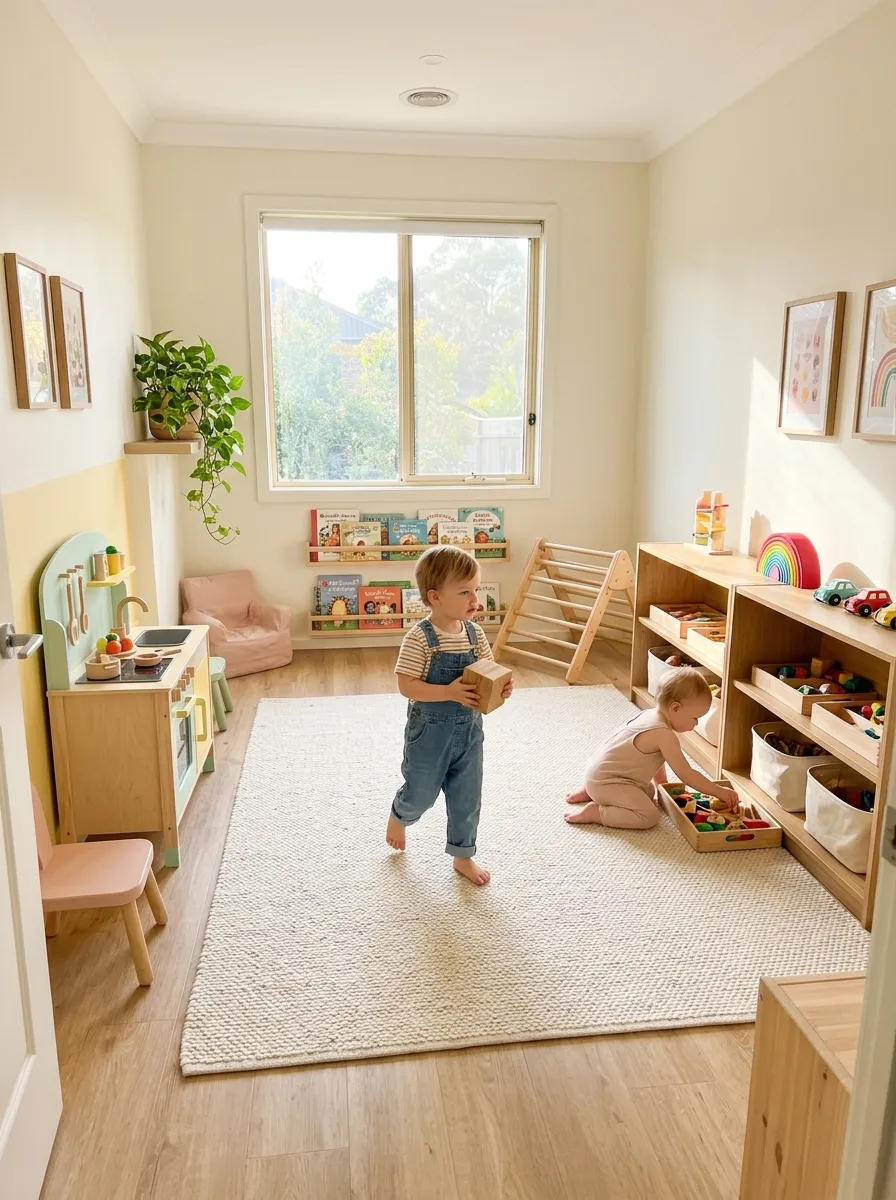
Most playroom photos you save are built for a five-year-old. Tall shelves, small loose pieces, a craft table your toddler cannot climb into without help.
A room for a one, two, or three year old works differently. Everything has to sit within arm’s reach of the floor, the middle needs to stay clear for dumping and carrying, and roughly half the toys belong somewhere else entirely.
These toddler playroom ideas are finished setups rather than projects. Each one gives you a rough height, how much to put out, and what changes between 12 months and age three.
You do not need a spare room. A corner with one low shelf and a clear patch of floor gets more real play than a whole room packed to the ceiling.
If your kids span a wider age range, my guide to playroom setup for ages 1 to 6 covers zones for older siblings too.
Table of Contents
1. Low Open Shelf Wall at Toddler Eye Level
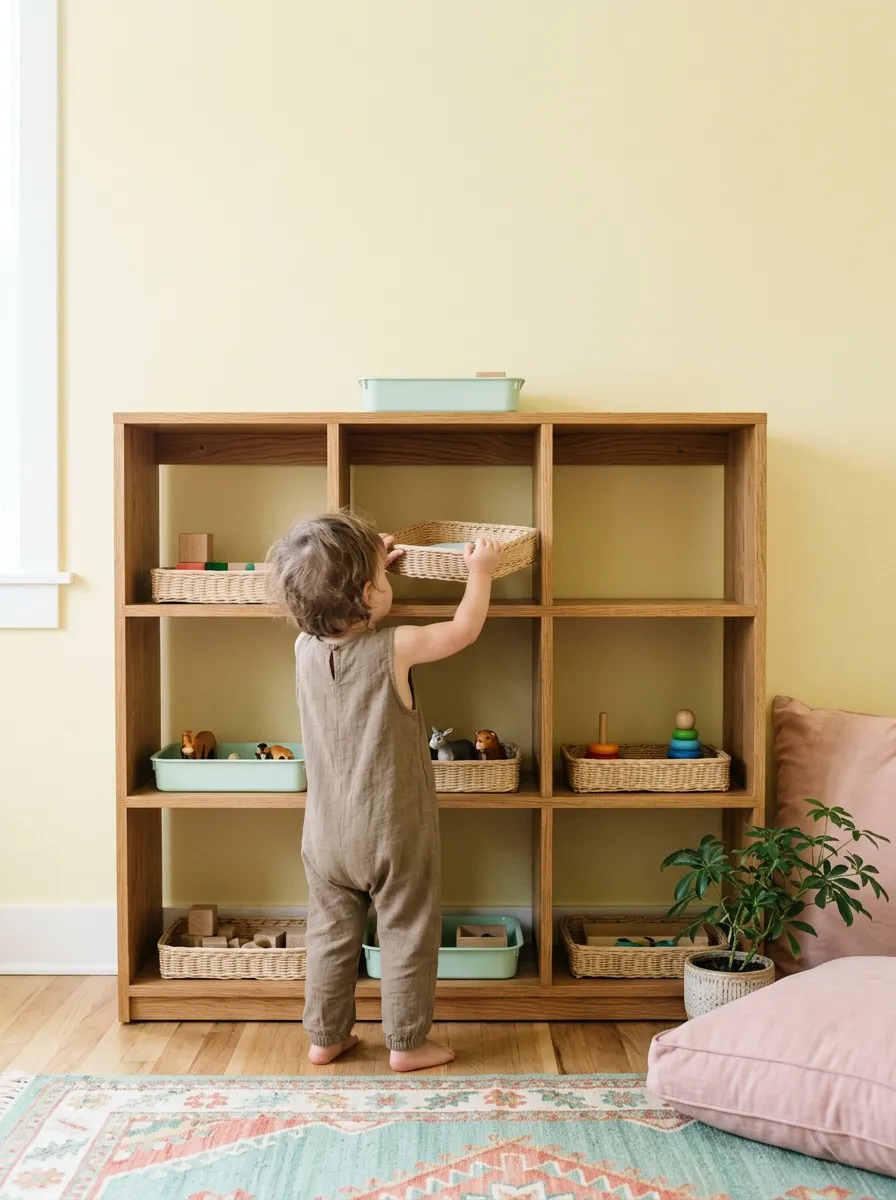
The single change that makes a toddler room work: shelves that stop at about 28 inches. Anything higher becomes your job, not theirs.
Put out six to eight open trays or shallow baskets, one activity each. No lids, no stacking, nothing they have to dig through. A toddler chooses what they can see from standing height, so the top surface matters more than the shelf count.
Leave one empty slot. It reads as a gap to fill rather than a wall of stuff, and it gives you a landing spot when something new comes out of rotation.
2. Front-Facing Book Ledges Under the Window

Spines mean nothing to a toddler who cannot read. Covers do all the work.
Mount two shallow picture ledges, the lower one around 16 inches off the floor, so a new walker can pull a book while holding the wall. Keep eight to ten books out and face every cover forward.
The window position earns its place. Toddlers sit down where the light is, and a book pulled off a ledge in good daylight often turns into ten quiet minutes.
3. Soft Landing Floor for New Walkers
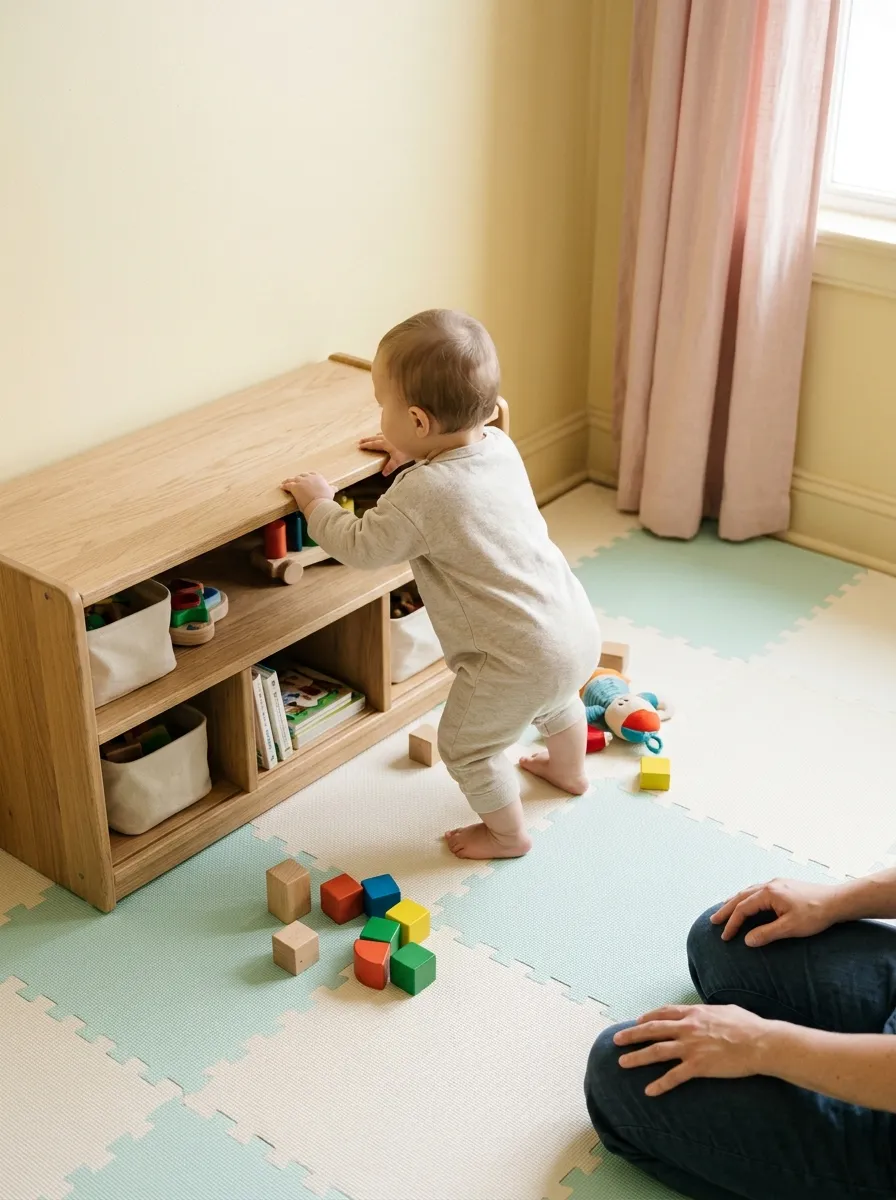
Between 12 and 18 months, the floor is the main piece of furniture in the room. A toddler at that stage sits, pulls up, takes four steps, and goes down again, maybe forty times an hour.
Cover the play area with interlocking foam or a thick low pile rug, wall to wall if you can. Flat weave beats shag, because wheels and blocks both need a surface that does not swallow them.
Skip the small scatter rugs. They slide under a new walker and they break the floor into patches instead of one continuous surface.
4. Ground-Level Climbing Corner
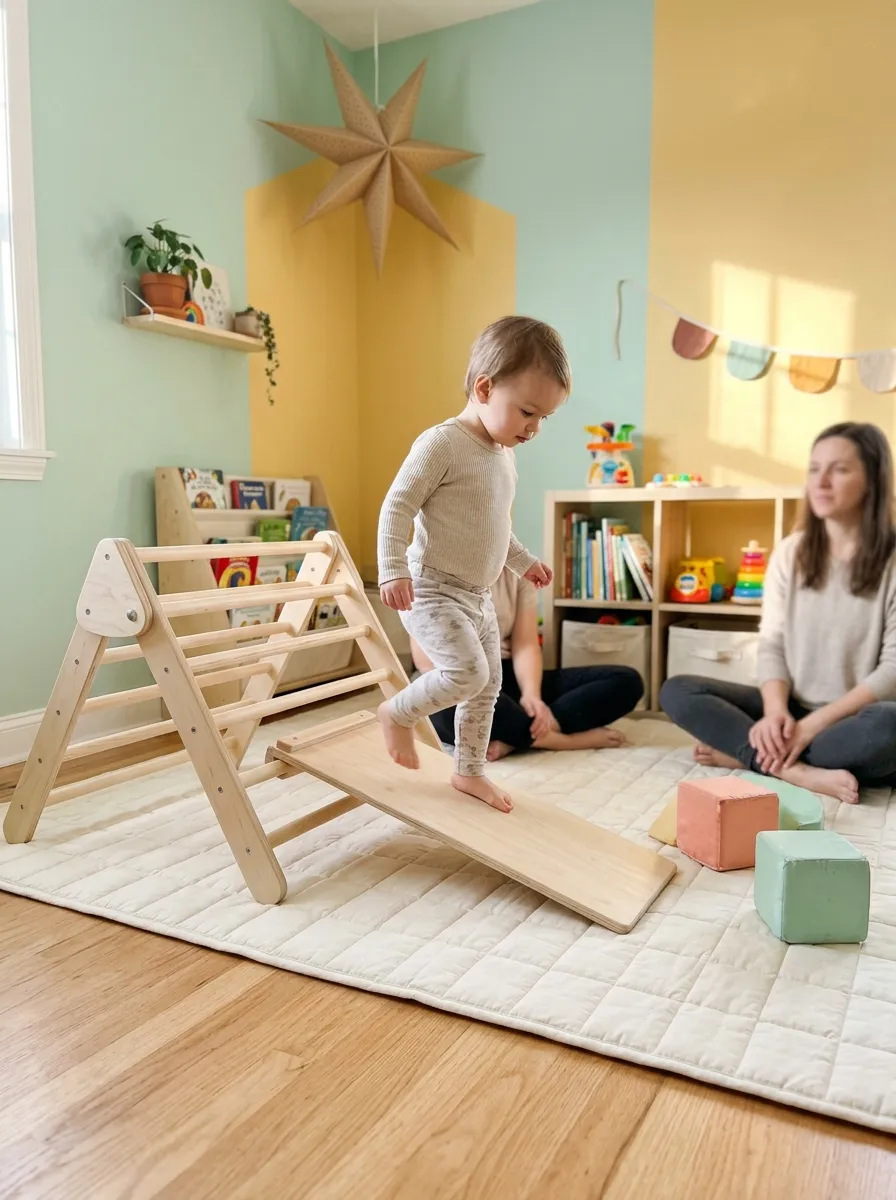
Toddlers climb whether or not you plan for it, so give the urge a destination. The trick for this age is keeping everything close to the ground.
A small folding climber, a low wooden triangle, or two soft blocks and a wedge all work. Set them against one wall with clear floor on the open side, and keep the pieces low enough that your toddler can get on and off without a hand from you.
Independence is the whole point. A climber they need lifting onto becomes an adult activity.
5. Pretend Kitchen Along One Wall
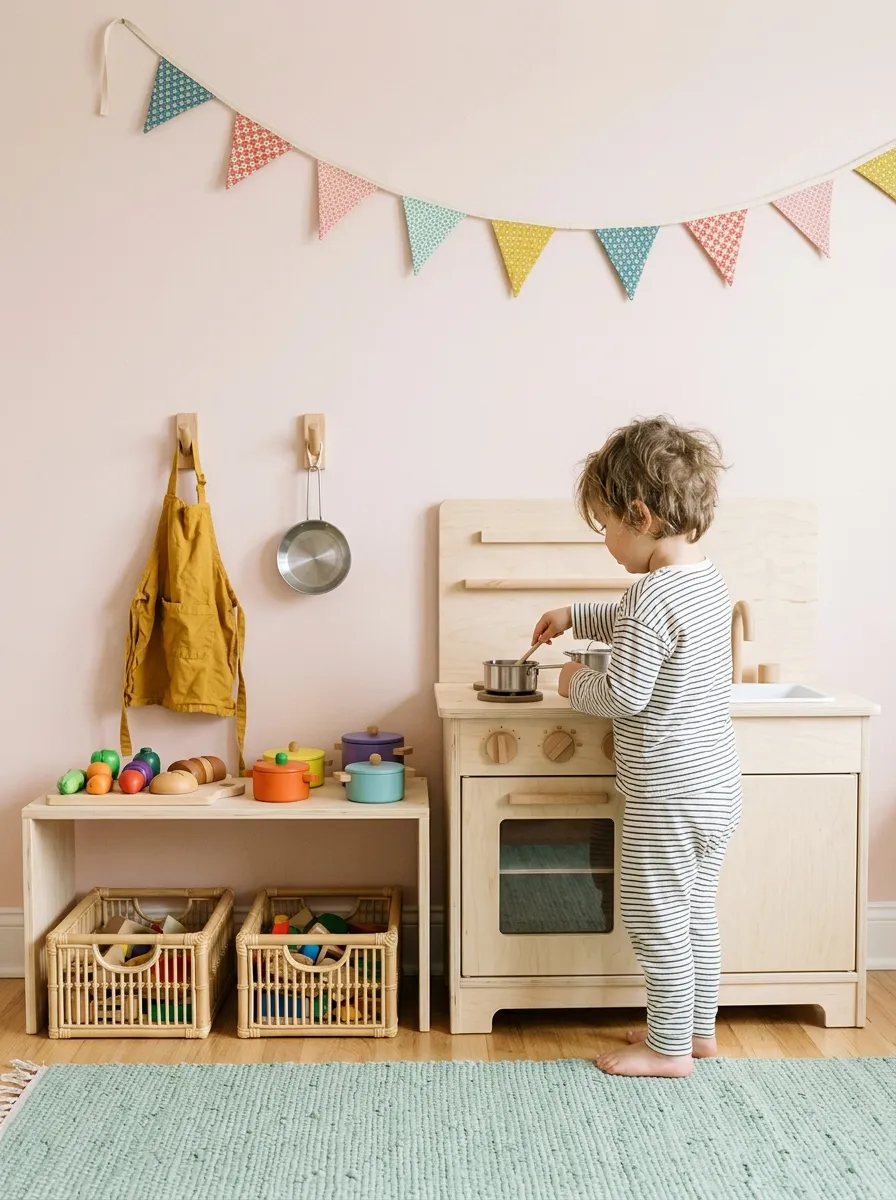
Kitchen play eats floor space fast, so push the whole thing flat against a wall and let it stay there.
A child sized kitchen, a low shelf to its left for pots and pretend food, and two open crates underneath holds the entire activity in about four feet of wall. Nothing needs to come to the middle of the room.
Hang a short rail or two hooks at toddler height for an apron and a pan. Visible, reachable props get used, and a pan on a hook goes back on a hook.
6. Mini Market Counter Next to the Kitchen
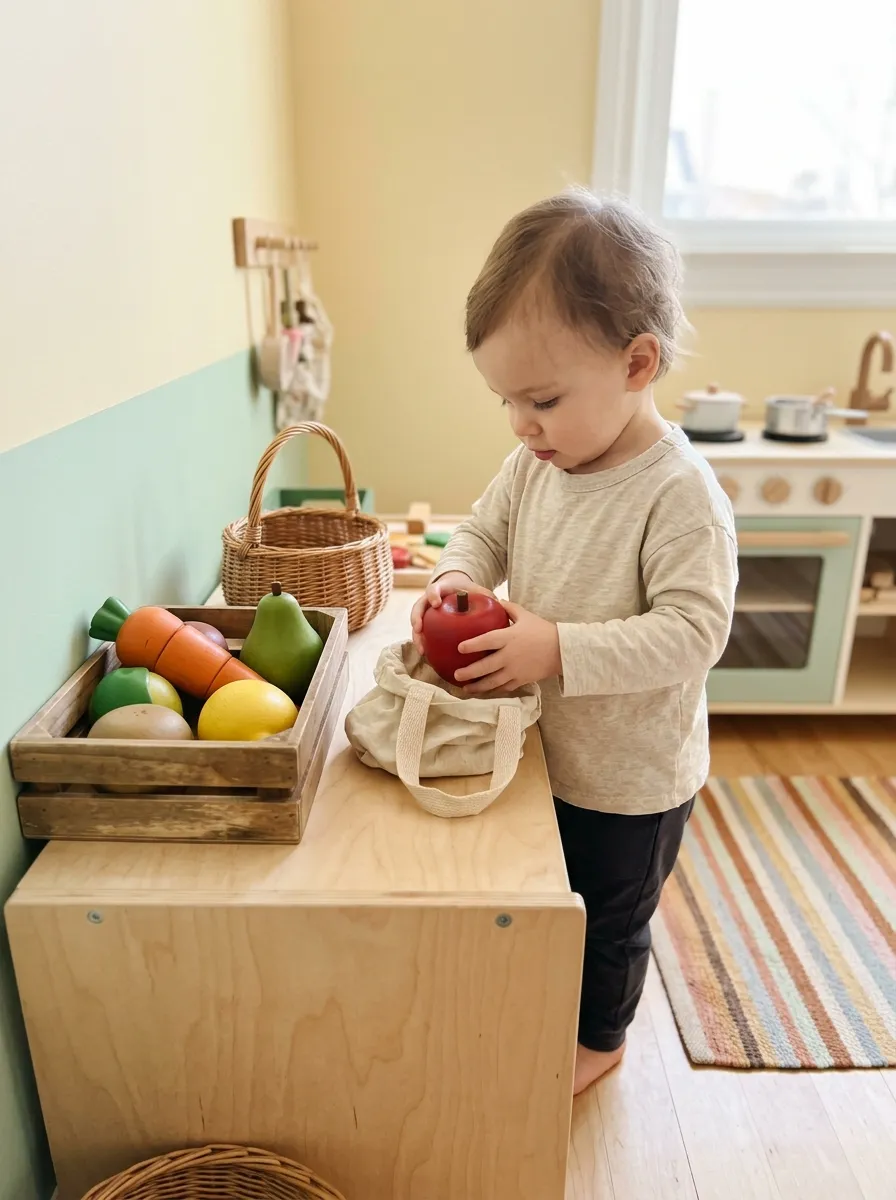
Pairing two pretend setups side by side gives toddlers somewhere to carry things, and carrying is most of what they want to do at this age.
A low counter, a shallow wooden crate of pretend fruit, a basket, and a cloth bag is enough. Keep it at the same height as the kitchen so the two read as one connected area.
Food pieces should be bigger than your toddler’s fist. Chunky wooden produce and fabric items survive this age and stay easy to spot on the floor at pickup time.
7. Block and Train Floor Patch
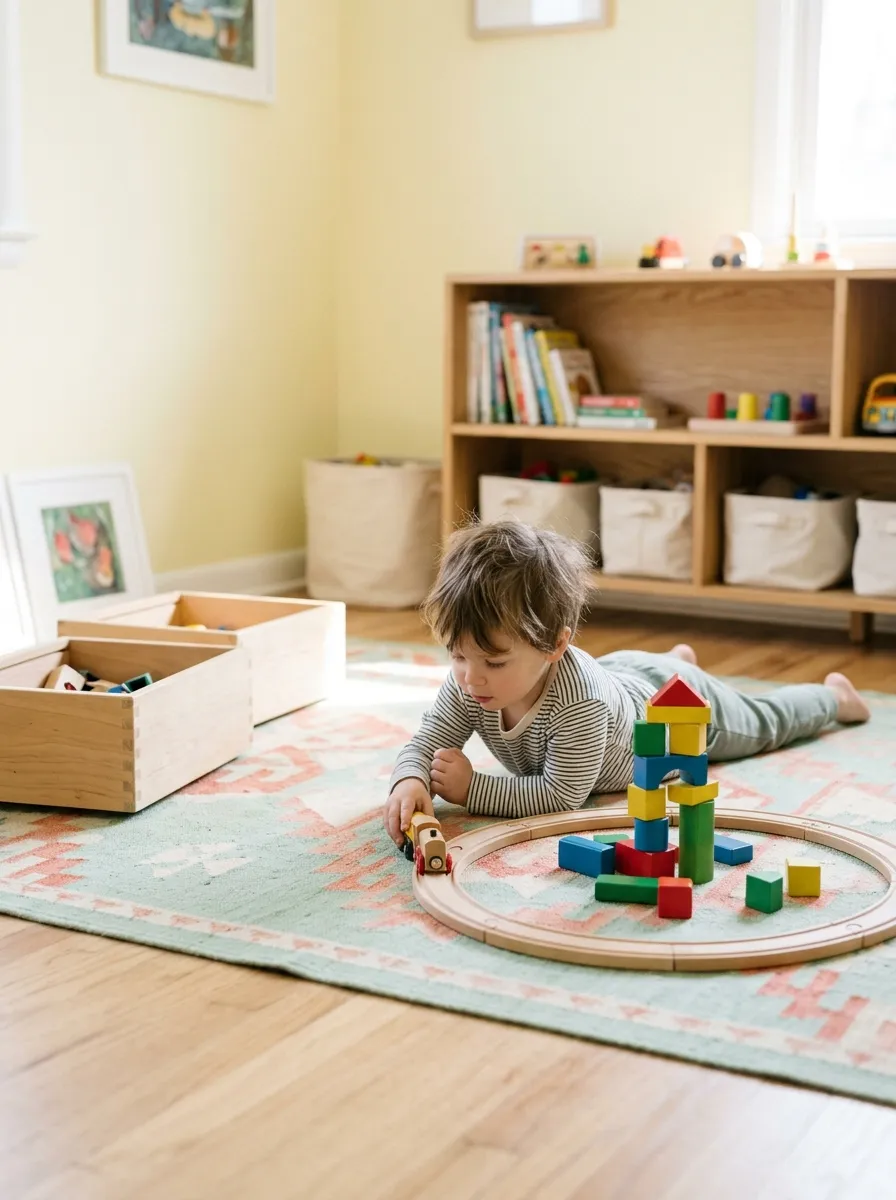
Building needs a flat, bounded patch of floor, and toddlers need the boundary more than the blocks.
Mark out a four by six foot area with one low pile rug and keep the surrounding floor clear. A wooden train loop or a block tower holds together on flat weave and collapses on thick carpet, which is the difference between ten minutes of play and instant frustration.
Store the pieces in two open bins at the edge of the rug. Bins at the boundary teach where the activity starts and stops without a word from you.
Two open bins at the rug edge
Clear floor on at least two sides
Big blocks on the bottom, small on top
One deep toy box they dig through
Building space tight against furniture
Mixing blocks and train track in one bin
8. A Table Sized for Short Legs

Most toddler tables sold as toddler tables are too tall. A two year old at the wrong height leans on their forearms, loses control of the crayon, and walks off in three minutes.
Feet flat on the floor, knees bent at a right angle, elbows just above the tabletop. That usually means a seat around 8 to 10 inches and a table around 16 to 18 inches for ages one to three.
Measure your own child rather than buying by the age printed on the box. Two toddlers the same age can need different chairs.
9. Rotating Discovery Table
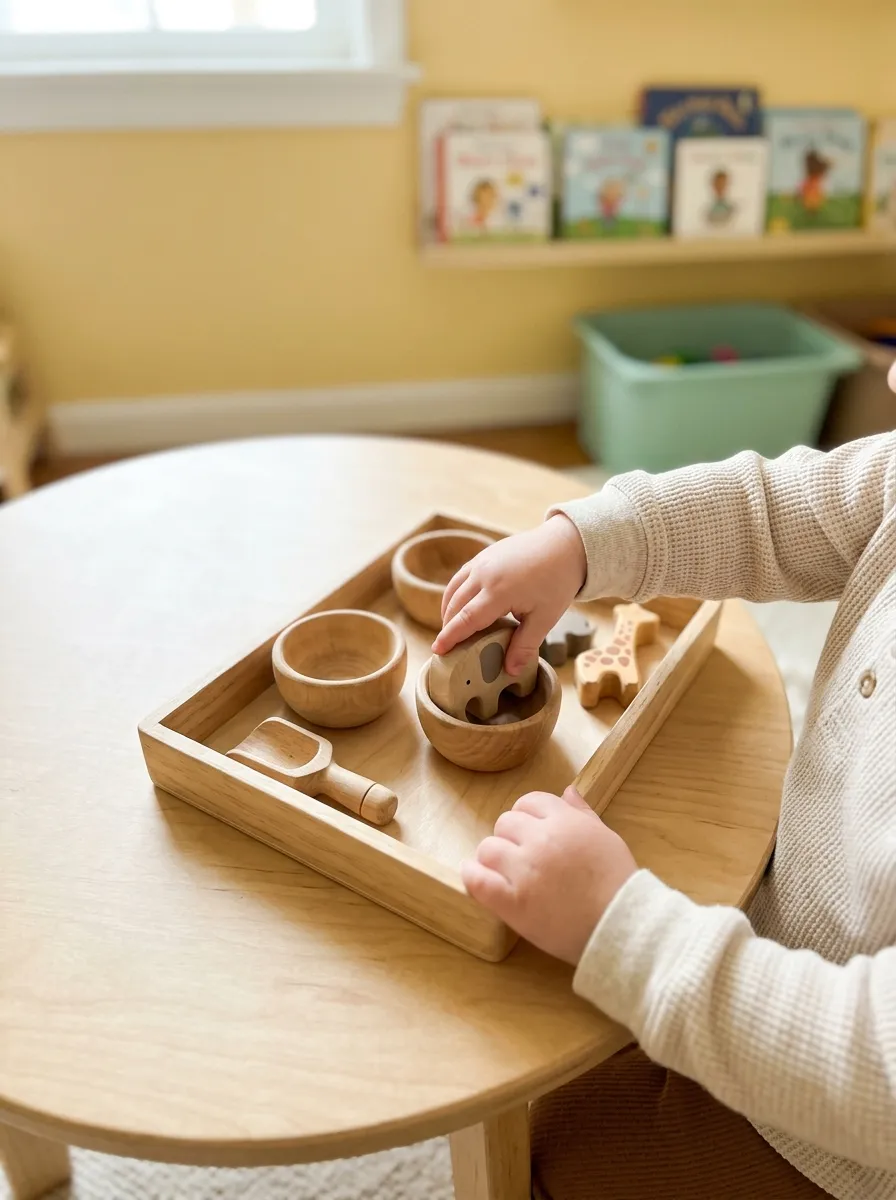
Give one small table a single job: holding whatever your toddler is into this week.
Four or five objects on a tray is the whole setup. Wooden animals one week, shells and a scoop the next, three puzzles after that. When interest drops, the tray gets swapped rather than added to.
Keep the surface almost bare. A toddler scans a table the way they scan a shelf, and four things get picked up while fourteen things get ignored. This pairs well with calm, mess free indoor play when you need twenty quiet minutes.
10. Reading Nook with a Floor Chair
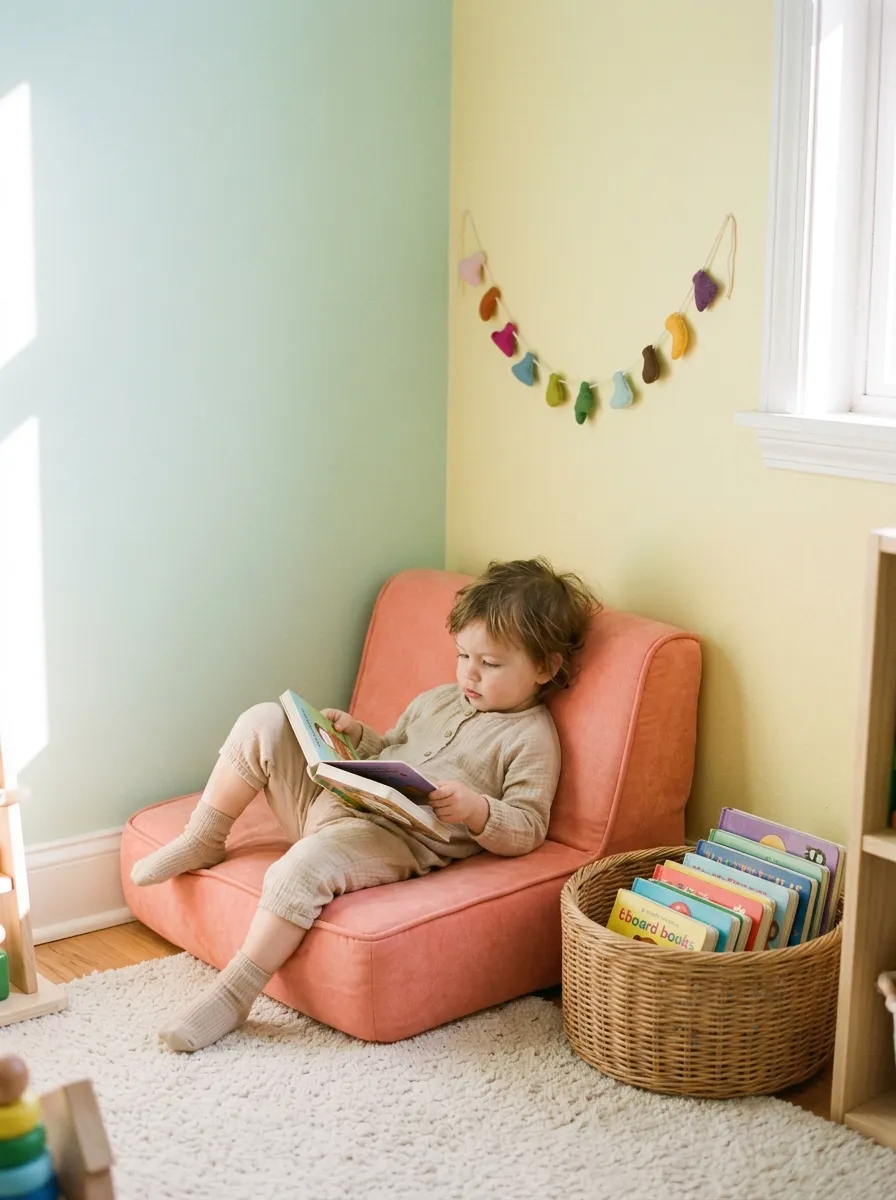
A reading corner for this age sits on the floor. Toddlers do not climb into armchairs, they flop.
One low floor chair or a firm cushion, a basket of eight books beside it, and a wall at your toddler’s back makes the spot feel contained. Corners work better than open walls because two sides of enclosure settle a busy toddler faster than one.
Light matters more than furniture here. A nook under a window gets used, a nook in the dark end of the room becomes storage.
11. Closet Toy Library for the Toys That Aren’t Out
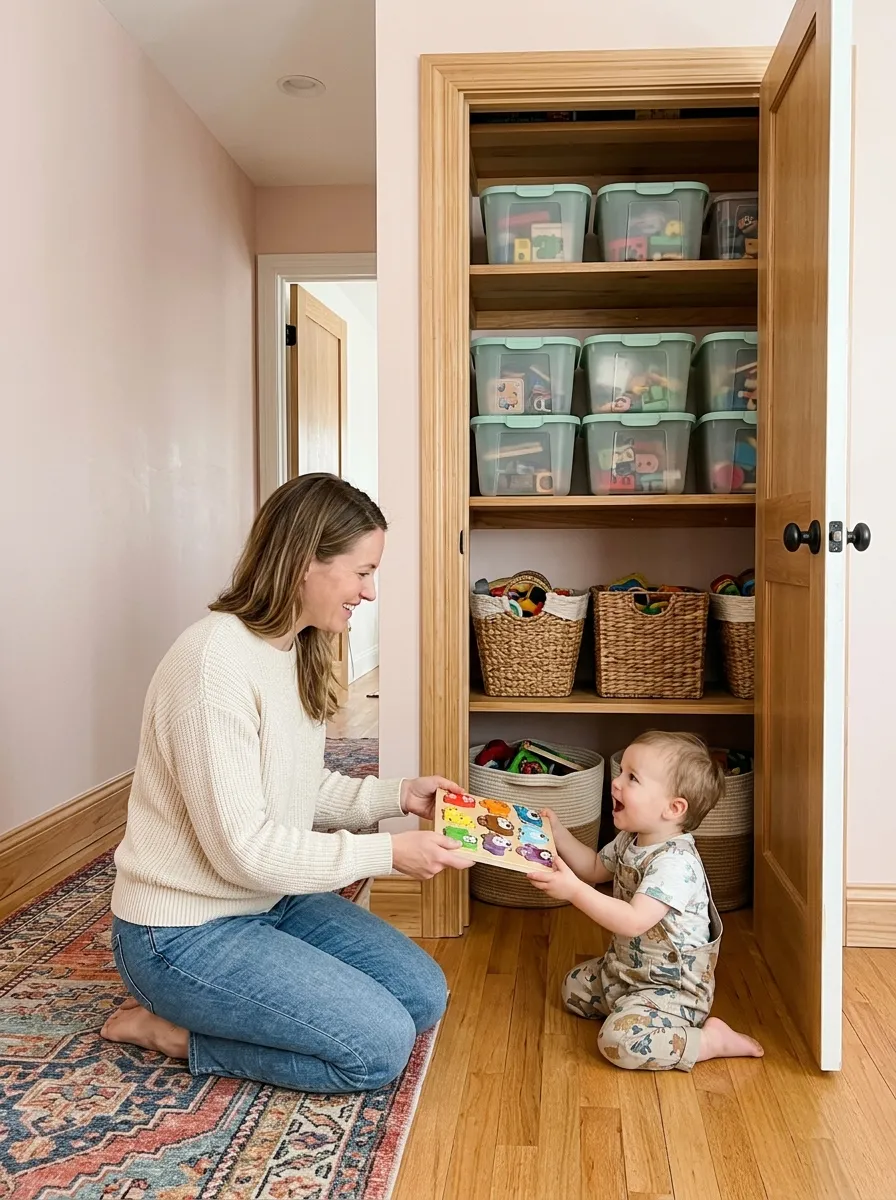
The best looking toddler rooms are not the ones with clever storage. They are the ones where two thirds of the toys live somewhere else.
Claim a closet, a hall cupboard, or three lidded bins on a high shelf. Everything not currently on the open shelf goes there. Then swap four or five items each week.
Fewer choices out does not mean less play. A toddler facing eight visible options plays longer with each one than a toddler facing thirty, and the floor at the end of the day looks completely different.
Nothing feels new
Pickup takes 20 minutes
Shelves refill themselves by noon
Swap day feels like new toys
Pickup takes 5 minutes
Your toddler can tidy some of it
12. Picture-Label Bins for Kids Who Can’t Read Yet
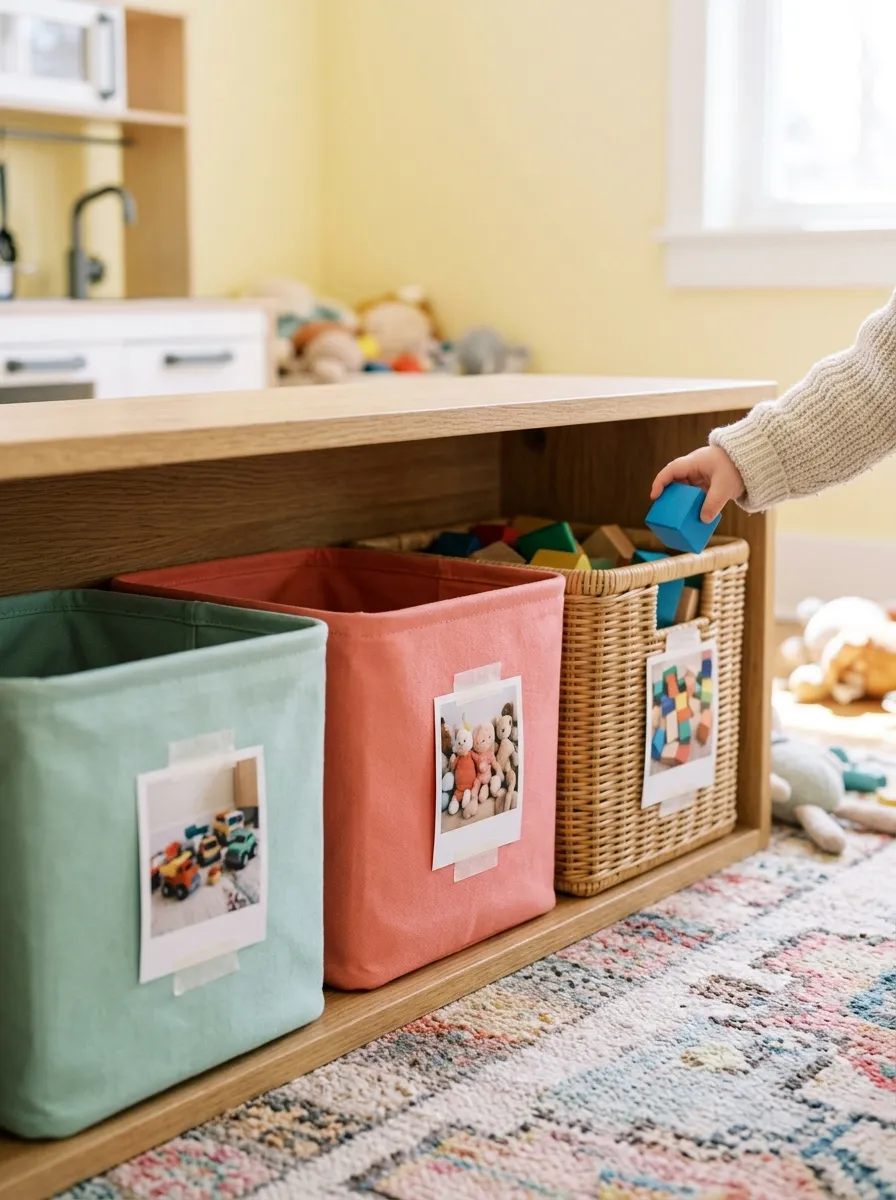
Word labels are for you. A photo of what goes inside is for your toddler.
Snap a picture of each bin’s contents, print it small, and tape it to the front of the bin at your toddler’s eye level. Blocks, cars, animals, one picture each.
Two year olds match pictures to objects well before they match words, so the label turns tidying into a sorting game they can actually win. One bin, one category, one picture.
13. Dump and Fill Station
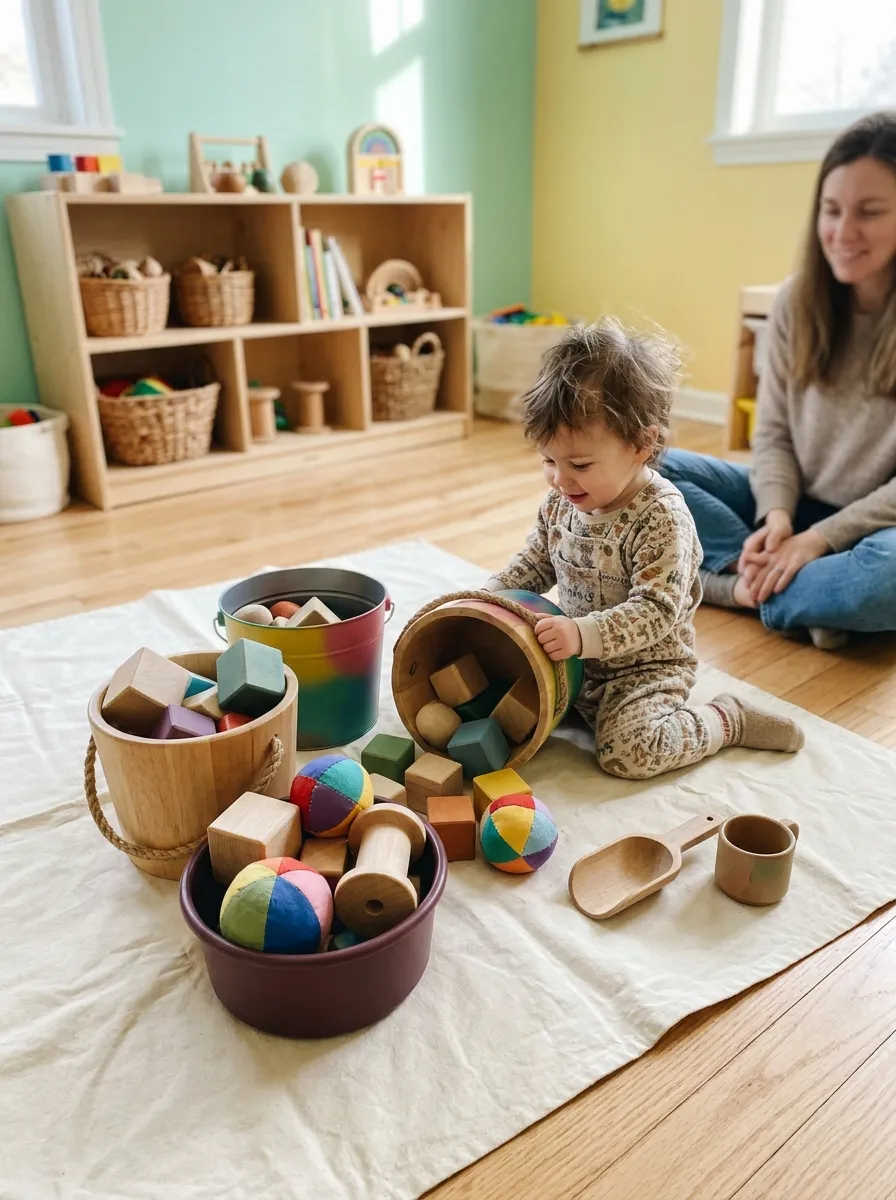
Toddlers empty containers. Build it into the room instead of fighting it.
Two sturdy buckets, one deep tray, a chunky scoop, and a set of objects larger than your toddler’s fist. Wooden blocks, fabric balls, big spools, whatever you already own in quantity.
Set it on hard floor or a washable mat near the shelf wall, low enough to reach while kneeling. Then let the dumping happen. The activity is the pouring back in, which is also where the fine motor practice sits.
14. Push Toy Loop Around the Room

New walkers need a lap to walk. Leave one, deliberately.
Pull the furniture back against the walls so there is a continuous path of at least 24 inches all the way around the play area. A toddler with a push wagon will circle it for twenty minutes, which is real gross motor practice without any setup from you.
Check the loop at floor level for the things that break it: a cable, a basket corner, a door that swings inward.
15. Mirror and Cruising Rail Corner

One unbreakable mirror mounted low changes a corner completely.
Fix a shatter resistant mirror panel from floor level up to about 30 inches, with a smooth wooden rail at roughly 18 inches across it. Pulling up, cruising sideways, and watching themselves do it keeps a 12 to 18 month old busy in a way toys rarely manage.
The corner keeps earning its place later. Two year olds use the mirror for dress up, three year olds for faces and dancing.
16. Height-Split Shared Room with an Older Sibling
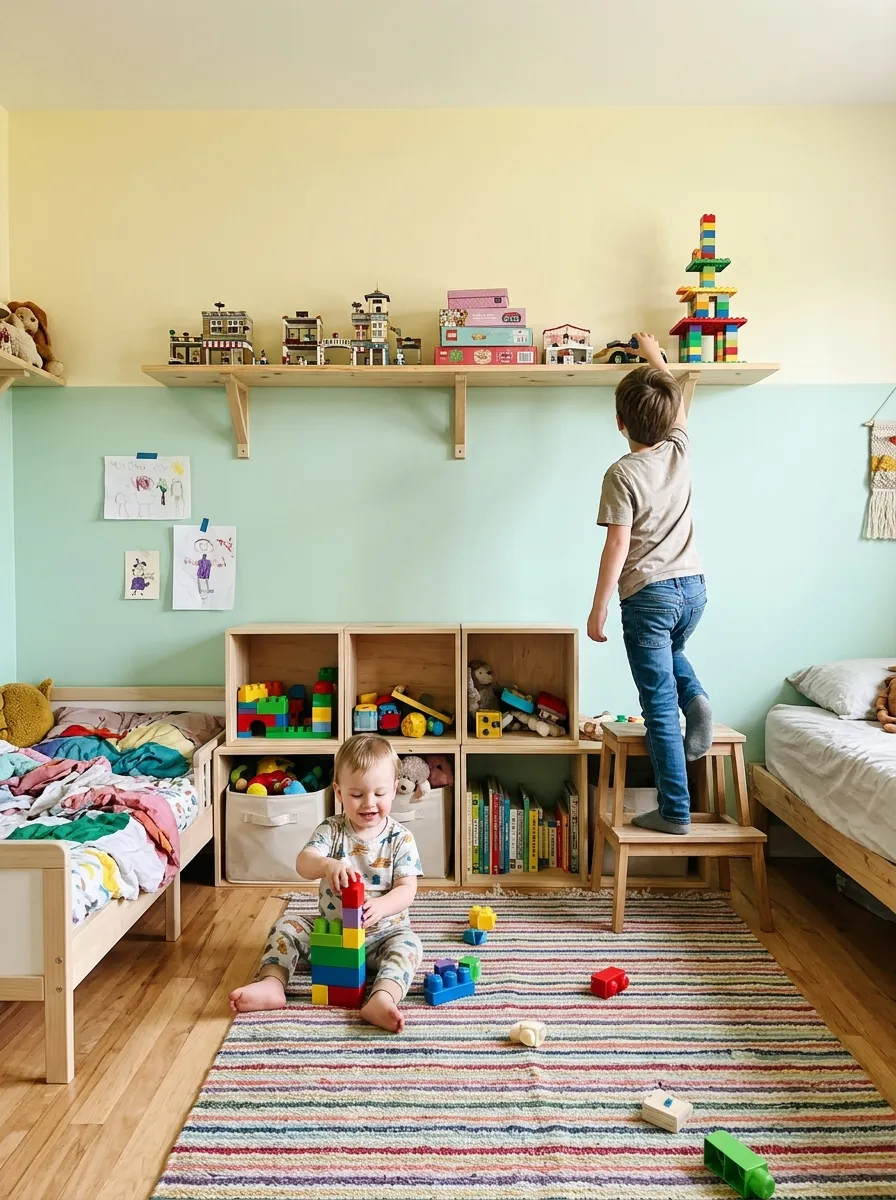
When a toddler shares with a four or five year old, split the room by height rather than by side.
Everything below 30 inches belongs to the toddler: open bins, board books, big blocks. Everything above belongs to the older child, including the small pieces, the craft supplies, and the builds they do not want knocked down.
Give the older sibling one high shelf they can reach and the toddler cannot. That single shelf prevents more conflict than any floor divider.
17. Nap and Play Corner in the Bedroom
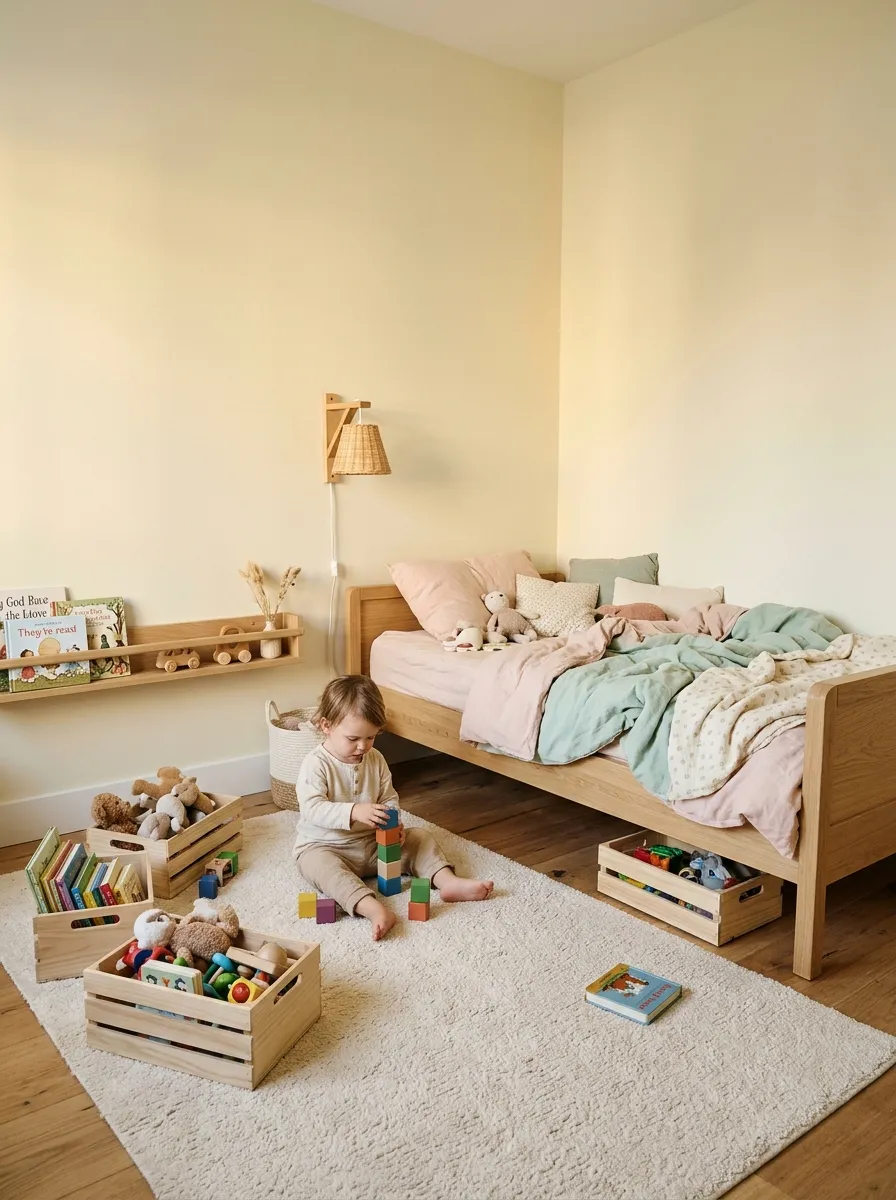
No spare room? The bedroom does both jobs, as long as play packs down before sleep.
Keep one low shelf and a soft rug on the wall opposite the bed, and use shallow crates that slide under the bed frame at night. Three crates hold a surprising amount and clear the floor in about two minutes.
Keep the area beside the bed calm: books, soft toys, nothing that invites running. The active things go on the far side.
Low shelf fronts clear
Floor open for blocks
Books by the bed
Rug clear end to end
Two soft toys stay out
Two minute reset
18. Daylight Play Spot by the Window

Light is a design decision, and in a toddler room it decides where play happens.
Put the activity that needs the most attention in the brightest spot: the table, the book ledge, or the discovery tray. Keep the storage and the climbing against the darker walls.
Watch where your toddler already sits in the late morning. Most of them pick the sunny patch on the floor without being told, and building the setup around that spot beats moving them to a corner you prefer.
19. Wall-Mounted Busy Panel

Vertical play costs no floor space, which makes it the most efficient thing you can add to a small toddler room.
Mount a plywood panel at 20 to 34 inches and fix on a few real mechanisms: a door latch, a light switch, a zipper strip, a wheel. Keep it to five or six items so each one gets found.
Choose the pieces by what your toddler already does to your house. A child who opens every cupboard wants latches, not beads.
Door latches, a hinged flap, a bolt
Light switch, dimmer dial, doorbell
Zipper strip, buckle, large snaps
Wheel, tap handle, rotating disc
20. Rug Lines Instead of Room Dividers
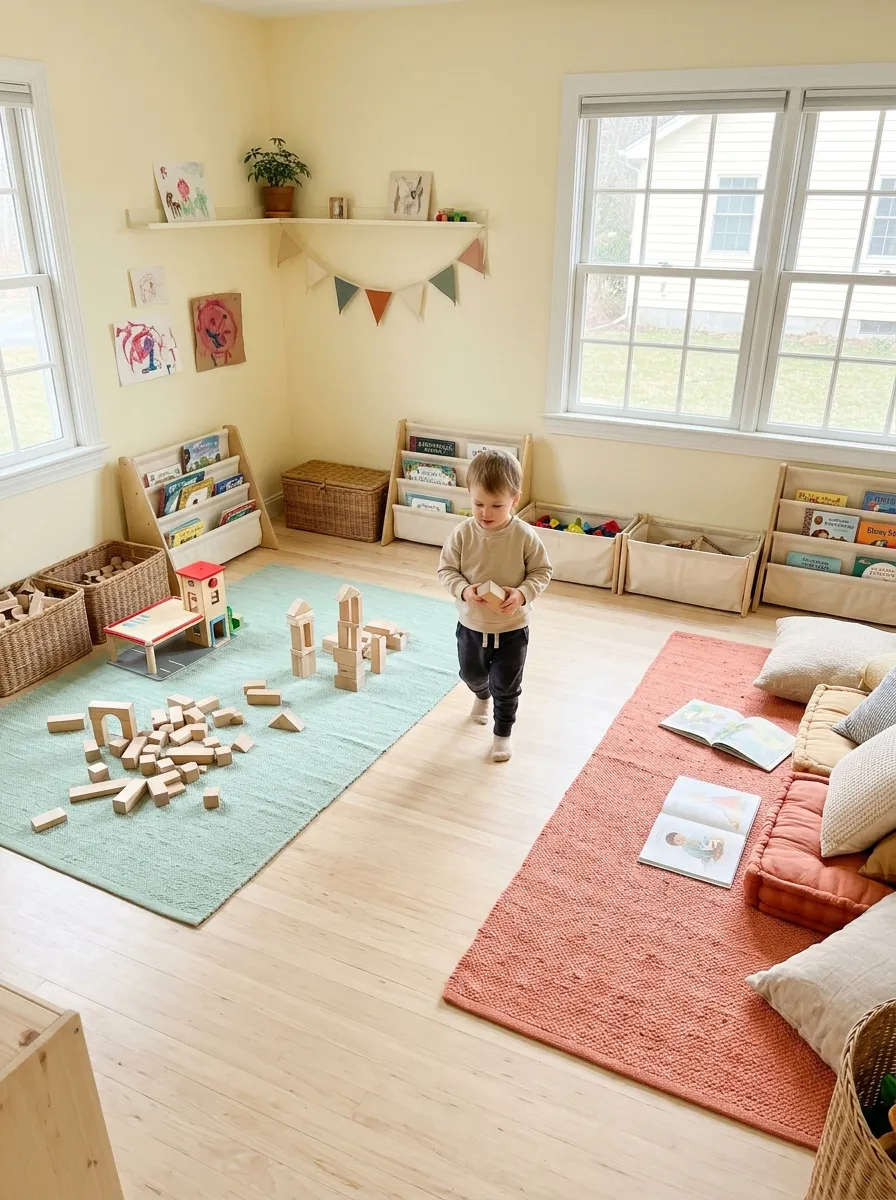
Toddlers read floor changes as boundaries, so rugs can zone a room that is too small for furniture dividers.
One rug under the build patch, a second under the reading nook, bare floor for the loop between them. No shelf backs sticking into the room, no sight lines broken, and the whole layout stays visible from the doorway.
Two rugs is usually the limit in a toddler sized space. Three starts to feel like obstacles. Your small playroom ideas post goes deeper on reclaiming floor space.
21. The Empty Middle

The most useful square footage in a toddler playroom holds nothing at all.
Push every piece of furniture to the walls and protect the center. Toddlers use open floor constantly: spreading pieces out, carrying things across, lying down with a book, pushing a wagon, dumping a bucket and starting again.
If you only change one thing from this list, clear the middle. A nearly empty center with low storage around the edges handles ages one to three better than any clever furniture, and it costs nothing. Short on space altogether? These living room and playroom combo setups pack down by dinner.
Nothing in the middle.
A Simple Place to Start
Pick three from this list, not twenty one. A low shelf with eight trays out, a clear middle, and a book ledge by the window will carry a one to three year old for months.
Then watch where your toddler goes on their own for a week. The spots they choose tell you what to build next, and the ideas you skipped will still be here.
Most of these toddler playroom ideas cost an afternoon and a tape measure rather than new furniture.
📌 Save this to your playroom board for the next time you are standing in that room wondering where to start.