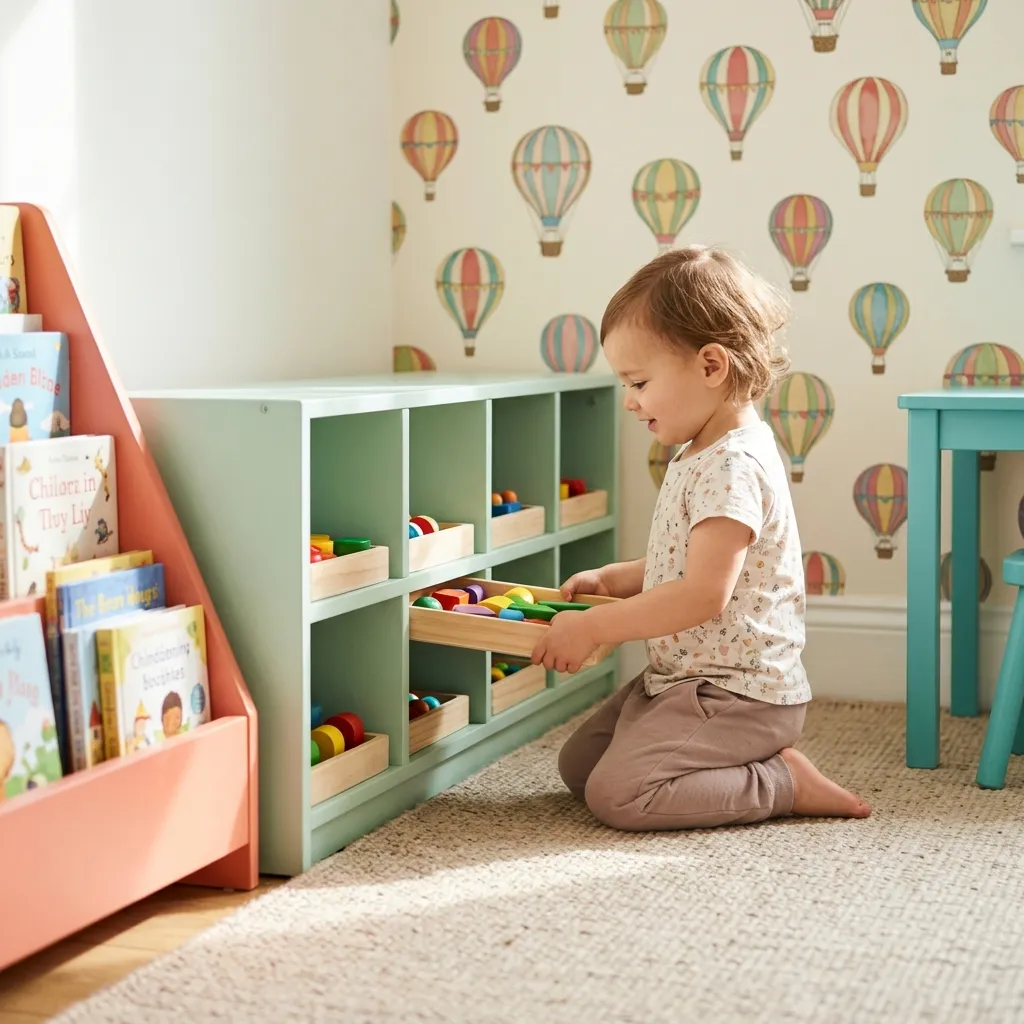
The first playroom I set up for my own kids had more toys in it than they ever touched. I kept buying, they kept drifting back to the kitchen drawer. What finally changed things was not another basket. It was moving everything down to their height and taking two thirds of it away.
That is the whole idea behind these Montessori playroom ideas. Not a shopping list and not a color scheme, but a room arranged so a four-year-old can pick her own work and a 15-month-old can reach his own book.
Before you buy anything, run your room past three questions:
- Can they see it? Toys in a deep bin do not exist.
- Can they reach it? If you have to hand it down, it is your activity, not theirs.
- Can they put it back? One activity per tray, one obvious home.
Everything below is a finished setup you can copy, with ages, and with the part most inspiration posts skip: what actually goes on the shelf, and how to keep it from silting up again by March. If you want the wider zone plan, the four-zone layout, the age-by-age chooser and the room safety walk all live in our kids playroom ideas guide.
Table of Contents
1. One Low Open Shelf With Six to Eight Trays
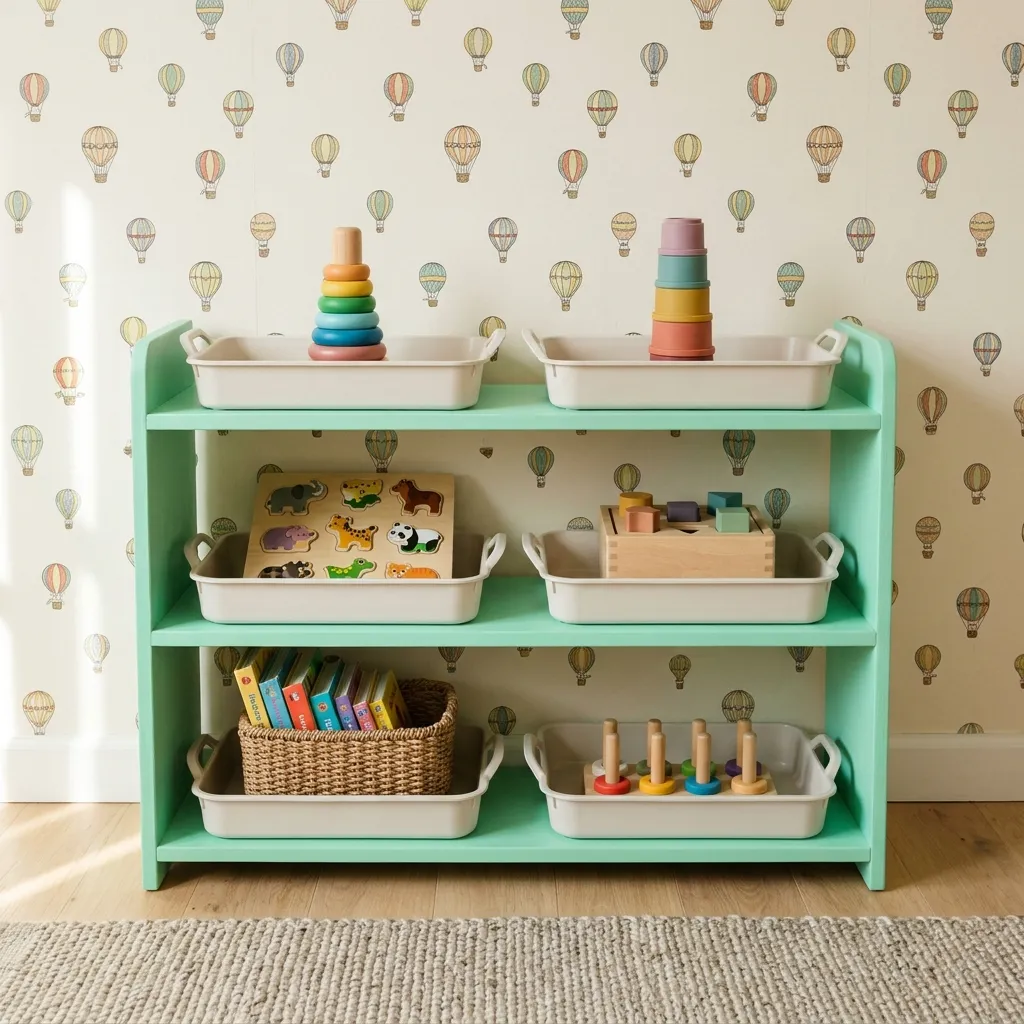
This is the piece everything else hangs off. A two or three tier shelf, no taller than your child’s shoulder, with each activity on its own tray or in its own shallow basket, spaced out so there is empty wood showing between them.
The empty space is the design. A crammed shelf reads as a pile, and a pile gets ignored.
Most parents I talk to buy the shelf and then stall, because nobody tells them what to put on it. Here is the part that was missing.
2. A Front-Facing Book Display With Only Six Books Out
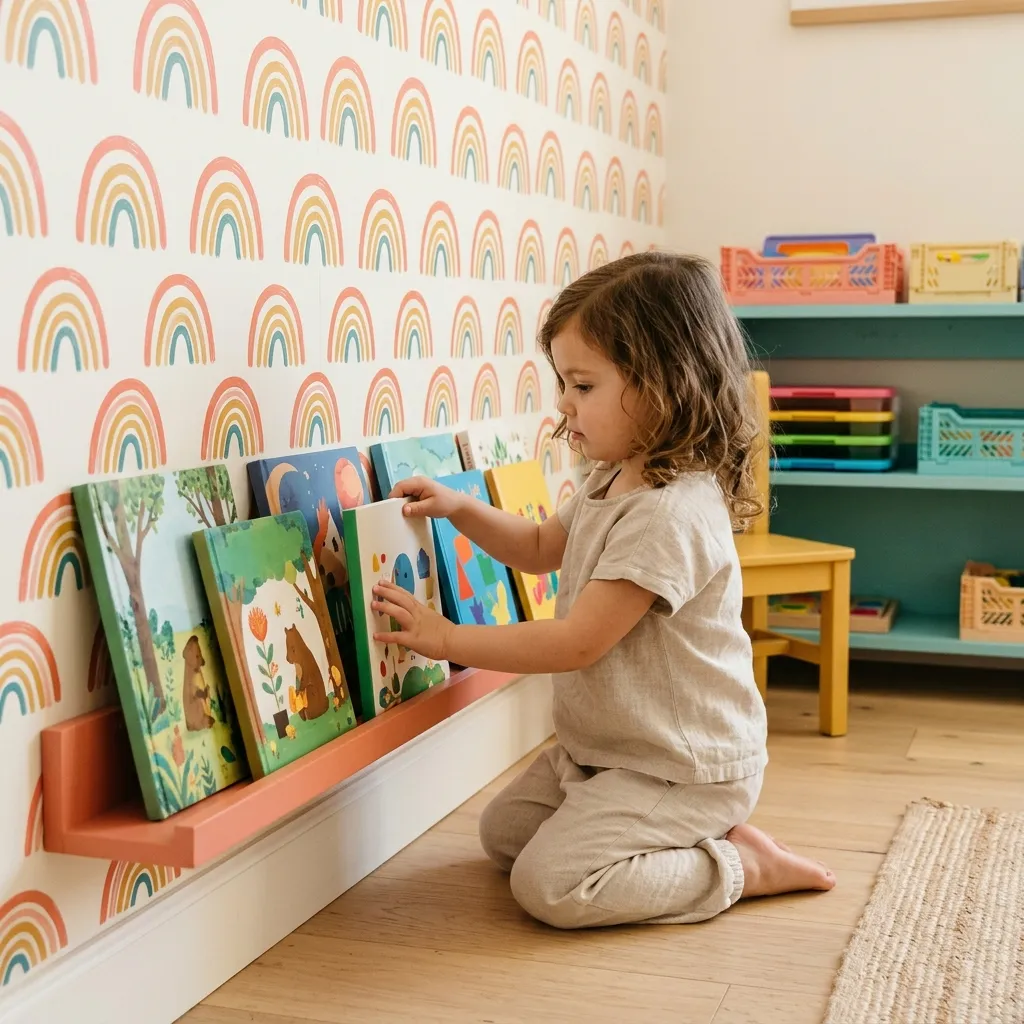
Spines mean nothing to a child who cannot read yet. Turn the covers out and borrowing becomes possible.
A narrow picture ledge at knee height does this as well as any dedicated bookcase. Six titles facing forward, the rest stored elsewhere and swapped weekly.
3. An Open Work Rug In the Middle of the Room
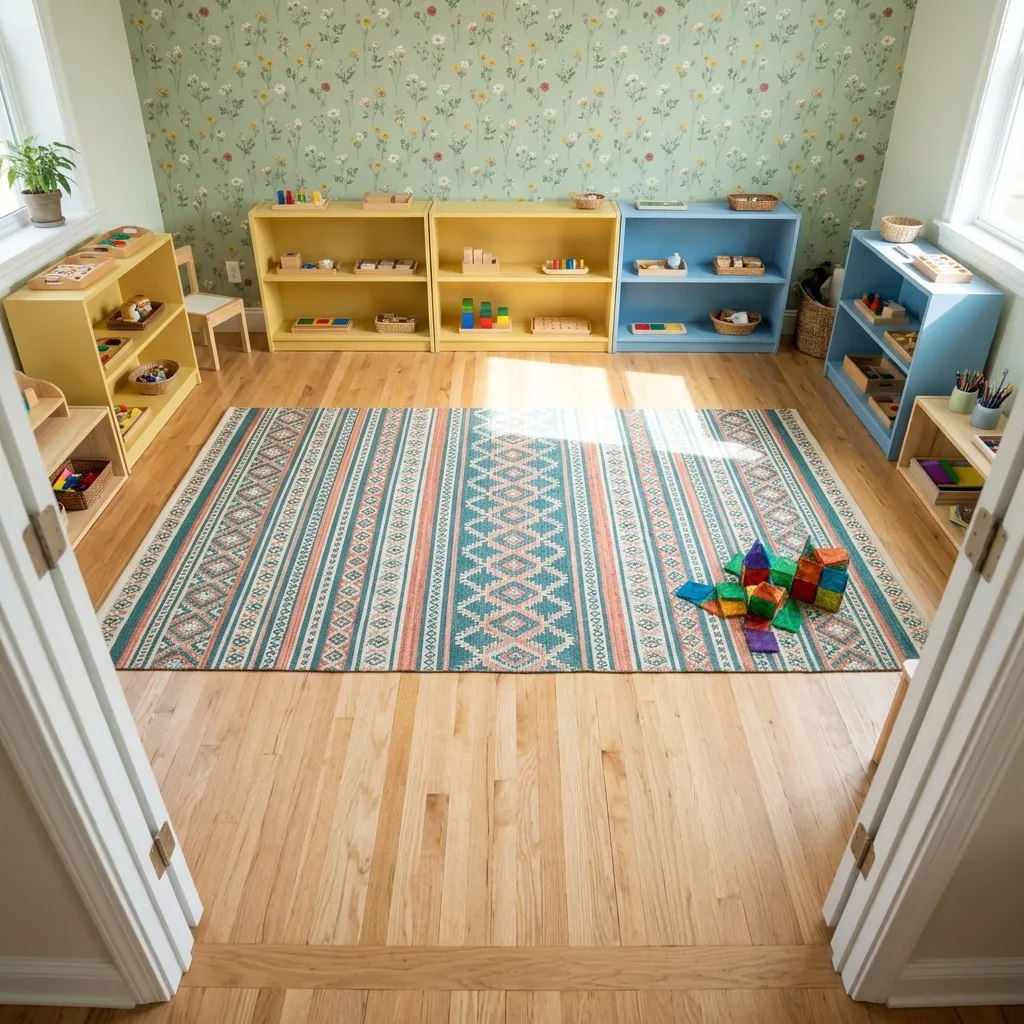
Push the storage to the walls and leave the center empty. That bare middle is where block towers get built, where a puzzle gets spread out, and where a toddler practices walking without weaving around furniture.
A flat low-pile rug marks the area without adding bulk. Avoid thick shag, which makes building wobbly and small pieces disappear.
4. An Art Station Your Child Can Open Alone

Mount a small easel or a roll of paper at their height, and put the supplies beside it in open containers rather than a lidded caddy. Crayons in one jar, brushes in another, a stack of paper they can pull from.
The test is whether drawing can start without a conversation. If they need you to open, reach, or decide, it will not happen on a Tuesday afternoon.
☐ Two open jars, not a closed pencil case
☐ Paper stack in a shallow tray they can lift
☐ One washable cloth hung on a hook
☐ A small bin for finished work so it leaves the table
5. A Practical Life Corner With Real, Child-Sized Tools

This is the most Montessori thing in the room and the cheapest. A small broom and dustpan on a low hook, a spray bottle of water, a stack of cloths, a dustpan brush. Children who are handed real work tend to do it.
Scale the job to the age and it stays interesting rather than becoming a chore.
6. A Snack and Water Station They Serve Themselves
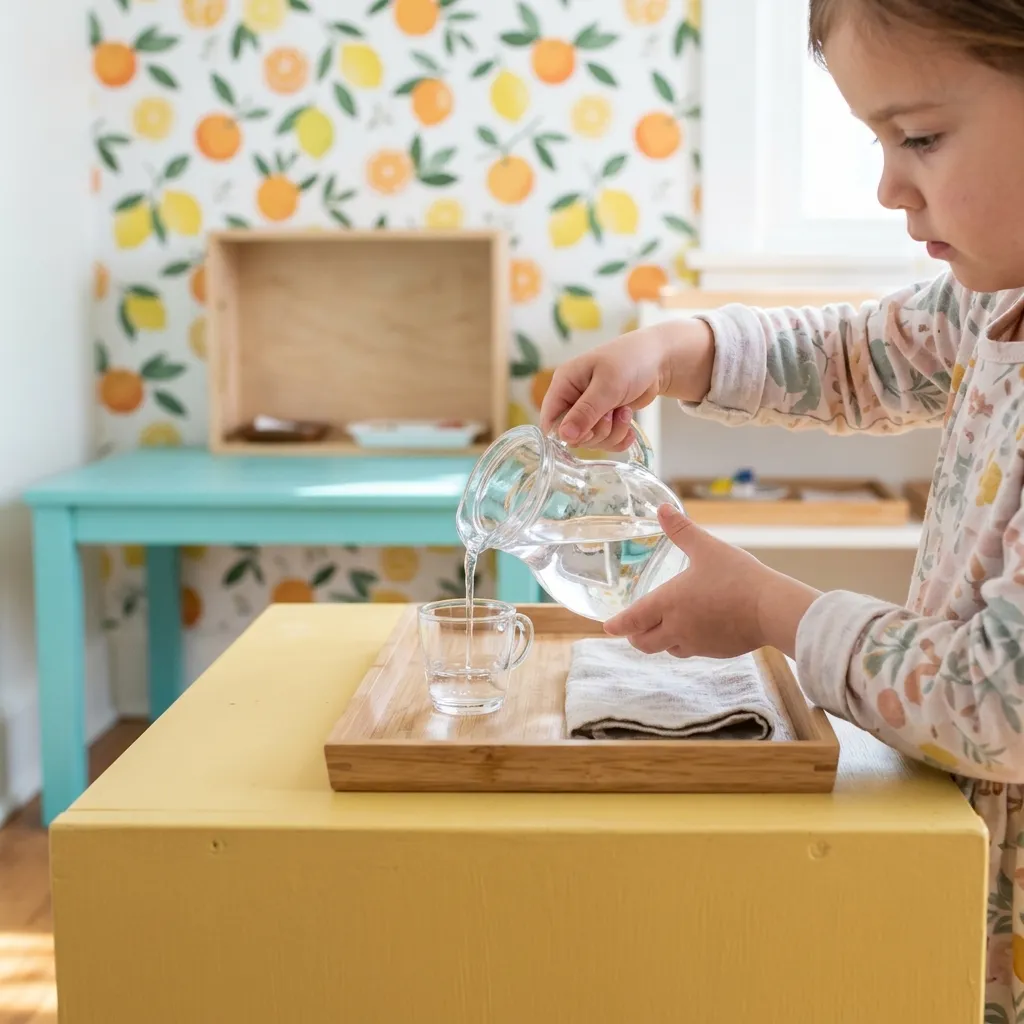
A tray on a low surface holds a small pitcher, one glass, and a napkin. Half-fill the pitcher and spills stay survivable.
It sounds like a kitchen idea, but putting it in the playroom buys you something specific: play does not have to stop, and you do not have to get up.
One glass, not a stack
A cloth within reach for spills
Dry snack in a covered bowl
Lidded cups that need you
Anything sticky near the rug
Refilling it for them
7. A Self-Dressing Corner By the Door

Two hooks at their height, a low basket for shoes, and a mirror they can actually see themselves in. That is a getting-ready station, and it turns the morning from a wrestling match into a sequence they know.
Leave one empty hook. Children hang things where there is room, not where the label is.
8. A Low Mirror With a Movement Bar

For babies and new walkers, a horizontal mirror mounted low along the wall with a wooden bar in front of it is the single most used thing in the room. Babies watch themselves roll. New walkers pull up and cruise.
Fix it flat to the wall rather than leaning it, and use shatter-resistant acrylic if you would rather not think about it.
1 to 2: a bar to pull up on and cruise along, right where the mat is.
3 to 6: dancing, dress-up checks, and stretching. It keeps being used, which is rare.
9. A Climbing Nook In the Corner, Not the Middle
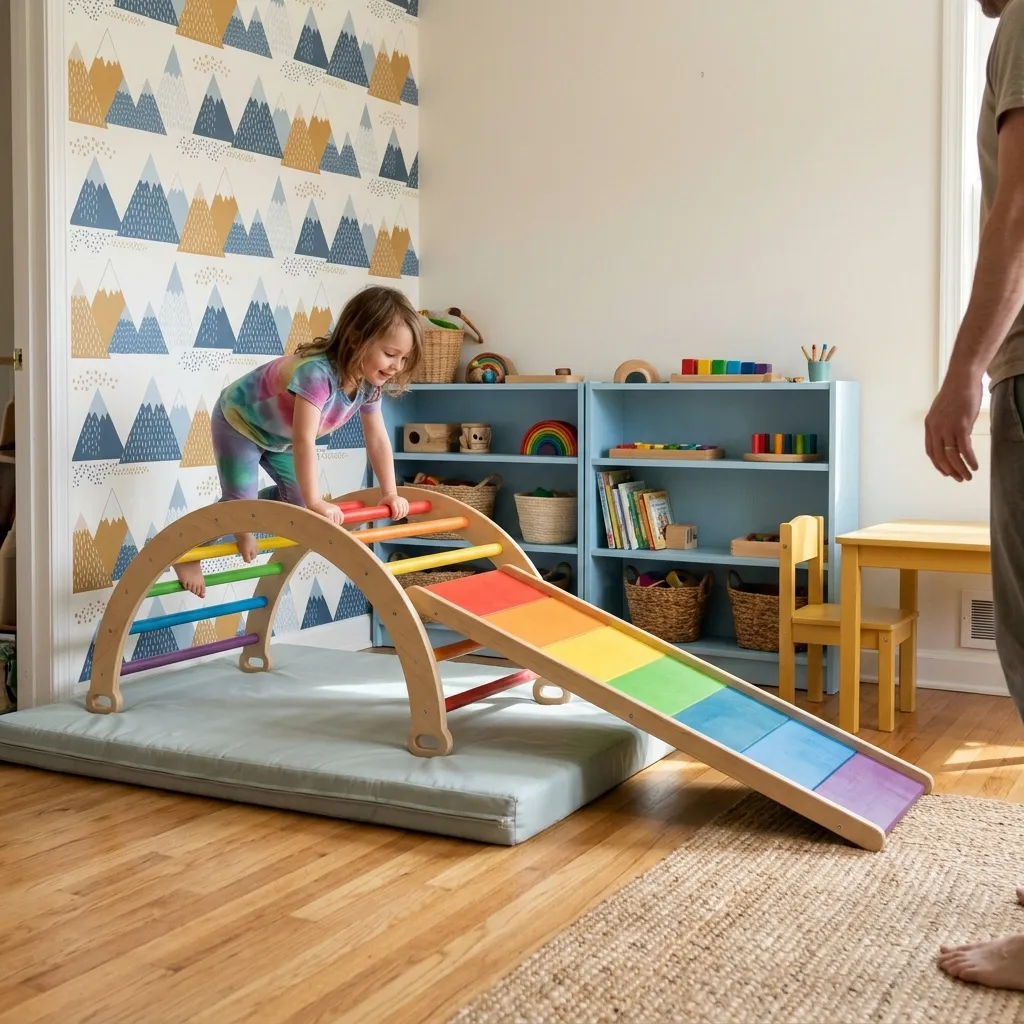
One climbing piece over a padded mat, tucked into a corner so the open floor stays open. A folding arch or a small ramp does more than a bulky frame, because it can be put away and because it changes with age.
Match the piece to what your child is working on right now, not to what looks best in photos.
10. A Cozy Retreat With a Floor Cushion and One Basket

Every busy room needs a place to stop. A floor cushion, a sheepskin or soft throw, and a single basket holding two or three quiet things. No shelf, no choices, nothing to tidy.
Tuck it where the room is calmest, which usually means away from the door and out of the main path.
11. A Rotation Closet, the Part Nobody Shows You

Here is the gap in almost every playroom post. A minimal shelf only stays minimal if the other toys live somewhere. Give them a closet shelf, a cupboard, or three labeled bins on top of a wardrobe, out of sight and out of reach.
Then run it on a schedule instead of a whim, because a whim turns into never.
12. One Activity Per Container, Every Time
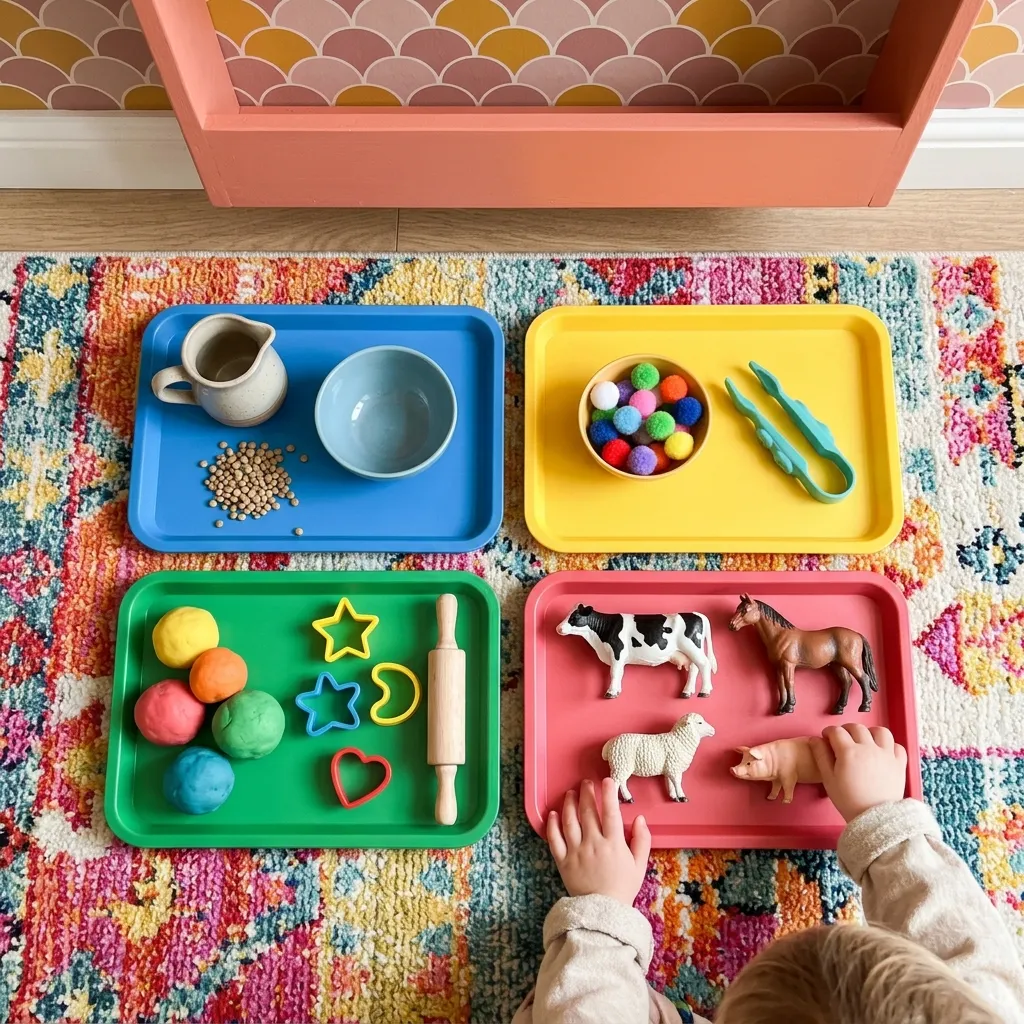
A tray with four things on it is one activity. A box with four activities in it is a mess waiting to happen. This single rule does more for tidiness than any storage purchase.
Choose the container by what it has to hold, not by what matches.
| Container | Best for | Why |
|---|---|---|
| Flat wooden tray | Pouring, sorting, play dough | Marks a workspace and carries to the table |
| Shallow basket | Figures, blocks, cars | Everything visible at a glance |
| Small lidded jar | Beads, buttons, loose parts for ages 4 plus | Opening it is part of the work |
| Deep toy box | Nothing on the open shelf | Hides contents and invites dumping |
13. A Table and Chair Sized to the Child, Not the Room

Feet flat on the floor, elbows resting comfortably on the table top. Get that right and a four-year-old will sit for twenty minutes. Get it wrong and nothing on the table matters.
Measure before you buy. Most family dining chairs are far too tall, and a booster seat is not the same thing.
14. A Sensory Table On a Washable Mat
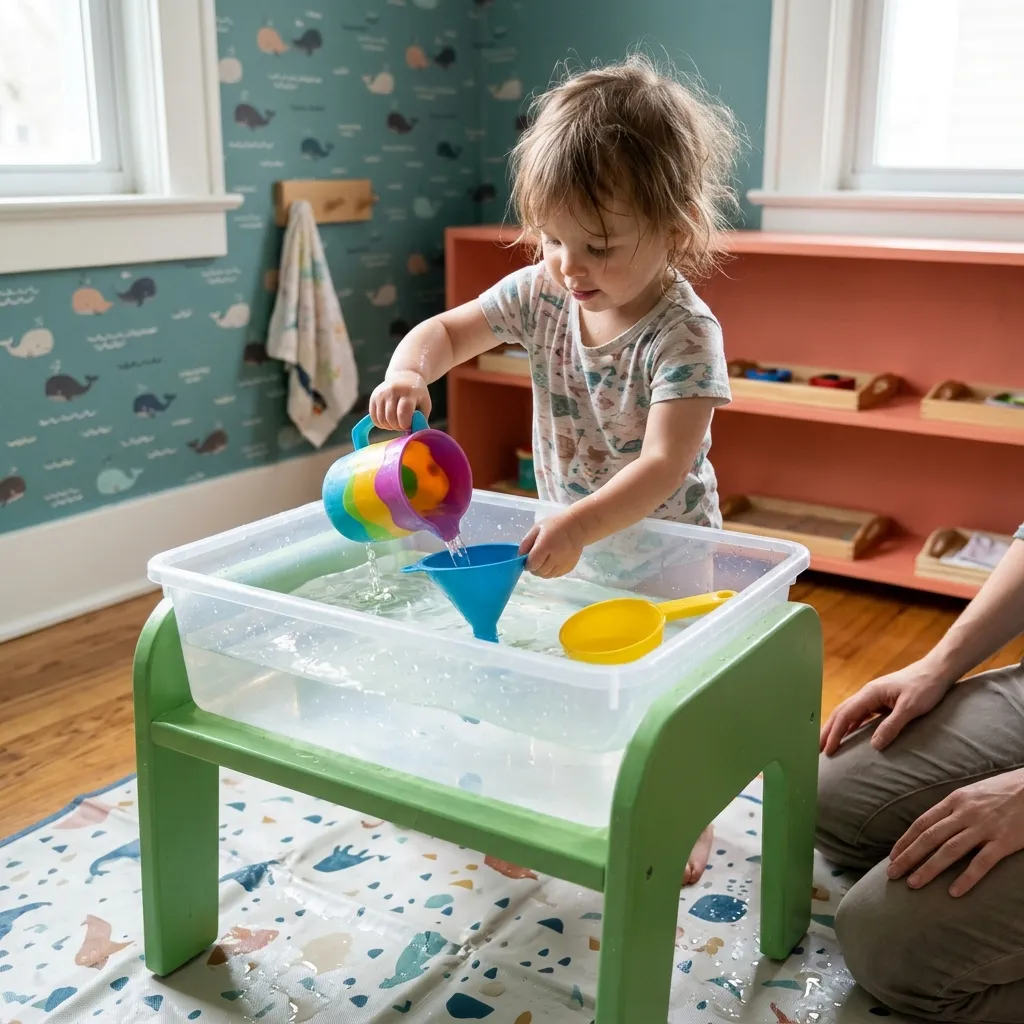
A shallow bin on a low stand, filled with one material at a time, standing on a wipeable mat or an old towel. Water one week, dry pasta the next, nothing at all when you need a break.
Keeping it to a single material is what stops it turning into a soup nobody wants to clean.
Harder: add a funnel, a jug to fill to a line, or two containers to transfer between.
Lower mess: move it to the bathroom floor and fill the bin only an inch deep.
15. A Nature and Discovery Shelf That Changes With the Season
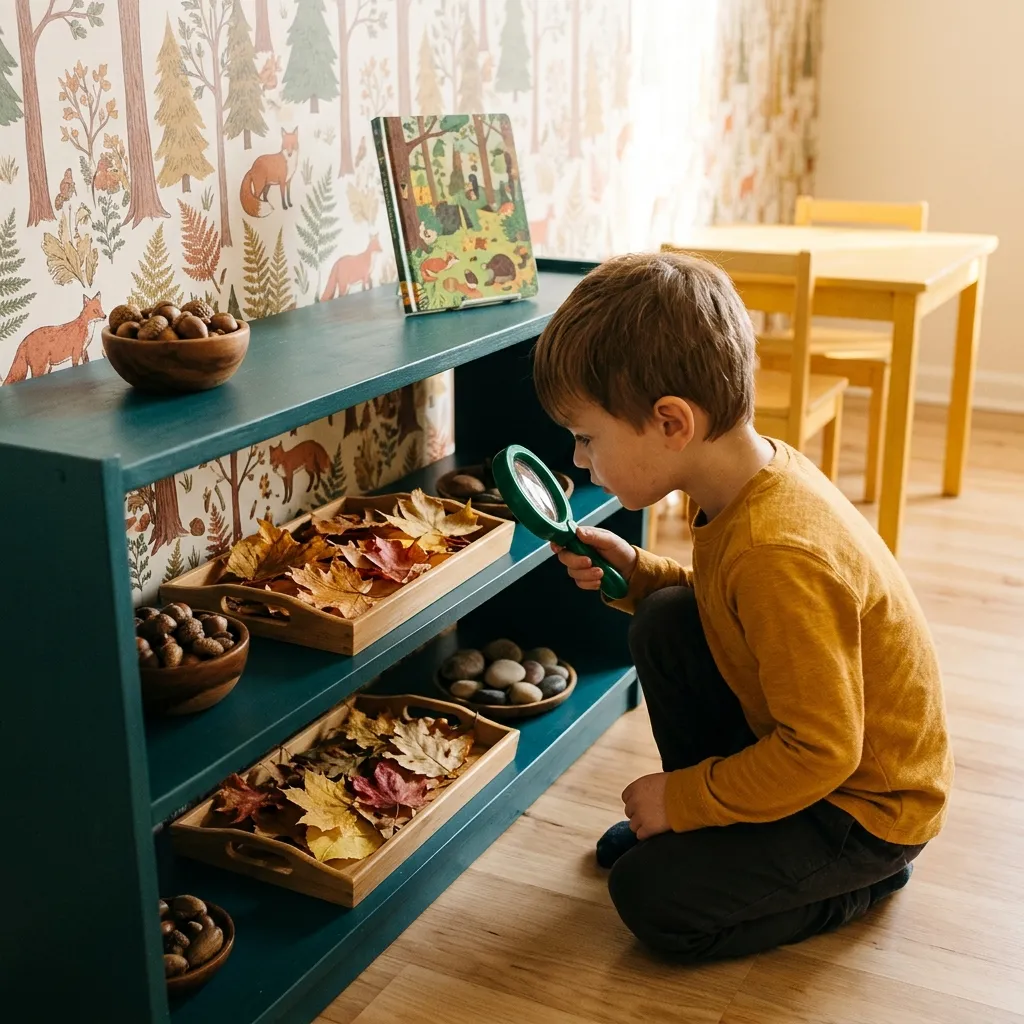
A single low shelf holding whatever came back from the last walk. Pine cones in a bowl, a magnifying glass, a few shells, one nature book facing out. It costs nothing and it keeps renewing itself.
Swap the contents when the season turns and the shelf never goes stale.
16. A Play Kitchen Nook At Counter Height
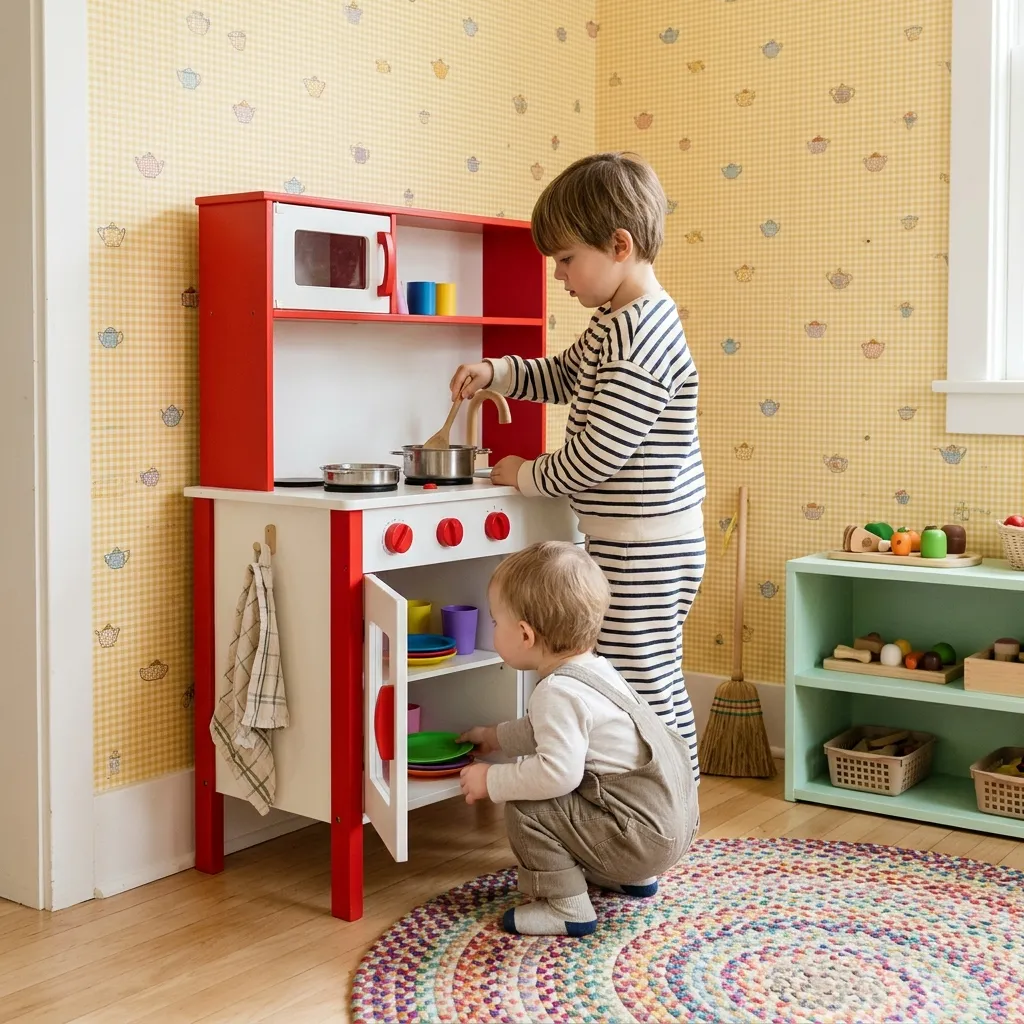
Set the kitchen against a wall with a small rug in front and the dishes stored in it rather than beside it. A nook reads as a place to go, where the same kitchen floating mid-room reads as furniture.
Stock it thinly. Two plates and two cups get used. Twenty pieces get dumped.
☐ One small pot with a lid
☐ A real wooden spoon from your drawer
☐ 5 or 6 pieces of pretend food, in a basket
☐ One cloth on a hook for wiping down
17. A Dress-Up Rail At Child Height

Swap the costume bin for a low rod with six hangers. Capes hang, they stay findable, and the whole thing stops being a heap your child digs through and abandons.
A tension rod inside a cupboard or a short length of pipe on two brackets does the job for very little.
Child tips it out to find one cape
Tidying means stuffing it back
Half the pieces are forgotten
Child takes one, wears one
Tidying is hanging it back up
Hats and bags go in one basket below
18. A Music Corner With Instruments Out In the Open
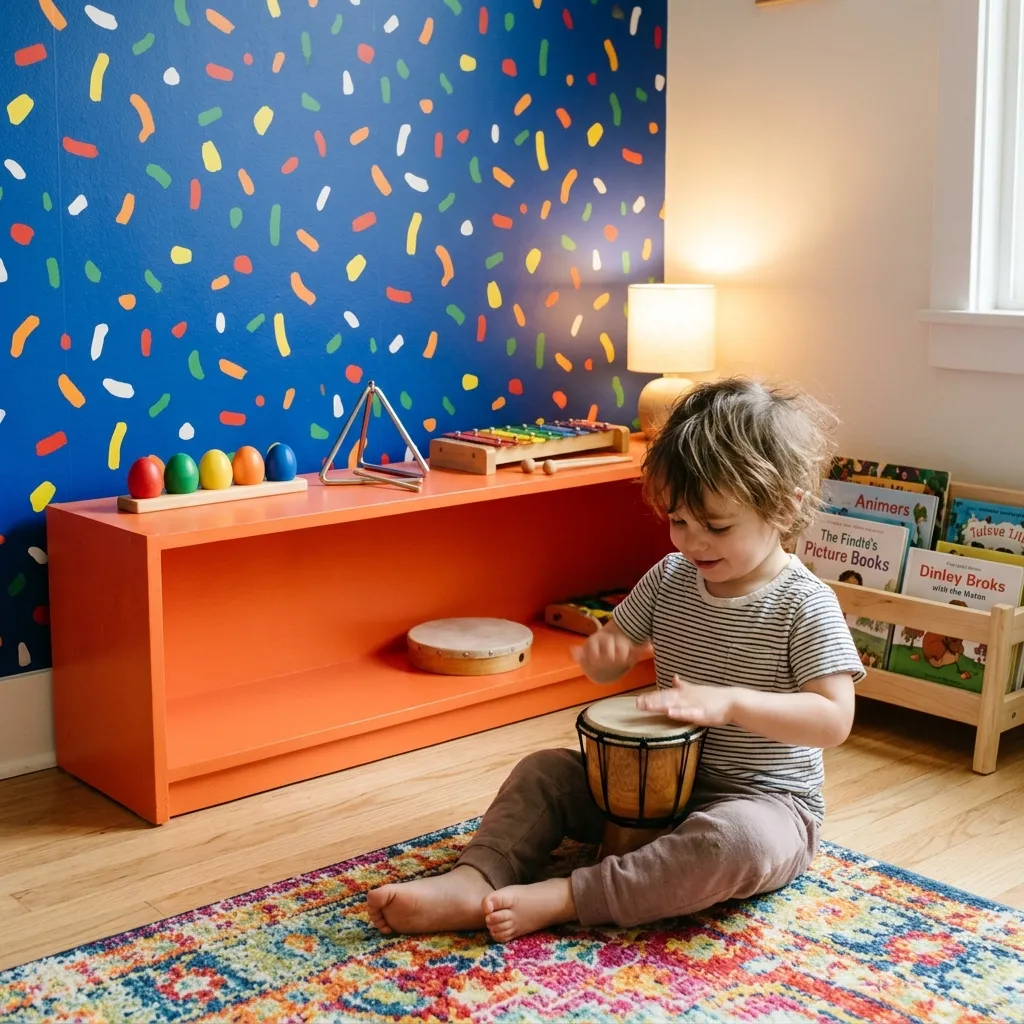
Three or four real instruments on a low shelf, not in a bag. A hand drum, an egg shaker, a triangle, a thumb piano for older kids. Out in the open they get picked up in passing.
Store them in a line rather than a pile so putting one back is obvious.
3 to 4: triangle, rhythm sticks, a tambourine. Copying a beat becomes the game.
5 to 6: thumb piano, xylophone with a song card, a simple recorder.
19. A Vertical Puzzle Rack Instead of a Puzzle Pile
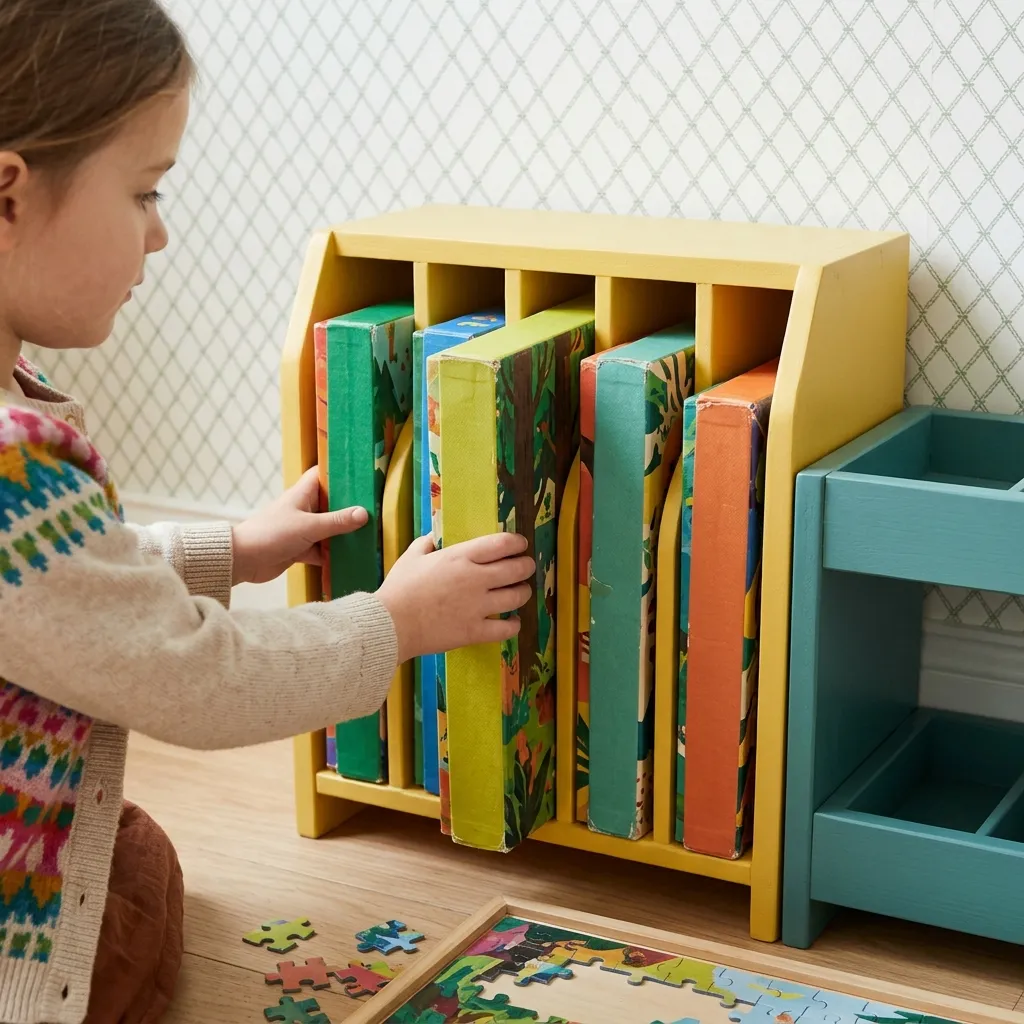
Stacked puzzles mean only the top one gets used. Stand them upright in a narrow rack, a wire file holder, or a shallow crate, so every edge is visible and any one can be pulled out alone.
Keep the number out low and the rest in the rotation closet.
20. A Window Plant Station With a Tiny Watering Can

Put one sturdy plant on a low windowsill or stool with a small can beside it. It gives a child a job that repeats, and it is the easiest thing in this list to set up this afternoon.
Choose something forgiving. A spider plant survives both over-watering and a forgetful week.
21. A Gallery Wall At Their Eye Level, Not Yours
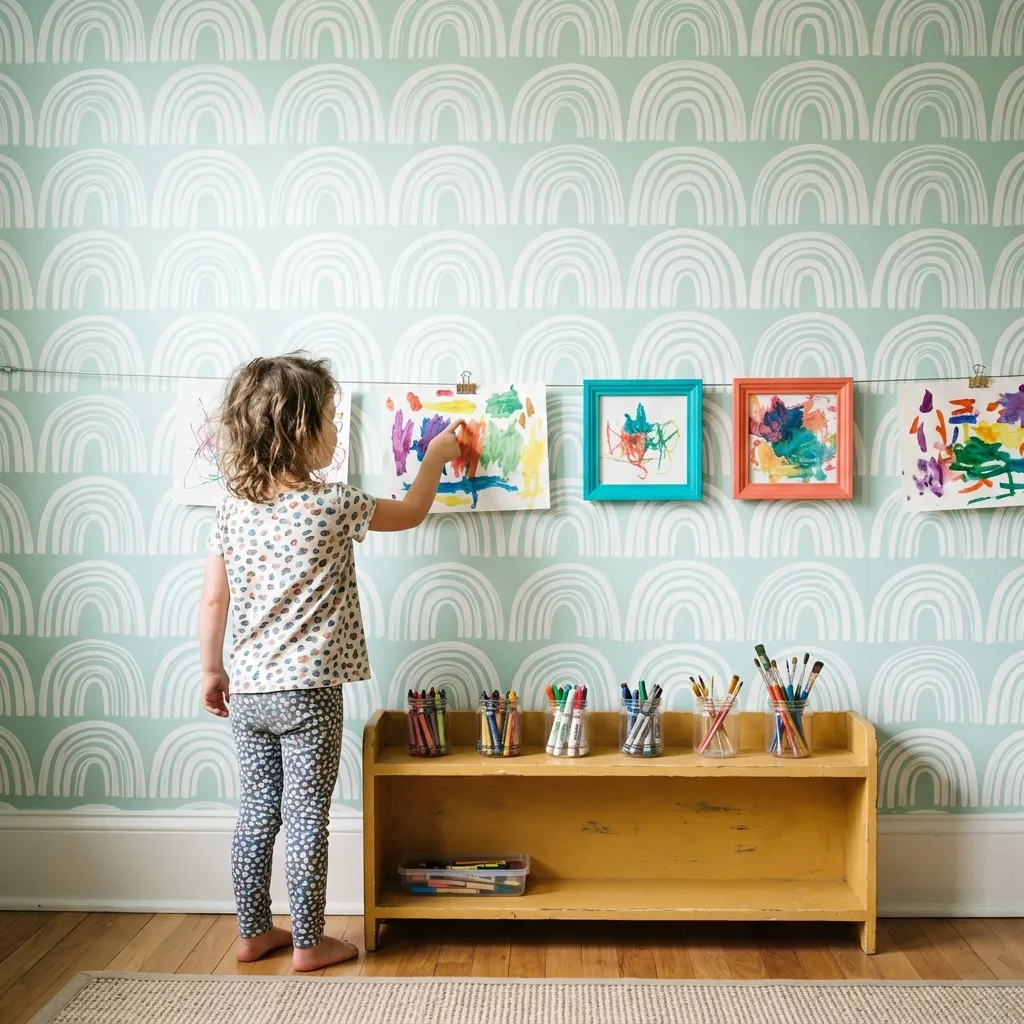
Hang your child’s work low enough that they can look at it without tipping their head back. It changes how seriously they treat their own drawings, and it keeps the walls from being decorated purely for adults.
Pick a hanging method you can change in thirty seconds, or it will never get updated.
22. A Block Zone With a Boundary the Child Can See
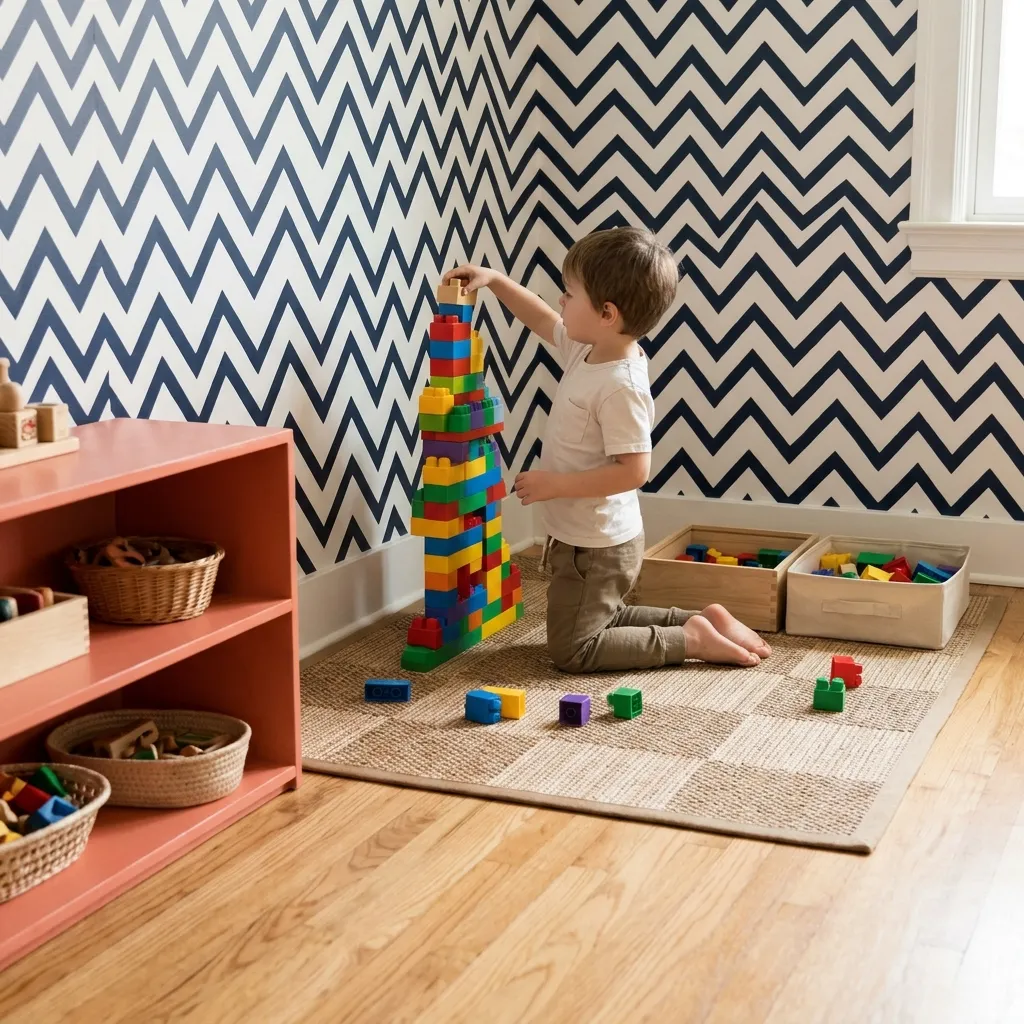
Blocks spread. Give them a defined patch, either a small flat rug or a taped square on the floor, and the spread becomes manageable. Children build right up to an edge when there is one.
Store the blocks in two shallow baskets by rough size rather than one deep crate.
23. A Language Shelf With Letters They Can Hold
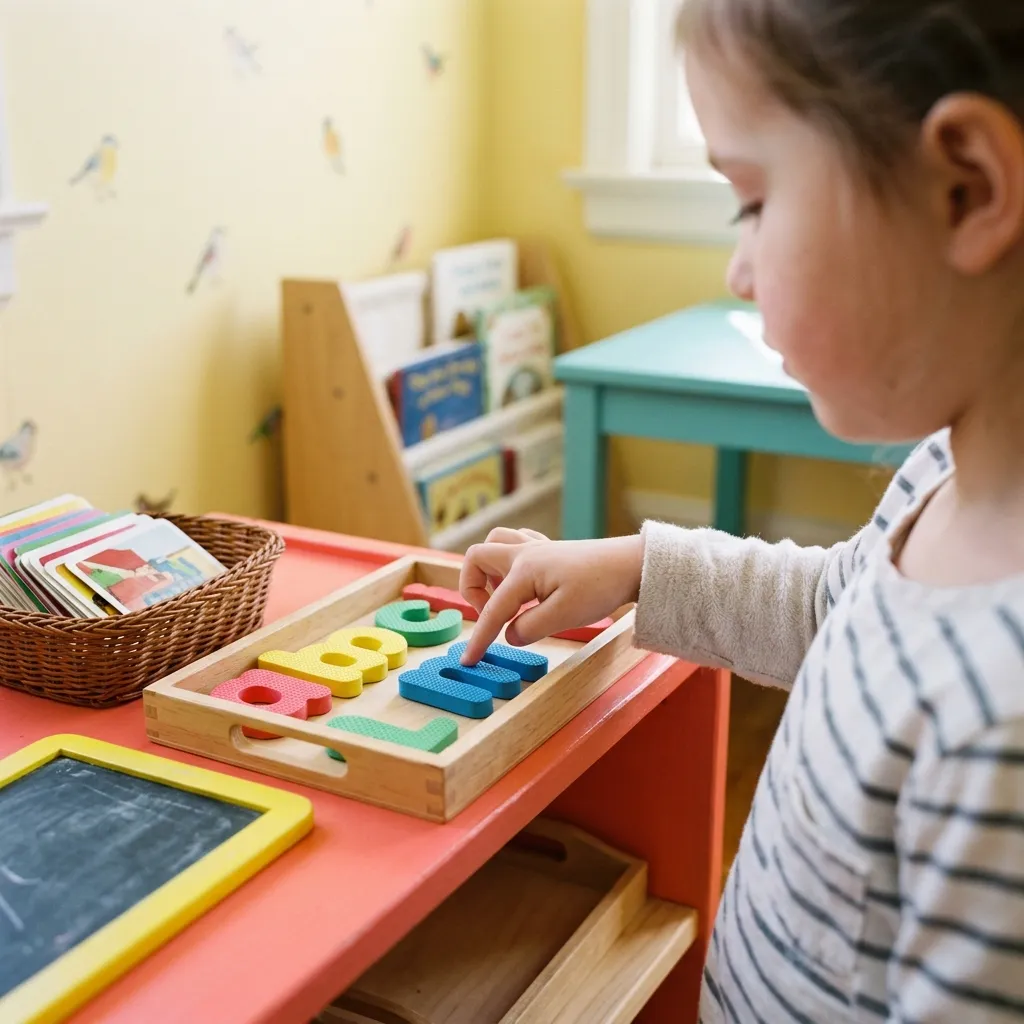
For ages three and up, a shelf with movable letters, a basket of picture cards, and a small chalkboard gives reading a physical home. Sandpaper or wooden letters work better than a poster, because they get touched and traced.
Under three, keep it to picture cards and naming games. The letters can wait.
24. Two Shelves At Two Heights For Two Different Ages
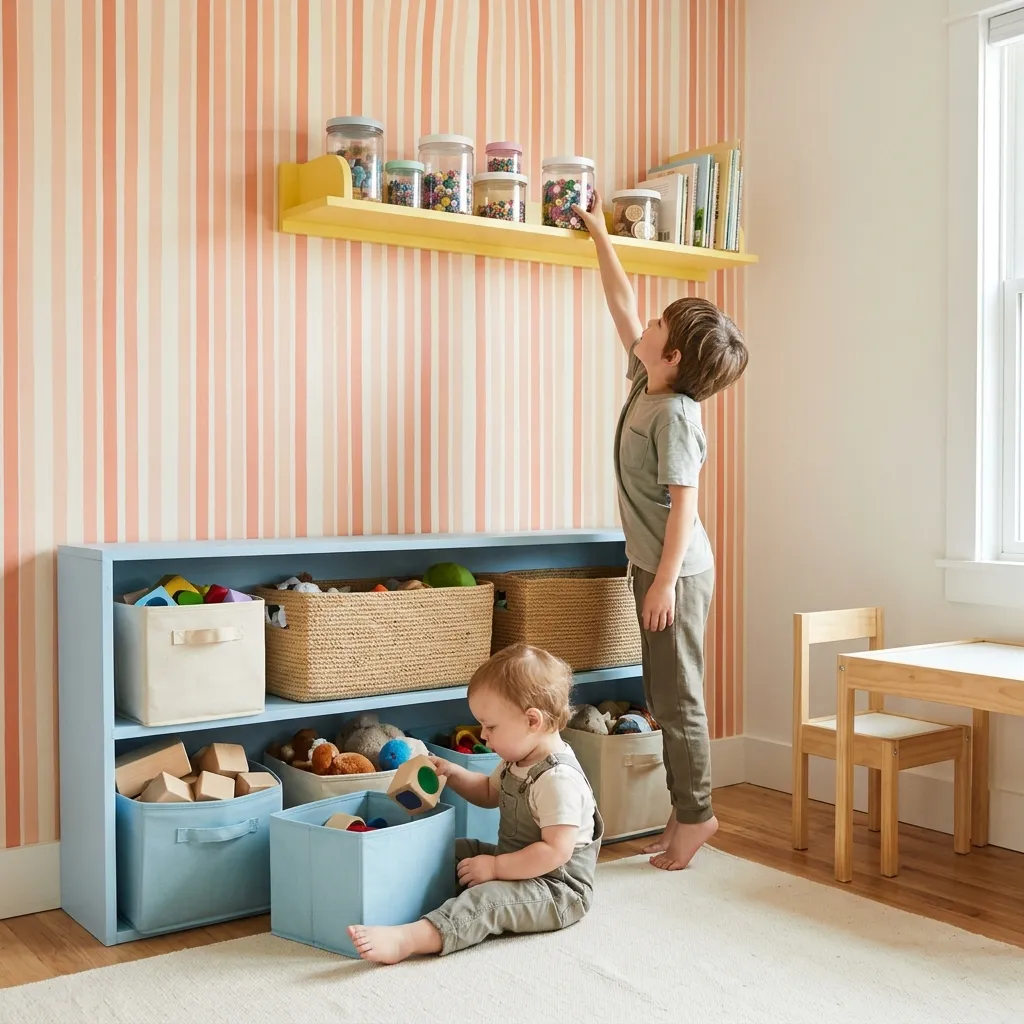
Sharing a room with a wide age gap is where most minimal setups fall apart. The answer is vertical. The younger child’s work lives on the bottom shelf, the older child’s small-piece work goes on the top shelf, above the little one’s reach.
Give each child one tray that is theirs alone. It removes most of the arguing.
| Bottom shelf, ages 1 to 3 | Top shelf, ages 4 to 6 | |
|---|---|---|
| Height | Floor to about 20 in. | Above 36 in. |
| Piece size | Large, one-handed grip | Small parts, beads, pins |
| Containers | Open baskets, no lids | Lidded jars and closed boxes |
| Workspace | Floor rug | Table, out of reach of the rug |
25. A Room Layout That Leaves the Middle Empty
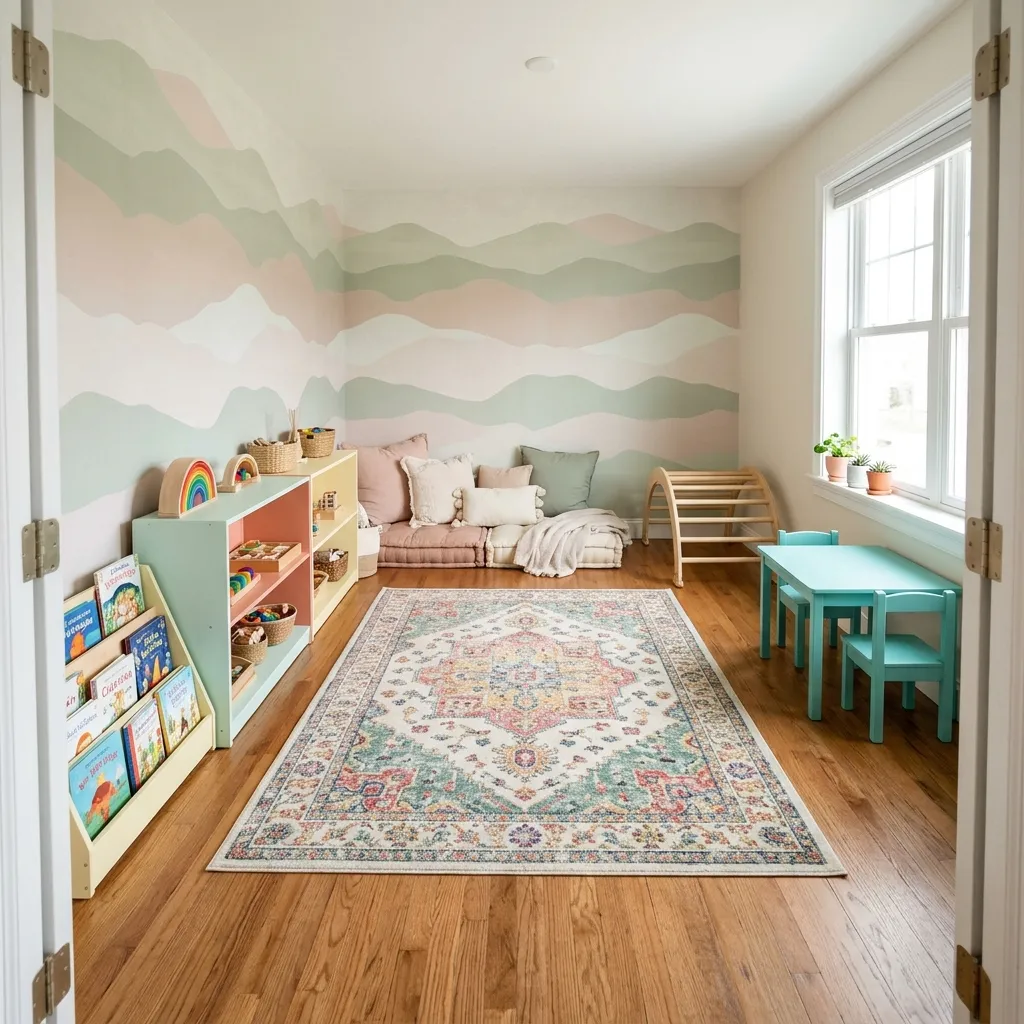
Most playrooms are arranged by where the furniture fits. Arrange yours by where the child walks instead. Storage and shelves go against the walls, the quiet corner goes furthest from the door, and the center stays clear.
Here is the layout I would copy if I were starting again tomorrow.
26. A Daily Reset Station So the Room Survives the Week
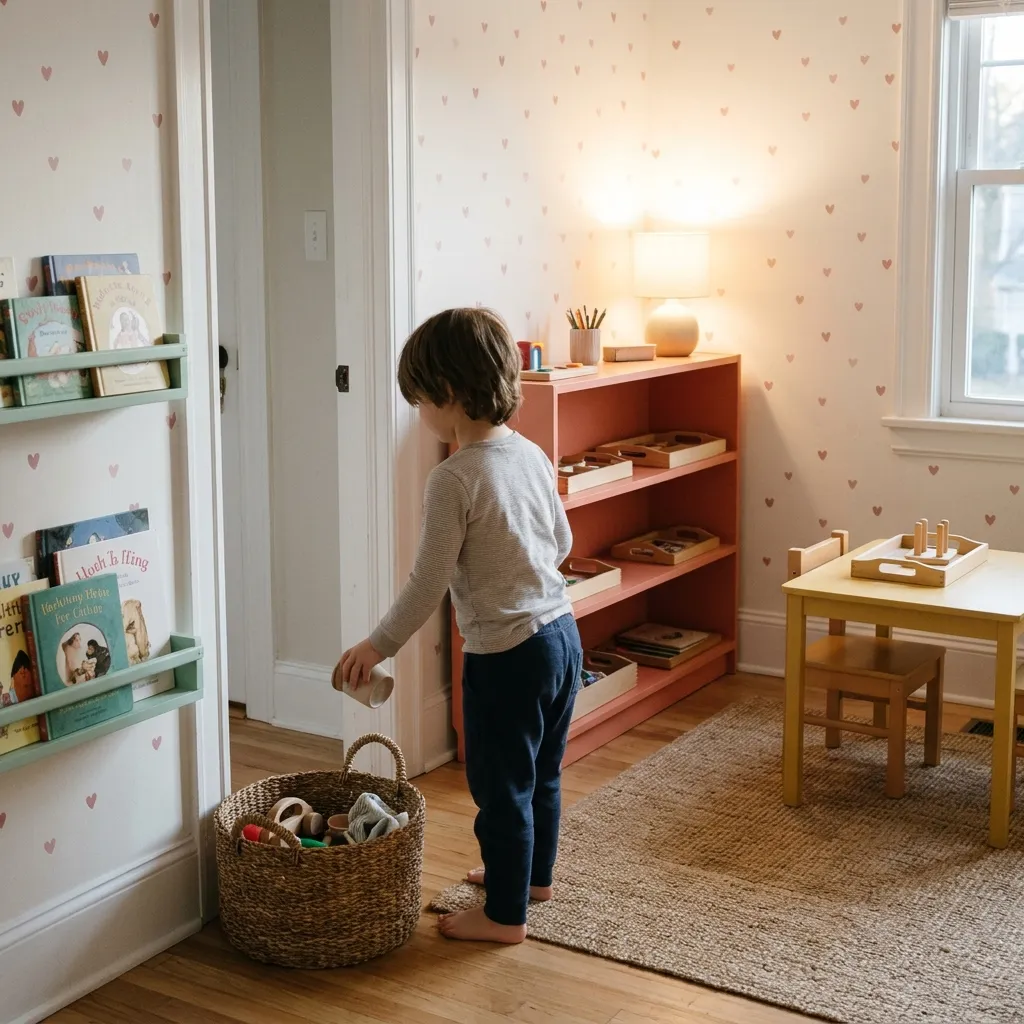
The last idea is the one that keeps the other twenty-five alive. One basket by the door for anything that belongs in another room, and one agreed rule: trays go back before the next one comes out.
Reset at the same moment every day, before bath or before dinner, and it takes about three minutes with a four-year-old helping.
☐ Anything from another room into the door basket
☐ Cushions and rug straightened, floor clear
☐ One activity left out ready for the morning
Common Questions
How many toys should be out at once?
Fewer than feels comfortable. Four to five activities for a one-year-old, six to eight for a four-year-old, with everything else in the rotation closet. If your child circles the shelf without landing, the number is usually too high, not too low.
Do I need to buy Montessori furniture?
No. A bookcase laid on its side, a picture ledge, a tension rod and a few kitchen trays cover most of this list. If you are furnishing from scratch on a budget, our IKEA playroom ideas round-up has the pieces that work hardest.
Can a small bedroom work?
Yes, and often better. A small room forces the editing that makes this approach work in the first place. Keep one shelf, one clear patch of floor, and the retreat corner, and skip the rest.
My child ignores the beautiful shelf. What now?
Check three things in order: height, quantity, and difficulty. Most ignored shelves are slightly too high, holding twice as much as they should, and pitched about six months behind where the child actually is.
Start With One Shelf
If you take one thing from this list, make it the shelf with eight trays and empty space between them. Everything else here is an extension of that one decision.
Set it up tonight, watch for a week, then swap out whatever went untouched. That loop is what separates a room that keeps working from a room that looked lovely in October.
Save this for the weekend you finally tackle the playroom, and pin the shelf chart so you have the age-by-age list with you when you start sorting.