
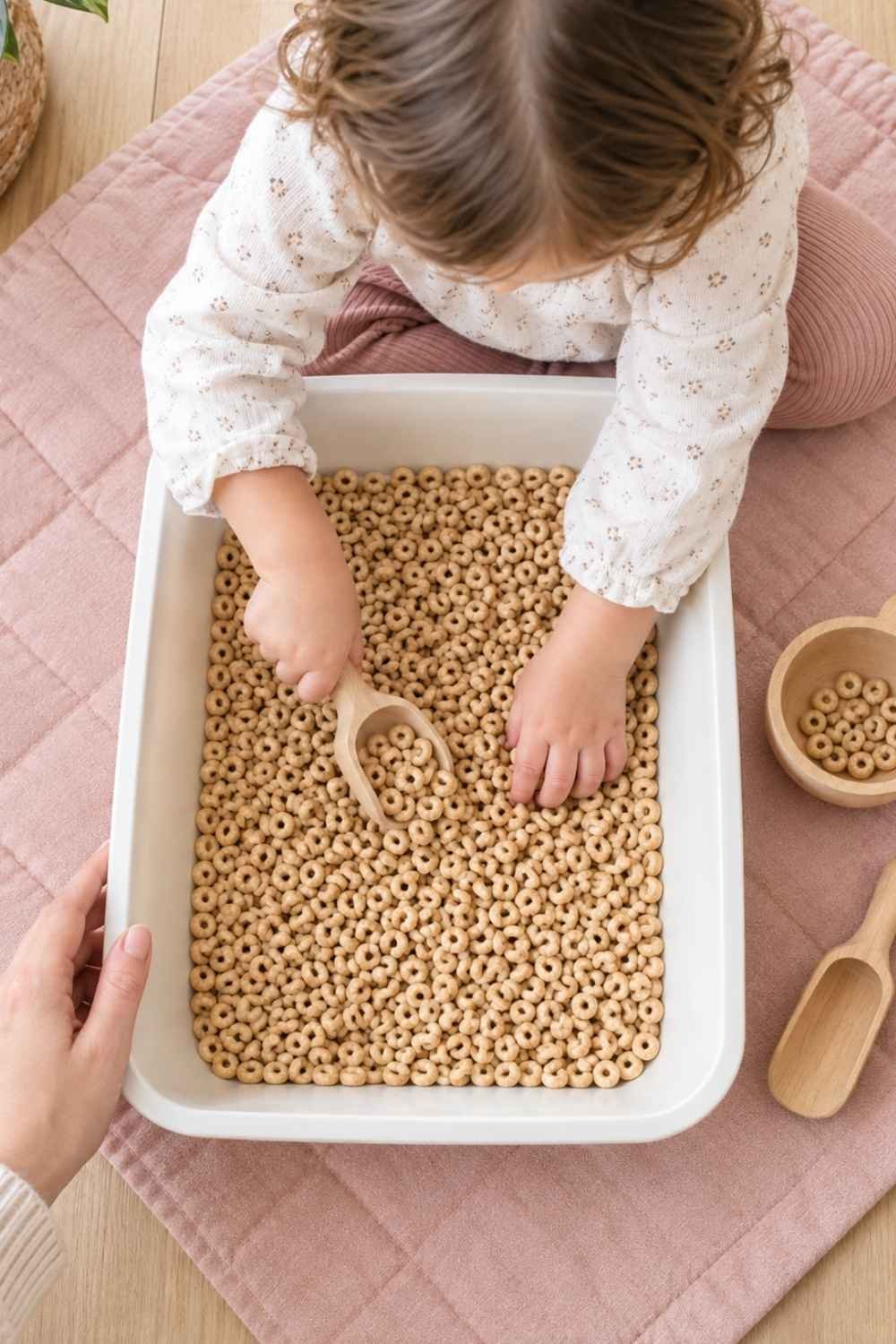
Affiliate Disclosure: This post contains affiliate links. If you make a purchase through these links, I may earn a small commission at no extra cost to you. As an Amazon Associate, I earn from qualifying purchases. Thank you for supporting CozyClan!
Most posts about sensory bin fillers make one quiet mistake. They treat “edible” and “safe” as if they mean the same thing. They do not.
Dry rice looks harmless. So does a scoop of pretty little beads. But a toddler does not play with a bin the way an older child does. They taste it, tuck some in a cheek, tip the rest on the floor, and taste it again. The filler that looks great in a photo is often the one you end up fishing out of a small mouth at snack time.
Sensory bins are one of the simplest ways to engage your toddler’s senses at home. If you’re new to sensory play or want to learn more about the developmental benefits, check out our beginner’s guide on the benefits, types, and basics of sensory play for toddlers.
Anyone who has sat next to a toddler and a full bin knows the plan is to scoop and the reality is to chew. The good news is that a few clear rules sort most fillers into safe, use with care, and skip within seconds.
Here is what you will settle by the end: which fillers work well for toddlers, what makes them safe and when that changes, and which popular ones are not worth the risk.
Table of Contents
What makes a sensory bin filler safe for a toddler?
A safe filler passes three tests: it is non-toxic, it is not a choking risk, and it is fine if a little ends up in a mouth.
Notice that “edible” is not on that list. Dry pasta and cereal are food, but food can still block a small throat, and a fistful is not a snack. Edible only tells you a mouthful will not poison anyone. It says nothing about size, shape, or how much goes in at once.
Two things change the answer. One is your child’s stage, since a toddler who still tastes everything needs different fillers than one who rarely does. The other is who is watching. No filler is safe with nobody nearby.
A safe filler is non-toxic, fine if a little gets in a mouth, and has no non-food pieces small enough to fit inside a toilet paper tube. Even then, it is only safe with an adult within arm’s reach.
How do you check any filler before it goes in the bin?
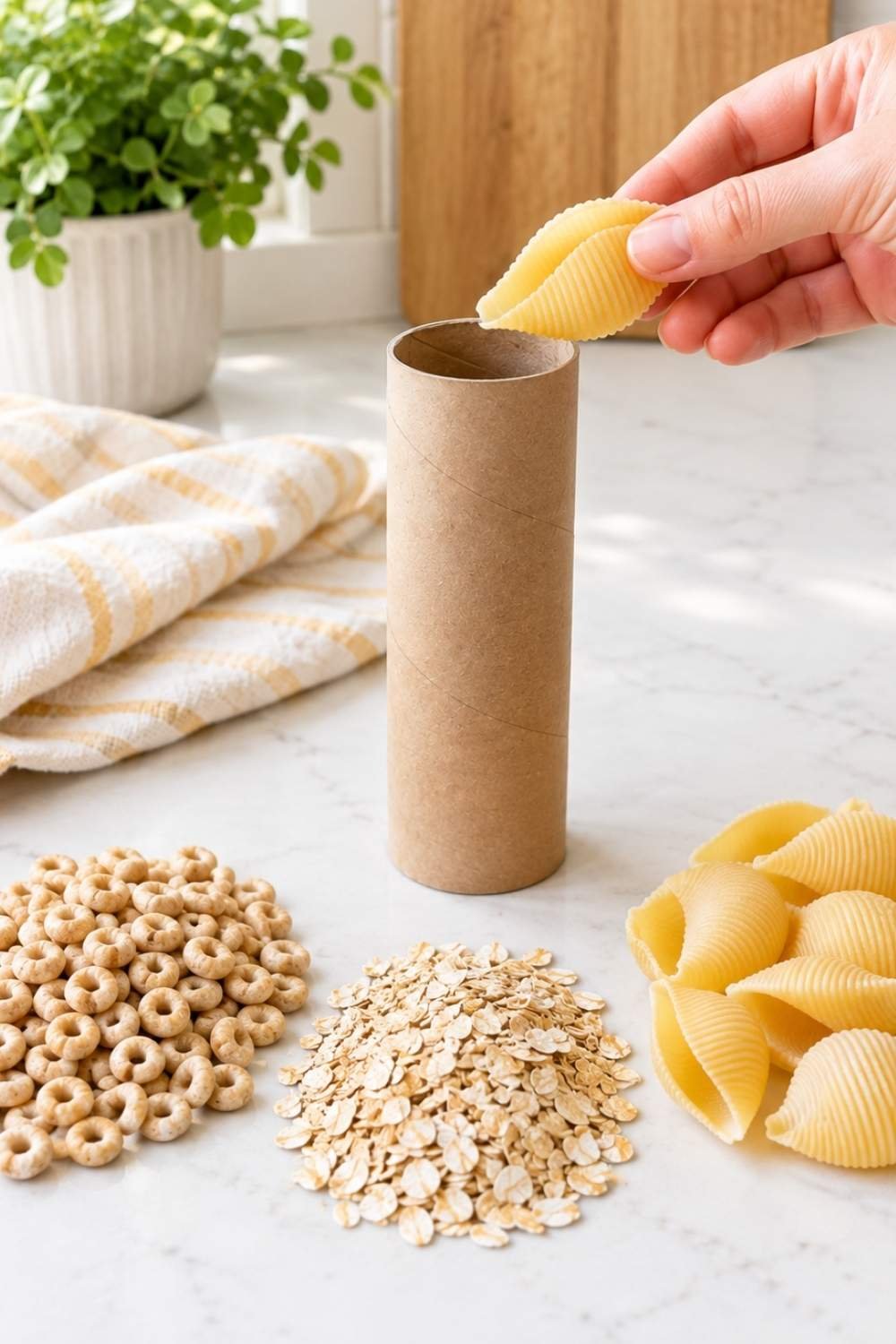
Start with the toilet paper tube test.
Any non-food piece that fits inside the tube is too small for a child under three. It can block a small airway, so it comes out of the bin, however pretty it is.
Food fillers are a partial exception. Dry rice and oats fit through the tube, but they are made to be eaten, so a mouthful is unlikely to poison anyone. Small hard grains can still end up in a nose or an ear, and a toddler who stuffs in handfuls needs a bigger filler.
After size, run three more checks. Would you stay calm if a mouthful went in? Does it throw dust or crumble into bits? And does it contain anything someone at the table must avoid? Wheat, nuts, and seeds are common ones, so read the label as you would for a snack.
A filler that fails even one check stays out, however good it looks online.
Before any filler goes in the bin
Which pantry fillers work best for toddlers?
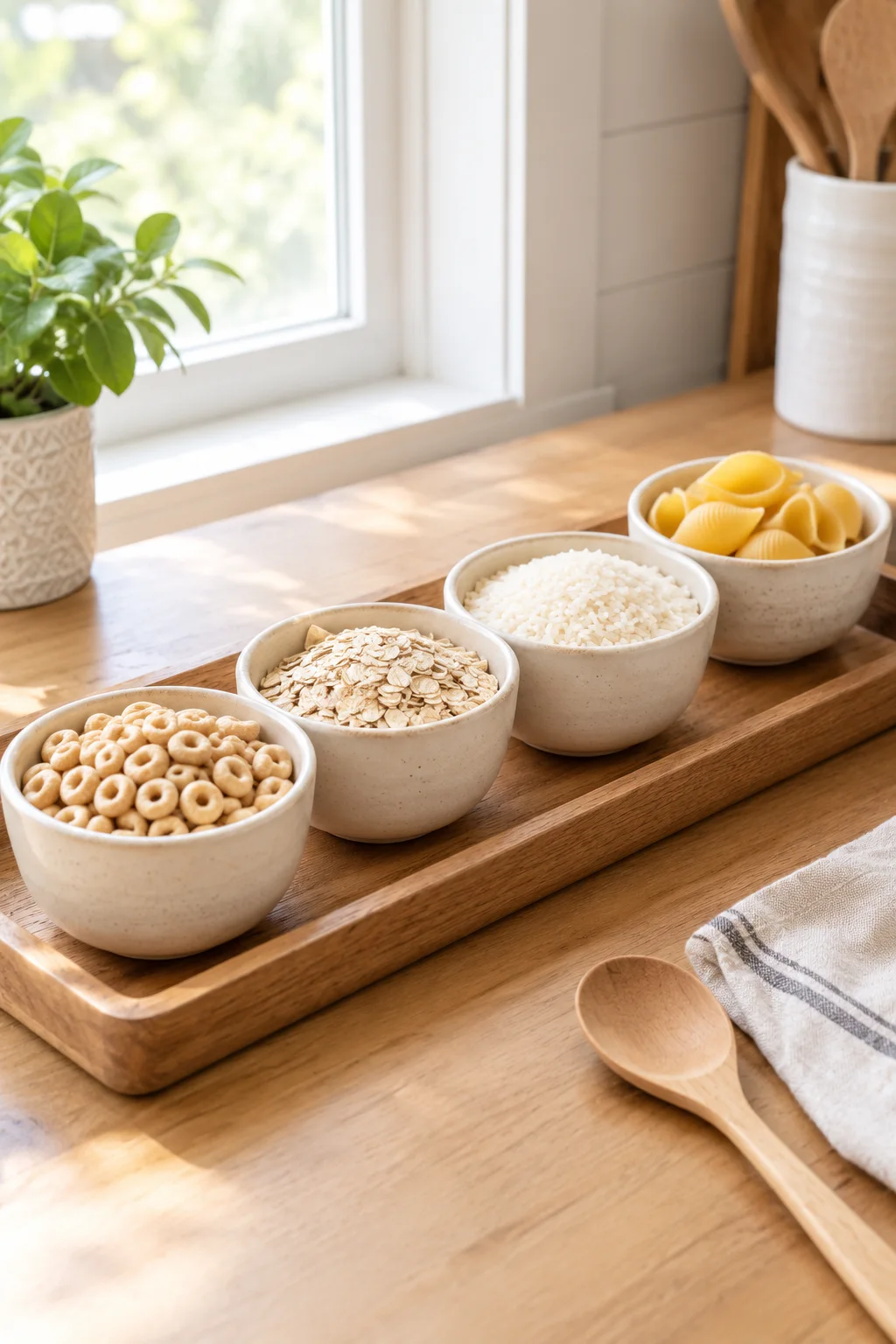
Pantry items are the cheapest sensory bin materials, but they carry different levels of worry. These three are ordered from least to most.
Plain cereal and rolled oats
Plain O-shaped or puffed cereal is already toddler finger food, so a mouthful is the smallest worry. Rolled oats behave the same way, but they are dusty and often share a factory with wheat, so check the label if that matters to you.
Big dry pasta
Pick the largest shapes you can find, like jumbo shells. Dry pasta is hard and can snap into sharp bits, so toss any cracked pieces and save this for a toddler who plays more than tastes.
Rice
Rice is the classic and the least forgiving. The grains are tiny and hard, so it suits a toddler who rarely stuffs handfuls, in a bin with tall sides and a mat underneath.
Whichever you choose, start with a shallow layer and see how your toddler plays before adding more.
Pantry fillers, from least to most worry
Are wet, taste-safe fillers like cooked pasta and oobleck worth the mess?
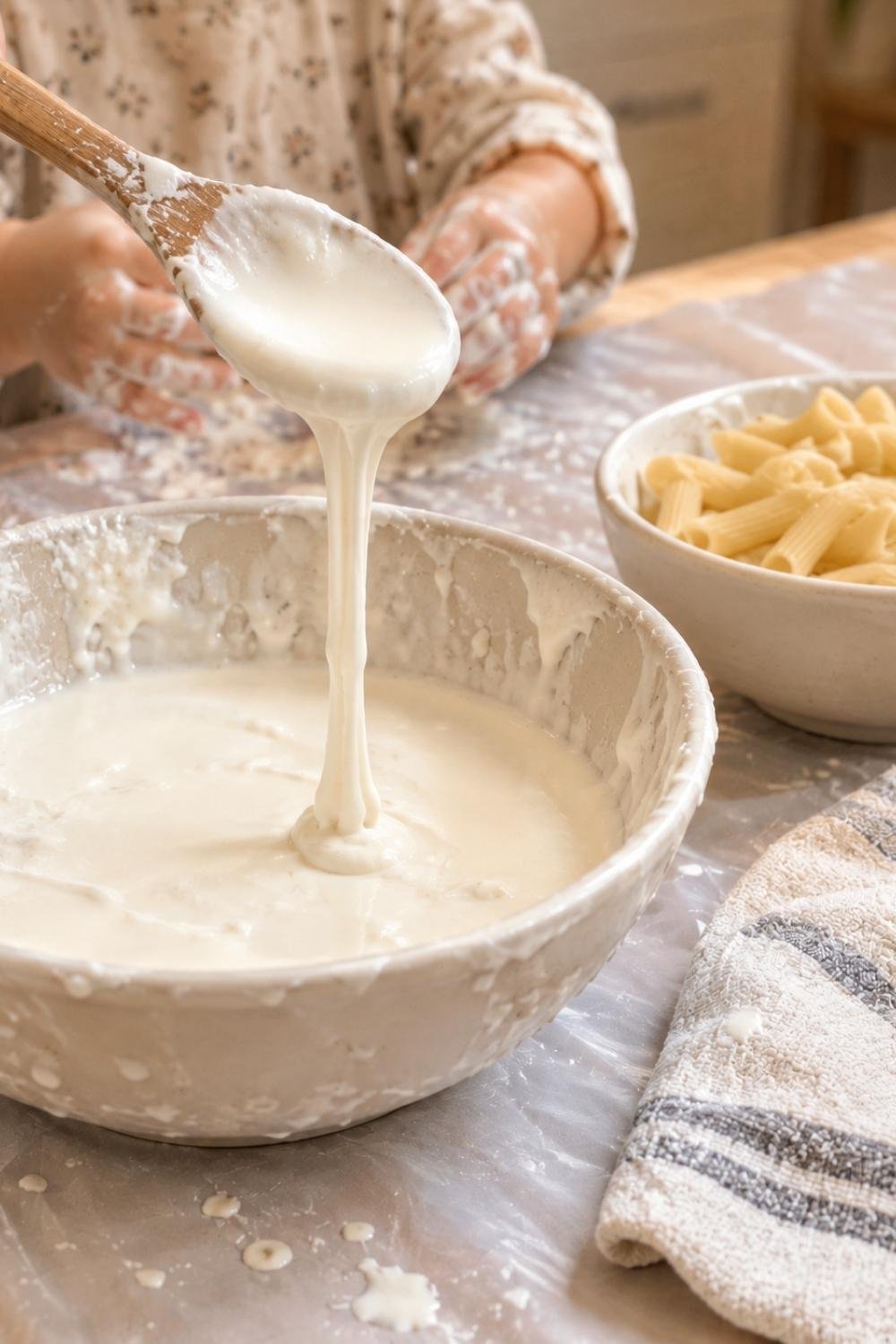
Yes, for the right afternoon. You give up a long shelf life and get a cool, squishy feel that dry fillers cannot match.
The two easiest wet fillers are plain cooked pasta and oobleck, which is only cornstarch and water. A small taste of either is fine, though neither is a snack. A toddler who eats handfuls needs a dry filler or closer watching.
Time is the catch. Wet food fillers start to spoil once they sit, and I learned that when a tub of cooked pasta stayed on the counter overnight. Make a batch, play, then bin it. Wipe oobleck into the trash instead of rinsing it down the sink, because it can clog drains.
Treat a wet bin as a one session treat and you will never have to store it.
| 🌾 Dry fillers | 🥣 Wet fillers |
|---|---|
| Feel: crunchy and pourable | Feel: soft, cool, and slippery |
| Mess: scatters and rolls, but sweeps up | Mess: sticks to hands, clothes, and chairs, then wipes off |
| Keeps: many play sessions, if stored dry and sealed | Keeps: one play session, then it goes in the trash |
| Best when: you want a calm, low prep bin | Best when: you want a hands on, messy afternoon |
Can you use sand, water, and leaves as sensory bin fillers?
Nature fillers cost nothing, and toddlers love them, but they bring problems pantry fillers don’t. Each one has its own cause and its own fix.
Sand
Dust and mess are the trouble. Sand gets into eyes and hair, and an uncovered outdoor sandbox can turn into a toilet for cats and other animals. Keep sand outdoors or over a mat, and cover it between uses. I keep a lid on our outdoor tub for exactly this reason.
Water
Water needs the strictest rule of all. A toddler can drown in very little water, so even a shallow bin needs an adult within arm’s reach the whole time. Empty it the moment play ends.
Leaves and other nature bits
Check two things: what the plant is, and where it grew. Some plants are toxic and some leaves carry pesticide, so use ones you can name from a place you trust. Skip pinecones and sticks with sharp ends, and wash hands afterward.
Nature fillers at a glance
Do non-food fillers like moldable sand, foam, and fabric scraps count as safe?
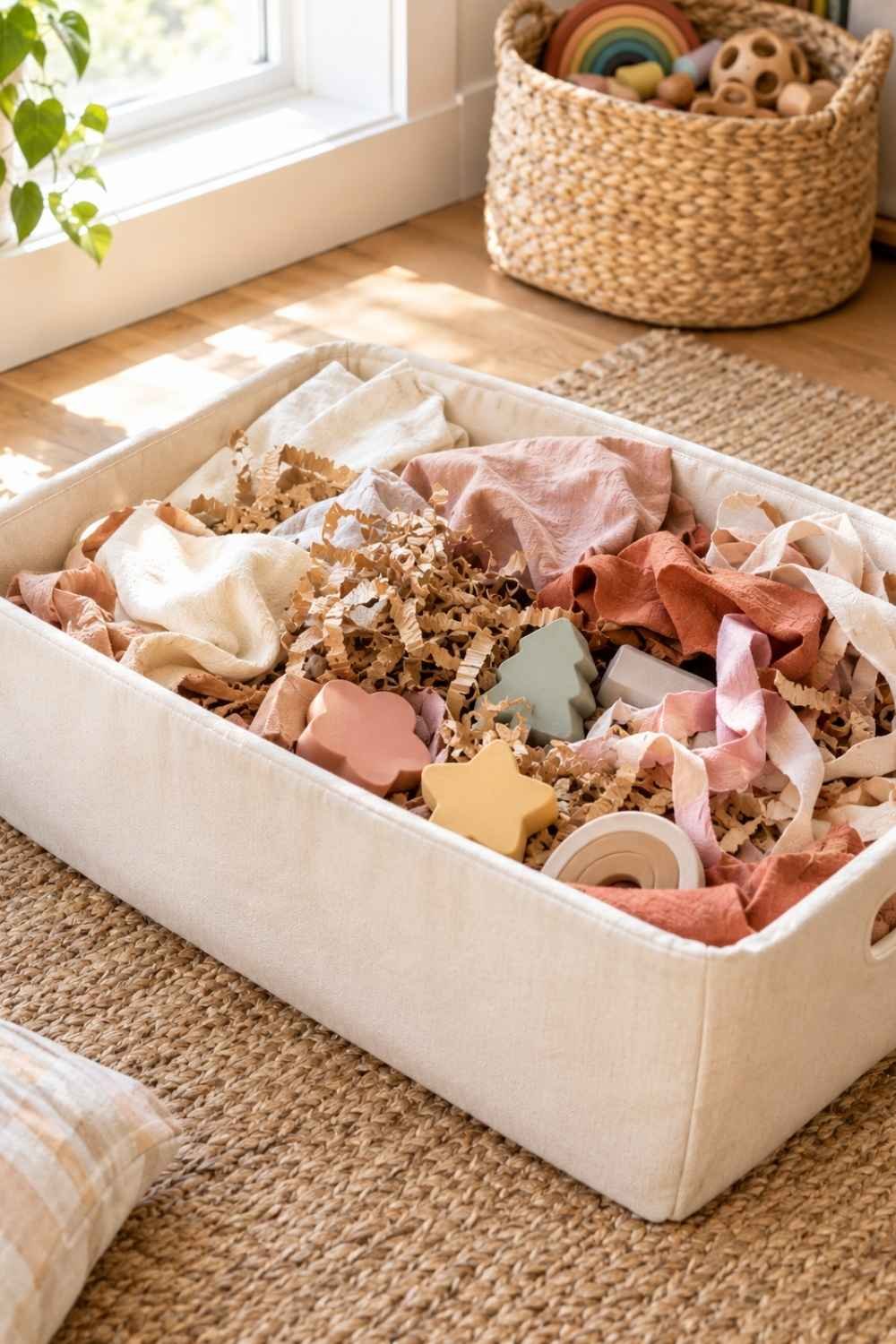
A “non-toxic” label is not a green light.
It means a small accidental taste is not expected to poison anyone. It does not mean the item is food, and it says nothing about choking. Moldable sand is a good example. It is made to be squished, not swallowed, and toddlers do not always know the difference.
Better non-food fillers are big and soft: large fabric scraps, crinkle paper strips, and chunky foam shapes too big to fit inside the toilet paper tube. Tiny pom poms and cotton balls are the usual trouble, since they fit the tube and cotton fluff pulls apart into bits that can be swallowed.
Read the label for age, then run the tube test anyway.
📖 In plain words: three labels that sound alike
Non-toxic: not expected to cause poisoning in a small accidental amount. It does not mean the item is food or safe to choke on.
Taste-safe: made from food ingredients, so a small taste is fine. It is not meant to be eaten, and it can still choke.
Edible: real food. Size and shape still matter, because food can block a small airway.
Which sensory bin fillers fit which stage of mouthing?
Two toddlers sit down at the same bin of dry pasta. One scoops and pours for a good while. The other has a fistful halfway to her mouth before you can sit down.
Same filler, two very different bins. A toddler’s behavior tells you more than their birthday does. So watch the first few minutes with a small handful of something safe, and let that decide which group below you start in.
Stages are not a straight line, either. A child who was past the tasting phase can slip back on a tired or fussy day, so a filler that worked last week may need to wait.
When you are unsure, start one group lower and move up once your child shows you they are ready.
How do you set up a toddler sensory bin so it stays safe?
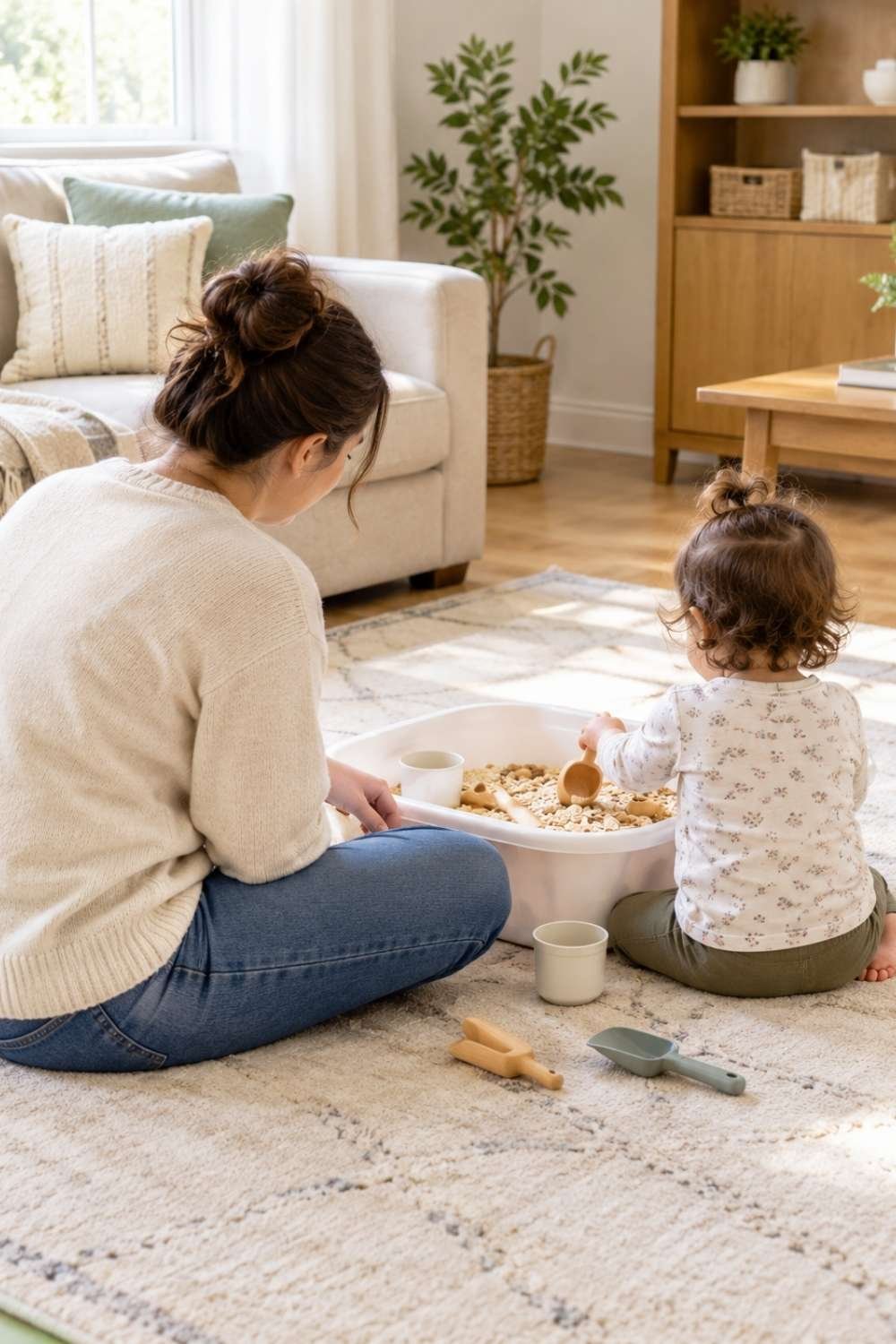
Setup does more for safety than any single filler choice.
Two parts matter most. The first is the bin, which needs low sides so your child can reach in without climbing, and a mat or old sheet underneath. Filler on a hard floor is a slip risk. I found that out when a scatter of dry pasta turned our kitchen floor into a skating rink.
The second is where you sit. Stay close enough to reach the bin in one move, not across the room folding laundry.
The steps below put it all in order.
Choose the spot. Lay the mat or sheet away from stairs, pet bowls, and small toys left by older kids.
Pick one filler and a few big tools. One or two scoops or cups is plenty. Fewer items means fewer things to throw or lose track of.
Pour a shallow layer. Add more only if your child needs it. A deep bin invites big handfuls.
Stay within arm’s reach. If you have to step away, lift the bin out of reach and take it with you.
End play early. When throwing or tasting takes over from scooping, pour the filler back and wash hands.
How do you store, clean, and reuse fillers without mold or mess?
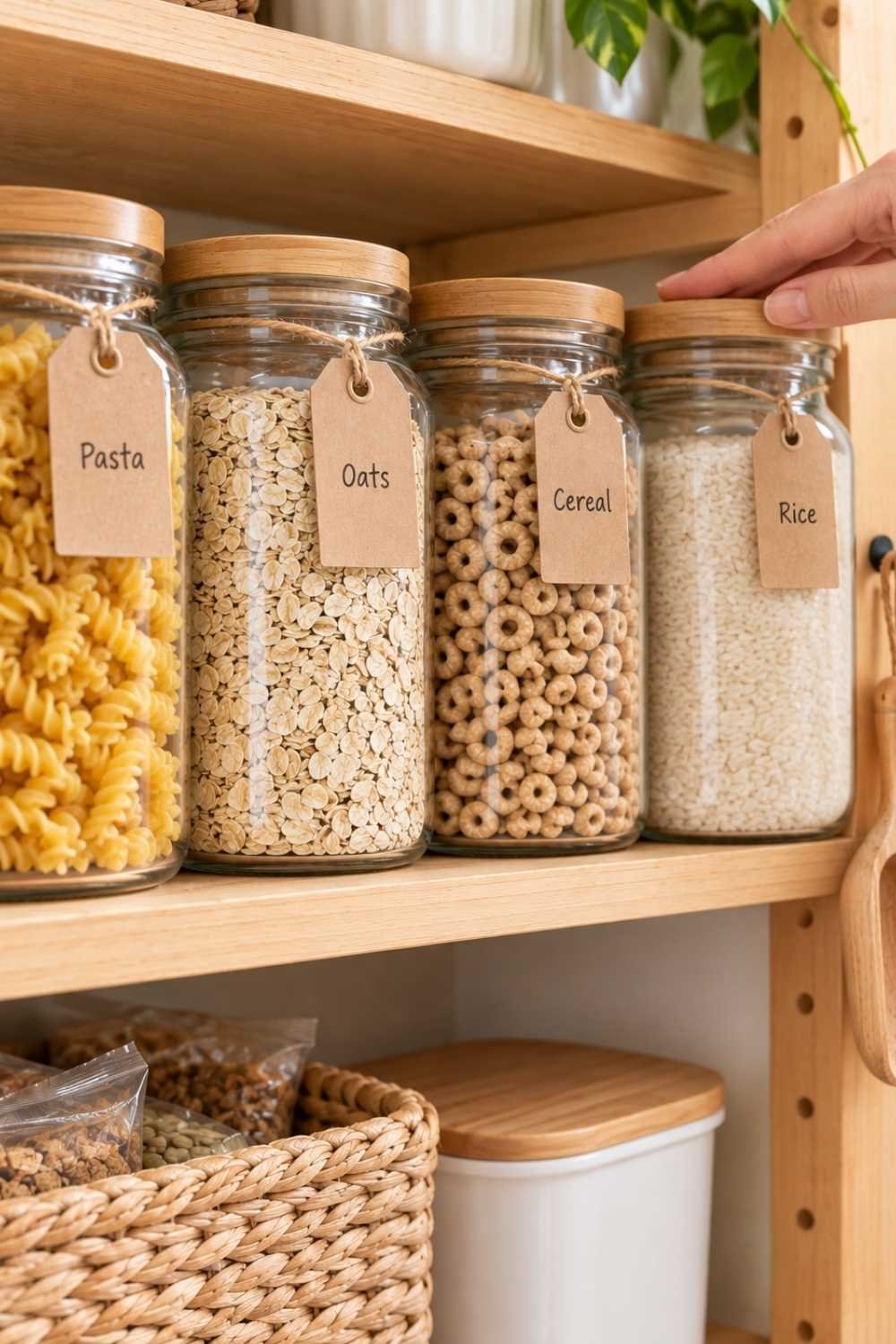
Moisture is what turns a jar of leftover pasta into a science project.
Mold and bad smells need dampness. Dry fillers keep for many play sessions as long as they stay dry, and wet ones do not keep at all. So the rule is about water, not about how old the filler is.
Toddler mouths add moisture too. Small damp clumps of oats or cereal, where little mouths have been, are the first thing to go bad, so pick them out after each session. Sift or sweep the rest to catch crumbs and stray bits before you seal the tub.
Use a lidded container with a label on it. That tells everyone in the house what is inside, including a wheat based filler like pasta.
Check the container before each play session, not only when you pack it away.
📌 Good To Know
Only store a filler that stayed completely dry. Before each reuse, look, smell, and feel. Toss it if it got wet, smells off, shows spots, or has clumps where little mouths have been. Cooked pasta and oobleck are never stored. Play, then throw them away.
Which sensory bin fillers should you avoid, and what can you use instead?
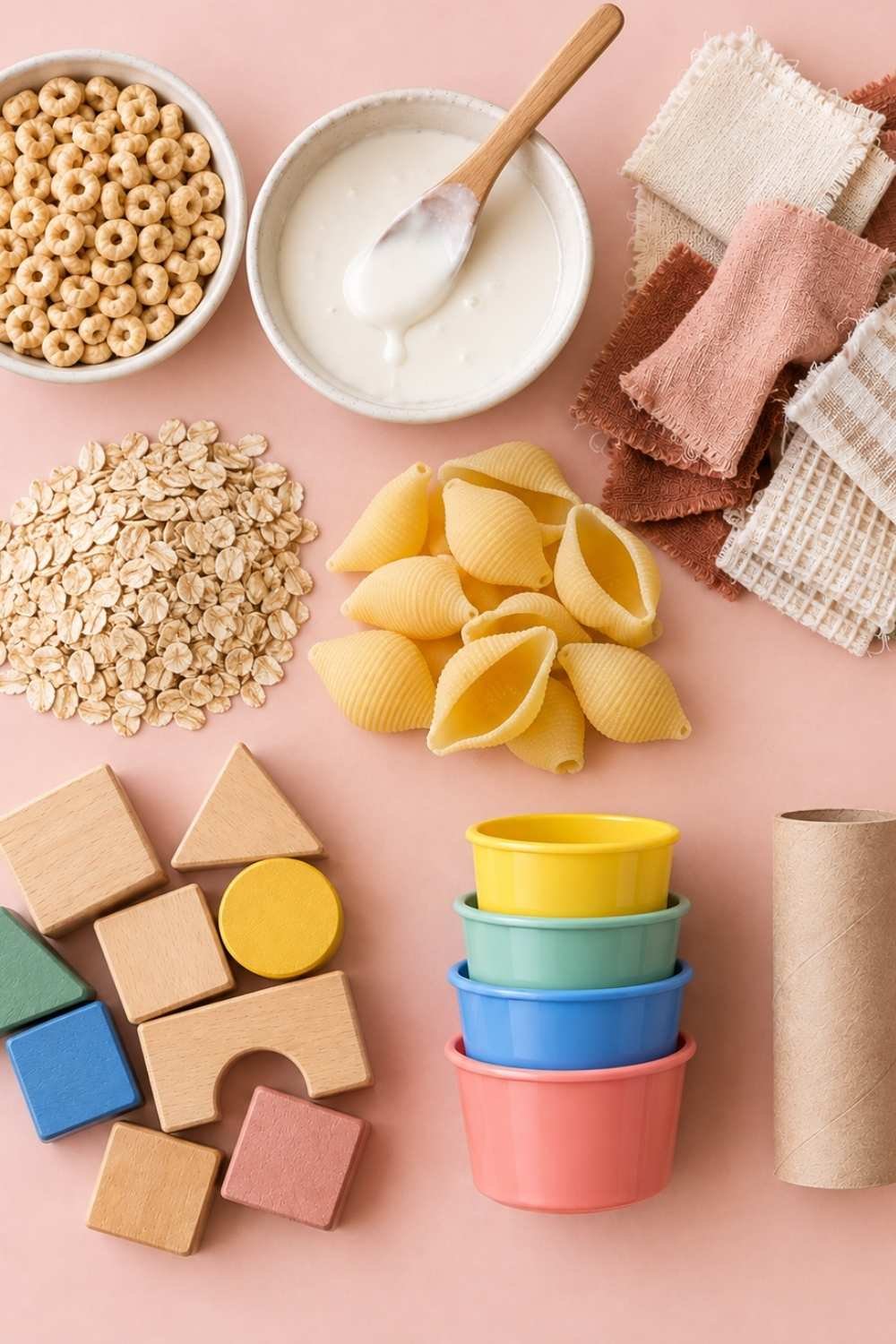
Some fillers are risky enough that no amount of watching makes them a good idea. Here they are, sorted by what goes wrong.
Choking hazards
These are non-food items that fit inside a toilet paper tube: marbles, pebbles, coins, small beads, foam beads, and pom poms. Even a marble that rolls under the couch counts, because a toddler will find it later. Balloon pieces belong on this list too, since a popped or chewed piece can block an airway.
Swallowing hazards
These do harm even after the choking risk has passed. Water beads swell inside the body and can block the gut. A button battery can burn from the inside, and small magnets can pull together and injure tissue. If you think your child swallowed one, get emergency help right away.
Fillers that look harmless but are not
Loose glitter gets into eyes and mouths and never sweeps up completely. Shaving cream and foam soap are not food, and they can sting eyes or upset a stomach.
Every item to skip has a safer swap.
Water beads. They swell inside the body if swallowed.
Button batteries and small magnets. They cause serious harm if swallowed.
Marbles, pebbles, coins, and small or foam beads. They fit inside a toilet paper tube.
Balloon pieces. A popped or chewed piece can block an airway.
Loose glitter. It irritates eyes and gets into mouths.
Plain cooked pasta for squish. Play once, then toss it.
Oobleck for a gooey feel. A tiny taste is fine, but it is not a snack.
Big fabric scraps for shine and soft textures. Choose pieces too large to swallow.
Chunky blocks and cups too big for the tube, for sorting and stacking.
Plain cereal for crunch.
Every swap still needs an adult within arm’s reach.
Common questions about toddler sensory bins
These are the leftover worries the sections above did not fully settle.
Q. What should I do if my toddler swallows some filler?
If your toddler is choking or struggling to breathe, call your local emergency number right away. If the filler was a water bead, a button battery, or a magnet, get emergency care immediately, even if your child seems fine. After a small taste of plain food like cereal, calmly take the rest away and watch closely. If you are unsure, call your local poison control line or a doctor.
Q. Are dry beans and lentils safe for toddler sensory bins?
They are not the best pick for toddlers. Small hard beans and lentils can choke a child or end up in noses and ears. Raw kidney beans are also unsafe to eat, because they must be cooked properly first. If you want to try beans, save them for Stage 3, keep the bin low and shallow, and stay close.
Q. Is dyed rice or pasta safe for toddlers?
It can be, if you color it with food coloring and a splash of vinegar instead of rubbing alcohol. Rubbing alcohol is not food safe, so skip it for toddlers. Let the color dry all the way before play, since damp dye stains hands and mouths. The size and mouthing rules still apply, so dyed rice belongs in Stage 3.
Q. How much filler does a toddler bin really need?
Less than most posts show. A shallow layer that lets your child scoop and pour without spilling over the sides is enough. Deep bins invite big handfuls and bigger messes. Start small, and add a little more only when your child runs out of things to scoop.
Q. Can my older child use small fillers when a toddler is nearby?
Yes, with a plan. Keep small pieces at a high table or behind a baby gate, and use a tray or lidded box so nothing rolls onto the floor. Ask your older child to put every small piece back in the box as soon as play ends, because one dropped bead is easy for a toddler to find.
Q. Can toddlers with food allergies still use pantry fillers?
Often yes, as long as the filler is made only from ingredients your child can safely eat. Read labels closely, since oats can share equipment with wheat. Touch and mouths can spread allergens too, so for a serious allergy ask your child’s doctor before using any food based bin. Non-food fillers like big fabric strips are a simpler route.
📌 What to Read Next:
Ready to set up your full routine? Explore our complete starter guide on Sensory Play for Toddlers: The Benefits, Types, and How to Start.
What should you remember the next time you fill a bin?
Good sensory bin fillers are not the prettiest ones in the photo. They are the ones that pass three checks: big enough not to choke on, non-toxic, and fine if a little ends up in a mouth. Start with plain cereal or big pasta, match the filler to how your child plays right now, and skip water beads, small beads, batteries, and magnets for good.
If you keep one rule, keep this one: an adult stays within arm’s reach, every time. Even the safest filler is only safe with someone watching, and that part costs nothing.
Screenshot this for the next time you fill a bin
Save this guide to your Pinterest board so, it is there the next time you need to check a filler.