
Affiliate Disclosure: This post contains affiliate links. If you make a purchase through these links, I may earn a small commission at no extra cost to you. As an Amazon Associate, I earn from qualifying purchases. Thank you for supporting CozyClan!
Every parent knows the quiet panic of watching a toddler approach a plate of spaghetti with far too much enthusiasm. You see a potential laundry disaster; they see a blank canvas. But that sudden urge to smash, smear, and explore textures isn’t just about making a mess; it’s a powerful developmental milestone.
If you are wondering whether your living room is about to become an accidental art studio, here are 10 clear signs your toddler is ready for messy sensory play, along with how to embrace the chaos without losing your mind.[Low mess sensory play ideas for busy parents] has setups built around exactly this.
Table of Contents
1. They Reach In With Their Hands Before Anything Else
Watch what happens the next time something new lands on the high chair tray. A toddler who is ready tends to touch first. A finger goes into the sauce. A palm presses flat on the wet bathroom tile. Bubbles in the sink get a slow, deliberate poke.
This hands-first habit matters because messy play asks children to gather information through their skin. A child who still mostly looks, or who waits for you to hand things over, is telling you to go slower and start drier.
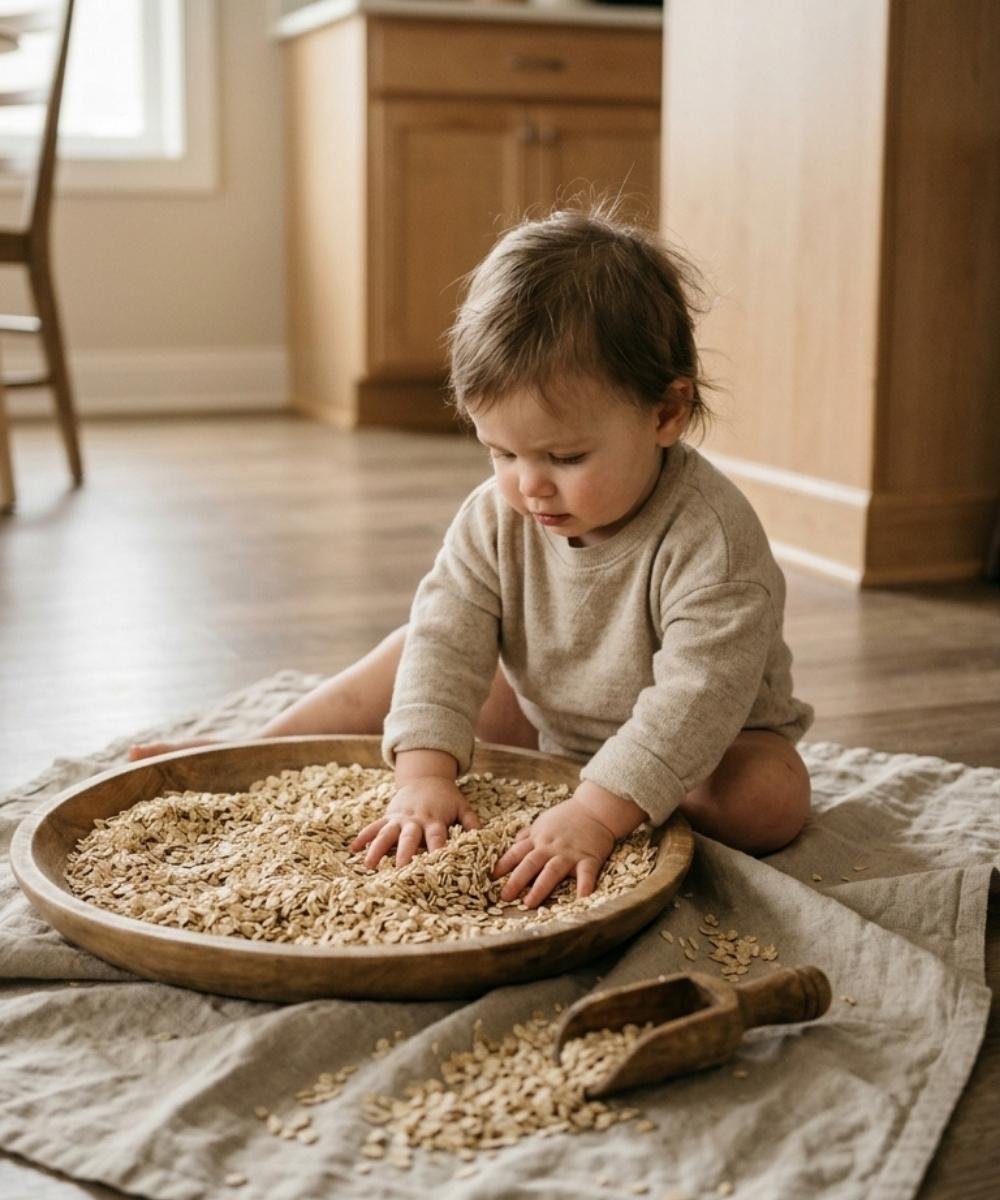
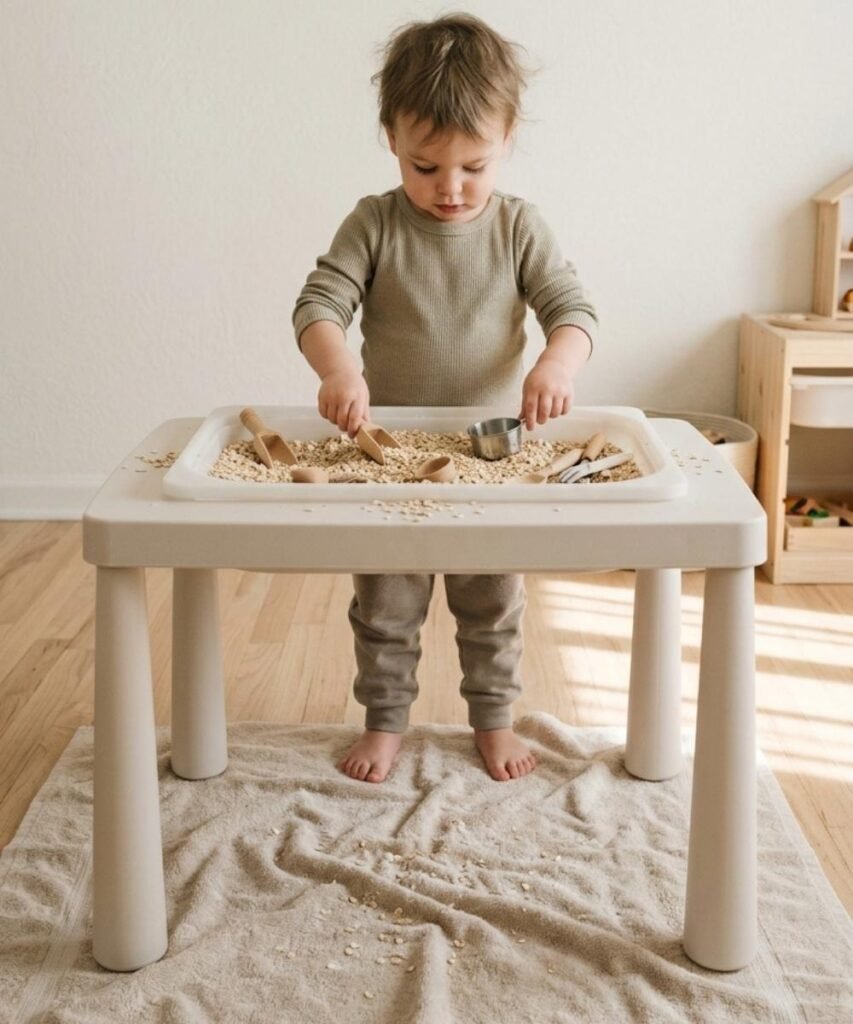
If the touching is already happening, you do not need to build up to anything. A shallow tray of dry oats on the kitchen floor is enough for a first session.
2. The Mouthing Phase Has Started to Slow Down
Early on, everything goes in the mouth. That is how babies explore, and it is the single biggest reason parents delay messy play.
The shift you are looking for is not that mouthing has stopped completely, because it rarely does. It is that fingers now get there first, and that a taste is a quick test rather than a meal. A toddler who scoops oats, looks at them, and sprinkles them back down is in a very different place from one who fills both cheeks.
One caution that does not change with readiness: small loose items stay out regardless. Water beads, dry beans, buttons, beads, small pom poms, and anything that fits through a toilet roll tube are not toddler materials, even with you sitting right there. Choose large, chunky, or edible-base fillers instead, and keep reading on [how to choose safe sensory play materials for toddlers] before you fill a bin.
3. They Repeat the Same Action Over and Over to See What Happens
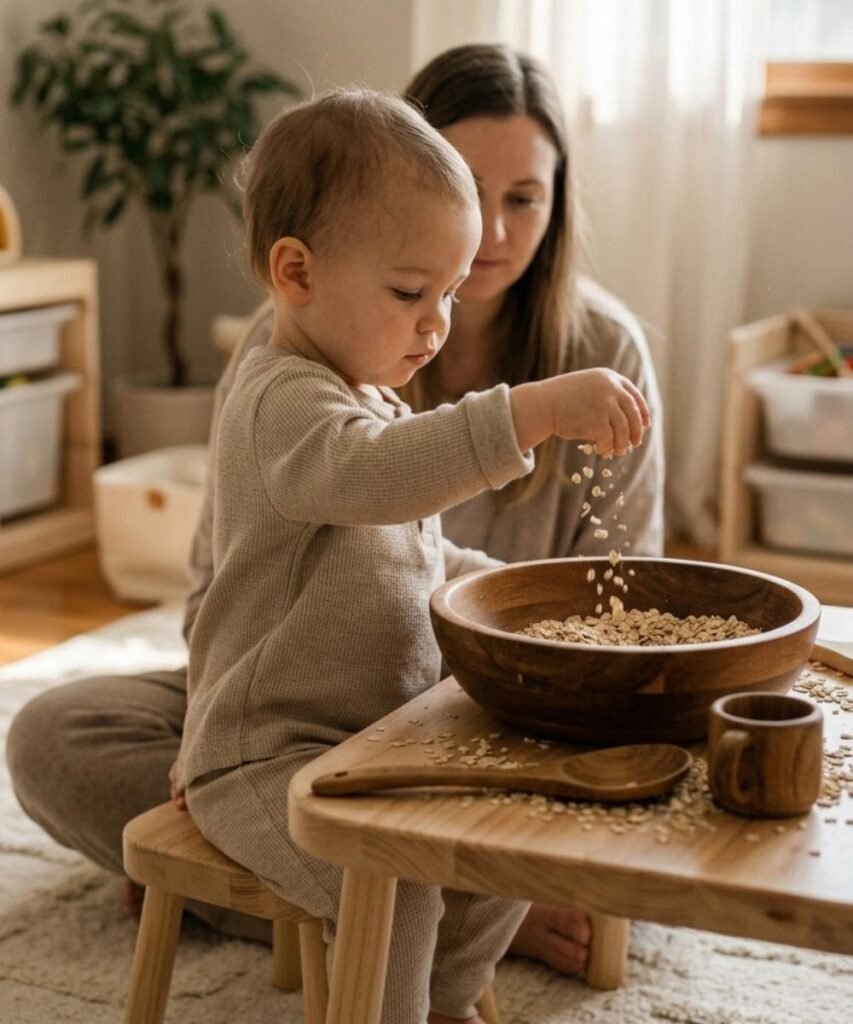
Squeeze the sponge, watch the water run out, squeeze it again. Drop the spoon, wait for the noise, drop it again. It looks like a loop with no purpose, and it drives a lot of adults slightly mad.
It is actually experimenting. Your toddler is checking whether the same action always produces the same result, which is the exact thinking messy play is built on. Flour behaves one way, wet flour behaves another, and finding that out takes about forty repetitions.
Once you spot this repetition, you can stop worrying that an activity is “too simple”. Two cups and some water will hold a child in this stage far longer than an elaborate setup will.
4. They Can Show You When They Have Had Enough
This one gets skipped, and it is the sign I would least want a parent to ignore.
Messy play involves strong input: cold, sticky, gritty, wet. A toddler who is ready has some way of telling you to stop. It does not have to be words. Pushing the tray away, turning the body away, holding both hands up, signing “finished”, or a clear “no” all count.
When a child can opt out, mess stops being something that happens to them. If your toddler has no reliable way to signal yet, keep sessions short and watch the face closely instead, and end things at the first stiff posture or frozen hands rather than waiting for crying.
Offer a cloth so they can wipe their own hands.
Leave the bin out, lid off, in case they return on their own.
“Just try it once more” after a clear no.
Waiting for crying before you end the session.
5. Dumping, Pouring, and Carrying Things Has Taken Over Your House
Laundry baskets get emptied. Cups of water travel from the bathroom to the sofa. The shoe rack ends up in the kitchen. Everything that can be tipped out, gets tipped out.
Parents usually read this as a phase to survive. It is more useful to read it as a request. Toddlers in this stage are driven to move material from one container to another, and a sensory bin gives that drive somewhere legal to go.
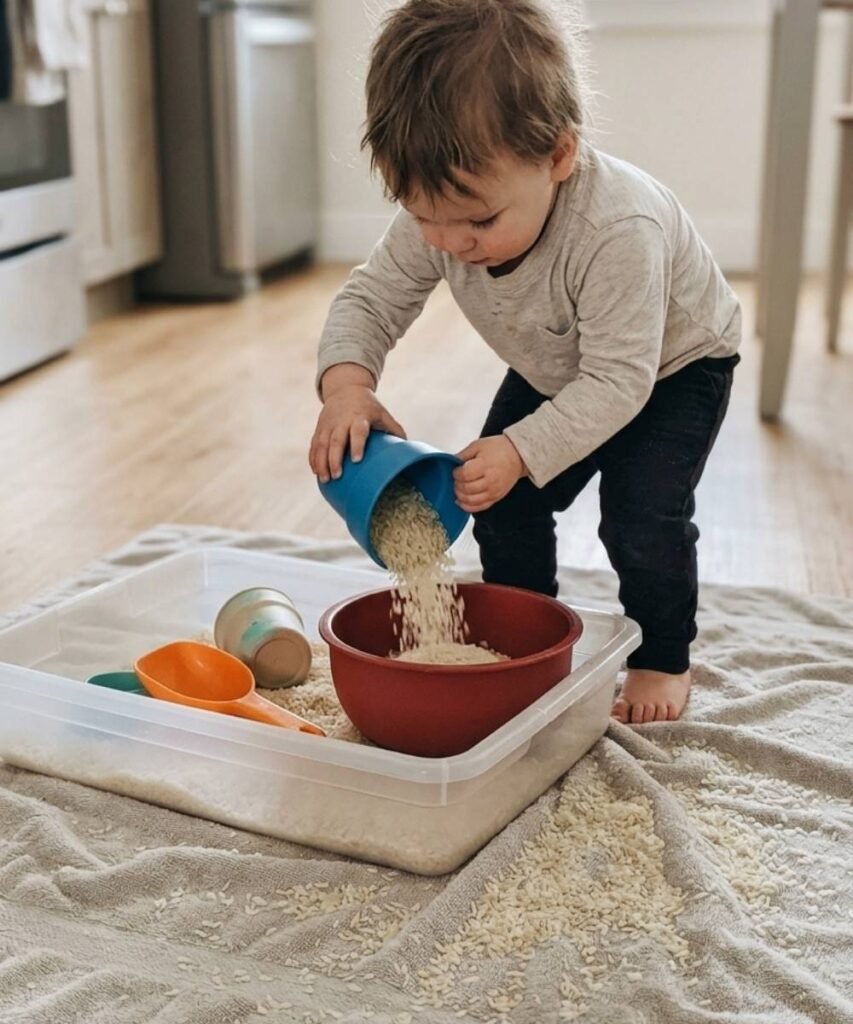
Set up the simplest possible version: one large tub of dry rice or oats, two or three containers of different sizes, and one chunky scoop. No theme, no colour, no small toys hidden inside. Let the dumping be the activity. For more filler choices once the first bin is a hit, [sensory bin fillers that work for toddlers] covers what holds up and what to skip.
6. They Stay With One Thing for Longer Than a Minute or Two
Attention span decides how much setup is worth your time, and it is worth being honest about where your child actually is.
A toddler who drifts after sixty seconds is not failing at anything. They simply need an activity you can assemble in two minutes and abandon without regret. A toddler who will sit with a puzzle or a stack of cups for five or eight minutes can handle a bin with more parts, a second texture, or a small pouring station.
Match the effort to the attention, not to what looks good in a photo. A bin that took twenty minutes to build and lasted three is the fastest way to decide sensory play “does not work” for your child.
| Stays with it for | Set up this | Your prep time |
|---|---|---|
| About a minute | One texture, one tool, high chair tray | 2 minutes |
| Three to five minutes | Floor tub, filler plus two containers | 5 minutes |
| Eight minutes or more | Two textures, pouring station, scoop and funnel | 10 minutes |
7. They Can Follow One Simple Direction in the Middle of Play
“Rice stays in the tray.” If your toddler can hear that, pause, and adjust even half the time, you have the boundary you need.
The common mistake here is loading up the rules before anything starts. Three instructions delivered at the door are three instructions a toddler will not retain. One short phrase, repeated calmly during play, is what actually lands.
Pick your single rule before you sit down, keep it to about four words, and say the same words every session. “Hands in the tray.” “Water stays in the bowl.” Consistency is doing most of the work here, not the wording.
8. Wet or Sticky Hands Do Not End the Day
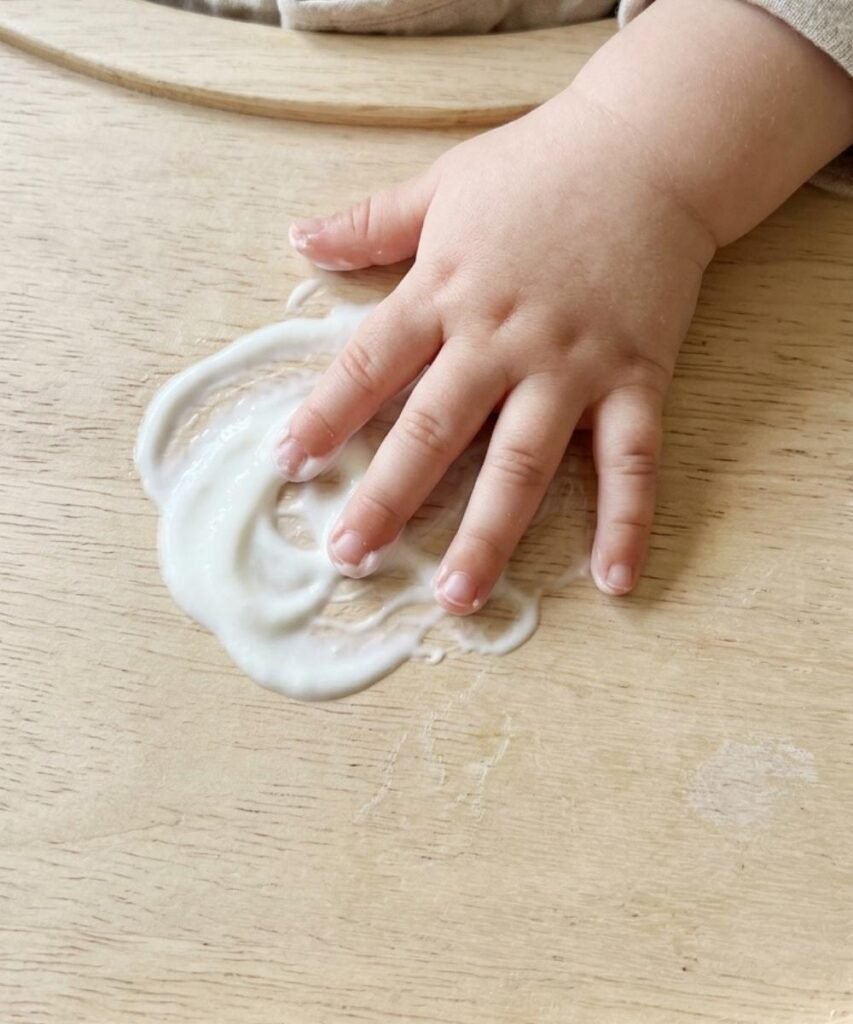
Early on, a drop of yogurt on the palm can trigger a full stop: hands held rigid in the air, body leaning away, the whole thing over. Later, the same child wipes a hand on a trouser leg and carries on.
That recovery is the sign. It does not mean your toddler loves mess, only that the feeling is now manageable.
If your child is still in the first group, this is not a flaw and it is not a reason to push. Offer dry textures first, keep a damp cloth within reach so wiping is always an option, and give tools so hands stay clean by choice. Some toddlers take months to go from a spoon to fingers, and plenty of good sessions happen with a spoon. [Low mess sensory play ideas for busy parents] has setups built around exactly this.
Keep a damp cloth beside the tray so wiping is always available without ending the game.
Offer tools first. A spoon, tongs, or a cup means hands can stay clean by choice.
Try one fingertip rather than whole hands, and let that be the whole session.
9. They Copy What You Do With Real Textures
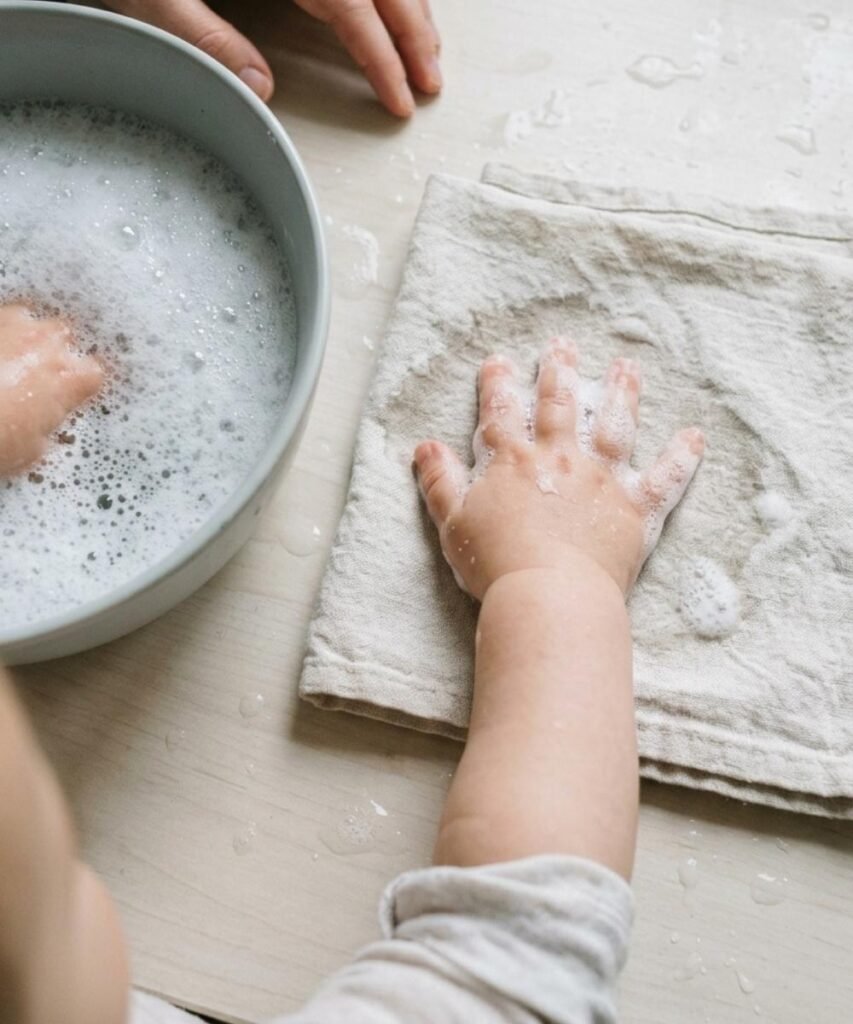
The kitchen sink is on, and a small person is hanging off your leg wanting in. Or you are kneading dough and two hands appear at the edge of the counter.
That copying instinct is readiness showing itself in the most practical form, because it comes with built-in motivation. A toddler who wants to wash up does not need to be convinced to touch soapy water.
Use the task they are already interested in. A washing-up bowl with two inches of water and a few unbreakable cups. A small lump of your dough on a floured plate. A spray bottle and a cloth for the patio doors. Real jobs, scaled down, tend to hold toddlers longer than anything bought for the purpose.
One rule for water: an adult stays within arm’s reach, every time, including with shallow water in a bowl.
☐ A lump of your bread dough on a floured plate
☐ Spray bottle and cloth for the patio doors or a tiled wall
☐ Watering can and one houseplant
☐ Dry rice and a colander over a tray
☐ A sponge, a bowl of water, and an empty bowl to squeeze into
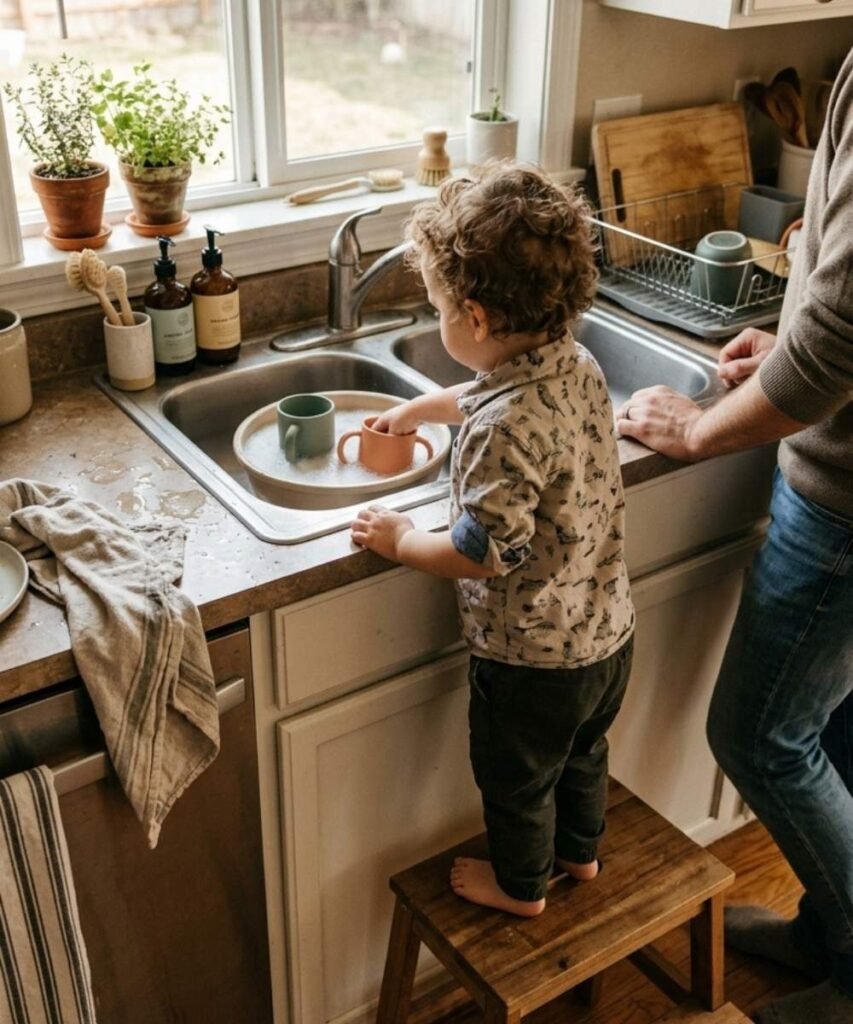
10. They Can Hold Themselves Steady With Both Hands Free
This sign is physical, and it quietly determines whether a session works.
Scooping, squeezing, and pouring all need two free hands. If your toddler is still using one hand to stay upright, or leaning on the tub and tipping it, the activity turns into a balancing problem instead of a sensory one.
Check it this way: can they sit on the floor, or stand at a low surface, and use both hands at the same time without wobbling? If standing is unsteady, move the tray to the floor. If floor sitting is unsteady, a high chair tray with a thin layer of material works well and keeps everything contained.
Position is usually the easiest thing to change when a session is not going well, so try it before you change the activity.
Conclusion
Readiness is not a gate your toddler either passes or fails. Most children show four or five of these signs before the rest catch up, and that is a fine place to begin: one tray, one dry material, five minutes, a towel underneath.
If very few of these feel familiar yet, nothing is wrong. Offer textures through everyday moments instead, bath time, meals, puddles, and check again in a few weeks. Children arrive at this at genuinely different times.
For a broader picture of what this kind of play offers and how to build it into a normal week, [sensory play for toddlers: benefits, types, and how to start] is a good next read.
Save this list to your toddler activities board so you can run through the signs again on the day you finally feel brave enough to open the flour.