
Affiliate Disclosure: This post contains affiliate links. If you make a purchase through these links, I may earn a small commission at no extra cost to you. As an Amazon Associate, I earn from qualifying purchases. Thank you for supporting CozyClan!
Most of December is off-limits to a toddler. The tree is fragile, the gifts are wrapped, the candles are lit, and the answer to nearly everything is not yet.
That is a lot of looking without touching, and it tends to come out sideways around four in the afternoon.
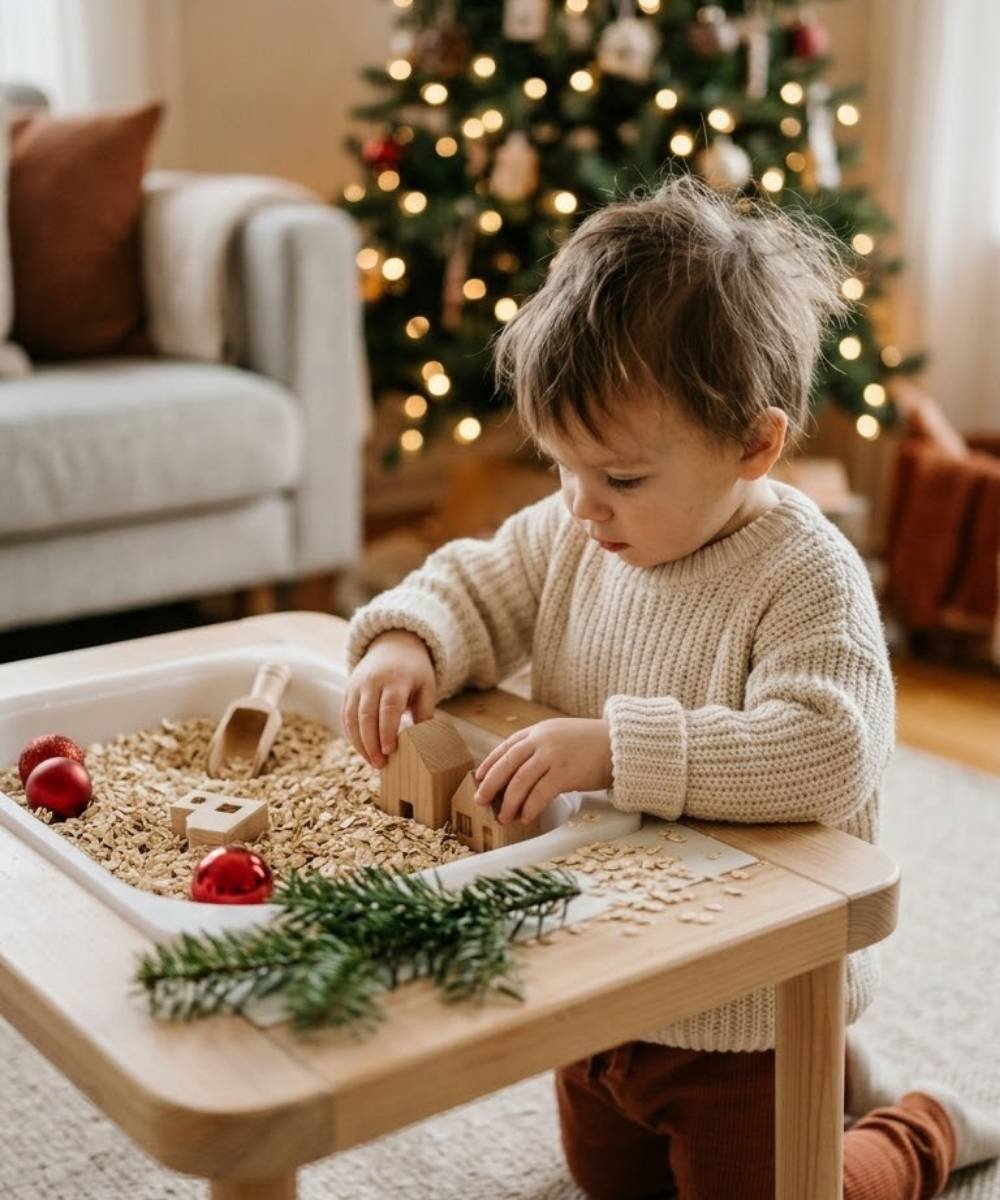
A bin fixes some of that. Hand over a tub of shredded paper and three small wrapped boxes, and one corner of Christmas finally belongs to them. They can dig in it, tip it out, and squash it flat, and nothing breaks.
These Christmas sensory activities & bins for toddlers and preschoolers were chosen for real December weeks, not for a styled photo. Most use what is already in your kitchen, your recycling, or the decoration box. A few take two minutes. A couple are worth saving for a slow Sunday.
Every idea below says how messy it actually is, and which ones are safe for children who still put everything in their mouth. Pick whichever matches the mess you can face today.
Table of Contents
The Christmas Bin Formula: Base, Festive Objects, One Tool
Nearly every bin on this list is built the same way, and knowing the pattern means you can invent your own with whatever is in the cupboard.
Start with a base that fills the tub, like oats, rice, shredded paper, or felt strips. Add festive objects big enough to stay out of a mouth, such as shatterproof baubles, pinecones, or small wrapped parcels. Finish with one tool, a scoop, a cup, or chunky tongs.
One tool, not five. A toddler with four scoops moves scoops around. A toddler with one scoop actually uses it.
Choose the base by age rather than by how it photographs. The [sensory bin fillers for toddlers] guide breaks down which bases suit which age and what to skip entirely.
1. Elf Workshop Bin With Shredded Paper and Wrapped Parcels
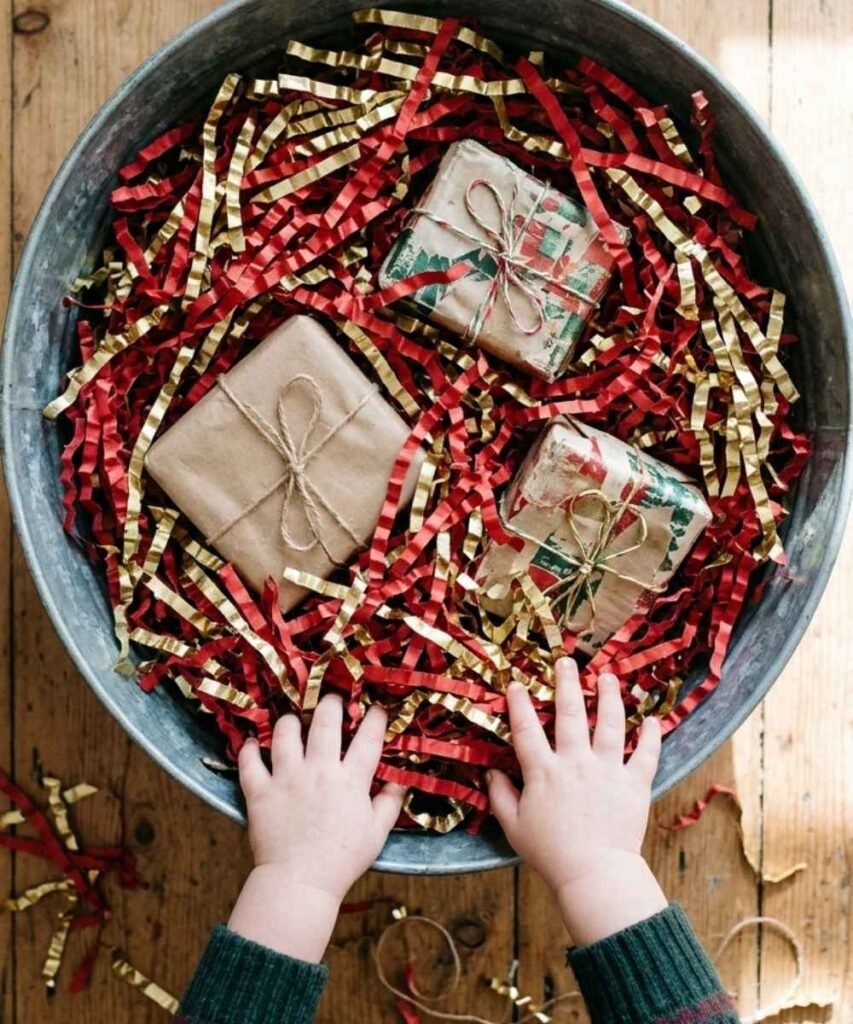
Shred a few sheets of old wrapping paper, pile them into a deep tub, and bury three or four little boxes wrapped in scraps.
The digging is good, but the unwrapping is what holds them. A toddler will tear one open, find a wooden block inside, and immediately want it wrapped again, which is a job you can do over and over without getting up.
Wrap loosely so small hands can win. Tight tape turns the game into a frustration within seconds.
Keep the paper pieces long rather than confetti sized, and sit nearby, because paper and mouths find each other fast.
2. Red and Green Rice Bin With Scoops, Cups, and a Funnel
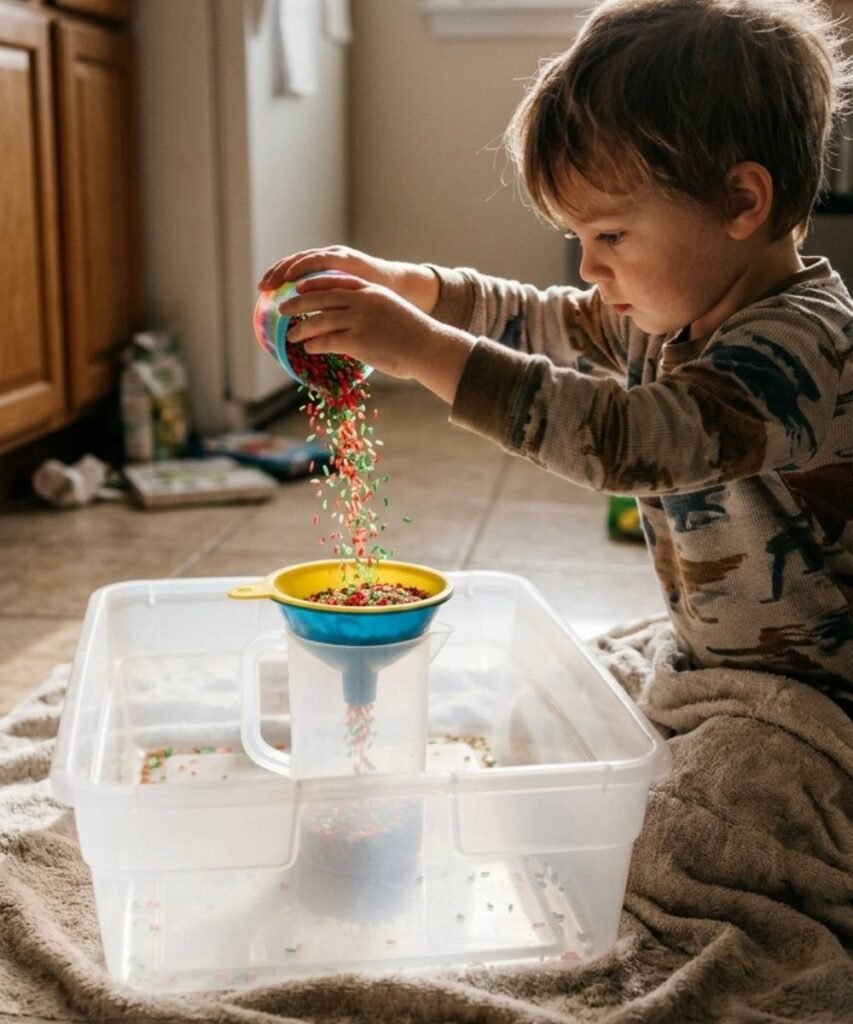
The pouring bin everyone pictures when they hear sensory play, and the one that needs the most thought before you fill it.
Dye dry rice by shaking it in a bag with a few drops of food coloring and a spoonful of vinegar, then spread it on a tray overnight. Red and green together look festive without extra decoration. Add a funnel, two cups of different sizes, and a small jug.
Rice is not suitable for children under three or for any child who still mouths materials, because loose grains are a choking and inhalation risk. For that age, use the oat bin below or the felt one instead. Our [sensory play safety guide for toddlers] covers how to judge when a child is ready.
3. Snowy Village Bin Built on Dry Oats
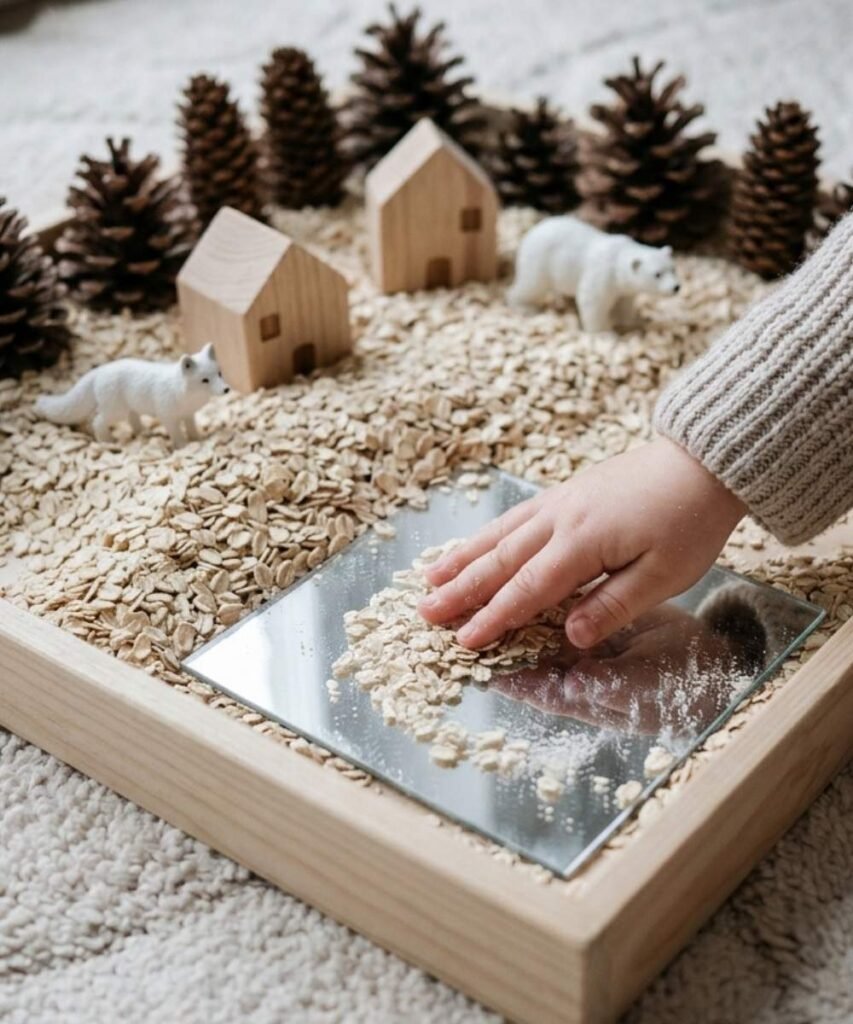
Oats look like soft snow, cost very little, and do far less damage than rice when they land on the floor.
Fill a shallow tub, half bury a few wooden houses or small winter animals, and add a wide spoon. Older toddlers will build drifts and dig animals out. Younger ones mostly want to run their hands through it, which is the whole point.
Plain rolled oats are the safest base here because a small amount in the mouth is not dangerous, though they are still not a snack.
To stretch it further, add a mirror tile underneath for an icy lake, or stand a few pinecones up as trees.
Mess: moderate, sweeps easily
Feels like: soft snow
Mess: almost none
Feels like: dry, draping, quiet
Mess: high, travels far
Feels like: fast and pourable
Mess: very high, plan a bath
Feels like: cold and slippery
4. Felt Strip Evergreen Forest Bin for Mouthing Toddlers
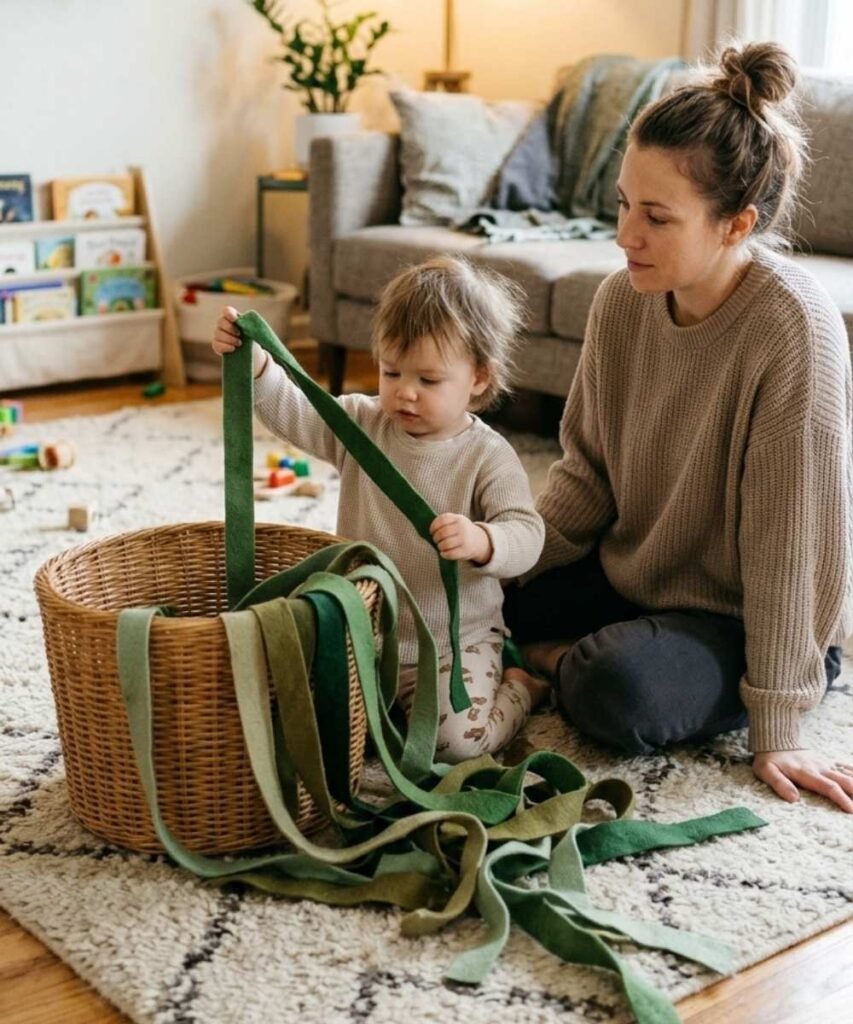
One rule makes this bin work for the youngest children: nothing in it is small enough to swallow.
Cut green felt or old fleece into strips about the length of your hand and fill a tub with them. Tuck in a few large fabric scraps and a chunky wooden spoon. The strips tangle, drape, and get flung about, and there is not a single grain or bead to worry about.
Felt makes a quiet, dry, almost mess-free bin, so it suits a living room rug better than most things on this list.
Good for children who are still at the stage of testing everything with their mouth.
5. Tangled Fairy Lights Bin Made From Cooked Spaghetti
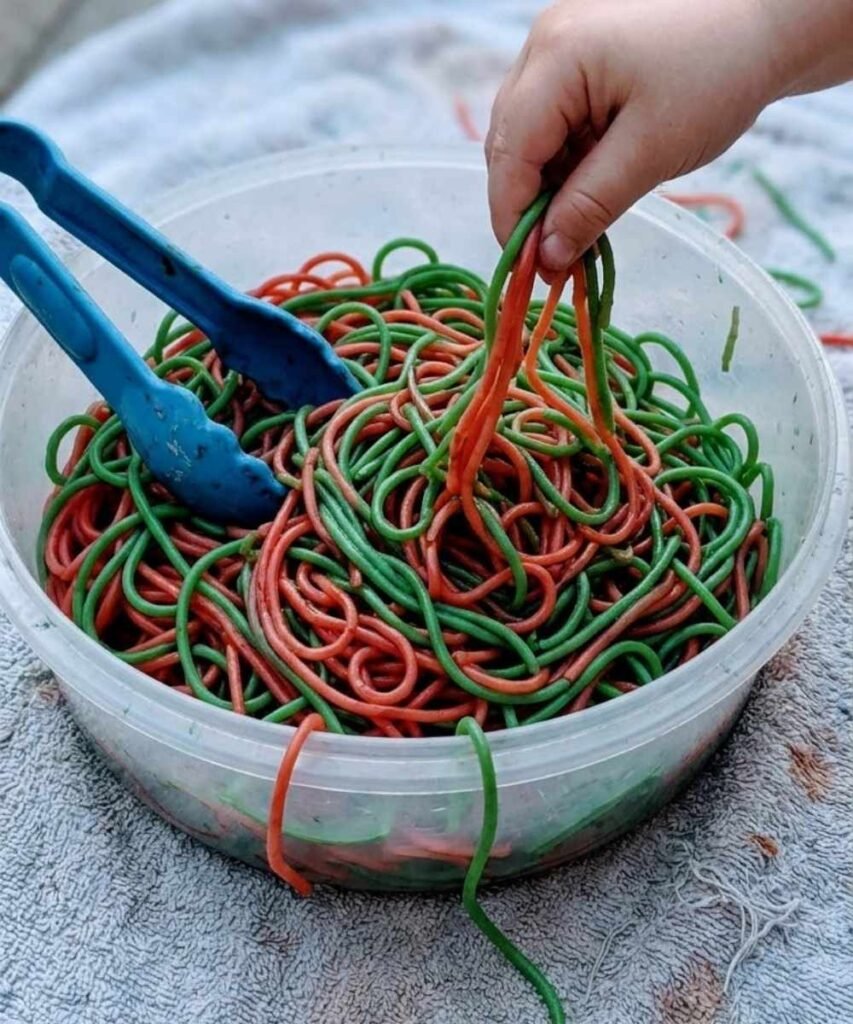
Cook a packet of spaghetti, rinse it cold, then toss half with green food coloring and half with red.
Piled in a tub, it looks exactly like a knot of Christmas lights, and it feels like nothing else on this list. Cold, slippery, and slightly alarming at first touch. Expect a long pause before some children will go near it, and expect others to plunge both arms in.
Add plastic tongs and a colander so there is a job attached to the mess.
A splash of oil stops the strands welding together. Lay a towel underneath and plan for a bath afterward, because this one travels.
Red and green food colouring
A splash of cooking oil
Plastic tongs and a colander
An old towel for underneath
6. Hot Cocoa Station Bin With Cocoa Powder, Cups, and Spoons
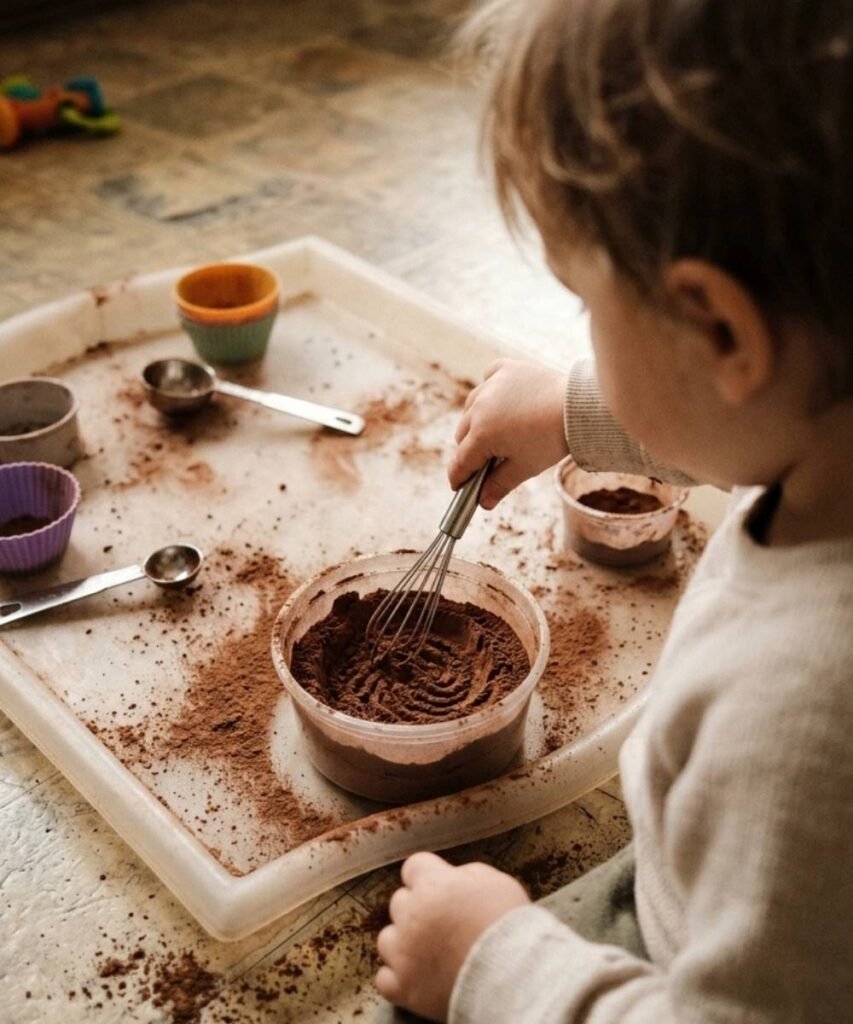
The usual mistake with this bin is adding water. Keep it dry and it lasts an hour instead of five minutes.
Tip plain cocoa powder into a tub, add a few tablespoons of flour to bulk it out, then set out small cups, a whisk, and a measuring spoon. The smell does most of the work. Toddlers scoop, pour between cups, and stir with real concentration.
Cocoa powder is bitter, so most children taste it once and stop. Skip it for anyone with a cocoa sensitivity.
Brown fingerprints wipe off skin easily but do mark pale fabric, so set up on a hard floor.
7. Jumbo Pom-Pom Ornament Drop Bin
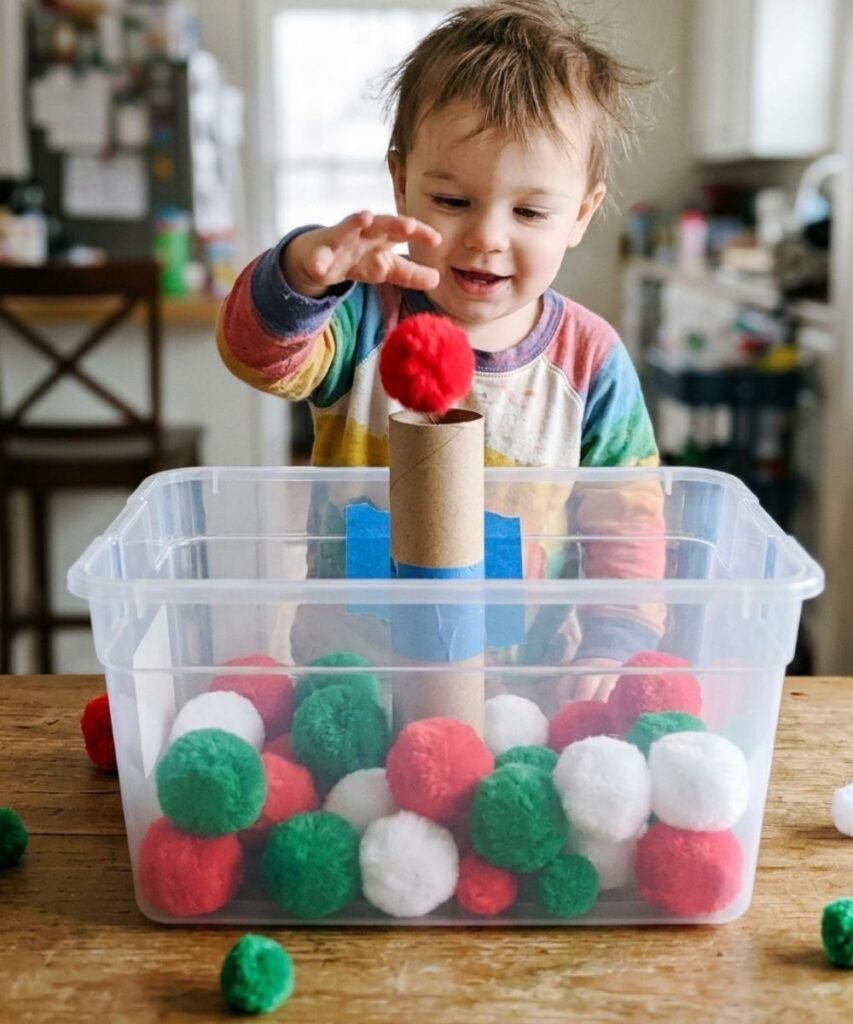
Dropping things is its own kind of satisfying, and this gives it a target.
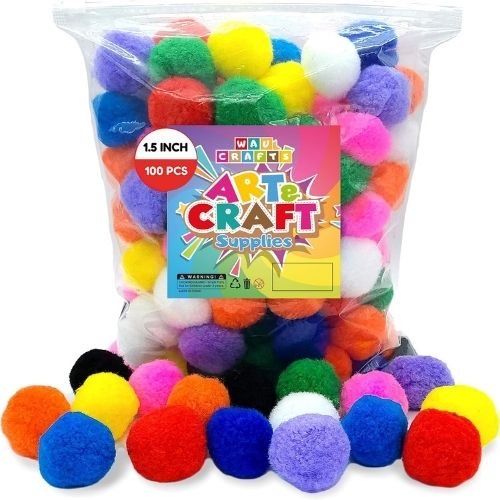
Tape a cardboard tube upright against the side of a tub, then fill the tub with jumbo pom-poms in red, green, and white. Your toddler posts a pom-pom into the top and watches it land. Preschoolers will race to clear the whole tub.
Use only jumbo pom-poms, the ones roughly the size of a plum. The craft-sized ones are a clear choking risk and belong nowhere near this age group.
Two tubes at different heights turn it into a sorting game, one color for each.
Click below to get yours’ POM POM Balls
8. Cranberry Float and Scoop Water Bin
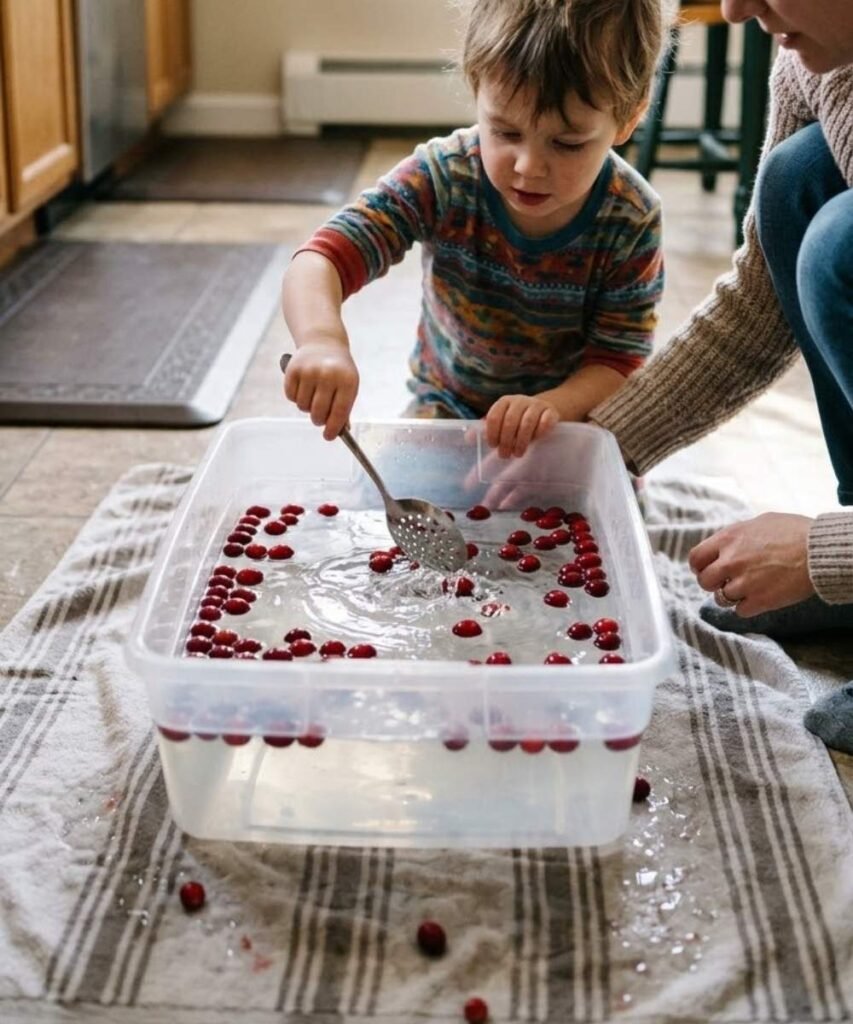
Cranberries bob, roll away, and refuse to be caught, which is exactly why this one holds attention.
Half fill a shallow tub with cool water, tip in a bag of fresh cranberries, and hand over a slotted spoon and a cup. The chase is the activity. Preschoolers can count them into the cup, and older toddlers will work out that a spoon catches more than fingers.
Cranberries are round, firm, and a genuine choking hazard, so this is for preschoolers who no longer mouth materials, with an adult within arm’s reach the whole time.
For younger children, swap in halved orange slices, which float just as well and are far too large to swallow.
Stay within arm’s reach the whole time.
Offer a slotted spoon and one cup.
Count the cranberries back in at the end.
Leaving the room, even briefly.
Deep tubs or buckets.
Frozen berries, which are harder still.
9. Shaving Cream Snow Drift Tray on a Baking Sheet
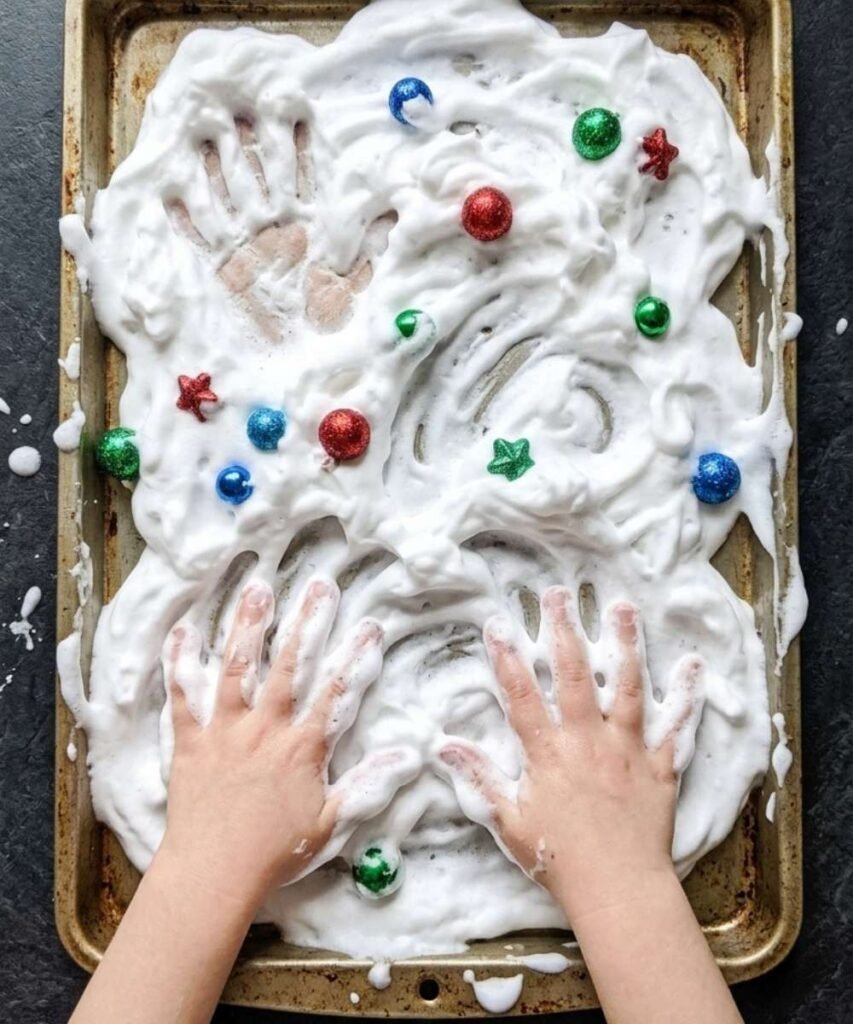
Worth saying plainly: this is the messiest idea here, and it is also the one most children remember.
Spray a thick layer of foam across a rimmed baking sheet and press a few shatterproof baubles into it. Hands disappear, lines get drawn, drifts get built and flattened. Keeping it on a tray rather than a table contains almost all of it.
Shaving cream is not taste safe. It stings eyes and tastes foul, so it suits children who are past putting hands in their mouth. If you are unsure whether yours is ready, the [signs your toddler is ready for messy sensory play] piece is a useful gut check.
Strip to a nappy or old clothes and keep a damp cloth within reach.
Strip to a nappy or old clothes
Press baubles in so there is a job to do
Keep a damp cloth within reach
Set up near a sink or on a wipeable floor
Carpet, rugs and fabric sofas
Scented or menthol foam, which stings
Treating it as taste safe, because it is not
Walking away mid-play
10. Taste-Safe Cornstarch Snow for Toddlers Who Still Mouth Everything
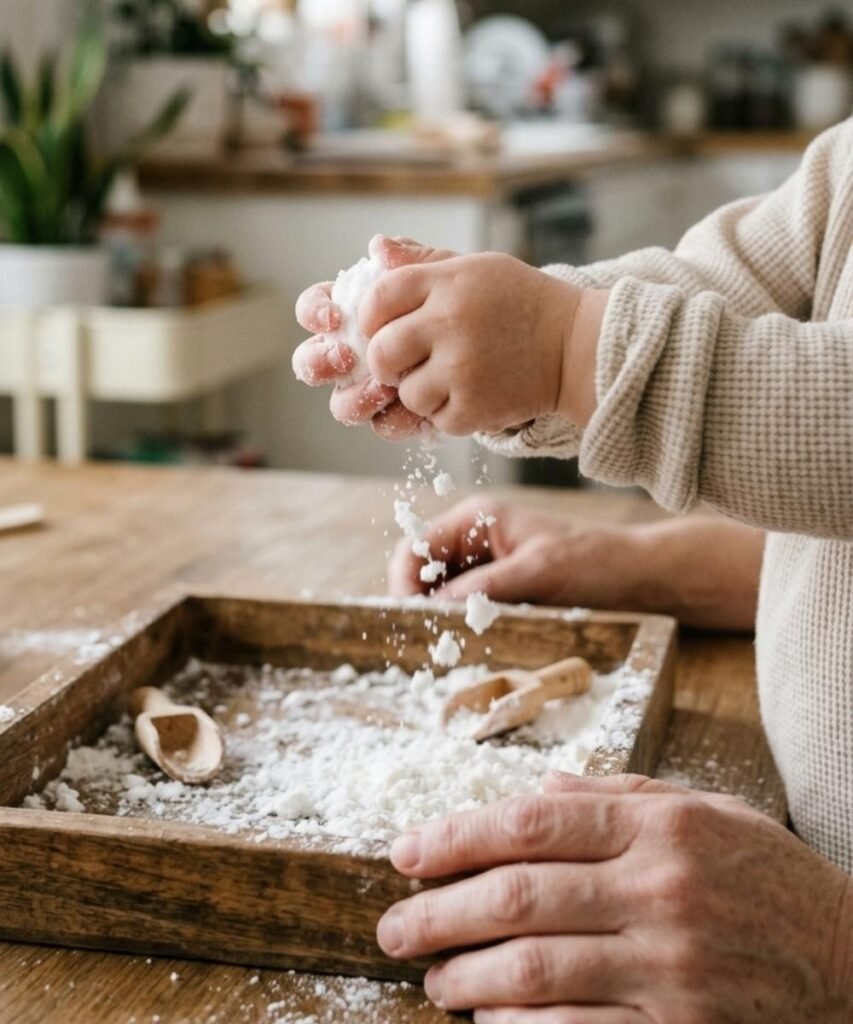
Here is the swap for the one above, and it feels closer to real snow anyway.
Mix eight parts cornstarch to one part coconut oil, breaking up lumps with your fingers until it holds a shape when squeezed and crumbles when you let go. Add a drop of peppermint extract if you want the smell.
It is cold to the touch, packs into tiny snowballs, and vacuums up without drama.
Taste safe does not mean edible. It is fine if a handful goes in a mouth, but it is not a snack, and coconut oil should be skipped if there is any coconut allergy in the house.
11. Fizzing Snowballs With Baking Soda and Droppers
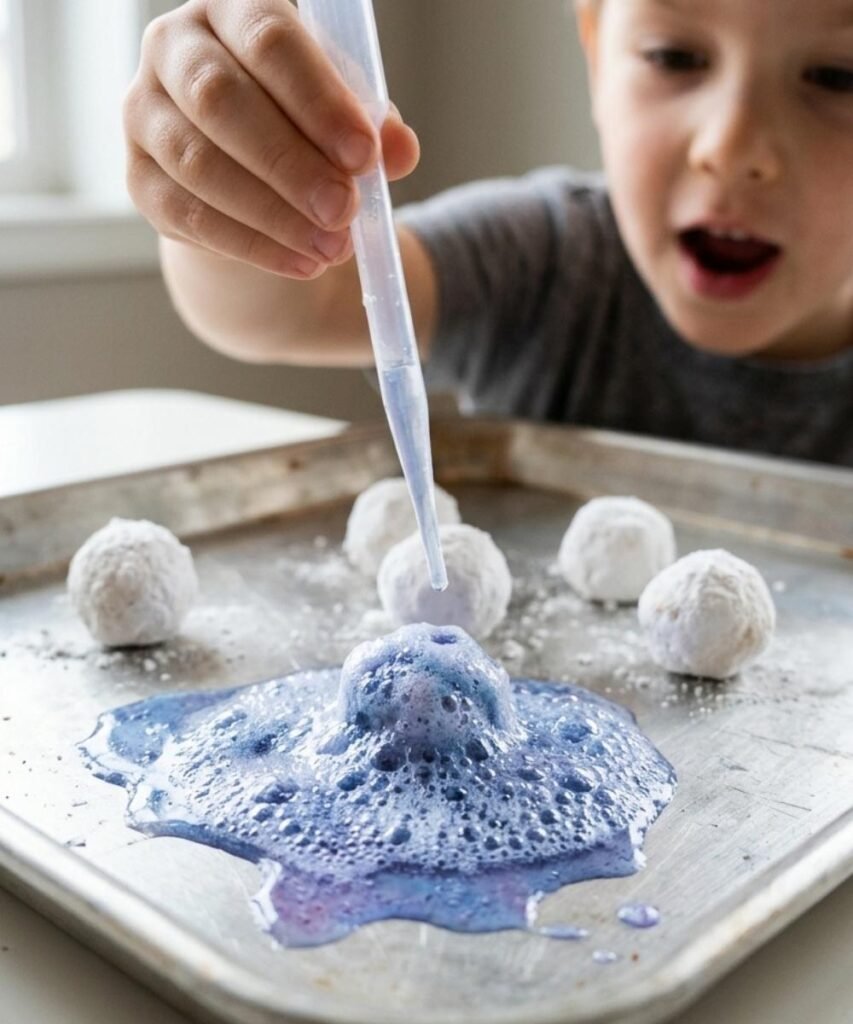
Pack damp baking soda into small balls, chill them for twenty minutes, then line them up on a tray with a bowl of vinegar and a pipette.
Every squeeze brings a hiss and a collapse. Toddlers will keep going long past the point where you have lost interest, and preschoolers start predicting which ball will go first.
A few drops of red and green food coloring in the vinegar gives colored foam as a bonus.
Vinegar fumes are sharp in a small room, so open a window. Keep the bowl shallow so a knocked elbow spills a little rather than all of it.
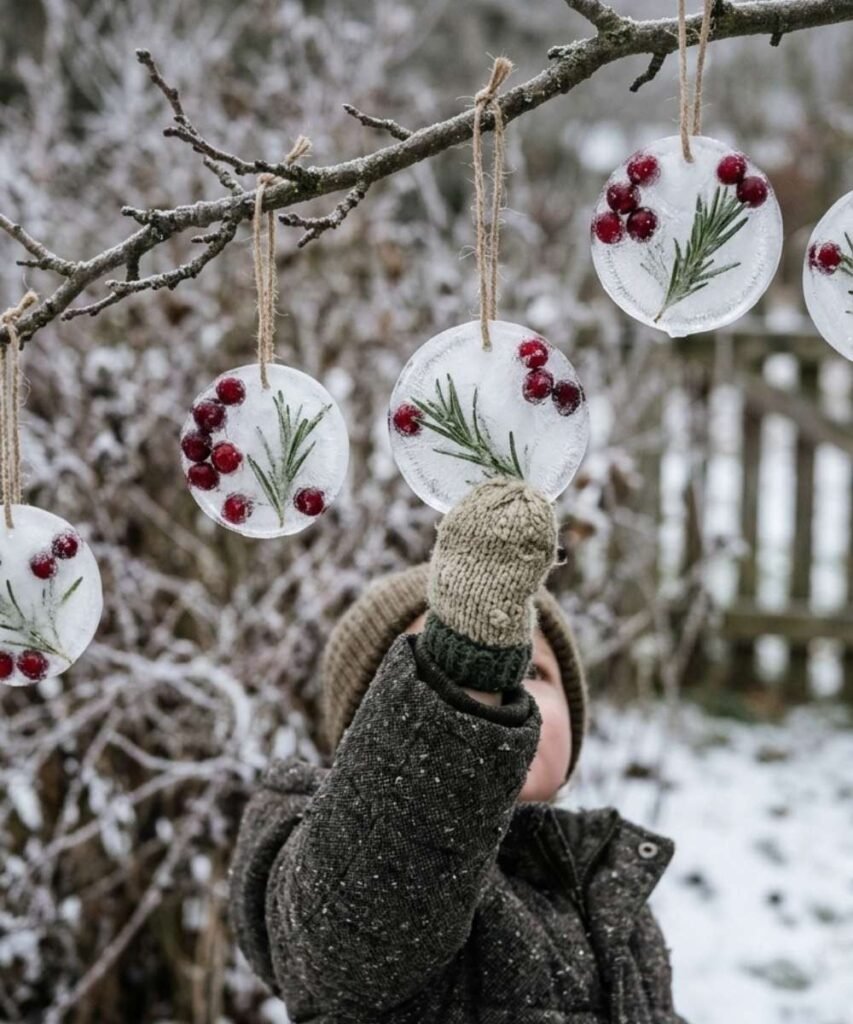
Most ice activities are about rescuing something. This one is about making something, which is a different pleasure altogether.
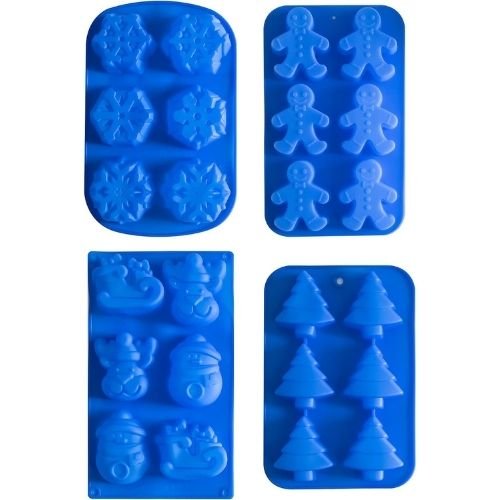
Fill a muffin tin or silicone mold with water, drop in cranberries, rosemary sprigs, or scraps of ribbon, and lay a loop of string across each one so it freezes in. Leave them outside overnight if it is cold enough, or use the freezer.
In the morning, pop them out and hang them from a fence or a bare branch.
They last a day at most in mild weather, which gives you a natural conversation about melting. Keep hands warm and the handling short.
13. Cotton Ball Snowball Transfer With Toddler Tongs
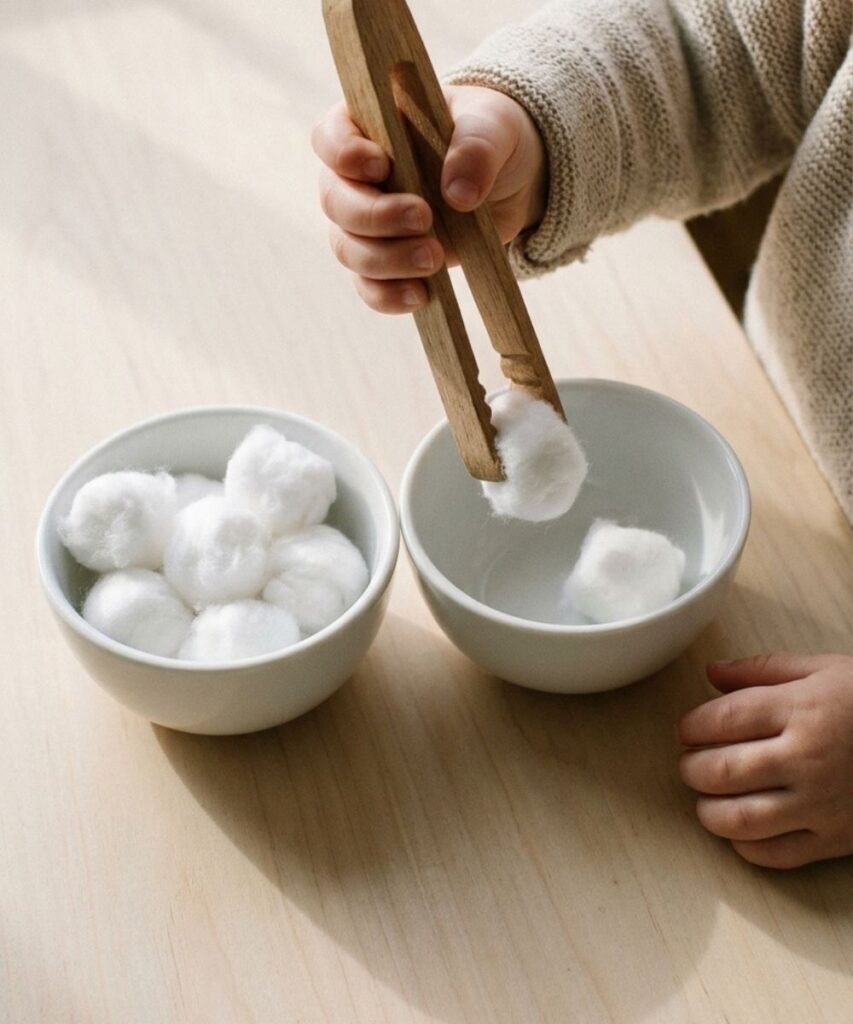
When the house is loud and you need the volume down, this is the one.
Set out two bowls, fill one with cotton balls, and hand over a pair of chunky toddler tongs. The job is to move every snowball from one bowl to the other. Silent, dry, and genuinely difficult for small hands.
Tongs are hard at two. Many toddlers give up and use fingers, which is fine, and some will go back to the tongs once the bowl is nearly empty.
If your afternoon needs more of this kind of thing, there are more [calm, mess-free indoor play ideas] in the quiet activities list.
| Tool | How hard it is | Best for |
|---|---|---|
| Fingers | Easy, and perfectly fine | Younger toddlers, or when patience runs out |
| Chunky tongs | Hard at two, achievable at three | Building hand strength slowly |
| A large spoon | In between, and less frustrating | The middle step when tongs defeat them |
14. Squishy Snowflake Sensory Bag Taped to the Floor
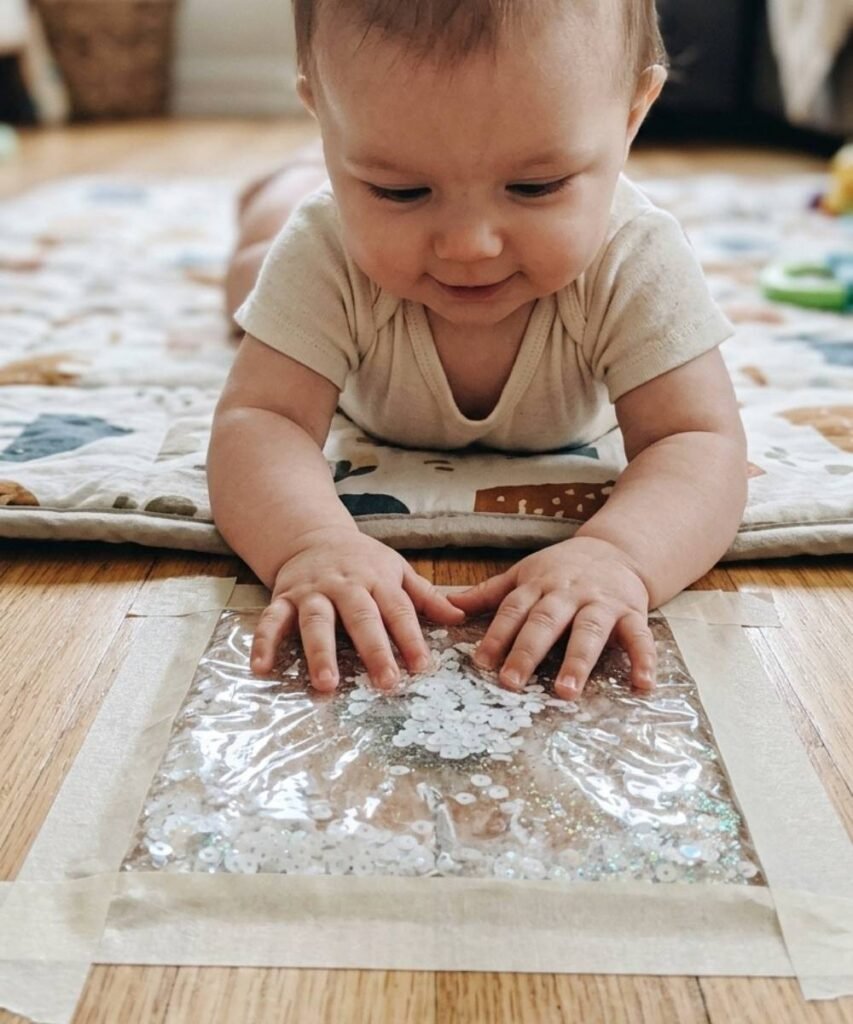
Babies and younger toddlers get left out of most Christmas play because nearly everything is small or messy. A sealed bag solves both problems at once.
Squeeze clear hair gel into a sturdy freezer bag, add white sequins, a spoonful of glitter, and a few paper snowflakes. Push out the air, seal it, then tape all four edges down with strong tape, ideally onto the floor or a low window.
Little hands press, push the sequins around, and chase the glitter. Nothing escapes.
Check the seal before every session and put the bag away between uses. A bag that has started to split goes in the bin, not back on the floor.
15. Glitter Snow Globe Sensory Bottles
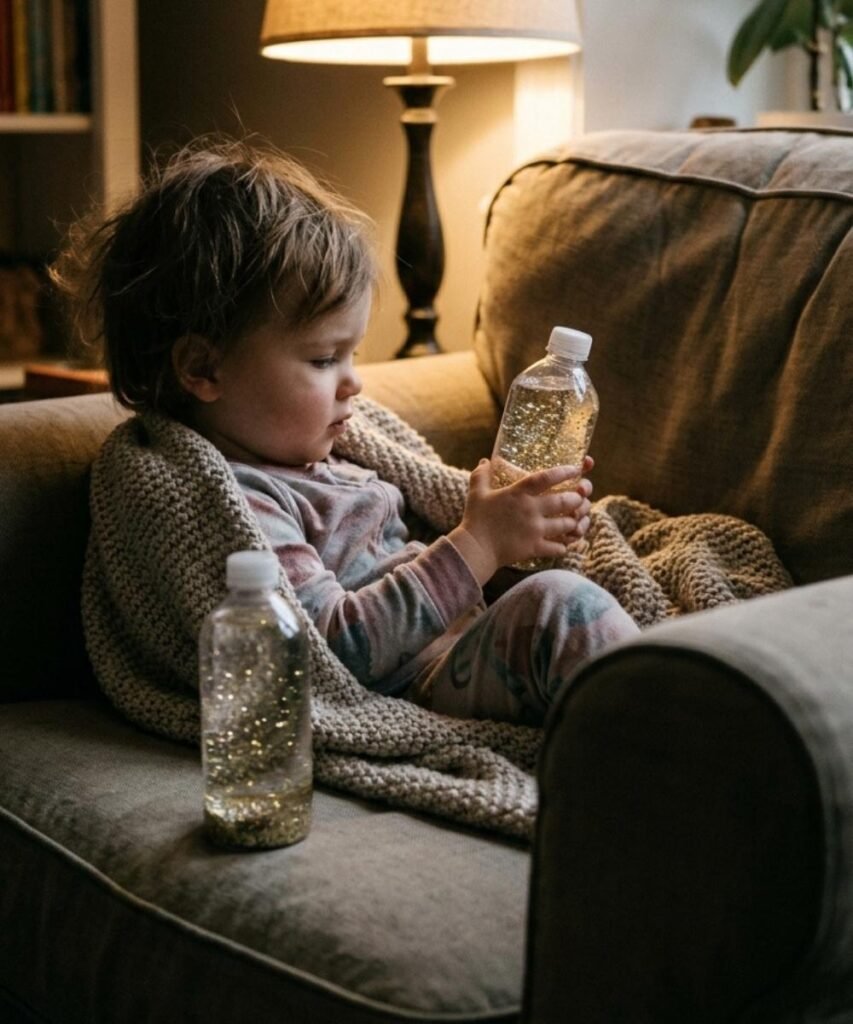
Late December evenings get overstimulating. Too many lights, too many people, too much sugar. A bottle like this gives an overwhelmed child something slow to watch.
Fill a small plastic bottle three quarters with warm water, add a tablespoon of clear glue, a spoonful of fine glitter, and a few sequins, then top it up and shake. The glue slows the glitter so it drifts for a good thirty seconds.
Glue the lid shut and tape over it. Do not rely on the thread alone, because toddlers are better at opening bottles than we expect.
Keep one in the car for the drive home from a family visit.
16. Christmas Card Texture Basket
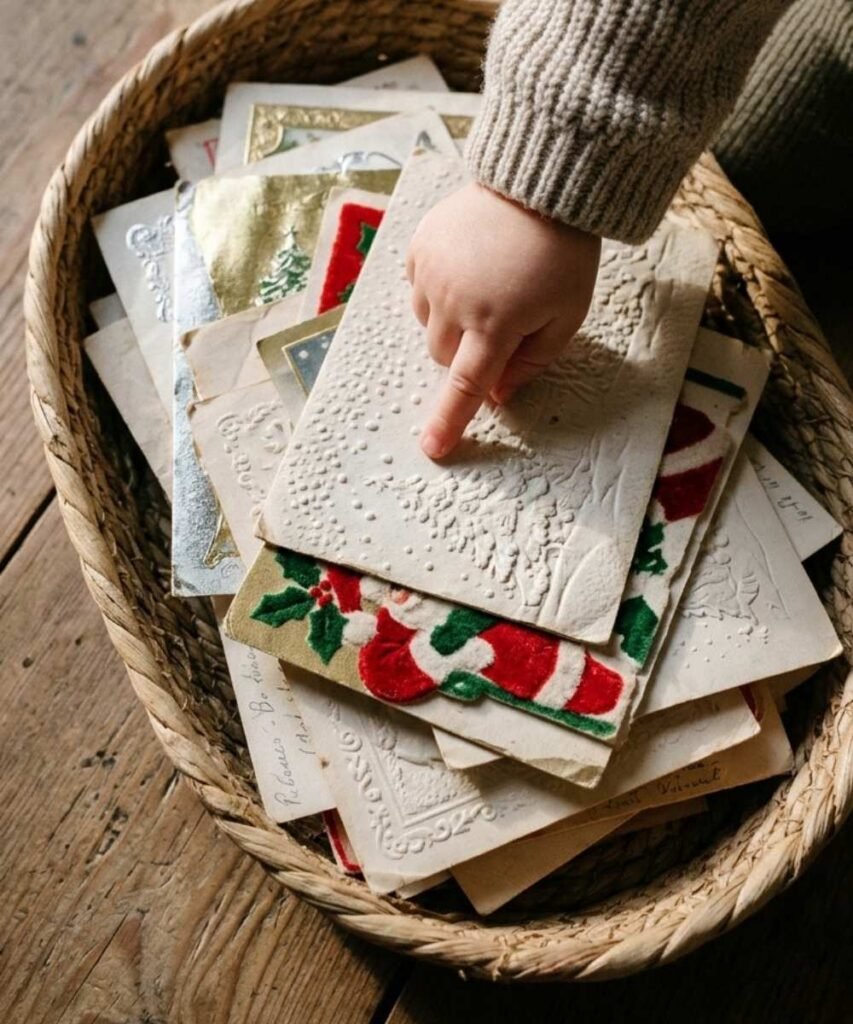
Last year’s cards are probably in a drawer somewhere, and they are a better texture collection than anything you could buy.
Pull out the ones with foil, glitter patches, velvet flocking, raised embossing, and plain matte card. Trim off any dog-eared edges and pile them into a shallow basket.
Toddlers sort them by how they feel long before they can tell you why. Run a finger over a bumpy one and say bumpy, then find a smooth one together.
Remove any card with loose glitter, small stuck-on gems, or a ribbon bow. Those come off in seconds and go straight in a mouth.
17. Stocking Feely Bag: Guess What Is Inside
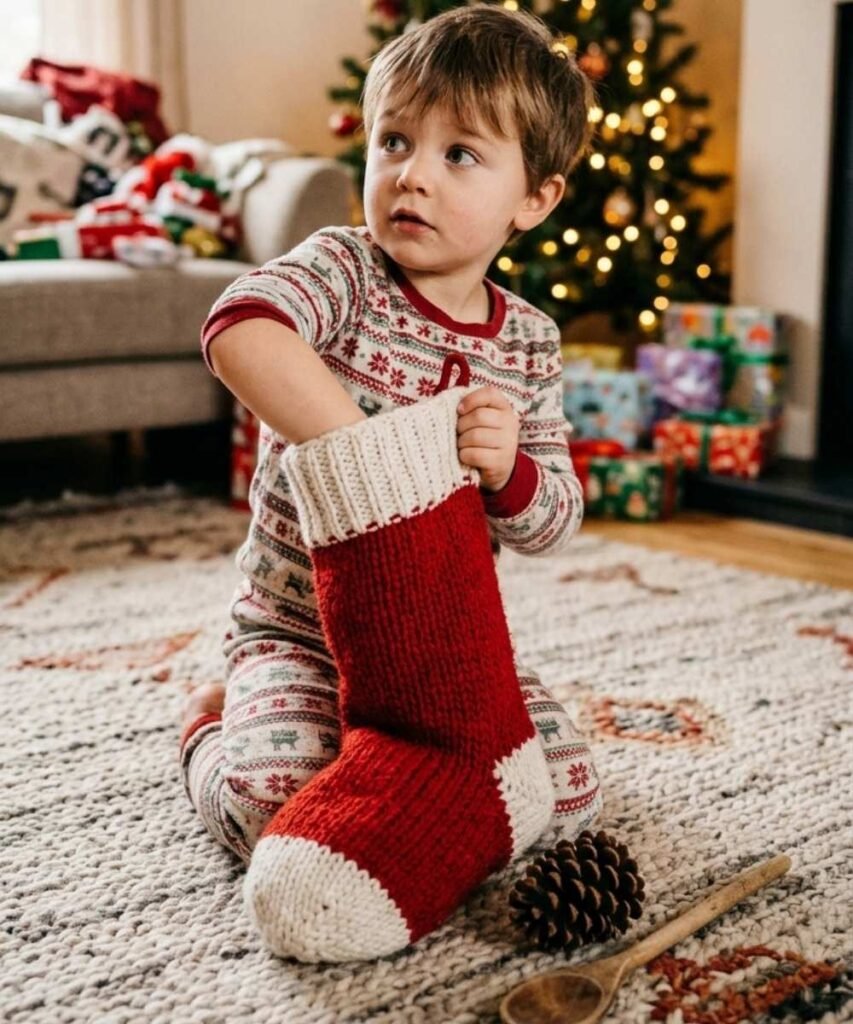
Touch without looking is a surprisingly hard skill, and toddlers find it hilarious.
Drop three or four familiar objects into a Christmas stocking, something like a pinecone, a wooden spoon, a soft toy, and a shatterproof bauble. Your child reaches in, feels around, and guesses before pulling it out.
Start with things they know well. Unfamiliar objects turn the game into a shrug.
Preschoolers can describe what they feel before guessing, which is where the language practice comes in. Toddlers mostly pull things out immediately, and that still counts.
Swap one object each round so it stays interesting.
18. Fairy Light Glow Tray in a Darkened Room
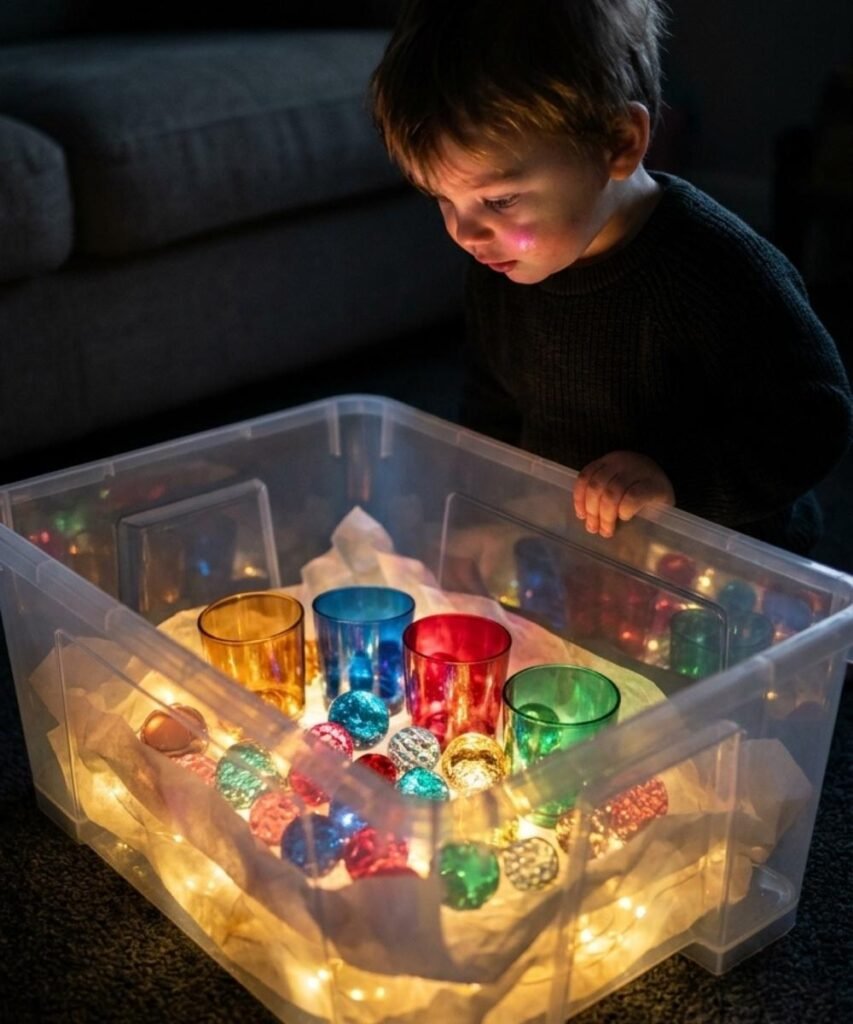
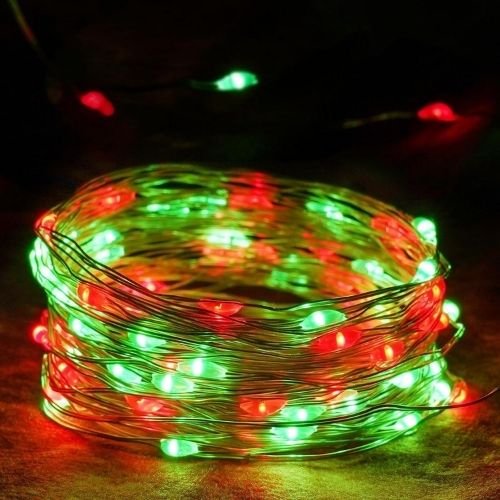
Lay a string of battery fairy lights in the bottom of a clear plastic tub, cover them with a sheet of baking paper, and turn off the lights.
Suddenly you have a glowing table. Set translucent objects on top, like colored plastic cups, acrylic baubles, or shapes cut from a clear folder, and the light comes up through everything.
Low light settles most children, which makes this a good one for the hour before bed in a week with too much going on.
Battery lights only, never mains. Check the battery compartment is screwed shut, because button batteries are one of the most serious hazards in the house.
19. Christmas Smell Jars: Orange, Cinnamon, Pine, and Vanilla
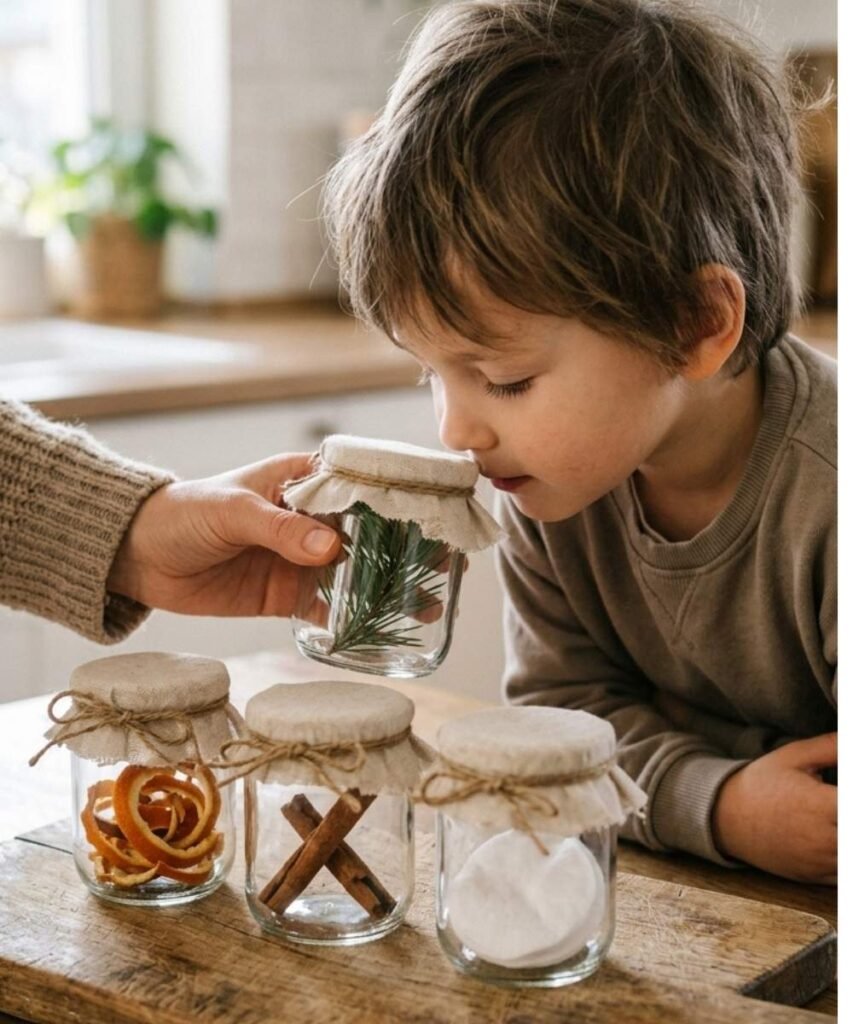
Smell is the sense everyone forgets, and it needs no mess at all.
Gather four small jars. Into the first put orange peel, the second a broken cinnamon stick, the third a sprig of pine or rosemary, and the fourth a cotton pad with a drop of vanilla. Punch holes in the lids or cover each with fabric and a rubber band.
Hold one up, sniff it yourself first, then offer it. Name what it is each time.
Keep the lids fixed on. Whole cinnamon sticks and cloves are choking hazards, and essential oils should not go on skin at this age.
20. Gingerbread Playdough That Smells Like the Oven
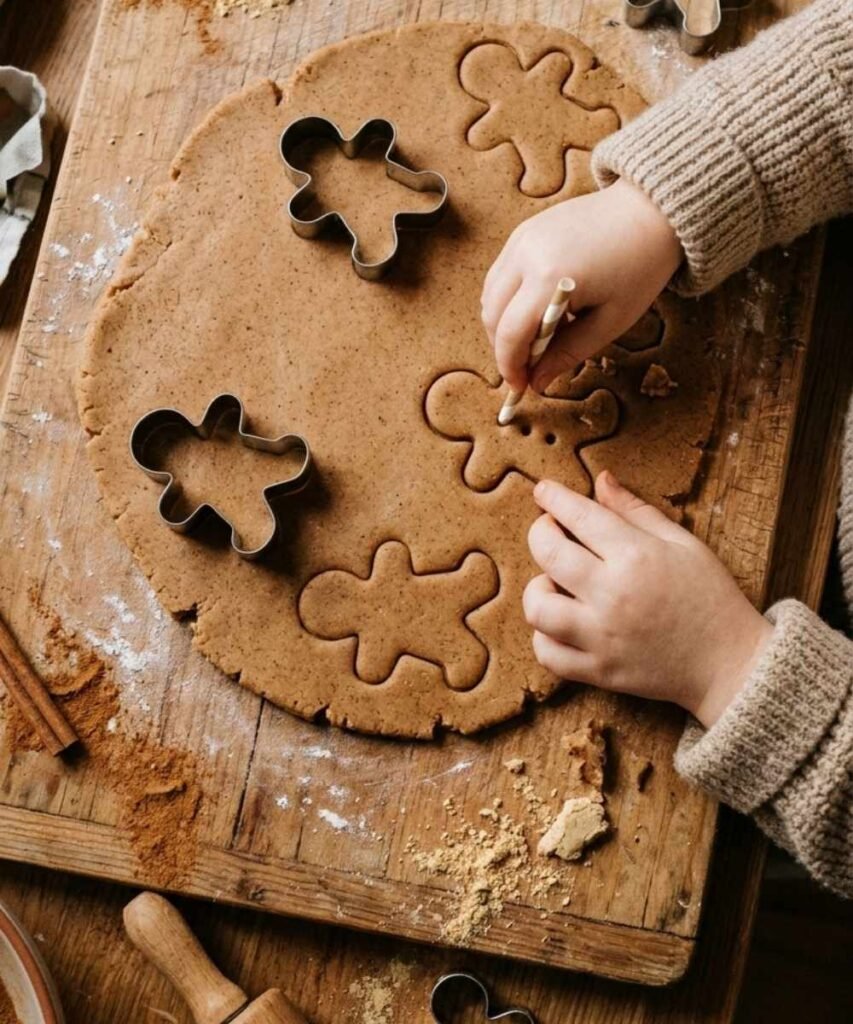
The smell of this one fills a room, which is half the reason to make it.
Warm one cup of flour, half a cup of salt, two teaspoons of cream of tartar, a tablespoon of oil, and a cup of water in a pan, stirring until it pulls away from the sides. Off the heat, knead in a tablespoon each of cinnamon and ginger and a teaspoon of nutmeg.
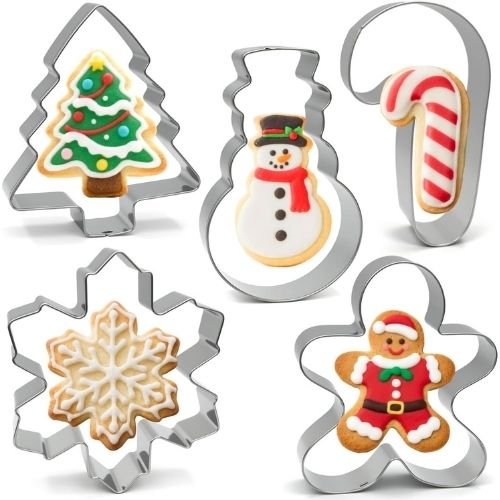
Roll it flat and press gingerbread cutters into it, then poke buttons in with the end of a straw.
The salt makes it unpleasant to eat, though some children still try. Stay close, and skip the spices entirely if there is any sensitivity.
½ cup salt
2 tsp cream of tartar
1 tbsp cooking oil
1 cup water
1 tbsp ground ginger
1 tsp nutmeg
Cookie cutters
A straw for buttons
21. Jingle Bell Shaker Bottles, Sealed Shut
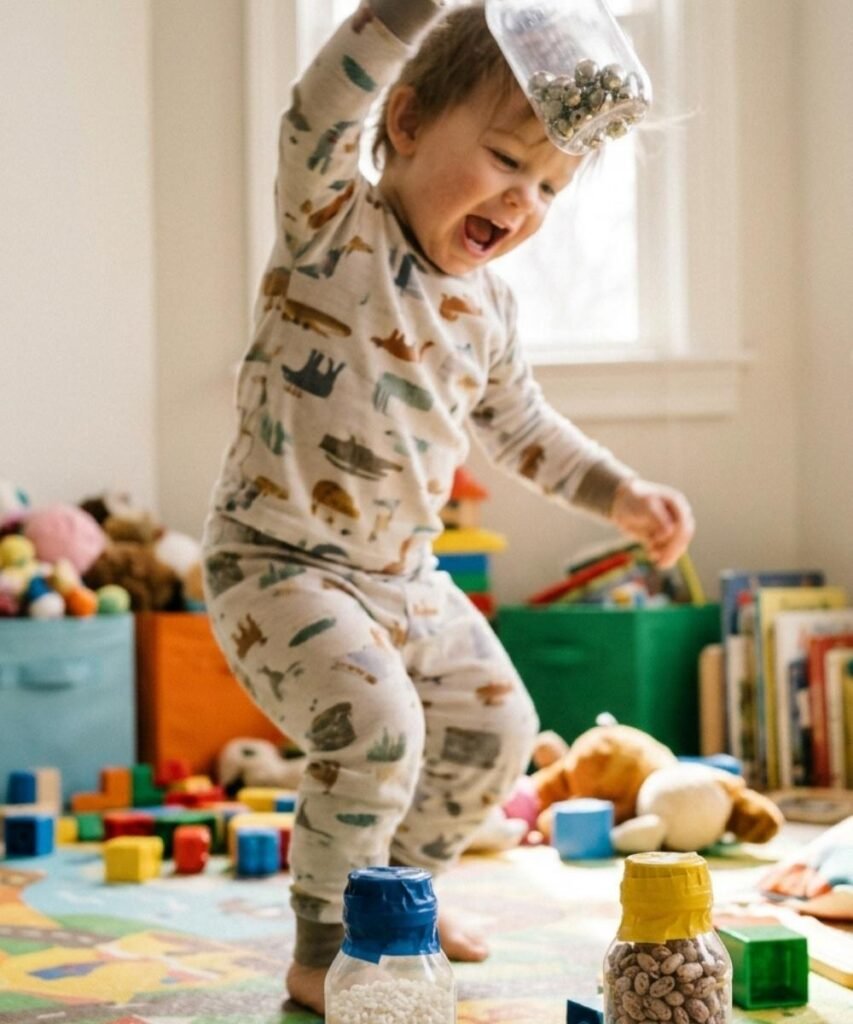
Loose jingle bells are one of the most common Christmas hazards in a house with a toddler. Sealed in a bottle, they become one of the best noisemakers you can offer.
Drop six or seven bells into a small clear bottle, glue the lid, and tape over it. Make a second bottle with dry rice for a softer sound and a third with a few dried beans for a rattle.
Shake one and let your child find the matching sound. Younger ones just shake everything at once, loudly.
Never leave loose bells within reach, and bin any bottle whose lid has worked loose.
Make three bottles with different fillings.
Check the seal before every session.
Shake one and let them find the match.
Glass bottles of any kind.
Relying on the screw thread alone.
Keeping a bottle whose lid has worked loose.
22. Pretend Christmas Pudding Stirring Station
Some toddlers do not need a fiddly tray. They need to push something heavy around.
Set a large mixing bowl on the floor, half fill it with oats, a few spoonfuls of flour, and some raisins, then hand over the biggest wooden spoon you own. Stirring a heavy bowl uses the whole arm and shoulder, and that kind of effort settles a wound-up child in a way that fine motor tasks do not.
Give it a story. This is the pudding, everyone gets a stir, make a wish.
Sit the bowl on a towel and expect oats on the floor. A dustpan handed over afterward often extends the game.
23. Pine Branch and Cinnamon Stick Nature Tray
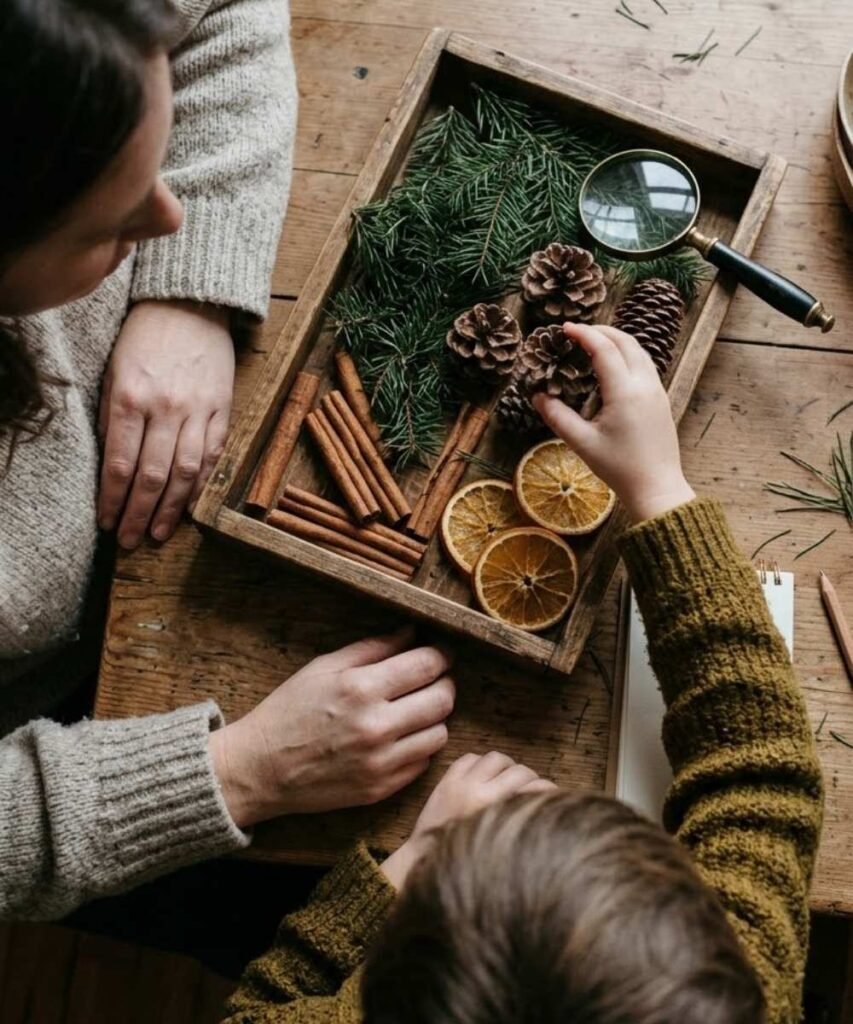
Real greenery smells like Christmas in a way that nothing artificial manages.
Collect trimmings from the bottom of the tree, a few pinecones, some cinnamon sticks, and a handful of dried orange slices, then arrange them on a tray with a magnifying glass. Children lift things, sniff them, and snap the twigs to release more smell.
Pine needles are sharp, and cinnamon sticks splinter when chewed, so this is a sitting-beside-them activity rather than a leave-them-to-it one.
Rinse and dry anything that came from outdoors, and check the tree trimmings have no leftover tinsel or hooks caught in them.
| Real tree trimmings | Artificial sprigs | |
|---|---|---|
| Smell | Strong, and stronger when snapped | None at all |
| Needles | Sharp, and they drop everywhere | Soft, but can pull loose from the wire |
| Best for | Sitting beside them, short sessions | Younger children, with wire ends checked |
24. Ornament Color Sorting Into a Muffin Tin
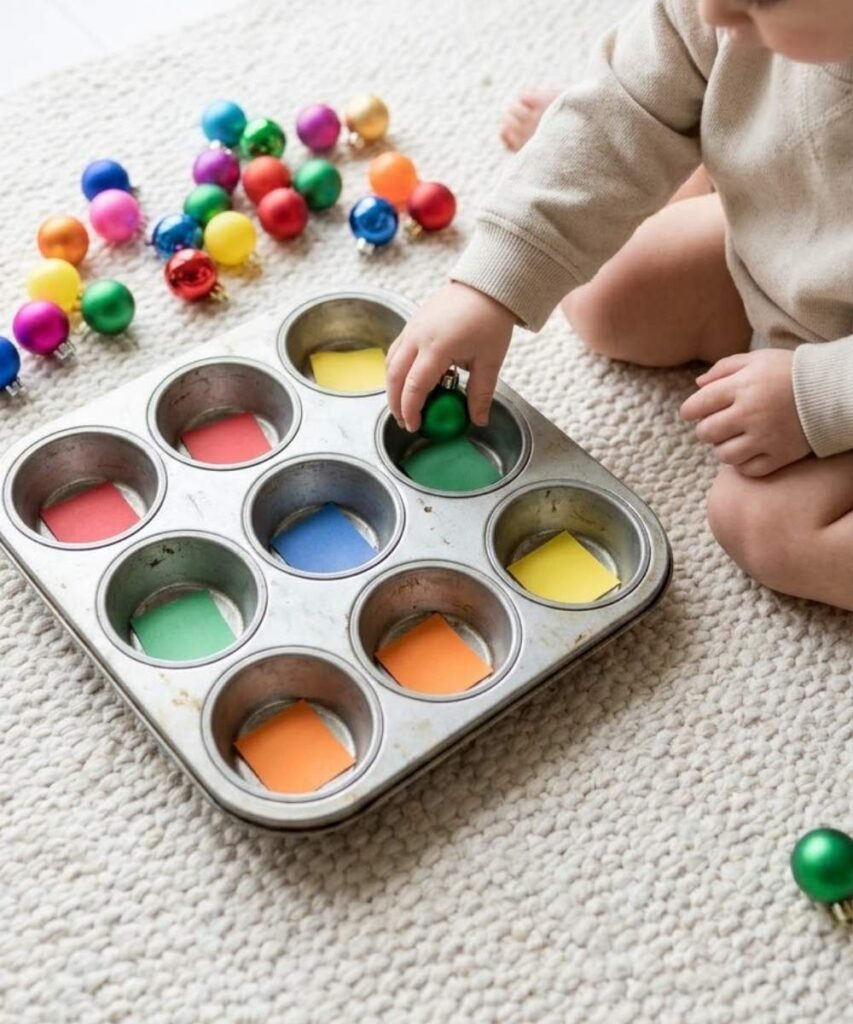
You almost certainly own the materials for this already.
Tip a mixed bowl of shatterproof baubles onto the rug, set a muffin tin beside it, and tape a small square of colored paper into the bottom of each cup. The job is to get every bauble into its matching hole.
Younger toddlers will fill the cups at random, which is still useful practice at dropping things into small spaces. Three-year-olds take the matching seriously and will correct you if you put one in wrong.
Shatterproof only, and check each one for a loose metal cap before you start.
25. Cinnamon Salt Writing Tray
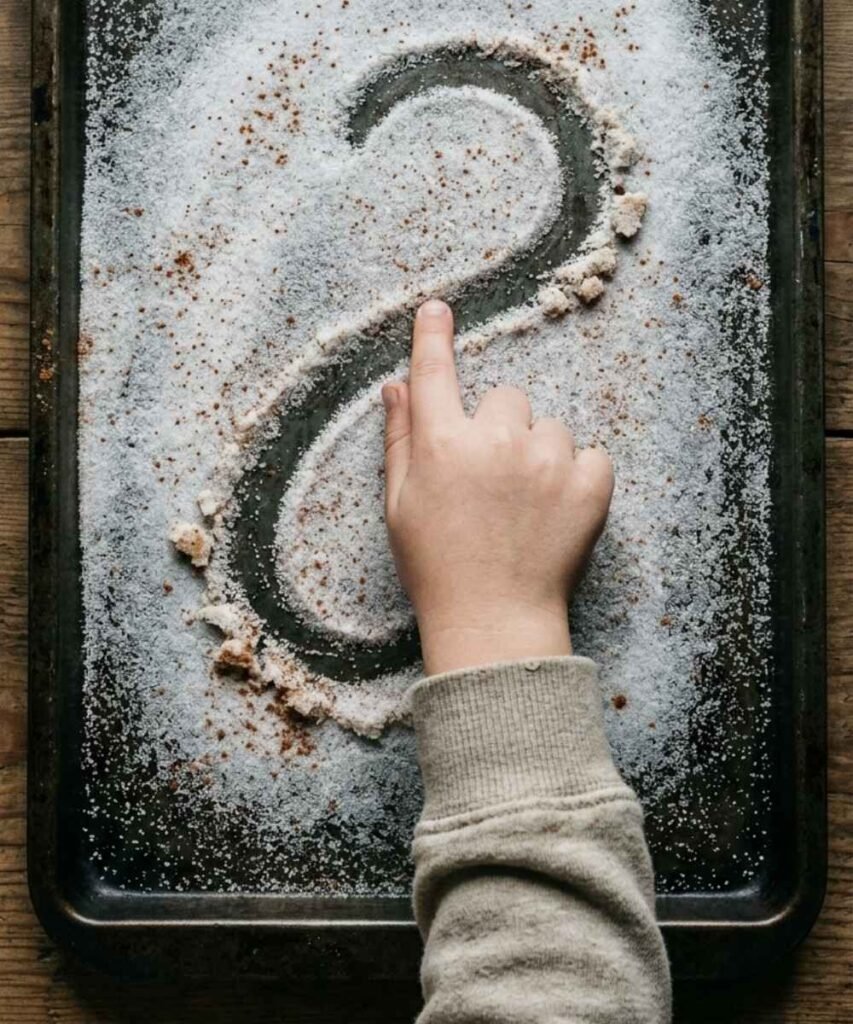
Spread a thin layer of salt across a dark tray and stir in a teaspoon of cinnamon until it smells warm.
Now there is a surface that remembers every mark. Fingers draw a line, a shake of the tray wipes it clean, and it is ready again. Toddlers scribble and swirl. Preschoolers will try a letter if you draw one first and leave it for them to copy.
A dark tray matters, because the contrast is what makes the marks show up.
Salt stings broken skin and cut fingers, so check hands first. Keep it off the floor, since it grinds into carpet.
26. Salt Dough Ornament Rolling and Stamping
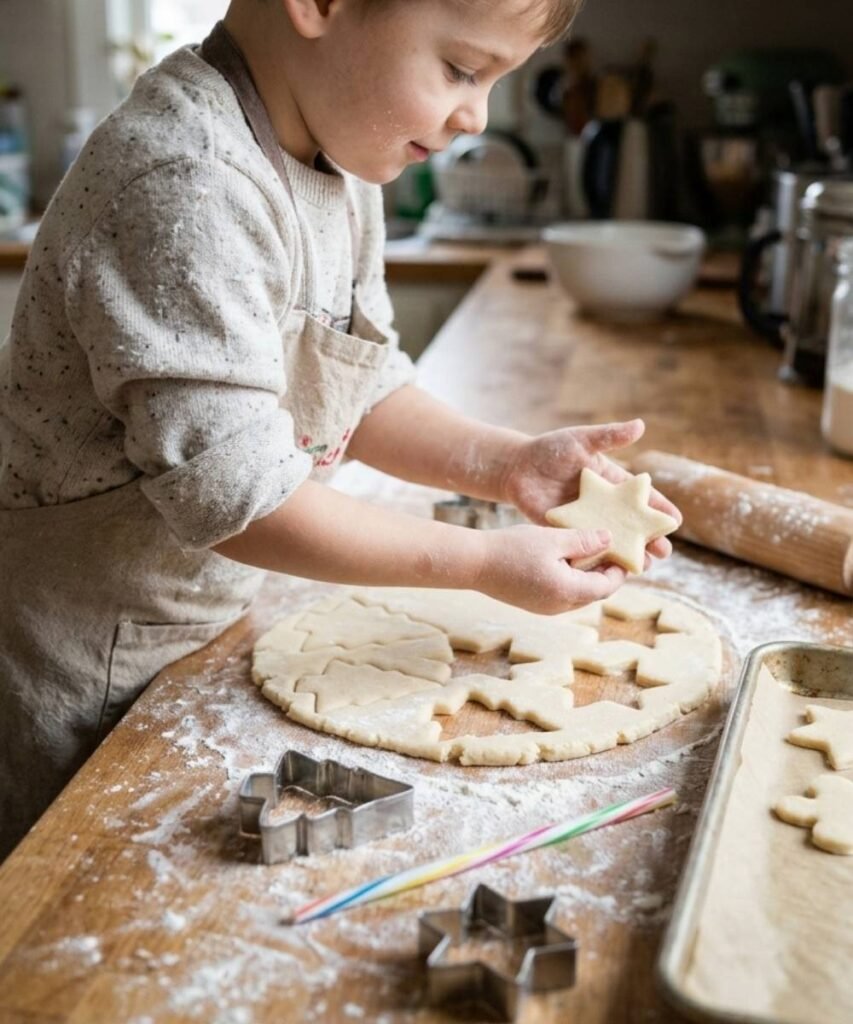
A two-day activity, which is useful when you are trying to stretch a week of school holidays.
Mix two cups of flour, one cup of salt, and about one cup of water into a stiff dough. Roll it out, press cookie cutters in, and poke a hole at the top with a straw. Bake low and slow for two to three hours, then paint them the next day.
The rolling and stamping is the sensory part. The painting is the bonus.
Salt dough contains enough salt to make a child seriously unwell if eaten, so this is for children past the mouthing stage, with close supervision throughout.
27. Orange Pomander Poking With Cloves
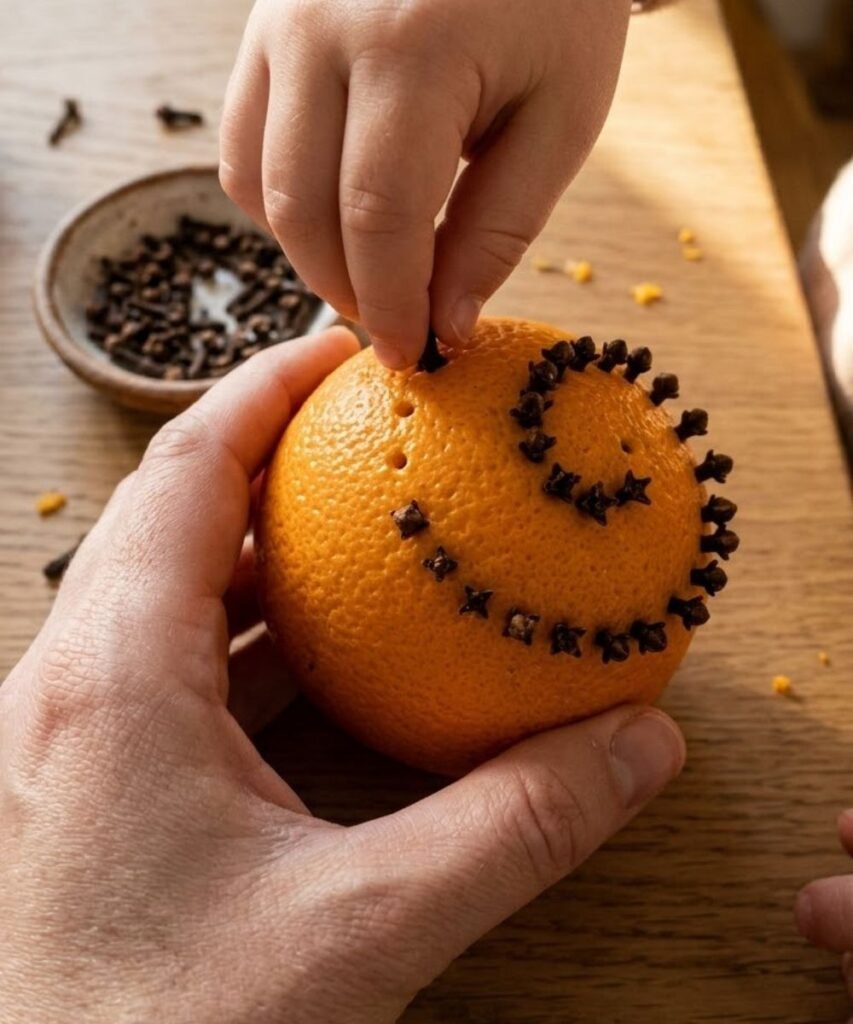
The hardest pinch-grip task on this list, and one for preschoolers only.
Give a firm orange and a small dish of whole cloves. Pierce starter holes with a skewer yourself, then let your child push a clove into each one. It takes real finger strength, and the smell gets stronger with every push.
A simple pattern helps. A ring around the middle, or a spiral, gives them a line to follow instead of a blank orange.
Cloves are small, sharp, and dangerous if swallowed or inhaled, so count them out, count them back in, and keep the dish out of reach of any younger sibling in the room.
Give a pattern to follow, like a ring or a spiral
Count the cloves out and count them back in
Use a firm orange that will not collapse
Keep the dish out of a younger sibling’s reach
Hand over the skewer at any point
Leave the clove dish unattended
Let it run long, since fingers tire quickly
Worry about a messy pattern
28. Tinsel Weaving Through a Laundry Basket
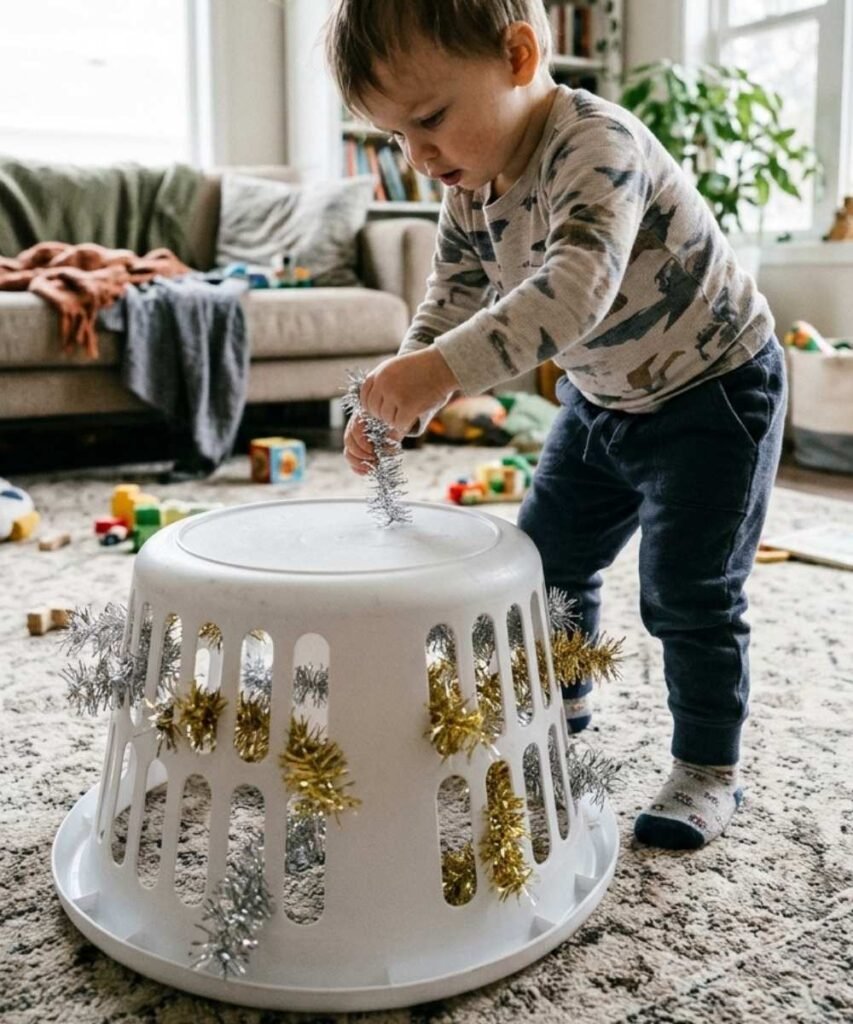
Turn a plastic laundry basket upside down and the gaps become a loom.
Hand over lengths of tinsel or wide ribbon and show how to thread one through a gap and out the next. Arms stretch, bodies lean, and the basket slowly turns into something decorated. It uses the whole upper body rather than just fingertips, which suits toddlers who cannot sit still at a table.
Shorter strands work better than long ones. Anything over an arm’s length tangles and gets abandoned.
Keep ribbon lengths short, and pack it all away afterward, since loose tinsel and long ribbon are both risks around babies and pets.
29. Gift Wrapping Station With Toddler-Friendly Tape
You have presents to wrap and a child who wants to be involved. Give them their own station instead of fighting them off yours.
Set out a few empty boxes, scraps of paper, and a tape dispenser they can actually use. Pre-cut strips of tape stuck along the table edge work even better for younger hands. The wrapping will be terrible and that is fine, because nothing in those boxes matters.
Preschoolers can wrap a real gift for a grandparent, which gives the whole thing a purpose.
Round-ended scissors only, and keep ribbon short and away from necks.
30. Christmas Sensory Walk: A Barefoot Texture Path
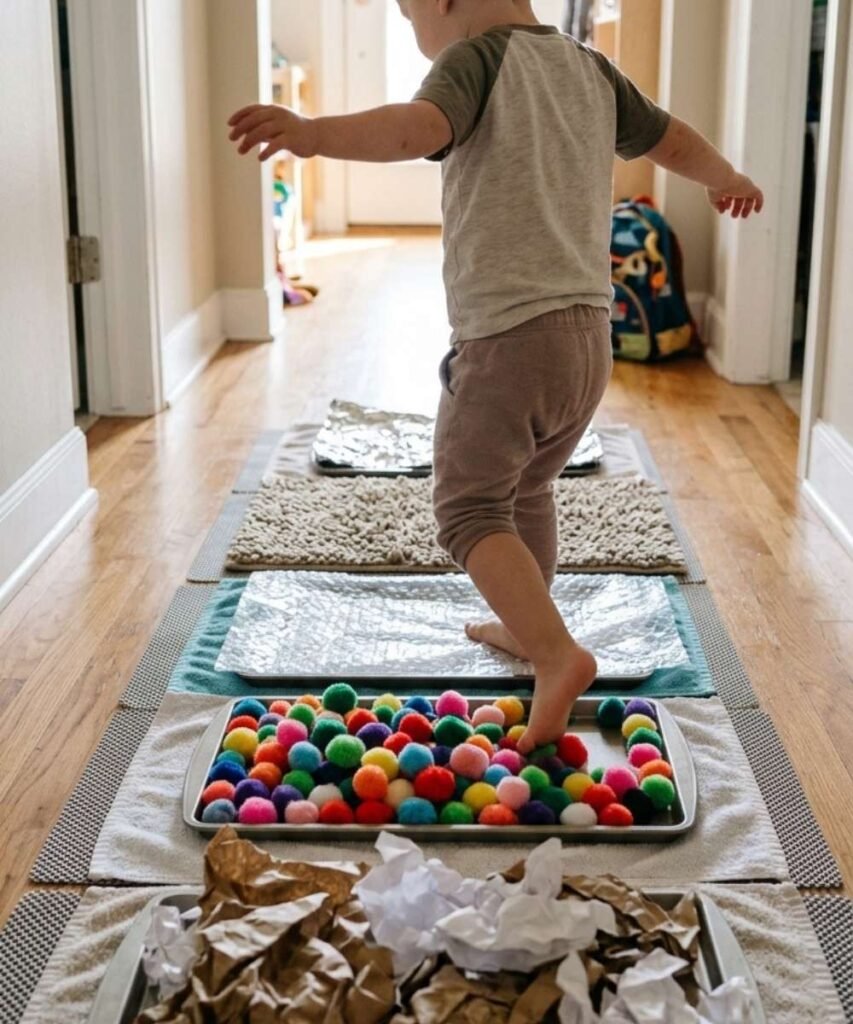
End with the one that gets them off the floor and moving.
Lay a line of trays or towels down the hallway, each with something different underfoot. A towel with crumpled wrapping paper, a tray of soft pom-poms, a square of bubble wrap, a bath mat, a sheet of foil. Bare feet, slow walking, one step at a time.
Ask which one is crunchy and which is soft. Walk it backwards the second time.
A non-slip mat under each tray matters more than the textures themselves on hard floors. For more ideas in this direction, there are plenty of [indoor activities that get toddlers moving] in the active play list.
Crumpled paper
Pom-poms
Bubble wrap
Bath mat
Foil sheet
Conclusion
You do not need a cupboard of craft supplies to give a toddler a good December. A tub of oats, a handful of shredded paper, and ten minutes of your attention go further than most things wrapped under the tree.
Some of these Christmas sensory activities will hold your child for half an hour, and some will get two minutes and a shrug. That is normal at this age, and it is not a reflection on the idea or on you.
Start with the bin that needs the least setup, and keep a second one in your back pocket for the afternoon it all falls apart.
Save this list to your Christmas activities board so it is there when the countdown to the big day gets long.

I’m Tracy, a mom of two on a mission to make kids’ days simpler and more fun. Here you’ll find play ideas that actually hold a child’s attention, plus a little sanity and inspiration for the busy years in between. Learn More!
- 15 Nature Christmas Ornaments for Toddlers and Preschoolers (Who Does What, Age by Age)
- 12 Christmas Ornaments a 2-Year-Old Can Actually Make Alone (No Scissors, No Glue, No Beads)
- Thanksgiving Crafts for Toddlers Under 2 (No Scissors, No Small Pieces)
- Christmas Sensory Activities & Bins for Toddlers & Preschoolers (30 Easy Setups)
- Outdoor Play for Beginners: How Much Outdoor Play Does a Toddler Need?