
Affiliate Disclosure: This post contains affiliate links. If you make a purchase through these links, I may earn a small commission at no extra cost to you. As an Amazon Associate, I earn from qualifying purchases. Thank you for supporting CozyClan!
Most parents ask the same question before they ask anything else about outdoor time: how much outdoor play does a toddler need in a day? It sounds like it should have a clean answer, a number you can write on the fridge and tick off. The honest answer is slightly messier, and knowing why will save you a lot of guilt.
No major health organisation publishes an official daily outdoor minutes target for toddlers. What they publish is a movement target. Outdoor play happens to be the easiest, cheapest and most reliable way to hit it, which is why the two get blurred together in almost every article you will read.
So this guide gives you both: the real recommendation, and a practical outdoor range you can actually plan your day around. You will also find out what counts as outdoor play (more things than you think), how to start if your toddler currently goes outside once a week, and how to tell whether your child is getting enough without owning a stopwatch.
Table of Contents
The Short Answer: How Much Outdoor Play a Toddler Needs
Aim for one to two hours outdoors on most days, split into two or three separate trips, with 60 minutes as a realistic minimum on difficult days.
That range is not arbitrary. It comes from working backwards from the movement guidelines. The World Health Organization recommends that children aged one to two spend at least 180 minutes a day in a variety of physical activities at any intensity, spread throughout the day, and that children aged three to four get the same 180 minutes with at least 60 of those minutes at moderate to vigorous intensity. paho
Three hours of movement sounds enormous until you realise it includes everything: toddling around the kitchen, climbing on the sofa, dancing, carrying things, pushing a toy pram. It is not three hours of structured exercise. It is three hours of not sitting still.
The reason outdoor play matters so much is efficiency. Research consistently finds that young children are more active outdoors than they are indoors, partly because expectations change: nobody tells a child to stop running in a park. An hour outside typically produces far more movement than an hour in a living room, so outdoor time does the heavy lifting on your daily total. nih
The Short Answer
Aim for 1 to 2 hours outdoors on most days, split into 2 or 3 short trips. Use 60 minutes as your bad-day floor.
The official target is 180 minutes of daily movement at any intensity for children aged 1 to 4. Outdoor play is simply the fastest way to reach it, because toddlers move more outside than they do indoors.
What the Official Guidelines Actually Say (and What They Leave Out)
This section exists because the internet is full of confidently stated outdoor numbers with no source behind them. Here is what is genuinely documented.
What is officially recommended:
The WHO movement guidelines above are the clearest global standard for under-fives. They apply from age one and emphasize that the activity should be spread throughout the day, with the note that more is better. vikaspedia
What is recommended by childcare standards rather than health guidelines:
Early years settings do have outdoor targets, because they need something staff can schedule. US childcare physical activity standards, for example, direct providers to give toddlers aged one to three at least 60 to 90 minutes of outdoor play daily, delivered across two or three occasions rather than one block. That is the closest thing to an official outdoor number that exists for this age group, and it is a useful floor for home too. ncdhhs
What is a reasonable practical target rather than a guideline:
Ranges like one to three hours a day for toddlers appear widely in paediatric and hospital parenting advice. One such guide suggests one to three hours total per day for children aged one to three, moving up to two to four hours for preschoolers aged three to five. Treat these as sensible practitioner advice, not as formal policy. marylanning
What is worth knowing for perspective:
Most families are nowhere near the top of these ranges. An analysis of US national survey data found that close to 40% of children aged three to five play outdoors for an hour or less per day. If your toddler gets a solid hour outside most days, you are already doing better than a large share of households. That is not a reason to stop improving, but it is a reason to stop panicking. cdc
A Realistic Daily Outdoor Target by Age
Toddlers are not one group. A newly walking 13-month-old and a confident three-year-old have different stamina, different attention spans and different safety needs.
Daily Outdoor Time by Age
| Age | Aim For | What It Looks Like |
|---|---|---|
| 12 to 18 months | 45 to 90 min 2 to 3 short trips |
Toddling on grass, pushing a toy, touching leaves, pram walk with time out of the pram |
| 18 months to 2 yrs | 1 to 2 hours 2 to 3 trips |
Supported playground play, running on flat ground, carrying and dumping, sand or water play |
| 2 to 3 years | 1.5 to 2.5 hours 2 to 3 trips |
Climbing, ride-on toys, ball chasing, digging, longer walks with stops |
| 3 to 4 years | 2 to 3 hours incl. harder bursts |
Running games, climbing frames, balance bikes, obstacle play, long imaginative play |
Typical ranges for healthy, typically developing toddlers. Follow your paediatrician’s advice for any child with a medical condition affecting activity or heat tolerance.
How to use this table: pick the row that matches your child, then look at your current average. If you are more than 30 minutes below the range, add one short trip rather than extending the trip you already do. The next section explains why that works better.
One caution worth stating plainly: these are typical ranges for healthy, typically developing toddlers. A child with a medical condition, a mobility difference, a heart or respiratory issue, or any condition affecting heat tolerance should follow their own paediatrician’s advice instead of a general table.
Why Short, Frequent Outings Beat One Long Trip
This is the most useful thing in this guide, and almost nobody mentions it.
When young children go outside for free play, their activity is front-loaded. Children’s natural physical activity comes in spontaneous bursts, and the most intense peaks tend to occur in the first stretch of outdoor free play, which is why researchers have tested scheduling several shorter outdoor periods instead of one continuous one. After the initial burst, children often settle into slower, calmer exploration, which is valuable for other reasons but produces less movement. nih
What this means for you:
- Three 25-minute trips can generate more actual movement than one 75-minute trip. You get three activity peaks instead of one.
- A ten-minute step outside is not a waste. Even a brief outing captures part of that initial burst.
- You do not need a destination. The front garden, the courtyard, the rooftop or the lane outside your door all work.
- Short trips are easier to protect. A 20-minute outing survives a bad morning, a late nap and an unexpected visitor. A 90-minute park trip does not.
Why 3 Short Trips Beat 1 Long One
3 ×
Three outings mean three activity peaks instead of one
10 min
Even a brief step outside captures part of the early burst
0
Equipment or destination needed. The doorstep counts
Toddlers move in spontaneous bursts, and the most intense bursts tend to come early in a session. After that, play usually settles into calmer exploration, which is valuable but less active.
If you have been skipping outdoor play because you cannot fit in a “proper” park visit, this is your permission to stop waiting for the big block of time. Go out for twenty minutes after breakfast instead.
What Actually Counts as Outdoor Play
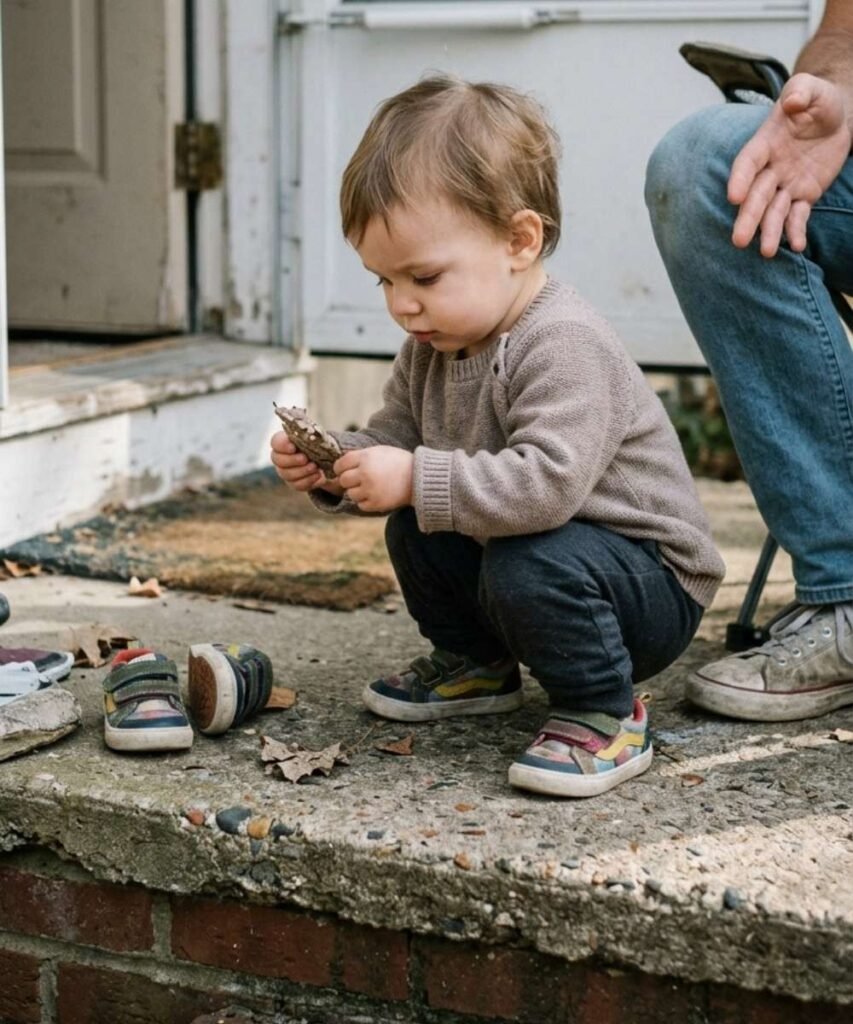
Parents routinely undercount their outdoor time because they only count the playground. Outdoor play means time outdoors with the freedom to move, not a scheduled activity.
These count:
- Walking to the shop with your toddler on their own feet for part of the way
- Standing in the garden watering plants while they dig next to you
- Time on a balcony, terrace, rooftop or shared courtyard where they can move freely
- Hanging washing while they carry pegs back and forth
- Sitting on a step while they walk up and down it twenty times
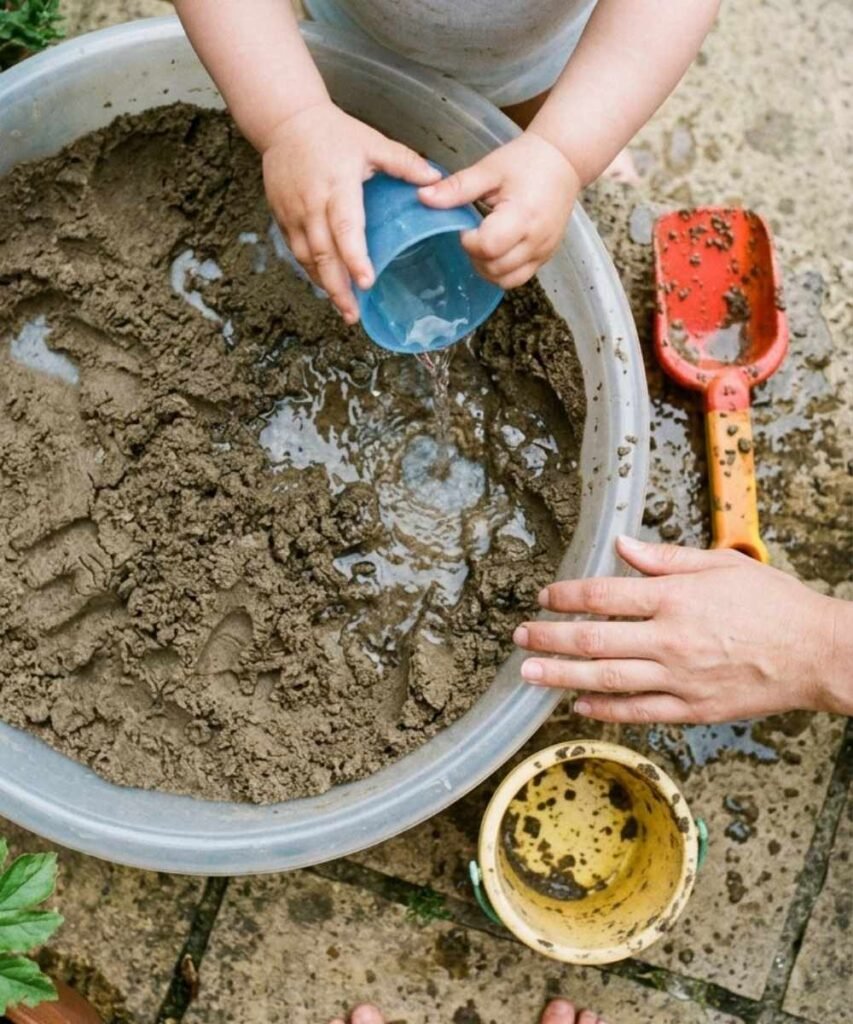
- Outdoor sensory play with water, sand, mud, leaves or stones
- Chasing bubbles, kicking a ball, pushing a ride-on toy
These count only partly:
- Time strapped in a pram, car seat or carrier. The fresh air and visual stimulation are real, but the movement is not. If your outing is mostly pram time, count a fraction of it.
- A trip where your toddler is carried most of the way.
The practical test: was your child free to move their whole body, outdoors, for most of that time? If yes, count it.
“Water, sand, mud, and leaf play all count as outdoor time, and if you are new to setting these up, our guide to [outdoor sensory play ideas] walks through the basics.”
Counts fully
- Walking part of the way on their own feet
- Garden, balcony, rooftop or courtyard time
- Digging, scooping, pouring, splashing
- Carrying pegs, watering plants, helping outdoors
- Chasing bubbles, kicking a ball, ride-on toys
- Walking up and down one step, repeatedly
Counts only partly
- Time strapped in a pram or carrier
- Being carried for most of the outing
- Sitting in a car seat with the window down
Fresh air is real. Movement is what the guideline measures.
The quick test: was your child free to move their whole body, outdoors, for most of that time? If yes, count it.
A Beginner’s First Week: How to Build the Habit
If outdoor play is currently rare in your household, do not jump to two hours. You will burn out by Wednesday. Build it in layers.
Day 1 and 2: Anchor one trip. Pick the easiest time of day, usually mid-morning, and go outside for 15 to 20 minutes. Do not plan an activity. Let your toddler lead and follow them.
Day 3 and 4: Add a second, tiny trip. Five to ten minutes after the afternoon snack. Front step, garden, balcony. The goal is frequency, not duration.
Day 5 and 6: Attach outdoor time to something you already do. Hang the washing outside, take a phone call outdoors, water the plants. Toddlers do not need you to entertain them outside, they need you present.
Day 7: Stretch one trip. Extend your morning outing to 30 to 40 minutes, ideally somewhere with space to run.
Week 2 onwards: keep the two anchored trips, and add a third whenever the day allows. Two reliable trips beat four aspirational ones.
A realistic weekday for most families ends up looking like 25 minutes in the morning, 15 minutes in the afternoon and a 30-minute walk or garden stretch before dinner. That is 70 minutes, which lands squarely inside the recommended childcare floor.
Your First Week Outdoors
Days 1 to 2: Anchor one trip
Mid-morning, 15 to 20 minutes, no planned activity. Let your toddler lead.
Days 3 to 4: Add a tiny second trip
Five to ten minutes after the afternoon snack. Frequency matters more than length.
Days 5 to 6: Attach it to a chore
Hang washing, water plants, take a call outside. They need you present, not performing.
Day 7: Stretch one trip
Extend the morning outing to 30 to 40 minutes, somewhere with room to run.
A realistic weekday: 25 min morning + 15 min afternoon + 30 min before dinner = 70 minutes.
How to Tell If Your Toddler Is Getting Enough
You do not need to track minutes. Toddlers give clear signals, and reading them is more reliable than counting.
Signs they likely need more outdoor time:
- Climbing furniture, throwing, and crashing into things indoors, especially late afternoon
- Trouble settling at bedtime despite being obviously tired
- Short fuse and frequent frustration with no clear trigger
- Loss of interest in indoor toys within minutes
- Big emotional release the moment you do go outside
Signs the balance is about right:
- They move between active and calm play without a crash
- They protest coming inside but settle within a few minutes
- They nap and sleep reasonably predictably
- They are physically tired at bedtime rather than wired
One honest caveat: sleep and behavior are affected by teething, illness, growth spurts, routine changes and dozens of other things. More outdoor play often helps, but it is not a cure for every difficult evening, and persistent sleep or behavior concerns are worth raising with your child’s doctor rather than solving with a longer park trip.
“If your toddler comes in wired rather than settled, a short calm activity helps bridge the gap, and our round-up of [calm indoor activities to wind down] has plenty of low-effort options.”
Weather: Adjusting Instead of Skipping
The default response to bad weather is to cancel. For most weather, adjusting is the better call.
Hot weather. Shift outdoor time to early morning and the hour before sunset, and shorten the midday window to almost nothing. Guidance on heat stress in active children advises reducing the intensity of activities lasting 15 minutes or more when heat and humidity are high, shortening sessions, and building in more frequent water breaks. It also advises increasing outdoor activity gradually over one to two weeks when acclimatizing to hotter conditions, and offering drinks before children feel thirsty. Shade, water play and loose cotton clothing extend how long a toddler can comfortably stay out. Check the temperature of slides, metal railings and paving before letting them touch. aupairinamericaaupairinamerica
Cold weather. Layers solve most of it. The common rule of thumb is one more layer than an adult would wear, with attention to hands, feet and ears, since toddlers lose heat faster than adults. Shorter, more frequent trips work well here too.
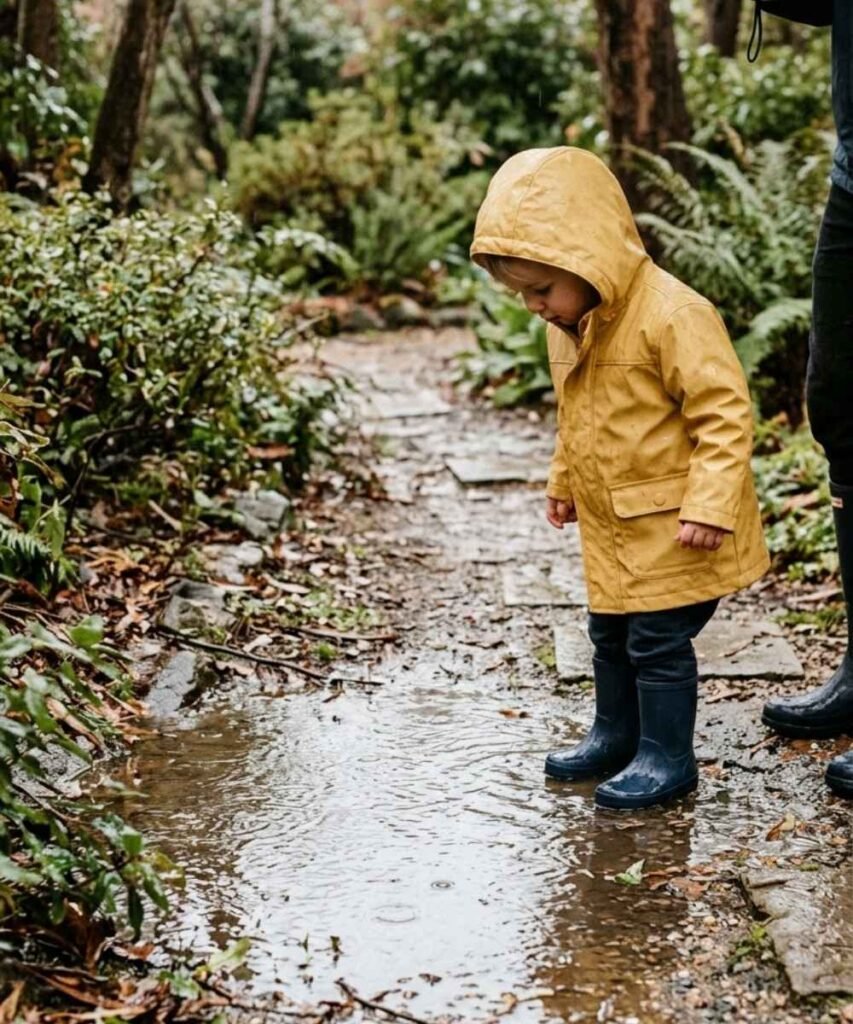
Rain. Light rain is usually a clothing problem rather than a safety problem. Heavy rain, storms, lightning, high winds or poor air quality are genuine reasons to stay in.
When you genuinely cannot go out, do not try to replicate outdoor play indoors. Replace it with indoor movement instead, which serves the same 180-minute target.
“On days when outdoor play is genuinely off the table, swap it for [indoor activities that get toddlers moving] so the daily movement target still gets met.”
Staying Safe Outdoors With a Toddler
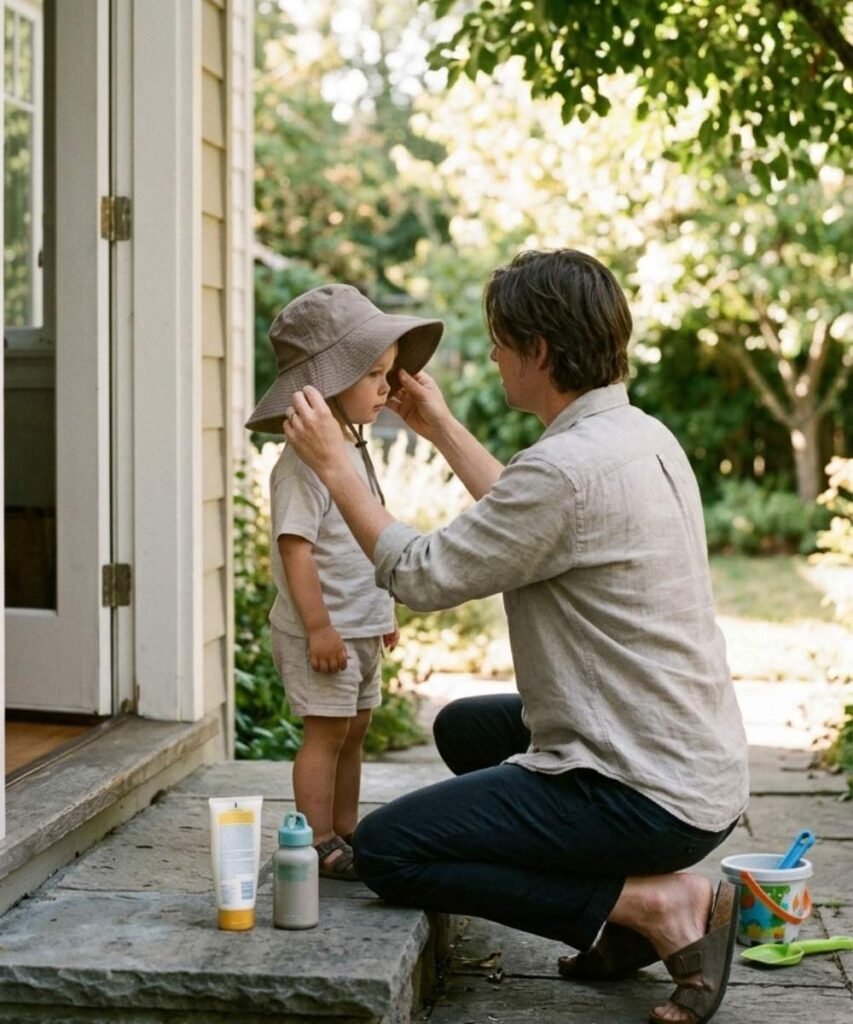
Outdoor play is safe play when the setup matches the child’s stage. These are the points that matter most for the one to four age range.
Supervision distance. Toddlers need an adult within reach, not just within sight, near roads, water, height, animals and other children. Water safety guidance for toddlers is explicit about staying within arm’s reach whenever a child is in or near water, and that applies to paddling pools, buckets, ponds and garden water features, not just swimming pools. merryhillschool
Sun protection. Sunscreen should go on at least 30 minutes before going outside, and should still be used on cloudy days. For toddlers, a broad-spectrum, water-resistant sunscreen of SPF 30 or above applied shortly before outdoor play, plus a wide-brimmed hat, is the standard advice. Shade and clothing are the first line of defence, not the backup. aupairinamericamerryhillschool
Ground and surface check. Before free play, scan for broken glass, sharp stones, animal waste, standing water, loose cables and gaps in fencing or gates.
Mouthing risk. Many toddlers still put things in their mouths. Outdoor environments contain small stones, berries, bark chips, cigarette ends and seed pods. Choking and ingestion risk does not disappear outdoors, it increases.
“Many of the same supervision rules apply indoors too, and our guide to [toddler play safety basics] covers choking risks, supervision distance and material checks in more detail.”
Plants and insects. Learn the two or three common toxic plants in your area. Teach a simple rule early: we look at plants, we do not eat plants.
Hand hygiene. Wash hands after outdoor play, particularly after sand, soil, animal contact and shared equipment.
Nothing here is a substitute for your own judgement of your child and your environment, and any specific concern about allergies, skin conditions, heat tolerance or medication that affects sun sensitivity should go to your pediatrician.
Do
- Stay within arm’s reach near water, roads, height and animals
- Apply sunscreen at least 30 minutes before going out, cloudy days included
- Scan the ground for glass, sharp stones, animal waste and standing water
- Offer drinks before your toddler says they are thirsty
- Check slides and metal rails for heat before play
- Wash hands after sand, soil, animals and shared equipment
Avoid
- Assuming mouthing risk disappears outdoors. Stones, bark, berries and seed pods are all within reach
- Long midday sessions in high heat and humidity
- Leaving buckets, paddling pools or water features unattended
- Relying on sunscreen alone instead of shade, hats and clothing
- Letting a toddler pick and taste any plant
General guidance only. Speak to your paediatrician about allergies, skin conditions, heat tolerance or any medication that increases sun sensitivity.
Common Beginner Mistakes
Waiting for the perfect outing. The park trip that needs an hour, snacks, a change of clothes and good weather happens twice a week. The ten-minute garden visit happens daily. Daily wins.
Over-directing the play. Toddlers outdoors do not need activities set up for them. Carrying a stick around for 20 minutes is legitimate play. Step back more than feels natural.
Counting pram time as outdoor play. Fresh air is good. It is not movement. If most of your outing is strapped in, your real outdoor total is lower than you think.
Treating one long weekend trip as a fix. Movement guidelines are daily and spread throughout the day. A three-hour Sunday at the park does not cover a sedentary week.
Skipping because of imperfect weather. Adjust the time of day, the clothing and the length before you cancel.
Chasing the number instead of the child. A tired, overheated, miserable toddler is not benefiting from minute 85. Stop when the play stops being play.
Frequently Asked Questions:
Quick Answers
Toddler Outdoor Play: Frequently Asked Questions
Is 30 minutes of outdoor play a day enough for a toddler?
It is below the usual recommended floor, but it is meaningfully better than nothing, especially if those 30 minutes are genuinely active and your toddler moves plenty indoors too. Treat 30 minutes as a minimum on hard days rather than a daily target, and add a second short trip when you can.
Does outdoor time replace the 180 minutes of daily movement?
No, it contributes to it. The 180 minutes covers all movement, indoors and out, at any intensity. Outdoor play is simply the most efficient contributor because children move more when they are outside.
Can a toddler get too much outdoor play?
Time outdoors is rarely the problem. Heat, cold, sun exposure, dehydration and overtiredness are. Watch the child rather than the clock, and shorten sessions in extreme weather.
My toddler refuses to go outside. What should I do?
Start smaller than feels useful. Go out for five minutes with no agenda, at the same time each day, and let them stay near the door. Many toddlers resist the transition rather than the outdoors itself, so a predictable routine usually works better than persuasion.
Does the garden count, or does it have to be a park?
The garden counts fully. So does a balcony, a courtyard, a rooftop or a quiet lane. Variety of surfaces and challenges is a bonus, not a requirement.
What if I live in an apartment with no outdoor space?
Use what is nearby, even briefly: the building entrance, a shared courtyard, a walkway, a nearby green strip. Two short trips to a modest space beat one trip to a perfect park that you rarely manage.
Conclusion
If you came here for a single number, here it is: aim for one to two hours outdoors most days, broken into two or three short trips, with 60 minutes as your bad-day floor. But the number that actually matters is the 180 minutes of daily movement, and knowing how much outdoor play a toddler needs is really just knowing the easiest way to reach it.
Start with one anchored trip tomorrow morning. Fifteen minutes, no plan, no equipment. Add the second trip when the first one feels automatic. That is the whole method.
Save this guide so you have the age ranges and the safety checks when you need them, and come back to the table when your toddler moves into a new stage.