
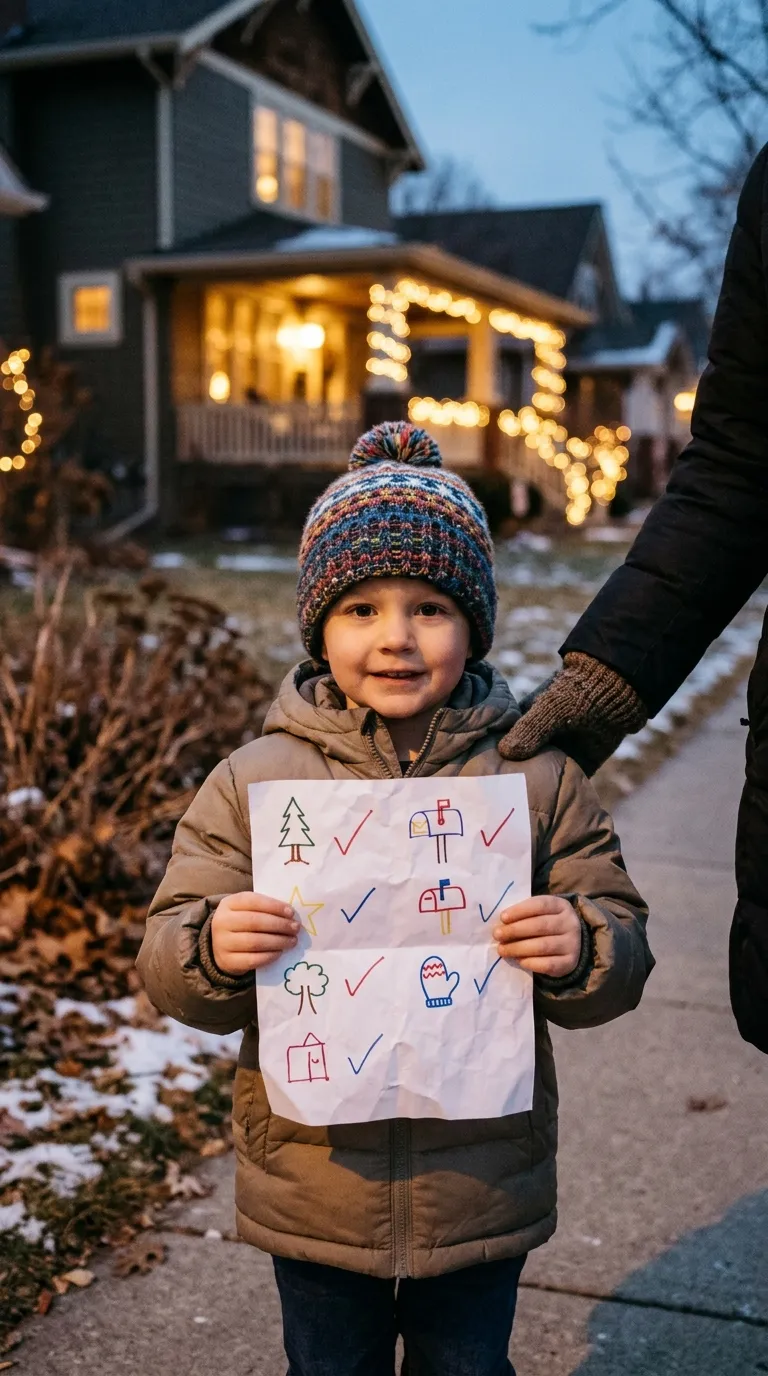
By mid-December the evenings are dark by dinnertime, and your kids have already touched every ornament on the tree twice. A Christmas light scavenger hunt turns one lap around the neighborhood into a 20-minute game — no shopping, no printer, no craft mess to clean up.
It stretches across ages, too. A one-year-old points and shouts “light!” from the stroller. A six-year-old wants a card, a marker, and a total to beat.
Below you’ll find how to build the hunt card in about five minutes, what to put on it for each age, the safety rules that matter once it’s dark, and how to wrap up before anyone gets cold and cranky.
Table of Contents
The Hunt, Start to Finish
1. Choose your route before you leave the house

Walk the block if you have sidewalks and a handful of decorated houses within a few minutes. Drive a slow loop instead if homes are spread out or it’s bitterly cold. A stroller or wagon lap sits between the two and buys you roughly 20 minutes with a child who tires fast.
Settle the route in daylight if you can. Deciding where to go while holding a cold toddler is how these evenings fall apart.
2. Go right after dinner, not after bath

Most kids under six last 15 to 30 minutes outside in the dark before the fun drains out. The slot right after dinner works best: full tummy, still dressed, bedtime routine untouched.
Displays switch on at dusk, which in December can mean late afternoon depending on where you live — you rarely need a late night out. Skip the hunt altogether on a day your child missed a nap. A tired three-year-old in the dark is not a scavenger hunter.
3. Pick 6 to 10 things to look for and match them to your child’s age

The list makes or breaks the game. Too long and your child stalls halfway; too obscure and they never cross anything off.
- Ages 1 to 2: three big, unmissable targets (any lights at all, a lit tree in a window, a giant inflatable)
- Ages 2 to 3: four or five items, mostly colors and familiar shapes
- Ages 4 to 5: eight items, with one tricky find for the thrill of it
- Age 6: ten items plus a counting challenge
Always include one wild-card square — “anything that sparkles” — so nobody goes home with an unfinished card.
4. Draw the hunt card in five minutes

Fold a sheet of paper into six or ten boxes and draw one symbol per box with a dark marker. A circle of dots for lights, a triangle for a tree, a star, a candy cane. Write the word underneath if your child is reading.
Hand-drawn beats a printable here, because toddlers recognize your drawings. Cut a panel from a cereal box and tape the paper to it so the card stays stiff in mittened hands.
Pro tip: Make one card per child. Sharing a single card with siblings guarantees an argument on a dark sidewalk.
5. Pack light and dress for standing still
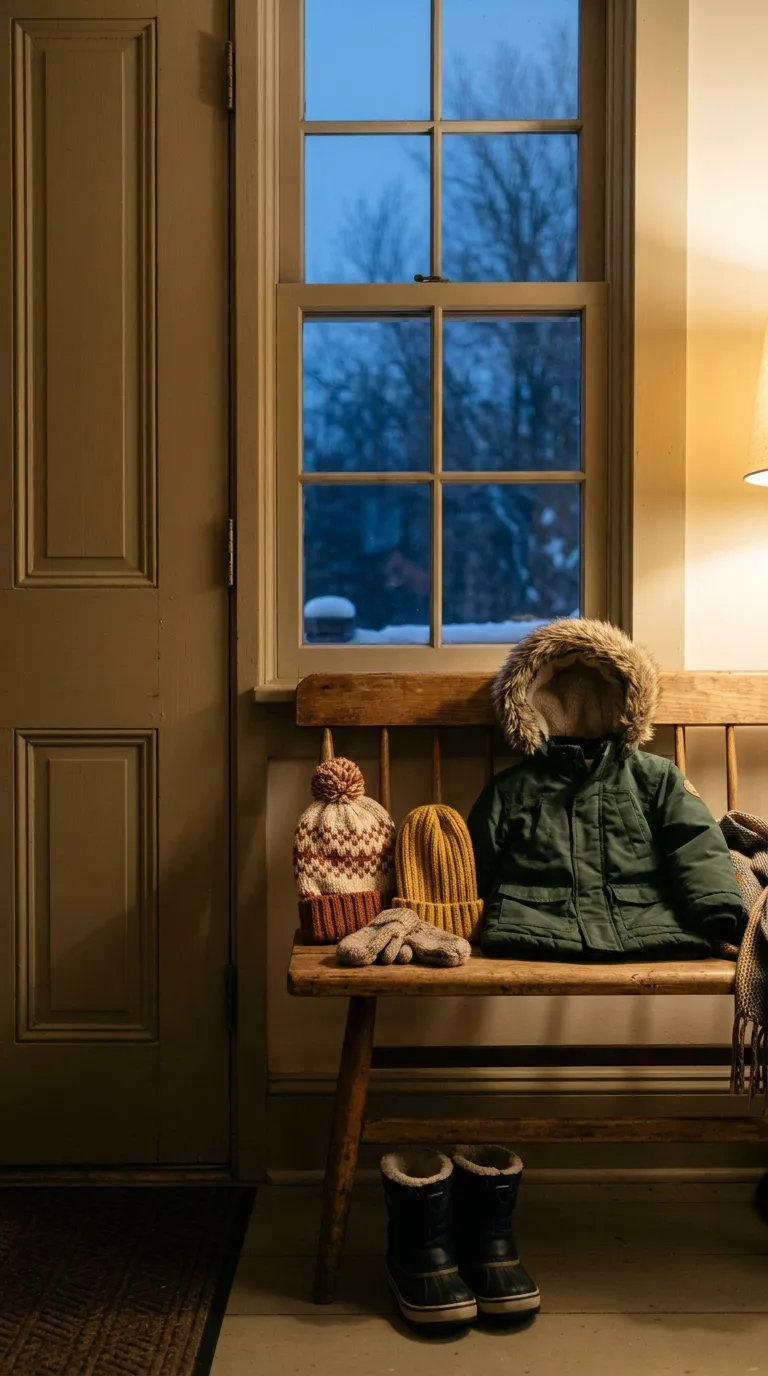
You’ll be stopping every thirty seconds, not striding along, so dress one layer warmer than a normal walk. Hats and mittens that stay on matter more than a thick coat.
Pack a small bag: one marker or sheet of dot stickers per child, a flashlight (the single most popular item of the evening), and a warm drink in a travel mug.
Heads-Up: Four Rules for a Dark Evening
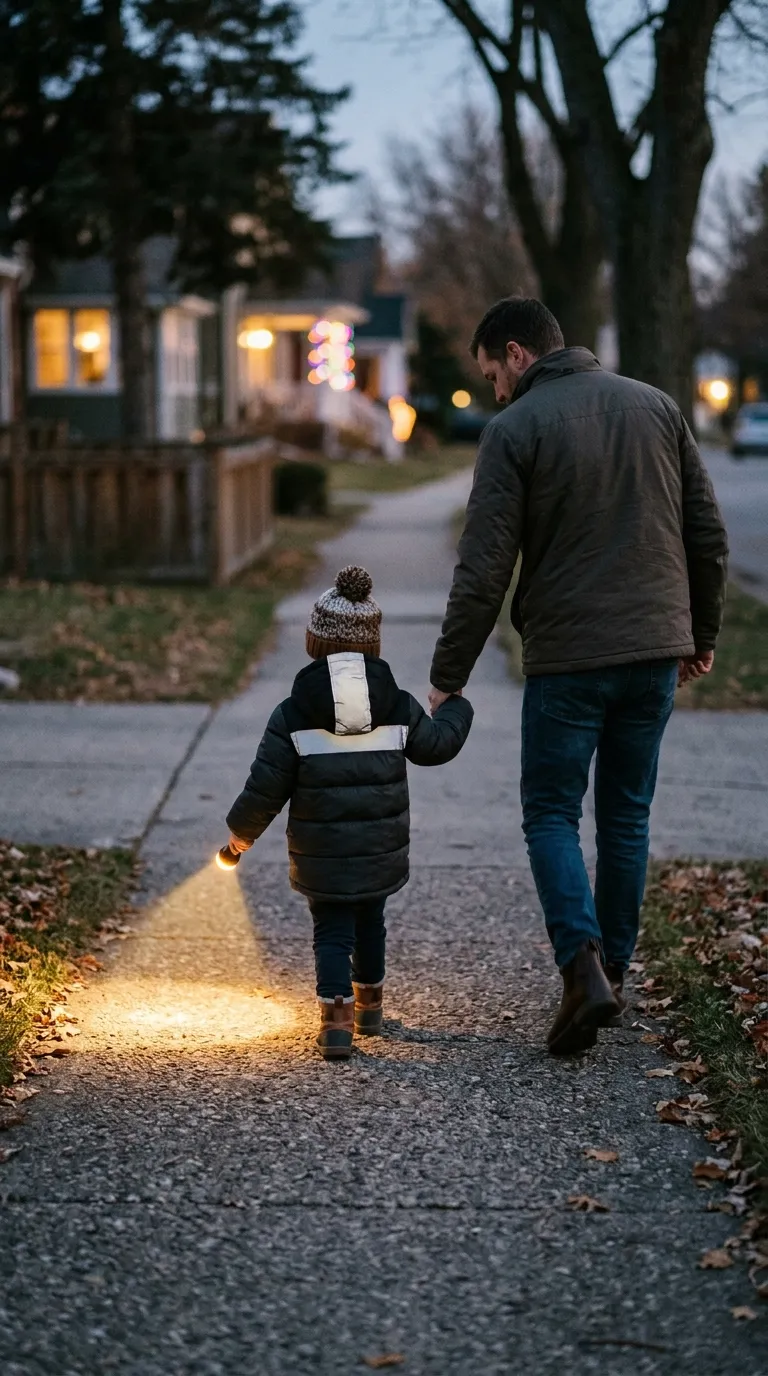
- Be seen. Drivers struggle to spot small children at dusk. Add a reflective strip, a light-up necklace, or a flashlight your child holds pointing down.
- Stay on the sidewalk. Admire every display from public ground — no driveways, no lawns, and hands off cords, stakes, and inflatables.
- Hold hands near roads every single time, including on quiet streets where cars reverse out without looking.
- Never leave a child alone in the car, not even for the thirty seconds it takes to look closer at a display.
6. Teach the game at the front door with one practice round

Explain the rules indoors, where it’s warm and nobody is distracted. Show the card, point to one box, and have your child find that thing on your own tree first. Then mark it together so they see exactly what “crossing it off” means.
This thirty-second rehearsal saves you from explaining the game three times on the street. If your tree is still a daily negotiation, our guide to toddler-proofing a Christmas tree helps there.
7. Let your child set the pace and mark every find
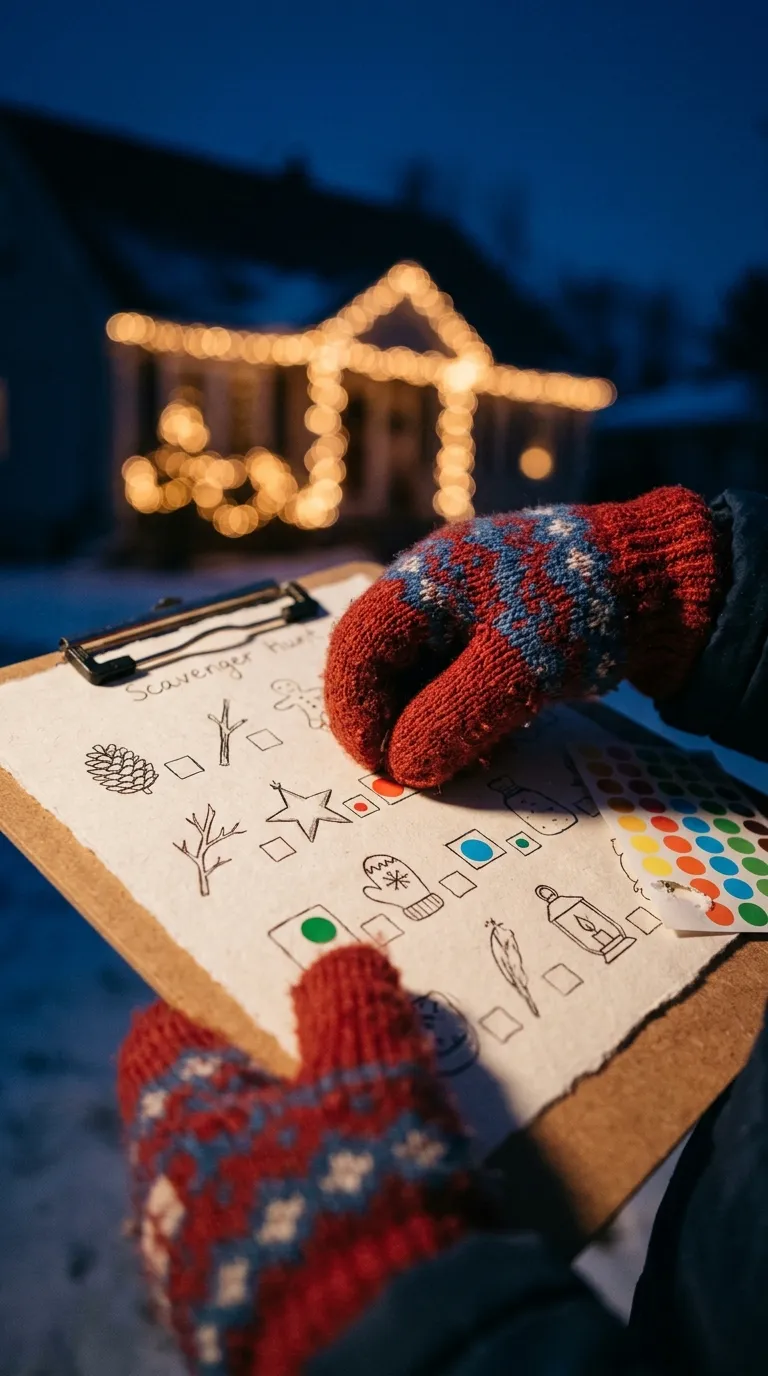
Hand over the card and the flashlight and follow their lead. When they spot something, stop fully, say the color out loud together, then let them mark the box themselves. The marking is the reward — resist doing it for them to speed things along.
Expect a four-year-old to announce finds that aren’t on the card at all. Count those. The goal is noticing, not accuracy.
Rules worth saying out loud before you set off:
- We look from the sidewalk, never up driveways or across lawns
- Hands stay off cords, stakes, and inflatables
- We hold hands whenever a car comes
8. Use these three rescue moves when attention dips
Energy usually drops around the eight-minute mark. Have a move ready instead of pleading.
- Shrink the goal. “Two more and we turn around.” A visible finish line revives most kids instantly.
- Switch the job. Give them the flashlight, or make them the official counter who announces the running total.
- Add a silly rule. Everyone has to whisper, or hop, between houses.
9. End while they still want one more house
Turn back before the complaining starts, not after. Finish somewhere cozy: hot chocolate at the kitchen table, card laid out in front of you, counting the total together.
Ask which light was the best one. That one question is what they’ll repeat to grandparents tomorrow. If bedtime still feels far off, a few quiet indoor activities bridge the gap nicely.
10. Reuse the same card for a second and third night
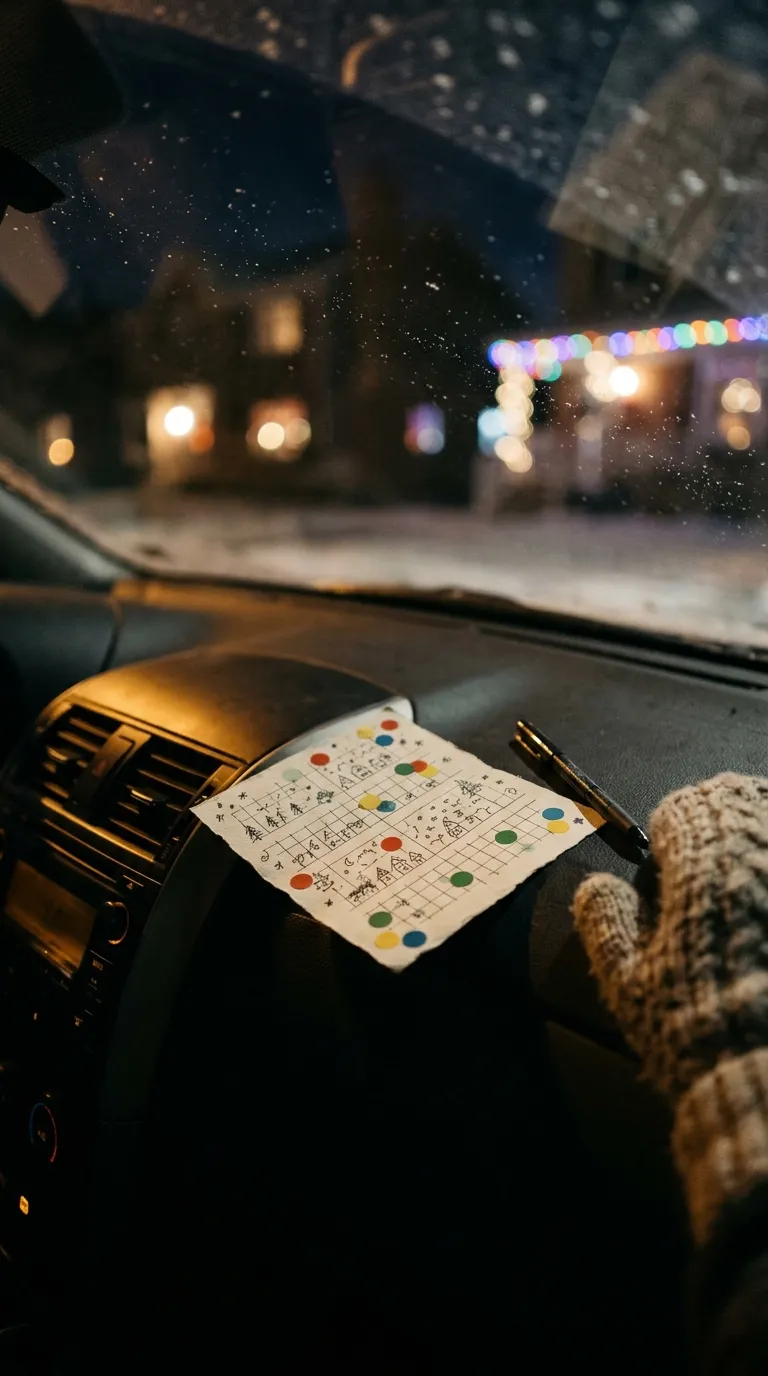
One card carries a whole week if you change the rules:
- Color night: find three of each color
- Counting night: tally how many Santas you pass
- Car night: same list, driven slowly, for rainy or freezing evenings
- Window night: park at a bright street and hunt from inside the car with the heat on
Rain for days? Run an indoor version with your own tree, then move on to a Christmas sensory bin or a fine motor Christmas tree activity at the table.
Questions Parents Ask
Christmas Light Scavenger Hunt — Quick Card
A December tradition that costs nothing

A Christmas light scavenger hunt asks for one sheet of paper, one marker, and twenty minutes of a dark evening. Most families end up repeating it two or three times before the lights come down.
Draw tomorrow night’s card tonight while you’re thinking about it — then it’s waiting by the door.
Save this to your Christmas board so the list is on your phone when you head out, and tell me in the comments which find your kids argued over most.