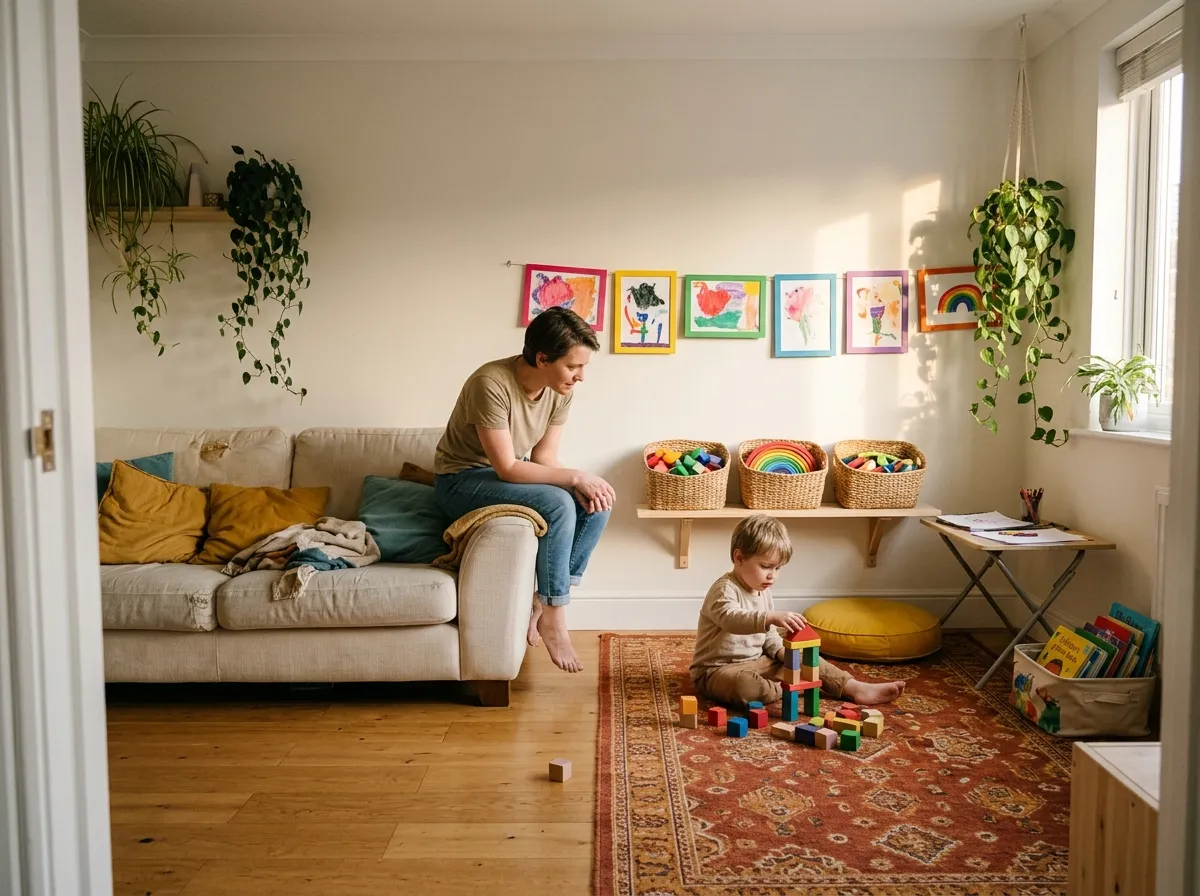
By the time my second was walking, our living room had stopped being a living room. There were blocks under the couch cushions, a ride-on toy parked against the TV stand, and a basket of puzzle pieces I kept moving from chair to chair.
If the only room you have is the one where everybody sits, you are not doing anything wrong. You just need the room to switch jobs twice a day.
That is the test I used for every idea below. A good living room playroom combo lets kids spread out in the afternoon and lets you have the room back in the evening, usually in under ten minutes. Not showroom perfect. Just calm enough to sit down in.
Each idea tells you what to use, where it goes, which ages it suits, and roughly how long it takes to clear. I have also flagged the few that need anchoring or close supervision, because low shelves and climbers in a family room deserve a second thought.
If you do have a separate room to work with, start with my full set of kids playroom ideas for ages 1 to 6 instead.
Table of Contents
Start Here: 3 Rules That Make a Living Room Playroom Combo Work
Everything that follows rests on these three. Get them right and almost any idea here will hold up.
1. Toy Baskets That Match Your Sofa, Not the Toys
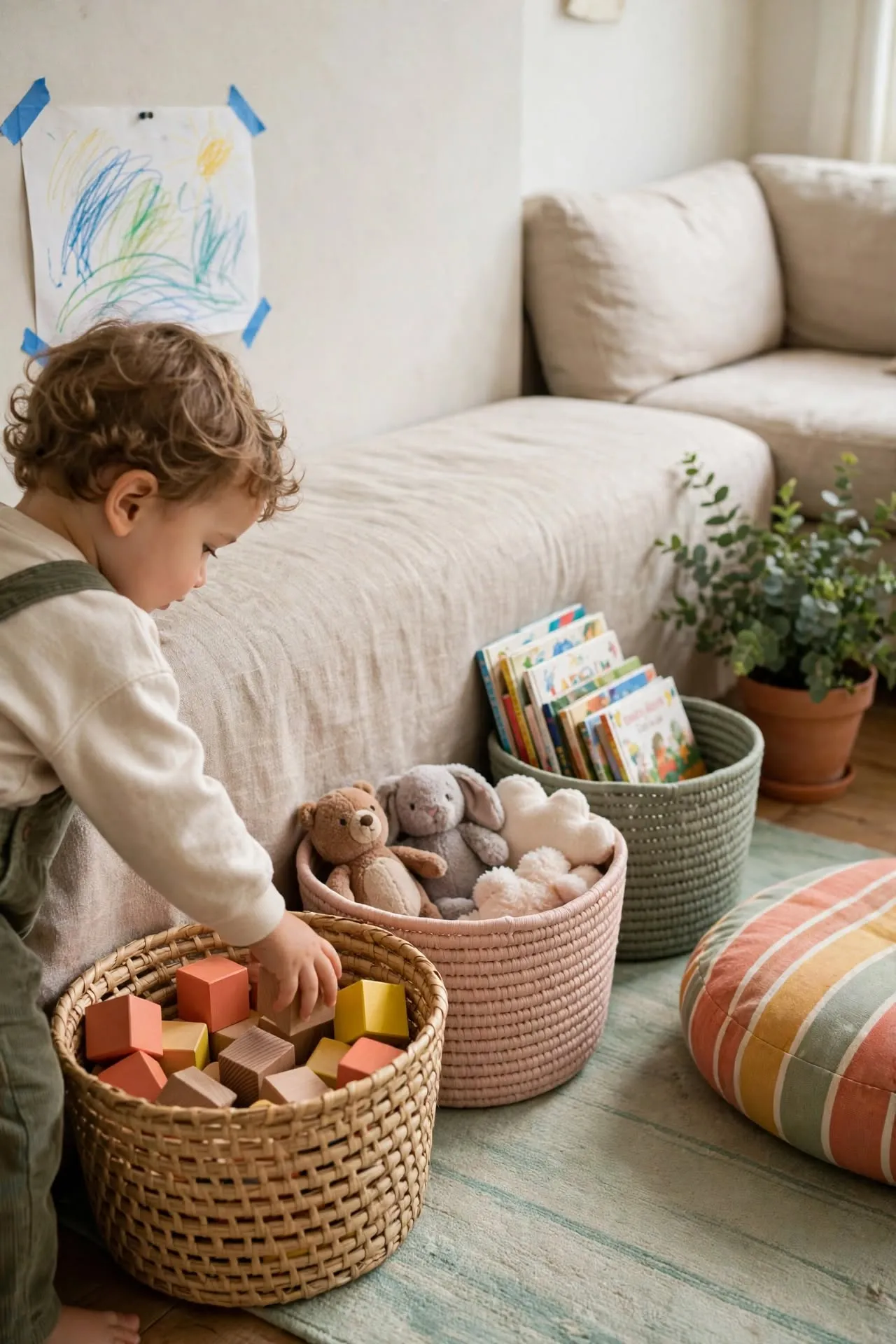
The quickest change you can make is swapping bright plastic bins for two or three woven baskets in the same tones as your furniture. The toys inside stay exactly the same. The room reads as adult again.
Put them at the end of the sofa or under a console table so kids can reach in without asking. Baskets with a soft or fabric body work best around new walkers, since there are no hard corners at head height.
One basket per category. Blocks in one, vehicles in another, soft toys in the third.
✓ Neutral or tonal colors that echo your sofa or rug
✓ Soft sides or rounded rims if a baby is crawling
✓ One picture label per basket for pre-readers
2. A Storage Ottoman That Is Really the Toy Box
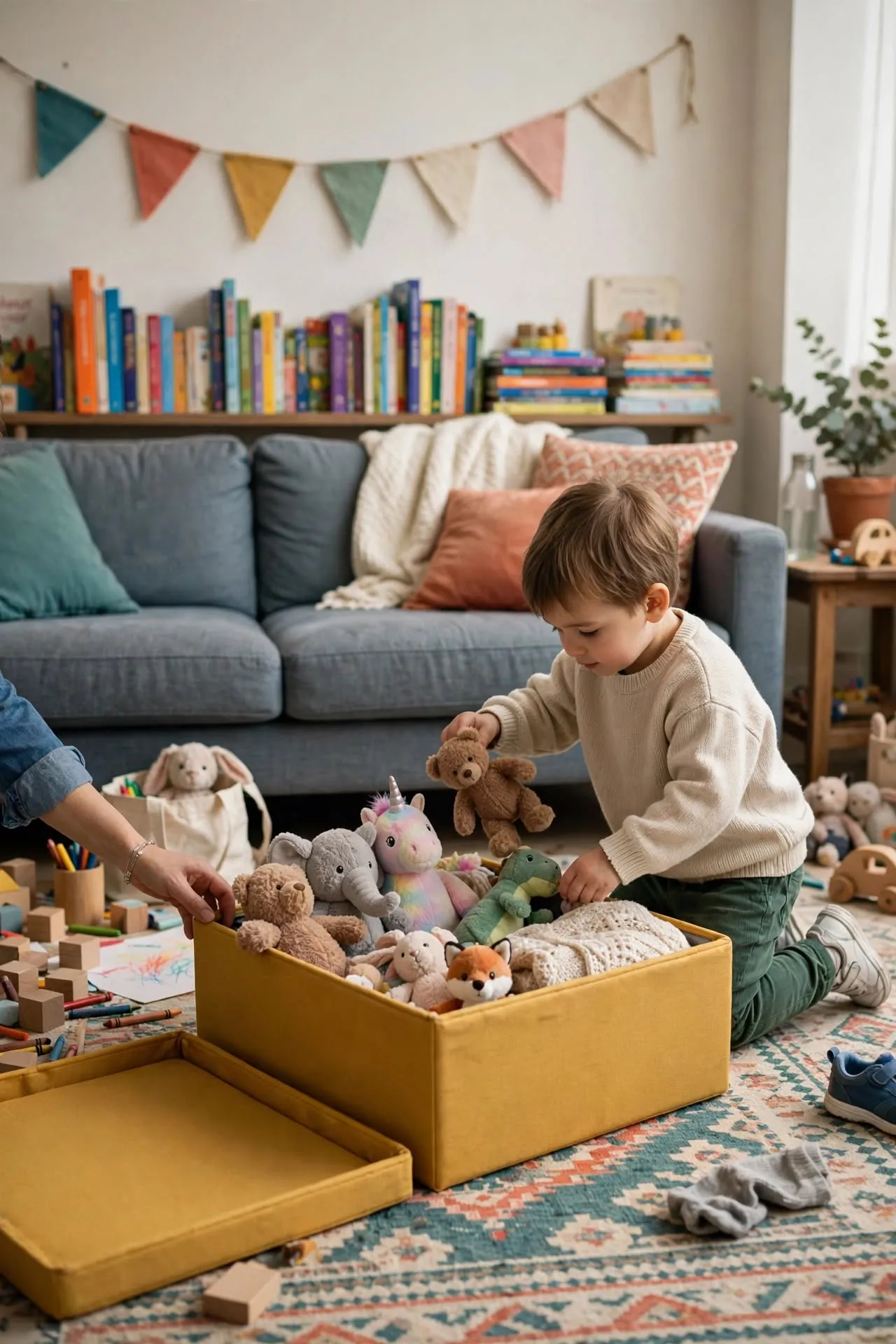
This is the single hardest-working piece in a shared room. Daytime it holds the bulky stuff that ruins a room when it is out. Evening you close the lid and put your feet on it.
Choose one with a lid that lifts off completely or has slow-close hinges. A heavy free-falling lid is a pinched-finger risk with small hands around it, so check this before anything else.
Keep it to one category, usually soft toys or dress-up. Small pieces disappear to the bottom and never come back out.
3. A Play Rug That Draws the Line
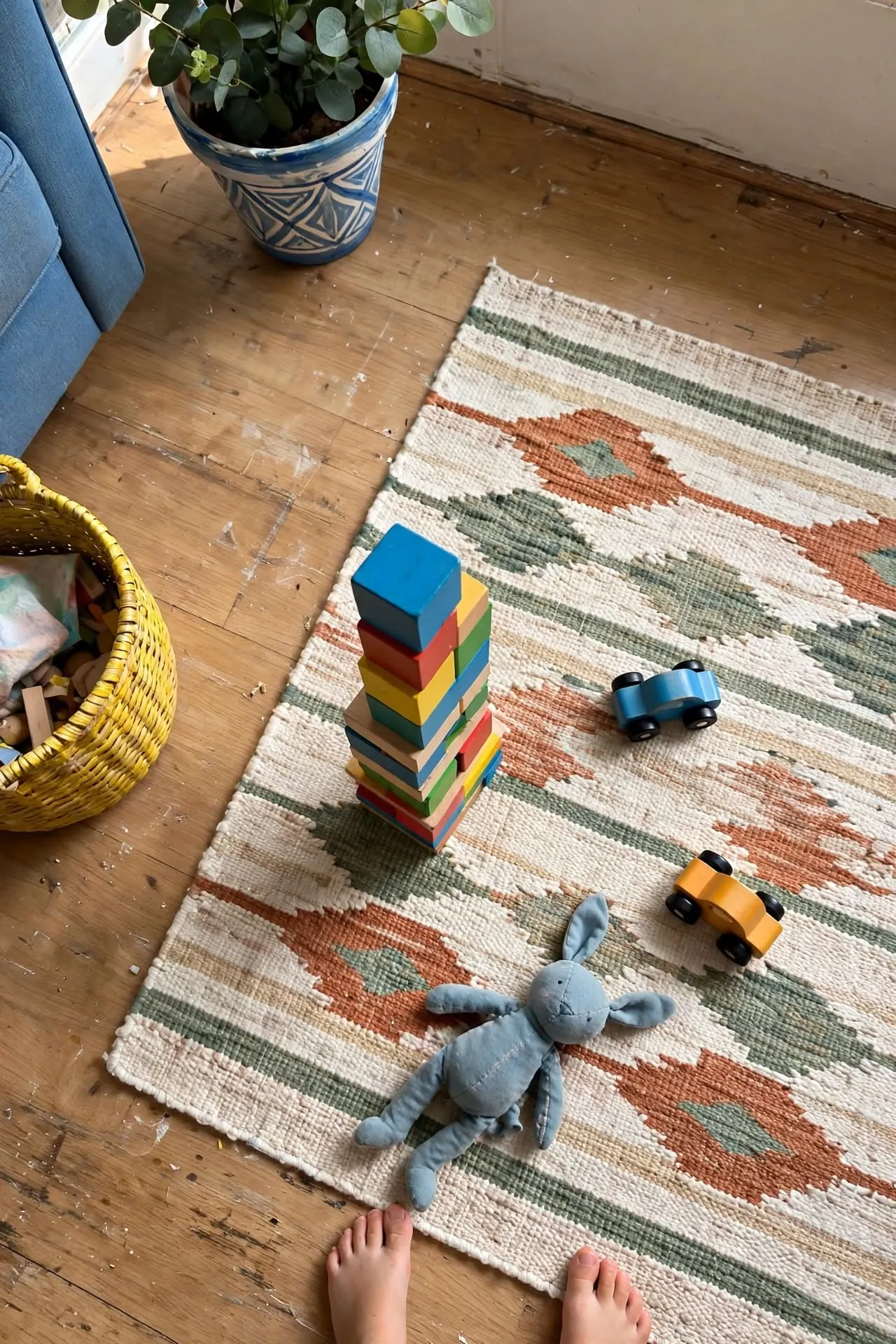
Kids understand edges better than instructions. A rug tells them where play happens without anybody saying it twice.
Lay a washable rug in the corner furthest from the walkway and keep the play on it. Toys that wander off the rug go back in a basket. It takes a week or two of reminding and then it mostly sticks.
Low pile is easier for block towers and ride-ons than anything shaggy.
4. Low Open Shelving, Anchored to the Wall
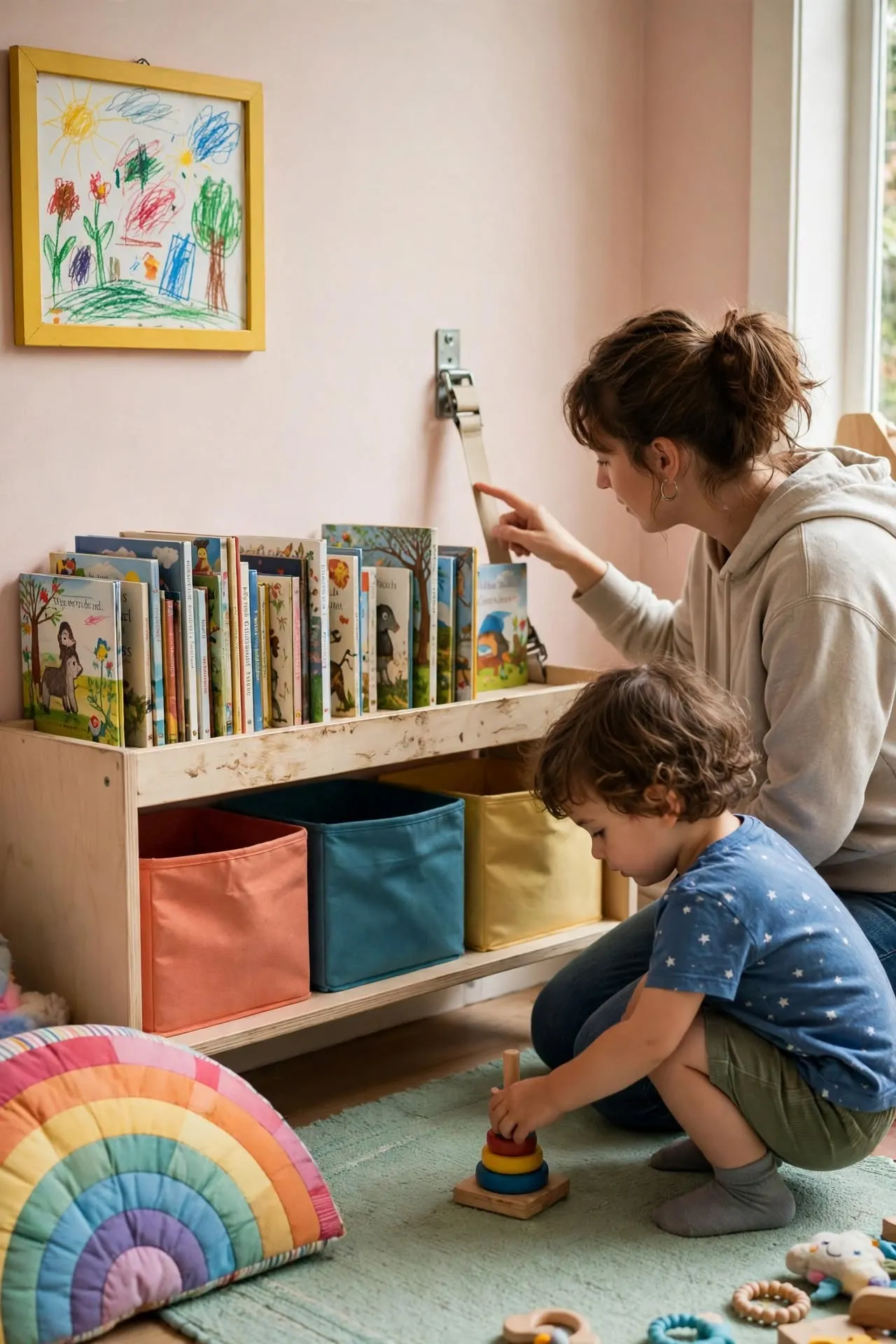
Open shelves at child height are the backbone of a good living room and playroom combo. Kids can see their options, choose, and put things back.
They also get climbed. Furniture tip-overs are one of the most serious hazards in a room where young children play, and most incidents involve a child who pulled up on or climbed a piece that was not secured. Anchor the shelf to a stud with the brackets that came with it before you put a single toy on it.
Keep the top surface boring. A tempting basket up high is an invitation to climb.
Keep the unit under 36 inches tall
Heaviest bins on the bottom shelf
Leave the top clear and uninteresting
Storing a TV or screen on top
Putting favorites on the highest shelf
Skipping the anchor because you rent
5. A Reading Corner Built From Things You Own
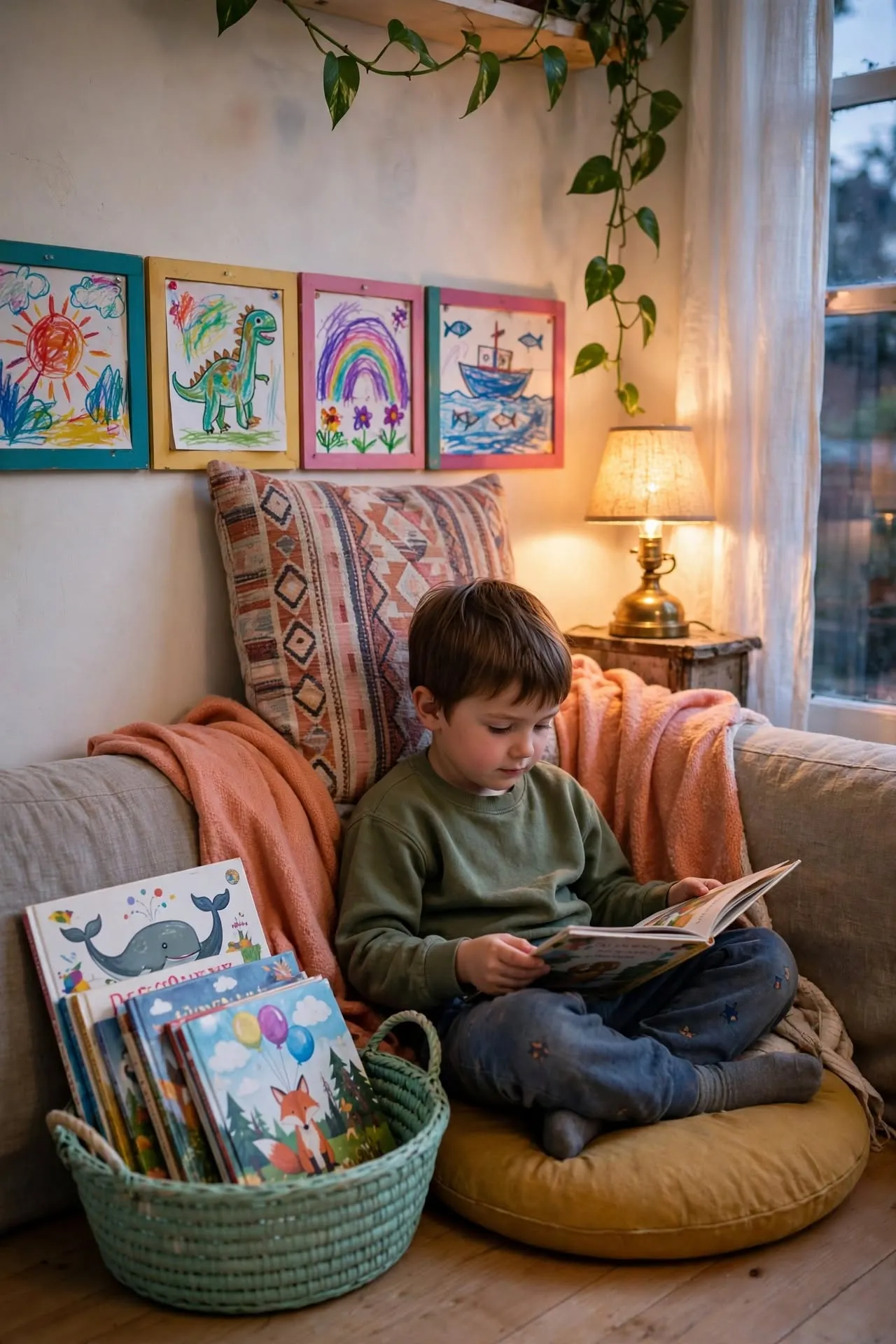
You need less than you think here. One armchair or floor cushion, a small lamp, and books facing cover-out in a shallow basket so a three-year-old can actually choose one.
The corner behind the sofa or beside a bookcase works well because it already feels enclosed. Avoid putting it directly under a window with blind cords, which should be tied up and out of reach regardless.
This is also the spot that earns its keep at 5pm, when everyone is tired and nobody wants another loud game. My list of quiet indoor activities for toddlers fits this corner well.
● Soft light from a lamp rather than the ceiling
● Books visible cover-out, around 8 to 10 at a time
● Something to lean against that is theirs
6. Toys Behind Cabinet Doors, Not in Full View
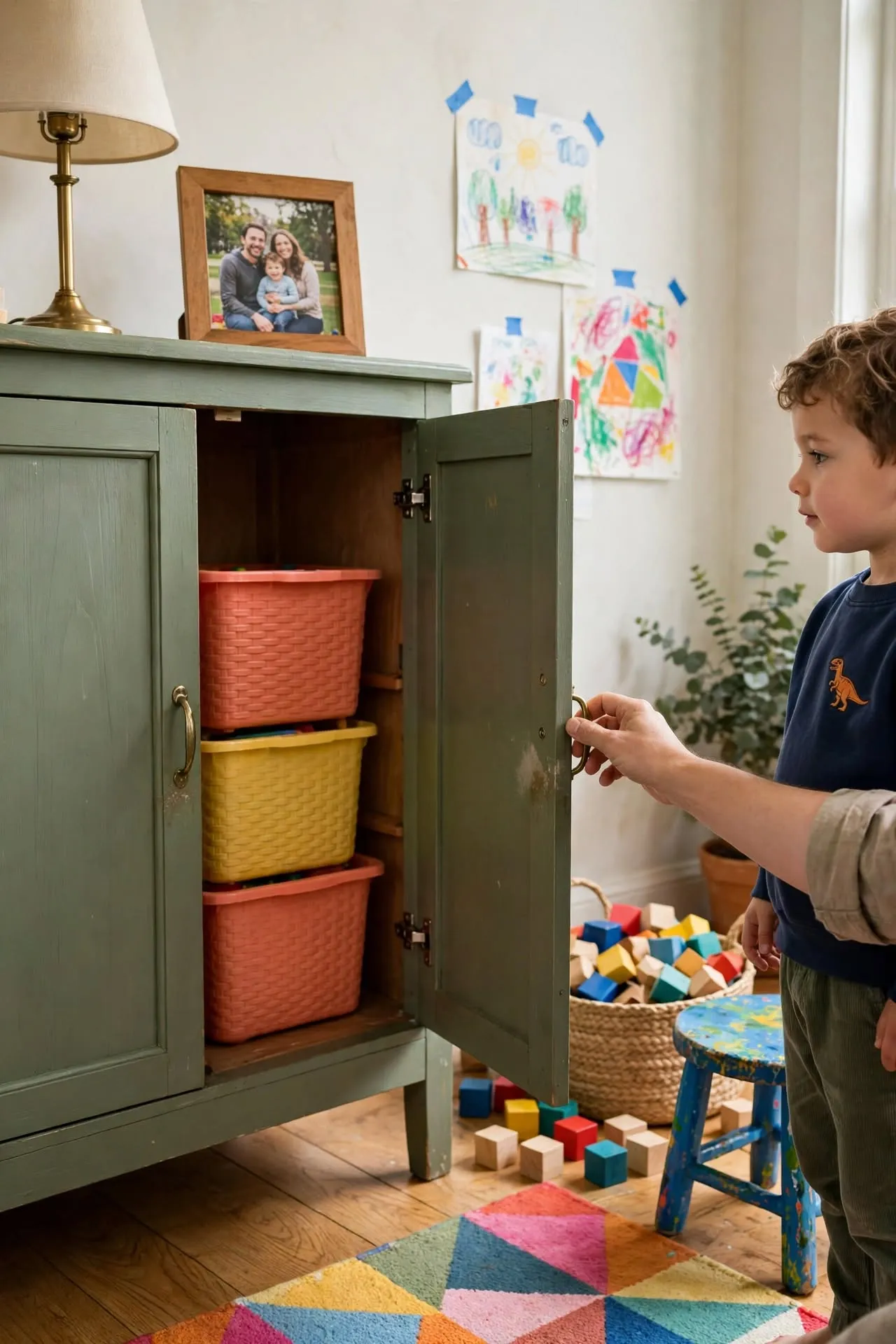
A closed cabinet is what separates a family room from a storage unit. Anything you do not want to see in the evening goes behind a door.
The trick is deciding what earns an open shelf and what hides. Open shelves are for the things kids reach for daily and can put back alone. Behind doors go the small-piece sets, the craft supplies, and anything that needs an adult anyway.
A cabinet with child-height doors also gives older kids independence without a visual mess.
7. The Window Spot Nobody Is Using
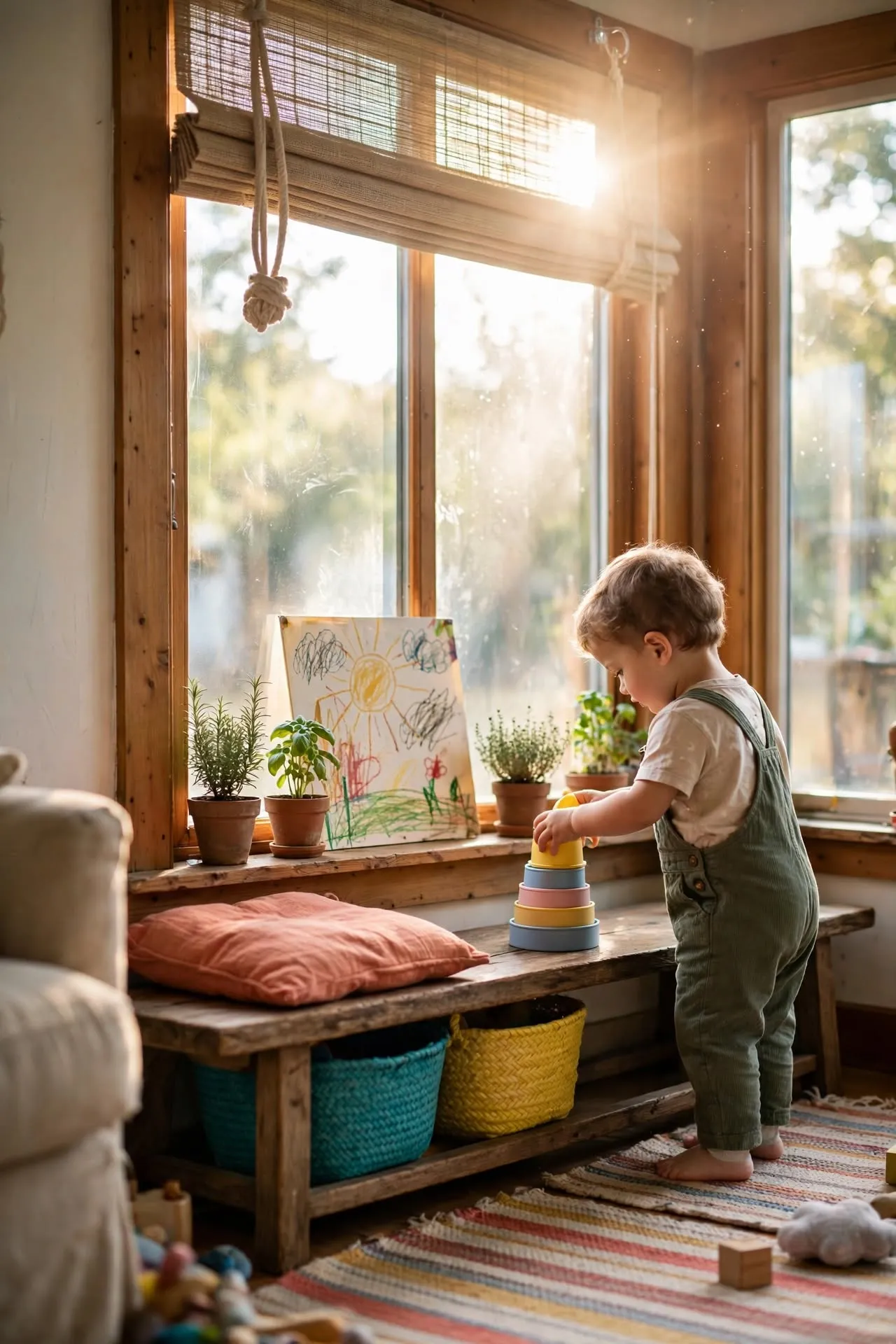
Most living rooms have a patch of floor by a window that holds nothing but light. It is the best place in the house for a small table or a low bench, because the daylight does half the work.
Keep furniture far enough from the glass that a child cannot climb onto the sill, and secure or remove any blind cords within reach.
| Window setup | Suits ages | Good for |
|---|---|---|
| Low bench with baskets under | 1 to 3 | Standing play, looking outside, quick clearing |
| Small table and two chairs | 3 to 6 | Drawing, puzzles, sorting, snack play |
8. A Fold-Away Table That Vanishes at 6pm
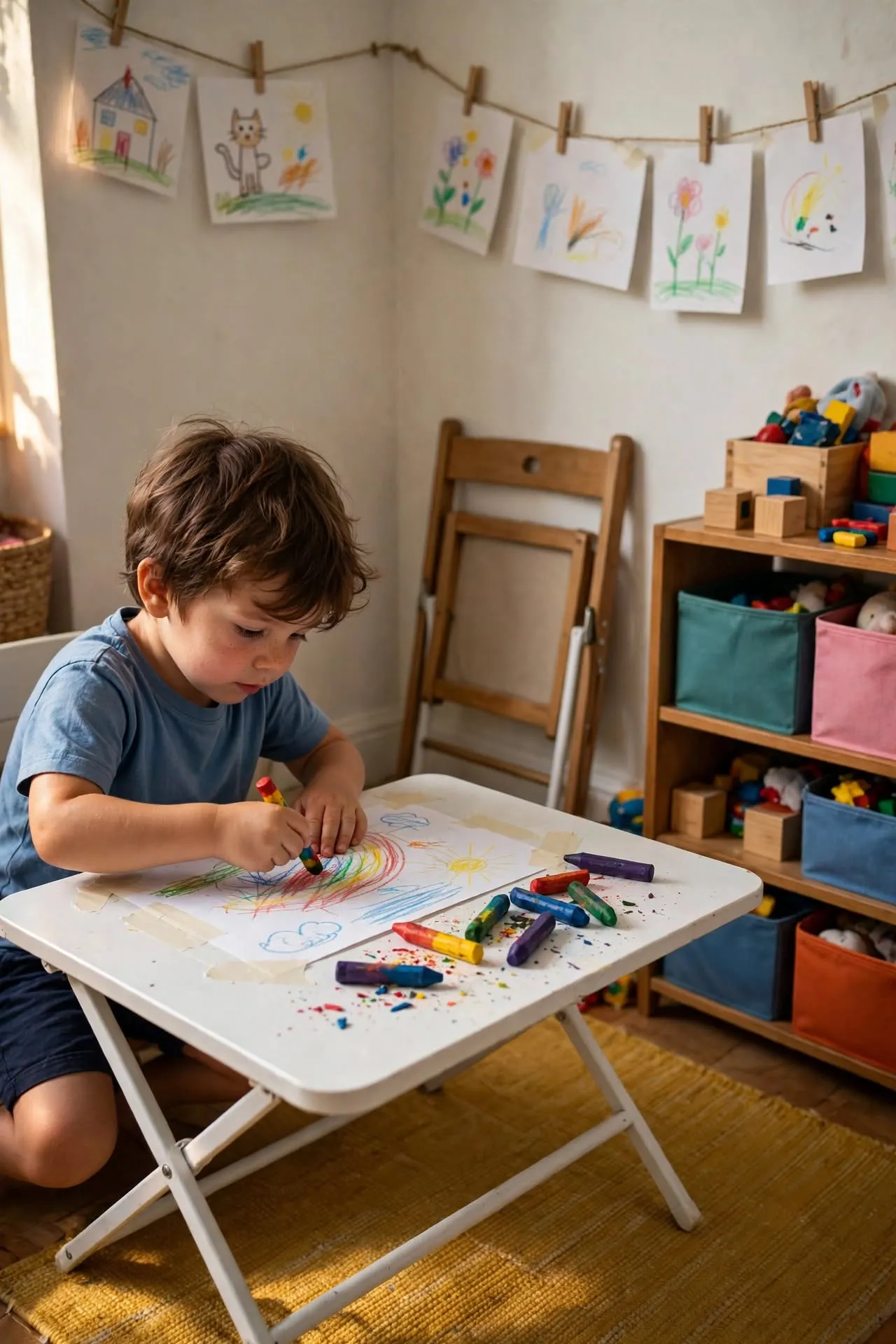
A table that folds flat and slides behind the sofa or into a closet changes the arithmetic of a shared room. You get a proper work surface all afternoon and your floor space back in the evening.
Look for one with a locking hinge so it cannot fold while a child leans on it. Store it flat rather than propped upright, where it can slide and fall.
This is the piece parents tell me they wish they had bought first.
9. A Soft Landing Zone for Babies and New Walkers
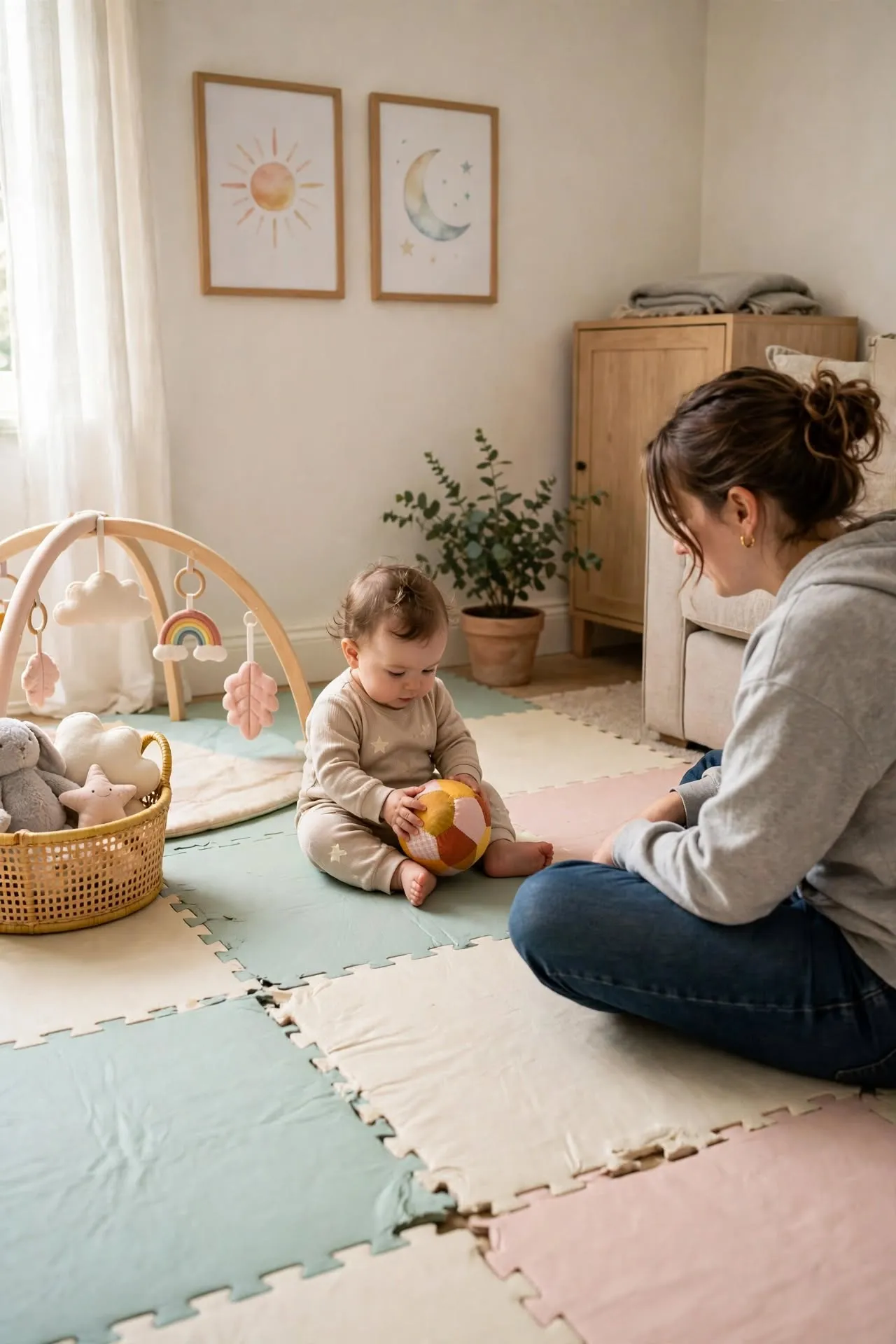
If the youngest in the house is still cruising the furniture, give them a defined patch of padded floor rather than letting them roam the whole room.
Interlocking foam mats or a thick folded quilt in the corner furthest from the coffee table works. Push the hard-cornered furniture back out of the fall radius instead of adding corner guards and hoping.
Keep this zone within your sight line from wherever you usually sit. That matters more than the padding does.
10. A Climber That Folds Flat Against the Wall
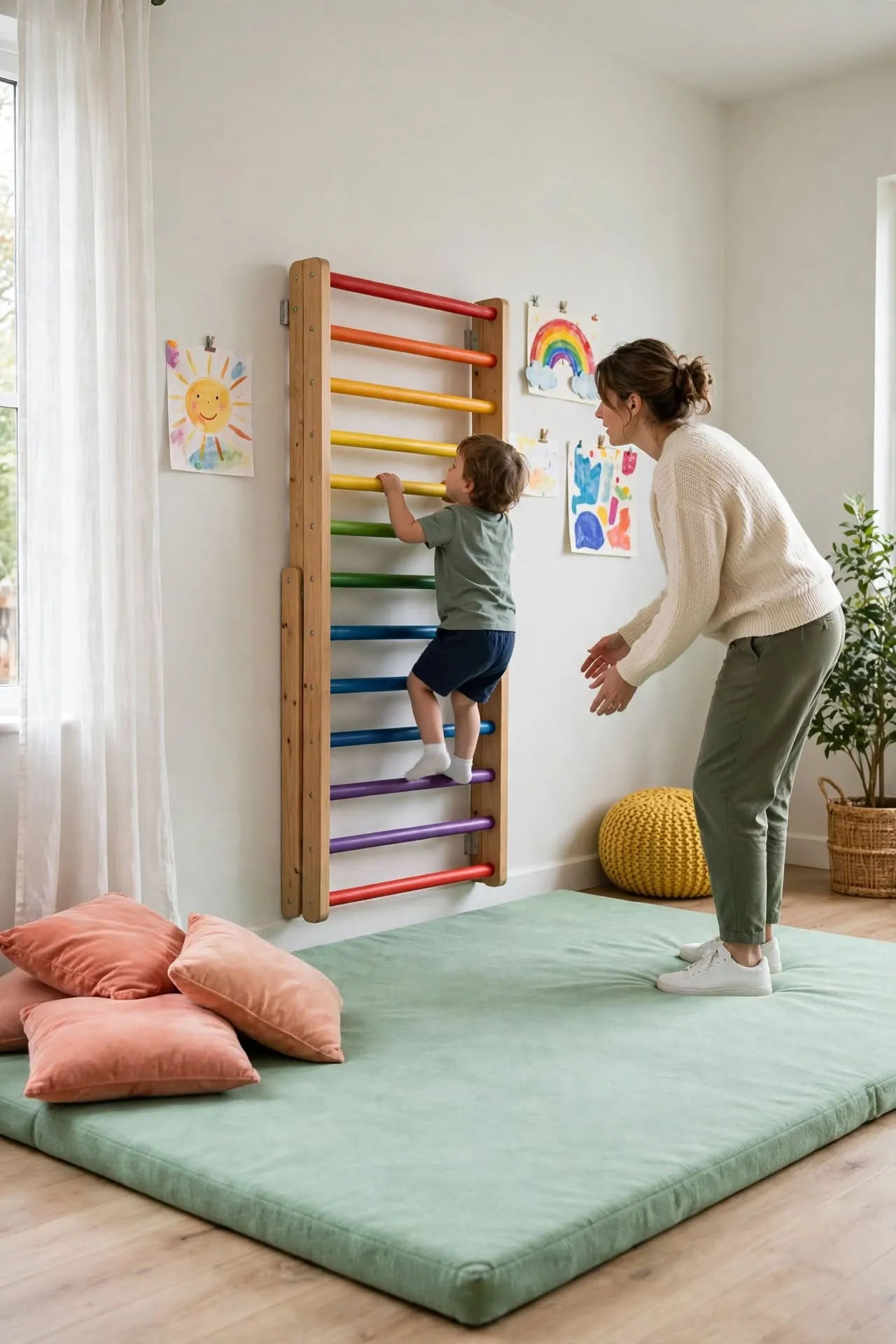
Folding climbing frames and small arches let active kids get the movement they need indoors, then flatten to the width of a bookcase.
They need real clearance, which is where most living rooms fail. Measure before you buy, not after. Place it over the padded zone, never on hard floor, and never where a fall would land against a coffee table or the TV stand.
For days when there is no room for one at all, try these active indoor activities for toddlers instead.
11. Turn the Back of the Sofa Into the Wall You Do Not Have
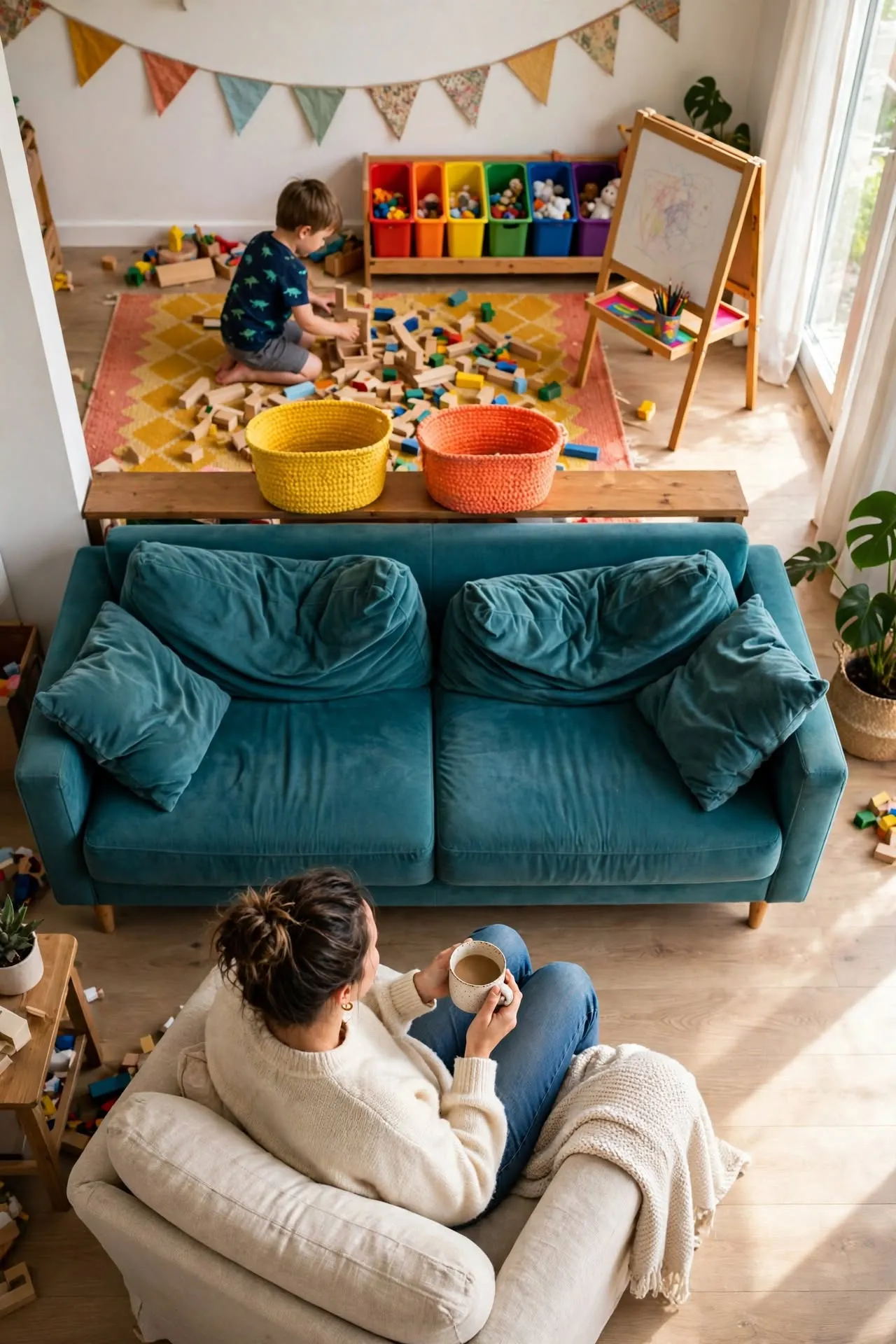
Pulling the sofa twelve inches off the wall and floating it in the room gives you two zones without building anything. Adults in front, play behind.
It works best in longer rooms. Run a narrow console or a row of baskets along the sofa back to finish the line and give the division a purpose.
12. A Sideboard That Holds Toys and Looks Like Furniture
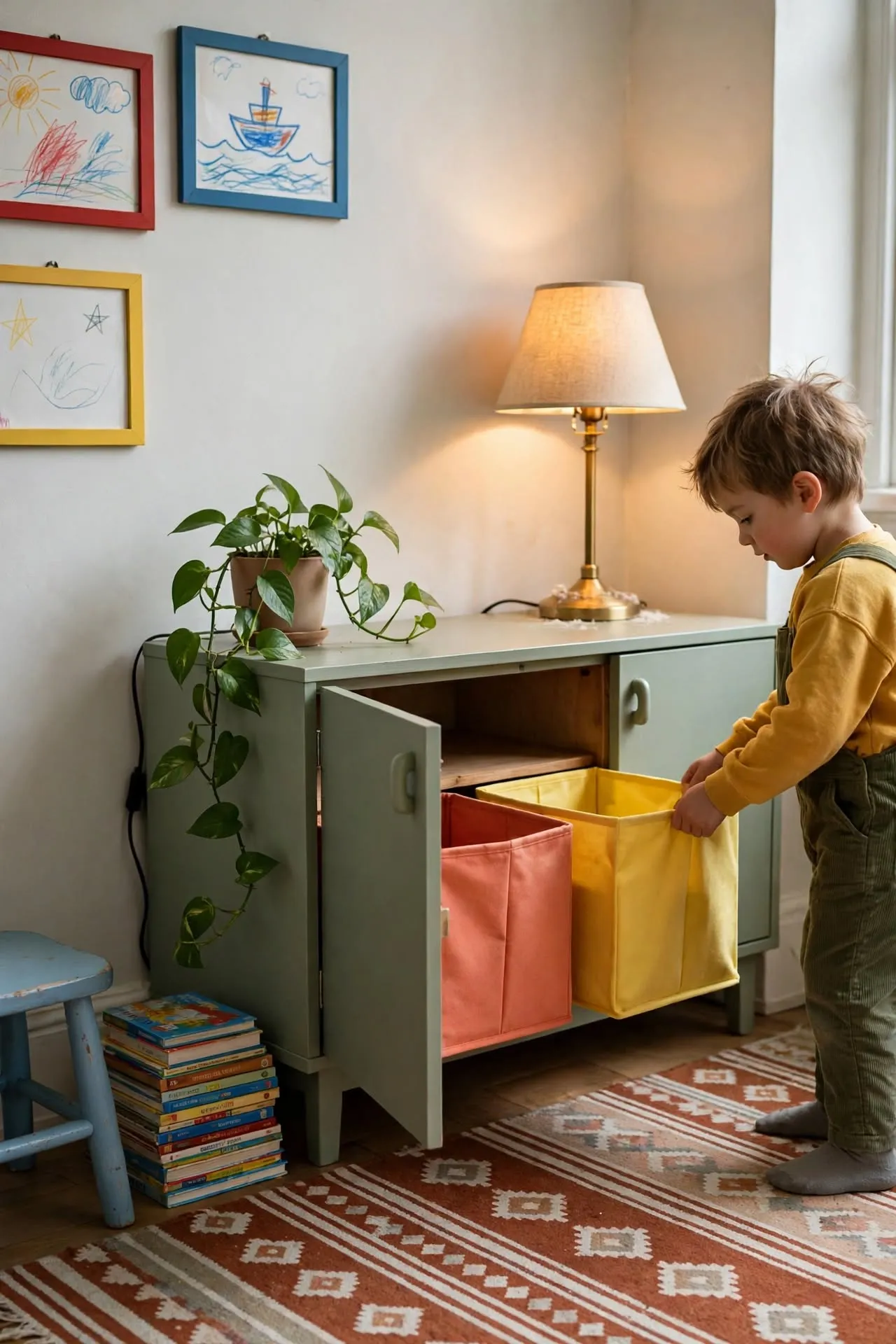
A plain sideboard is the most grown-up toy storage there is. Lamps and framed photos on top, bins of toys inside, nothing to signal that half the contents belong to a four-year-old.
Anchor it like any other tall-ish piece, especially if a lamp with a trailing cord sits on it. Cords are a pull hazard in a room where kids play on the floor.
13. An Art Drawer Built Into the TV Unit
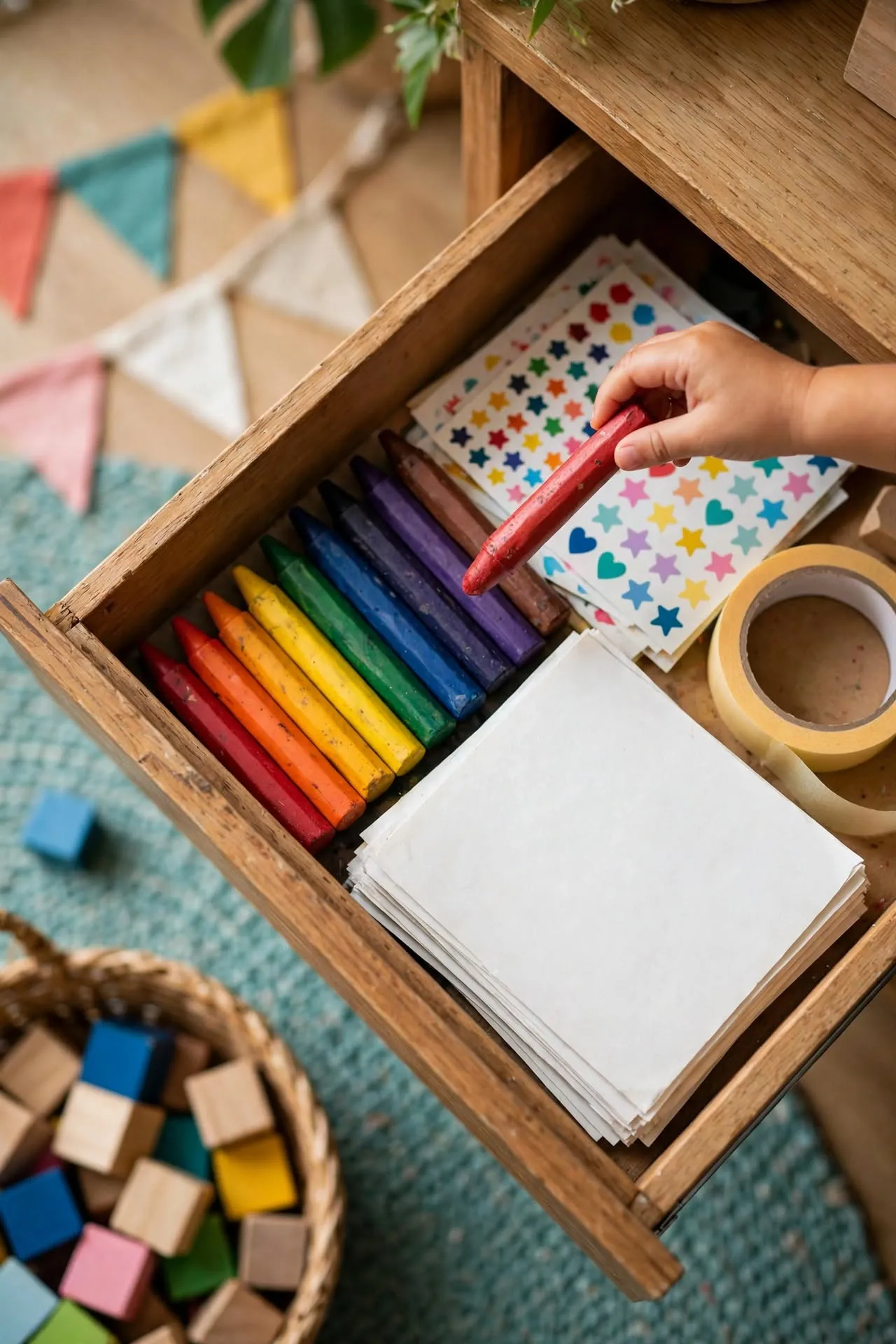
Most media units have one drawer nobody uses well. Make it the art drawer: paper, chunky crayons, washable markers, stickers, a roll of tape.
Everything lives in one place, so a child who wants to draw does not need you to fetch four things. For ages one to three, keep the drawer stocked only with washable, large-format supplies and store anything small or staining higher up. Non-toxic labeling does not mean something is safe to eat.
2. Chunky washable crayons or large markers
3. One sheet of stickers, refilled weekly
4. Masking tape for holding paper down
5. A cloth, so spills are their job too
14. A Craft Corner With a Surface You Can Wipe
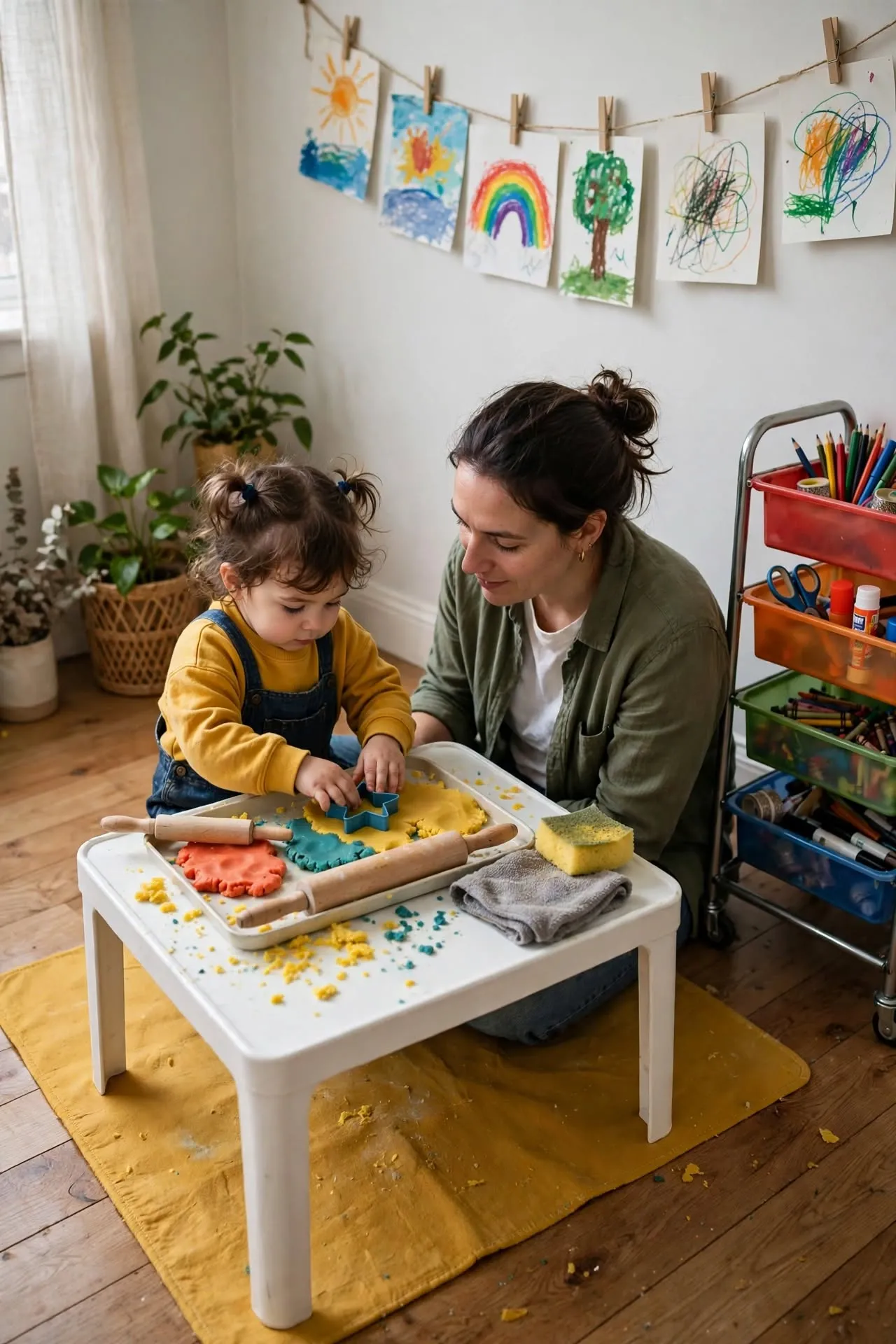
Paint and play dough belong on a surface you are not protecting. A small laminate or sealed-wood table, an old tablecloth, or a plastic tray on the floor all qualify.
Put it on hard flooring rather than carpet if you have the choice, and keep the messiest supplies in a closed box that comes out with you, not one a child can open alone.
15. A Curtain You Can Close on the Whole Thing
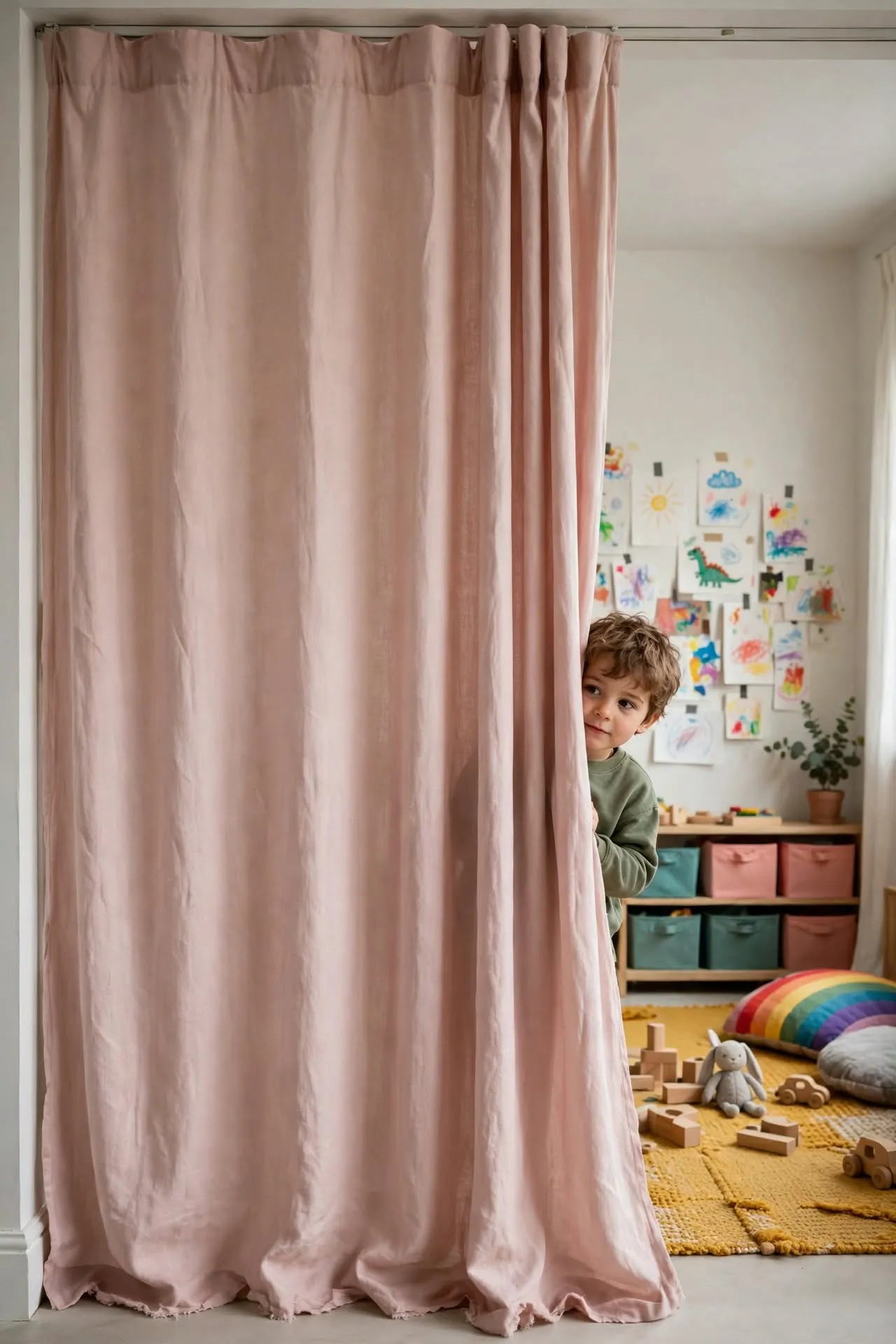
A ceiling track or tension rod with a plain curtain lets you shut a play corner away in one movement. It is the cheapest divider there is and the fastest to undo.
Hang it so the fabric clears the floor by an inch. Pooling fabric is a trip hazard, and a long loose panel invites pulling.
16. A Toy Wall Made of Picture Ledges

Shallow picture ledges hold books and small toys without taking a single inch of floor. Mounted at the right height, they also stop a child reaching for things they should not have.
Height is the whole decision. Mount the child’s ledges where they can reach standing flat-footed, and put everything that needs an adult above the line their fingertips reach when stretching.
17. A Play Kitchen Chosen to Look Like a Cabinet
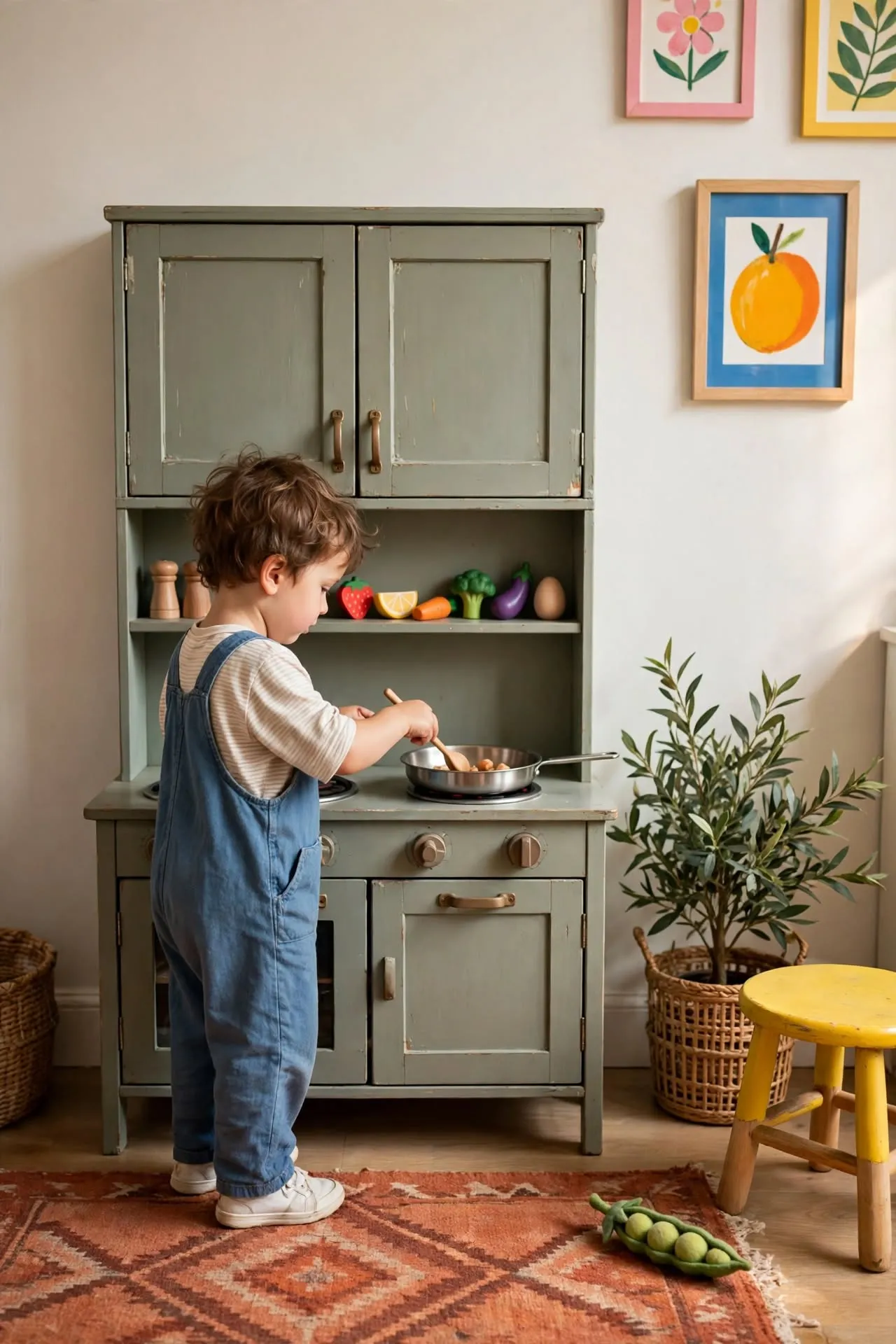
Play kitchens are the biggest single item most families bring into a living room, so the finish matters more than the features. A wooden one in a muted color reads as a piece of furniture. A bright plastic one reads as a toy store.
Put it against a wall rather than in the middle of the floor, and keep the accessory count low. Twenty plastic vegetables end up everywhere; six do not.
✓ Depth under 15 inches so it does not crowd the room
✓ Built-in shelves, so accessories have a home
✓ No small detachable parts if a baby shares the room
✓ Stable base, and anchored if it is tall and narrow
18. A Music Basket Instead of a Music Corner
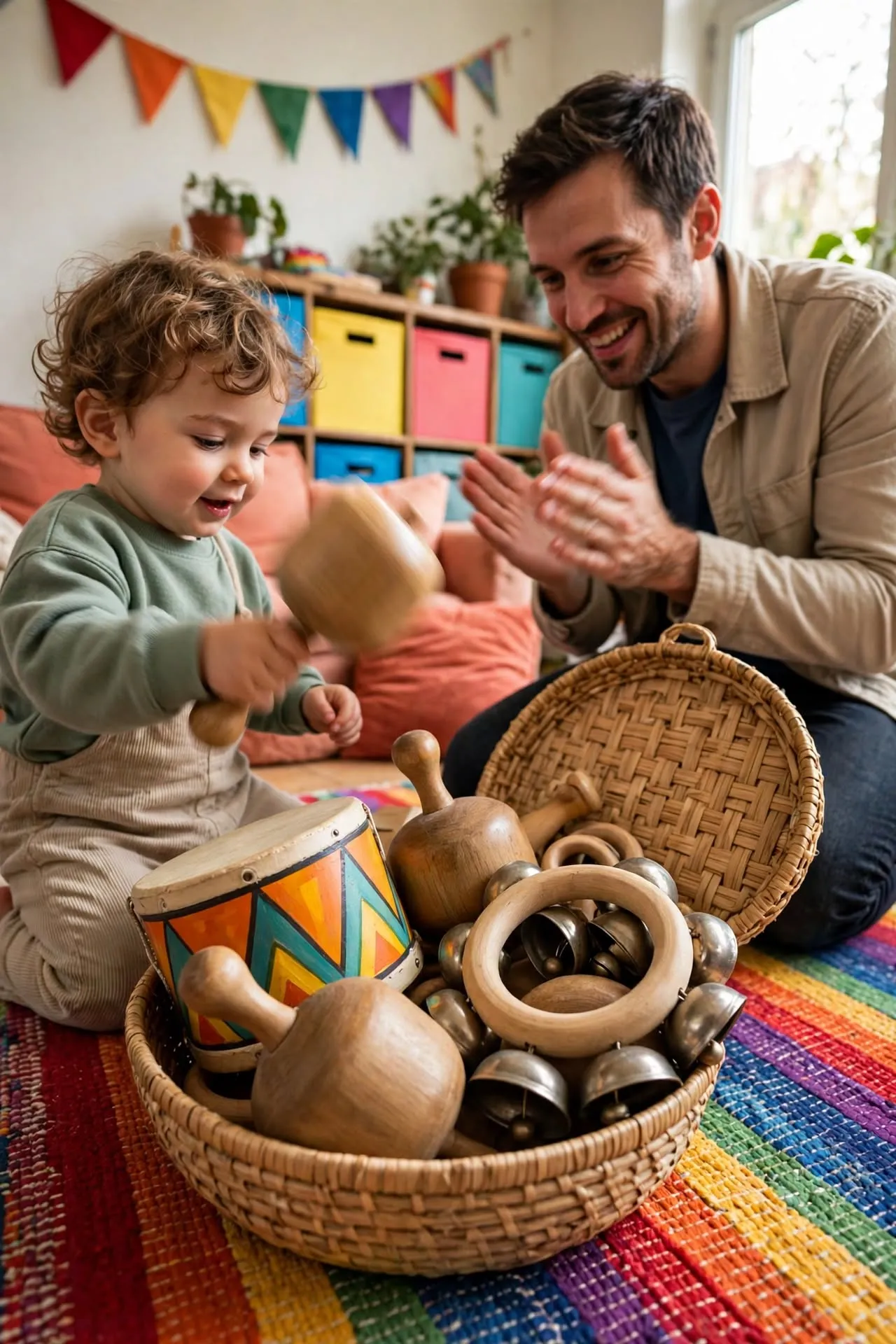
A dedicated music station in a living room becomes noise you cannot escape. One lidded basket holding a few instruments is the better version. It comes out, it goes away.
Shakers, a small drum, and bells are enough for ages one to three. Skip anything with small beads or parts that can come loose, and check seams for ages under three.
19. A Cushion Pile for the Days Nobody Can Sit Still
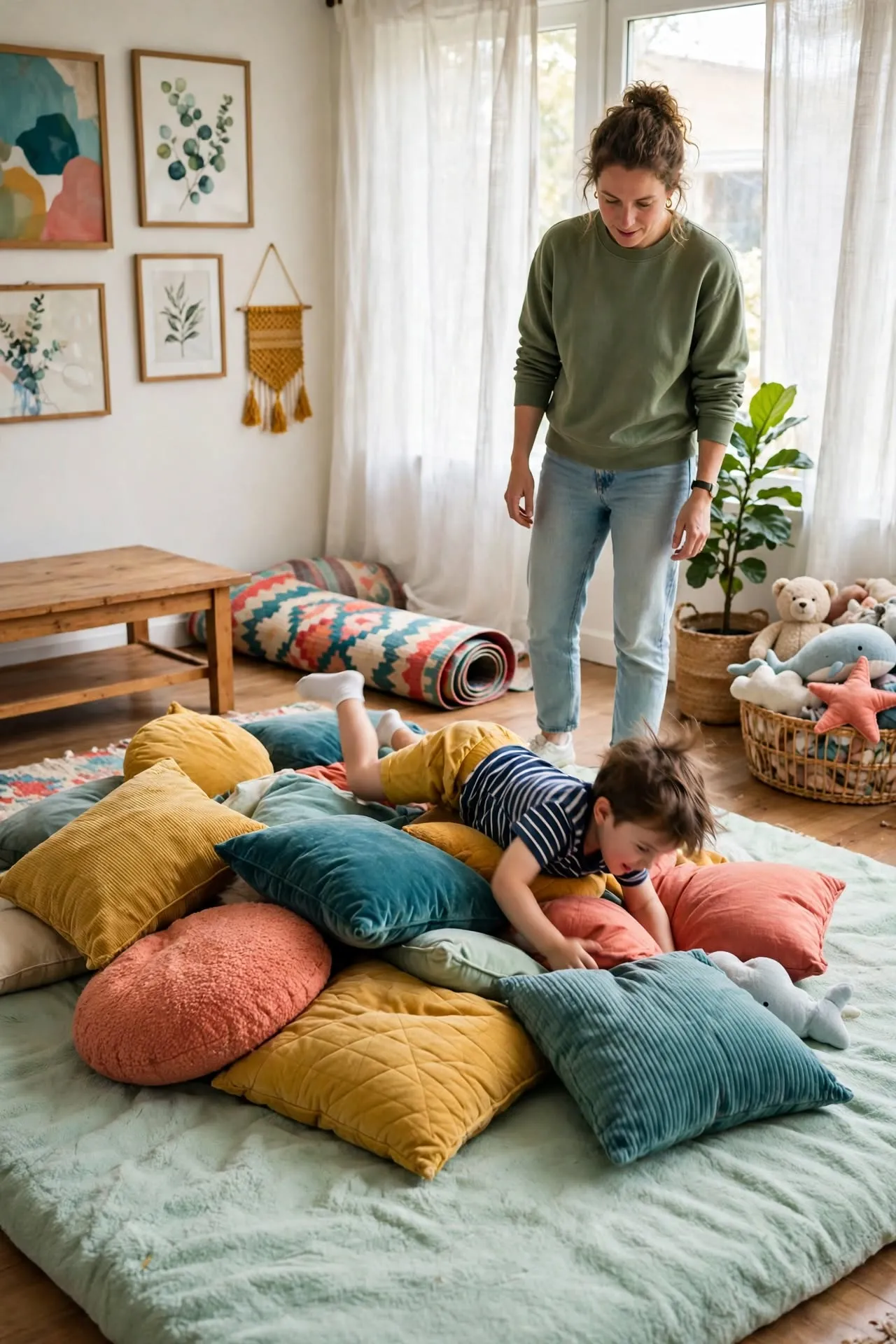
Spare sofa cushions, floor pillows and a folded duvet make a crash pad for jumping and rolling without any equipment at all. It stacks back onto the sofa in under a minute.
Build it on the padded zone, away from the coffee table and any hard edges, and stay in the room. Piles get climbed and launched from.
20. A Rolling Cart That Wheels the Whole Afternoon Away
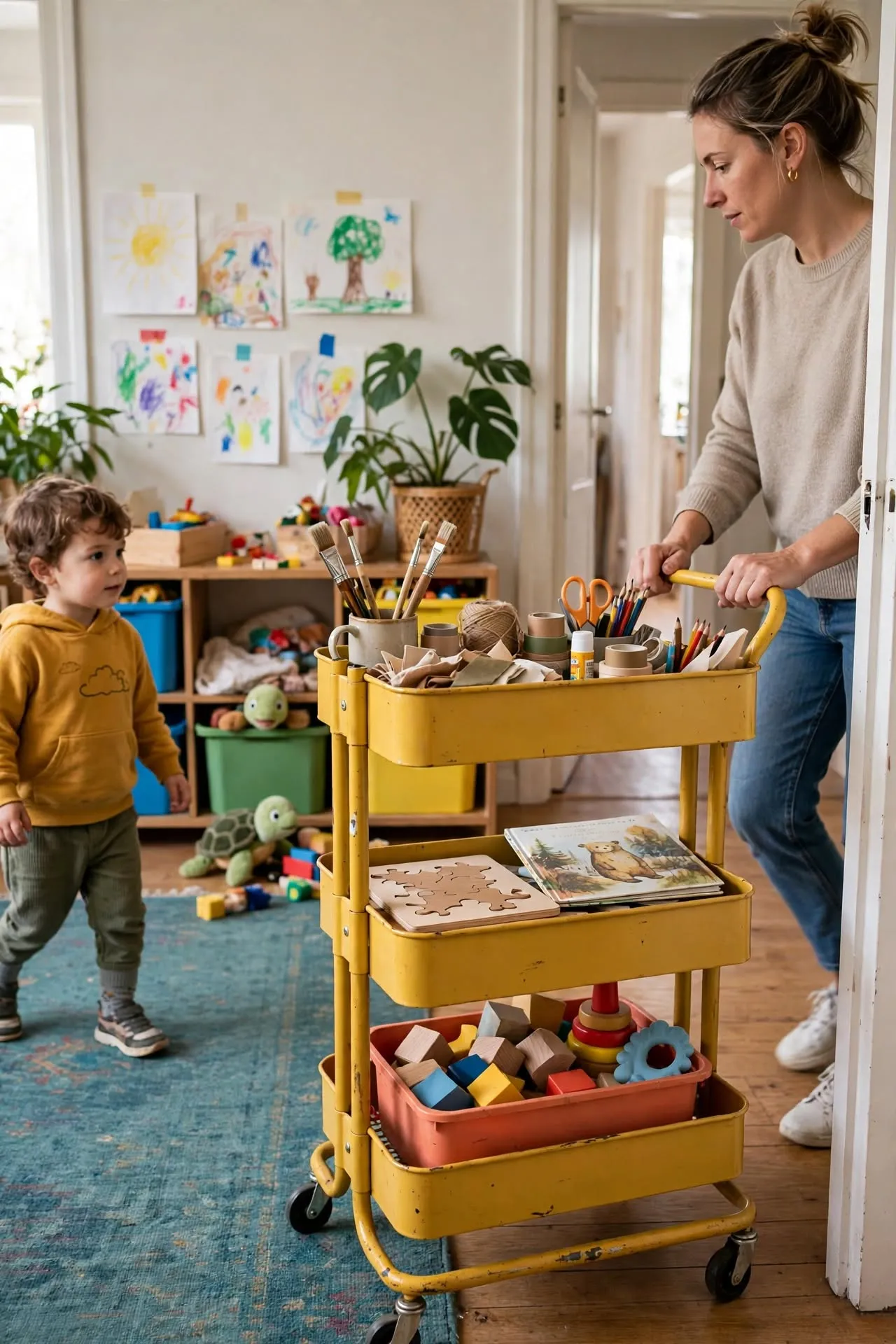
A three-tier cart is the fastest reset in this entire list. Load it in the morning, roll it to the play corner, roll it into a closet or behind a door at dinner.
Give each tier one job so nothing migrates. Lock the wheels if the cart has brakes, since a loaded cart that rolls when pulled is heavy enough to hurt.
21. A Proper Desk Spot for the Four to Six Crowd
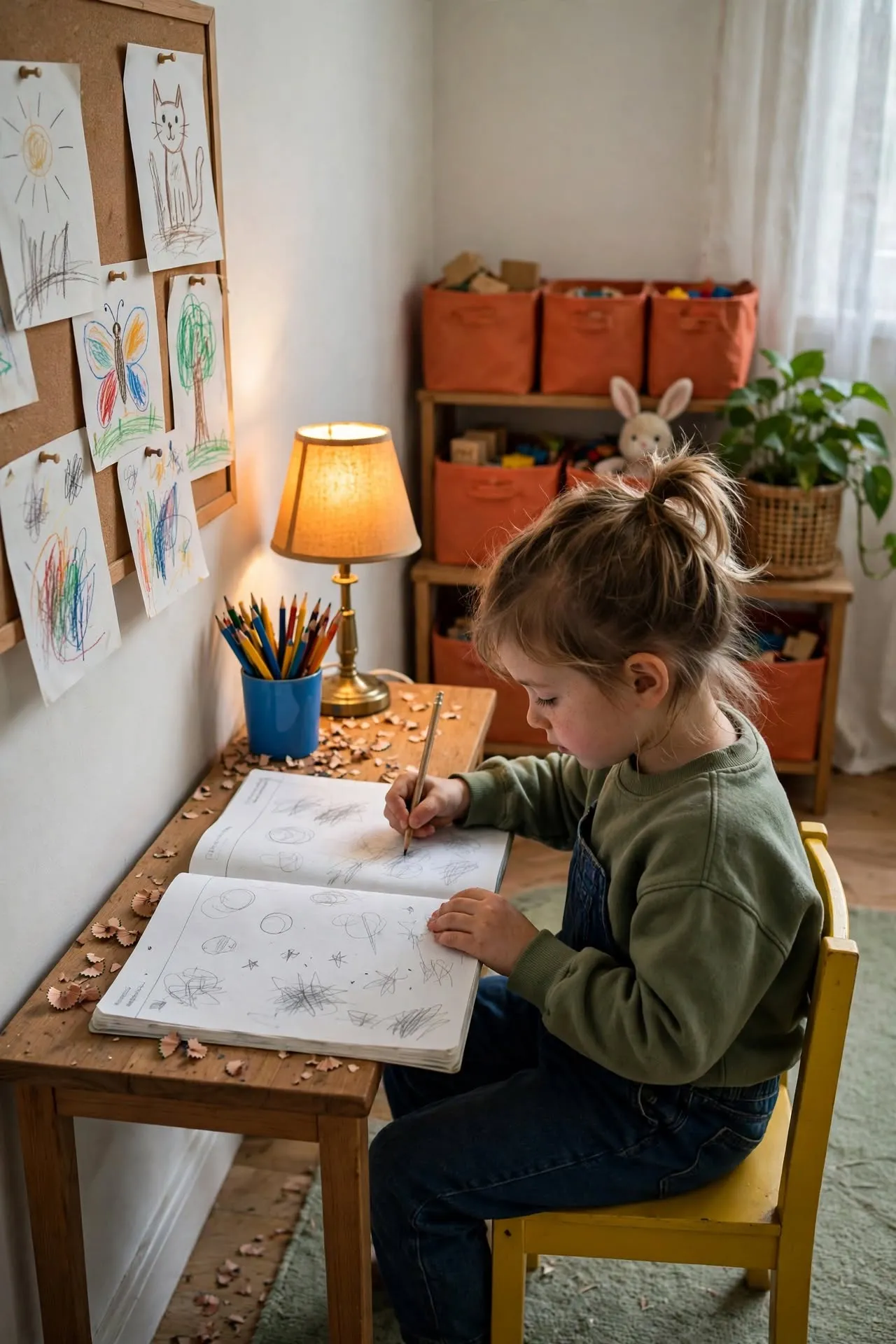
Older kids in a shared room need a surface that is theirs and does not get cleared for dinner. A narrow console against a wall, or a drop-leaf shelf, gives them one without a whole desk.
Add a lamp and a cup for pencils. The lamp is what signals that this spot is for concentrating, not for play.
| Option | Floor space used | Best when |
|---|---|---|
| Narrow console against the wall | 10 to 14 inches deep | The spot stays set up all week |
| Wall-mounted drop-leaf shelf | None when folded | Floor space is tight and guests come often |
22. A Swing or Hanging Seat, Only With the Right Fixing

Indoor swings are wonderful for kids who need movement, and they are the idea I am most careful about in a shared room.
They must be fixed into a structural joist by someone who knows what they are doing, never into a plasterboard ceiling or a doorframe alone. Follow the manufacturer’s weight limit, check the hardware regularly, and keep the swing arc clear of furniture, glass and walls. Take it down or unhook it when the room goes back to adult use.
Installed to the maker’s instructions
Hardware checked before each use
Clear arc on all sides
An adult in the room, every time
Exceed the stated weight limit
Leave it hanging overnight
Site it over a hard coffee table
Let two children swing together
23. Only Six Choices Out at Once
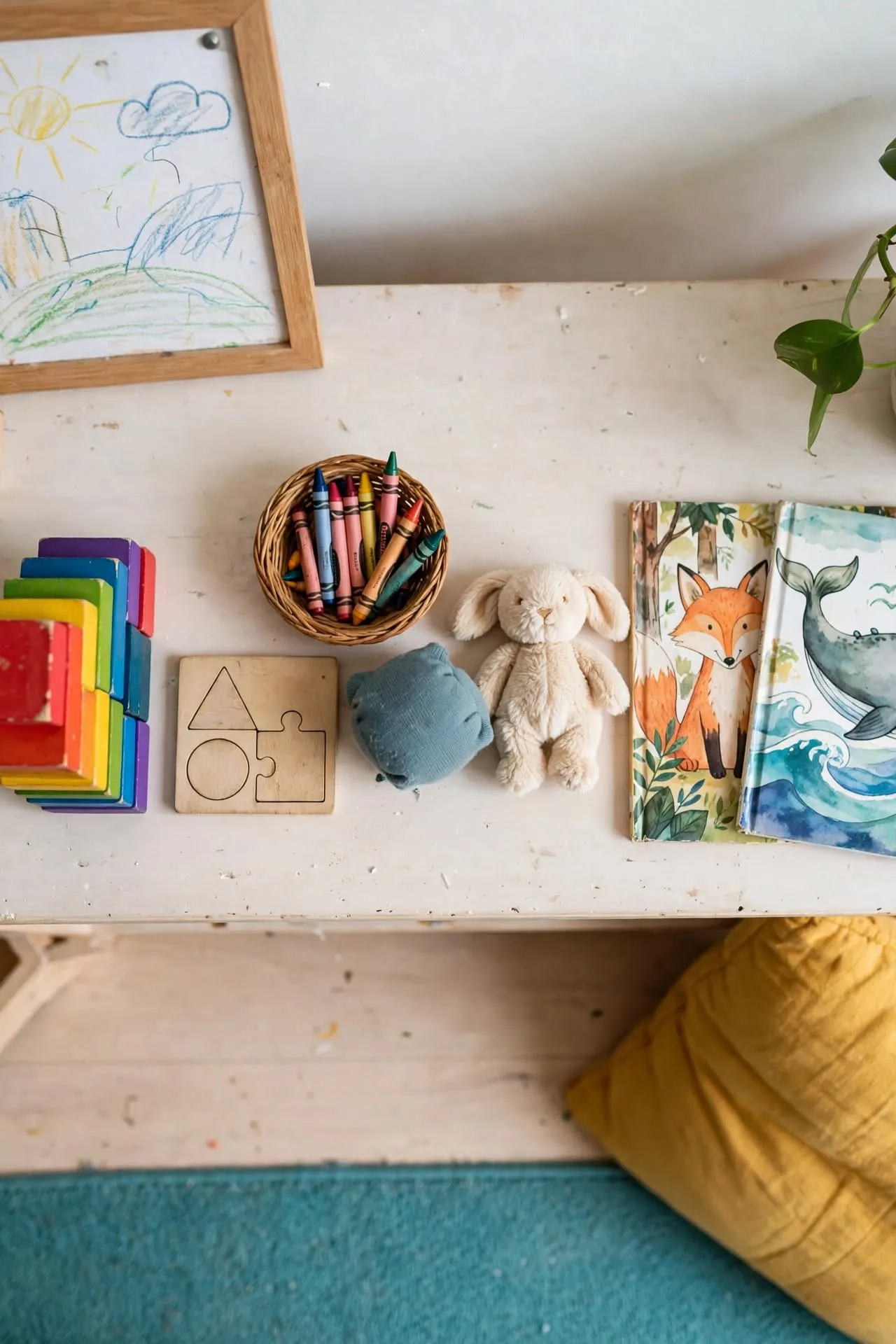
This idea costs nothing and does more for a shared living room than any piece of furniture. Keep six to eight toys available. Box the rest in a closet. Swap a few every couple of weeks.
Less out means less to tidy, and most kids play longer and deeper with fewer options in front of them.
● One pretend-play item
● One puzzle or sorting toy
● One art or drawing option
● One moving toy, a ball or a ride-on
● Two or three books, faced out
24. A Dress-Up Trunk Beside the TV Stand
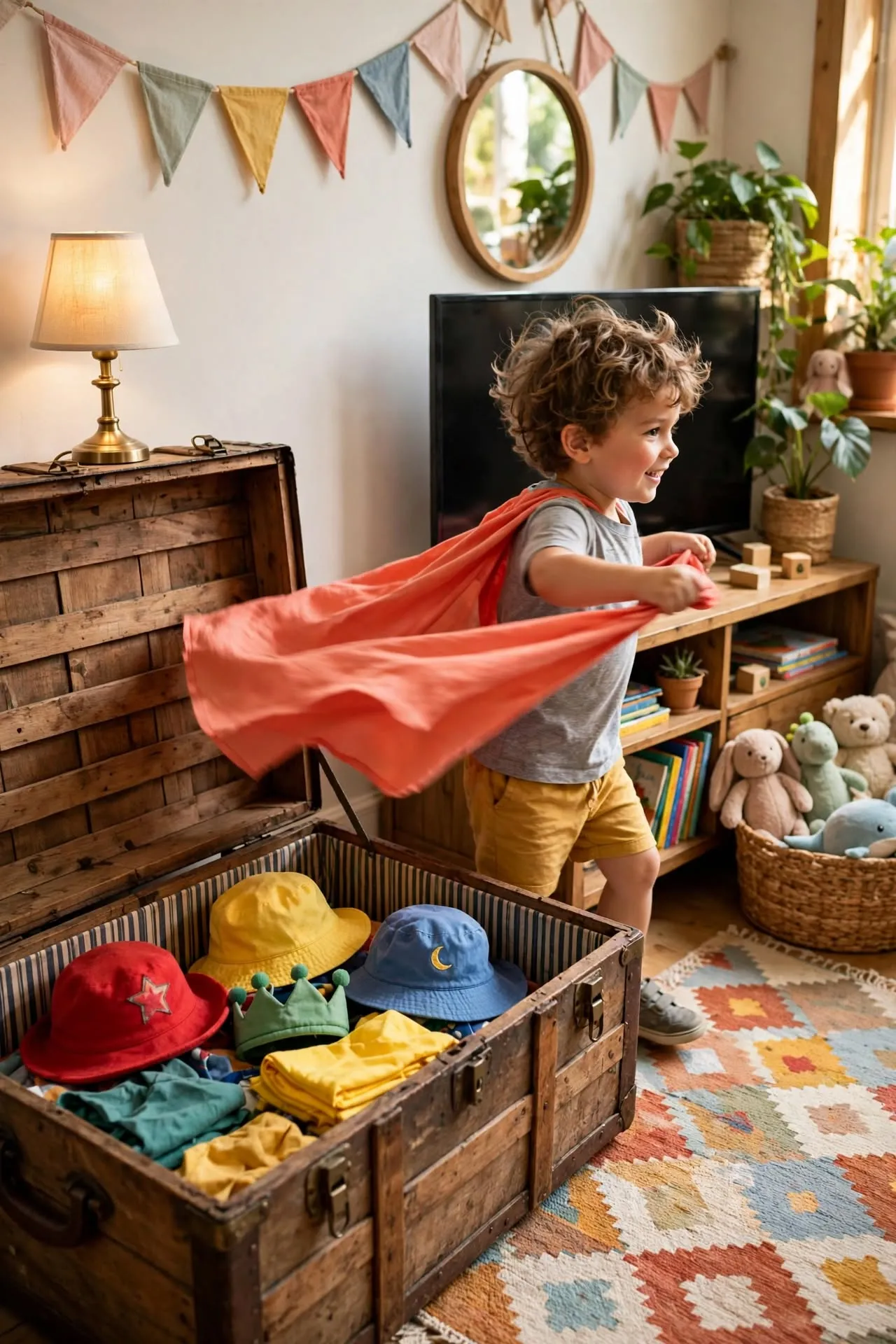
A lidded trunk or a lined crate holds costumes, scarves and hats, closes flat, and passes for a side table with a lamp on it.
Dress-up gets heavy use between three and six, and it is one of the few categories that genuinely does not need sorting. Everything goes in the same box.
25. Pick a Theme the Room Can Outgrow
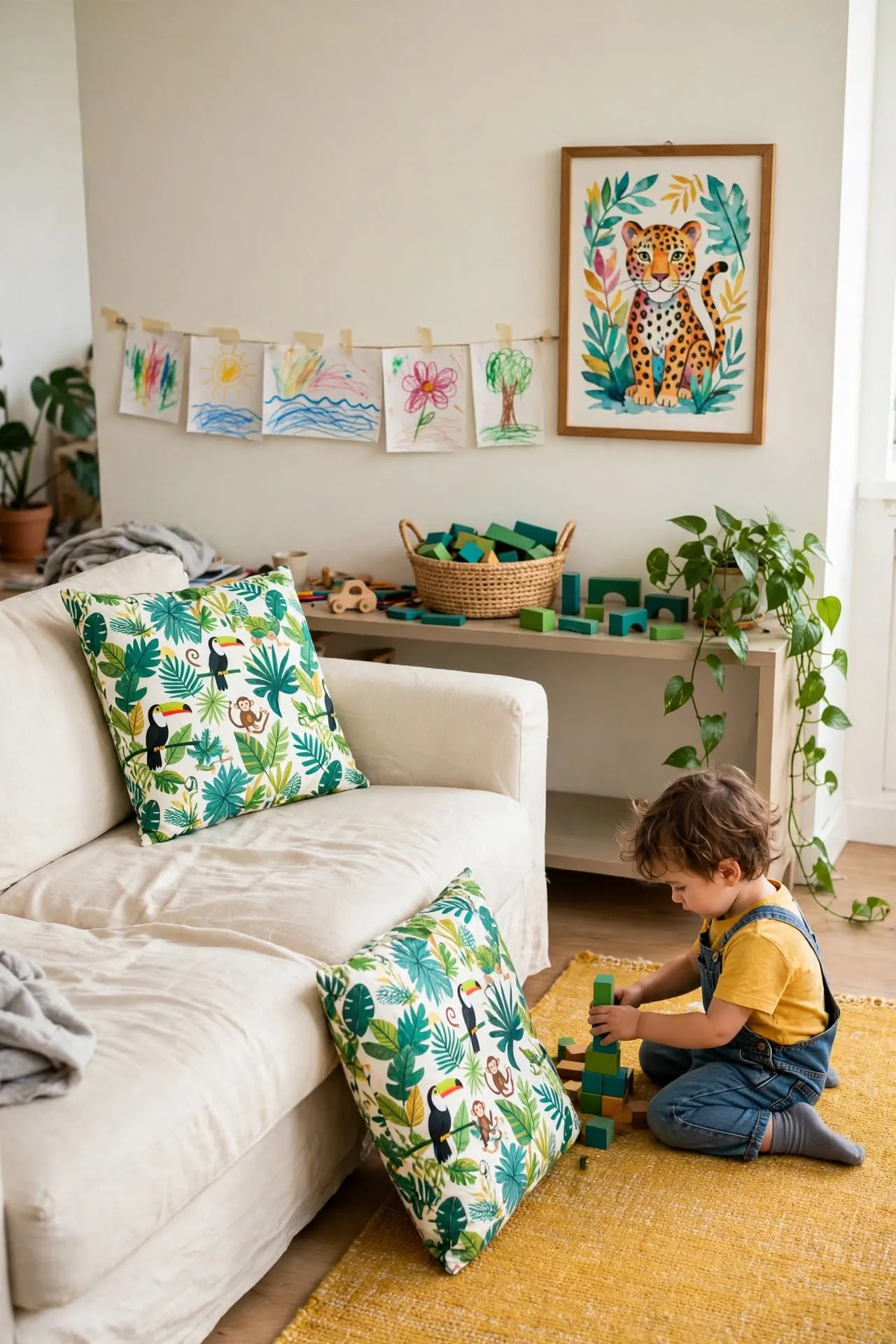
Themed corners photograph beautifully and date fast. The ones that survive put the theme in things you can swap, cushions, a print, a basket, and leave the furniture plain.
A child who loves dinosaurs at three may not at five, and repainting is a bigger job than changing two cushions. If color is what you are after, I go through this properly in my colorful playroom ideas.
26. The Tucked-In Spot Behind the Sofa or Under the Stairs
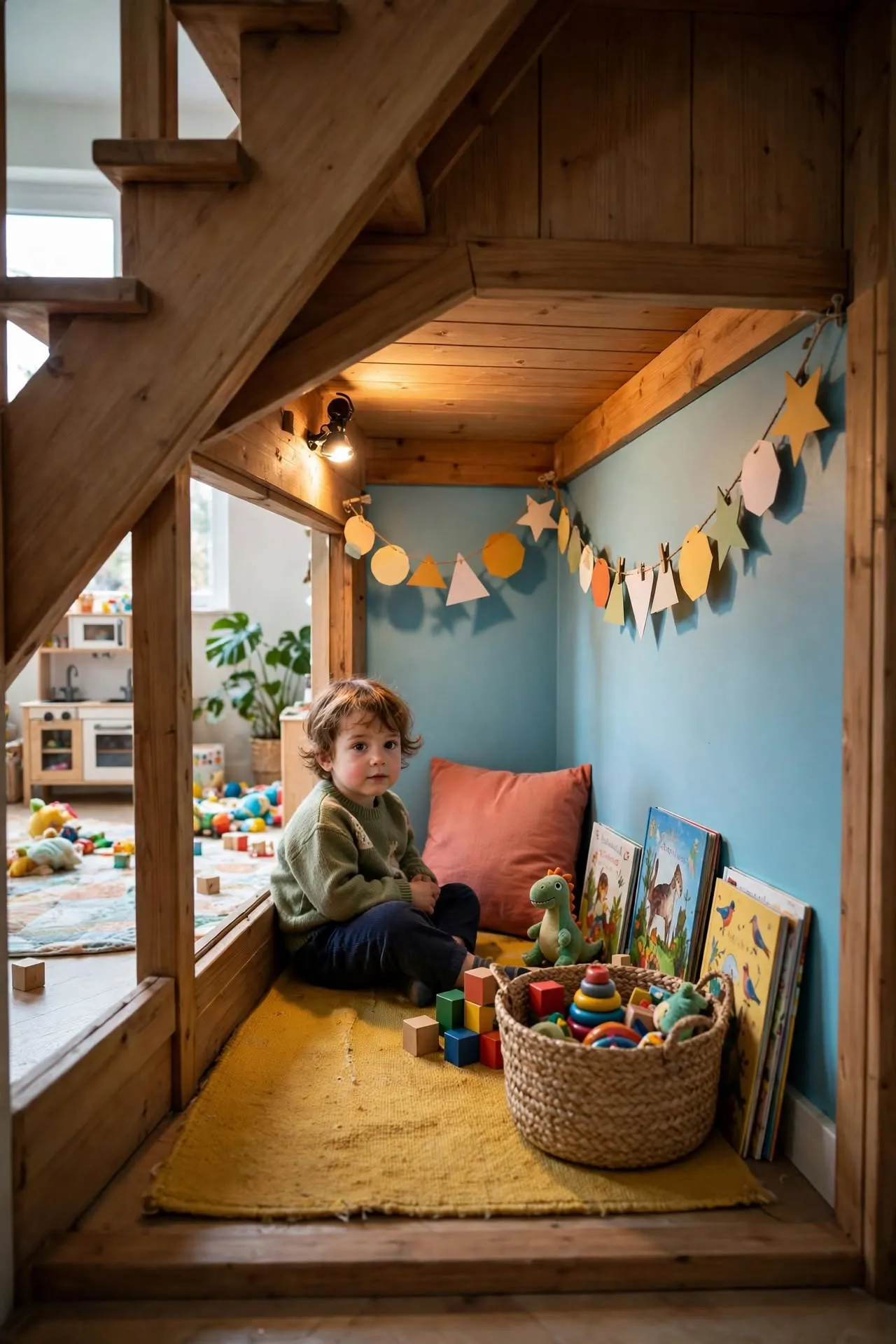
The last idea is the one most people overlook. Awkward leftover space, behind a floating sofa, under a staircase, in an alcove, makes the best play spot in the room because it is already enclosed.
Add a rug, a light, and one basket. Kids gravitate to small spaces, and anything happening there is out of the main sightline when guests arrive.
Before You Call It Done: The Five-Minute Check
Walk the room on your knees, at your child’s height, and look for these five things. It is the part of setting up a shared room that gets skipped most often. Anchoring is the one to do first: the CPSC’s Anchor It! guidance covers which furniture tips over and how to secure it.
✓ Cords? Lamp and blind cords tied up, shortened, or out of reach
✓ Small parts? Nothing small enough to swallow within reach of a child under three
✓ Falls? Hard corners out of the play zone, rugs on non-slip pads
✓ Sightline? You can see the play area from where you usually sit
Where to Start Tonight
Pick one thing. If the room feels chaotic, start with rule three and box up everything except six toys. If it feels unsafe, start with the anchors. If it never gets tidy, buy the rolling cart.
A living room and playroom combo does not need to look like a magazine. It needs to work twice a day, every day, which is a harder and more useful thing.
Looking for something to actually do in the space once it is set up? My list of easy indoor activities for any day is the one I come back to most.
Save this list for the weekend you finally move the sofa.