
Affiliate Disclosure: This post contains affiliate links. If you make a purchase through these links, I may earn a small commission at no extra cost to you. As an Amazon Associate, I earn from qualifying purchases. Thank you for supporting CozyClan!
Yes, most toddlers can do sensory play safely. The catch is that safe depends on a few choices you make before the bin ever comes out.
Search for sensory play safety for toddlers and you will usually find two kinds of advice. One says it is only rice and scoops, so relax. The other makes a bowl of pasta sound like a risk assessment. Neither helps much when your toddler is already reaching for the container.
The honest answer is more useful than either one. Toddlers explore with their hands and their mouths, they move fast, and they do not yet know that a bead is not a snack. That is exactly why sensory play works so well at this age. It is also why the setup matters.
By the end, you will know what is safe to start with, what to skip until they are older, and what to check every single time. None of it needs special equipment. If you are still deciding whether sensory play is worth the effort, our post on [the benefits of sensory play for toddlers] is a good place to start.
Table of Contents
Is Sensory Play Safe for Toddlers? The Short Answer
For most toddlers, yes, and the conditions are short enough to meet at home.
Toddler safety starts with three habits worth knowing. They mouth things to find out what they are. They cannot yet tell a toy from a snack. And they can pull a bin off a low table before you finish your sentence. None of that is a reason to skip sensory play. It just shows you where the risks actually sit.
Sensory play is safe for most children under 3 when four things are in place: child-safe materials, a stable and dry play space, close adult supervision within arm’s reach, and a few simple rules. If one is missing, pause and fix it before you start.
New to sensory play altogether? Our [beginner guide to sensory play for toddlers, including the types and how to start] covers the basics. This post covers sensory play safety, so you know what to check before you begin.
Choking Hazards in Sensory Play: What Counts as a Small Object for Children Under 3?
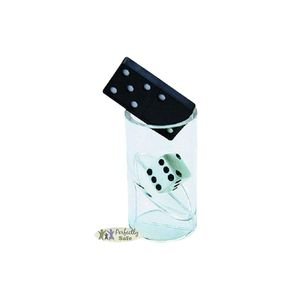
Grab an empty toilet paper tube. If a solid object fits completely inside it, treat it as a choking hazard for any child under 3.
That one test catches most of the trouble, and it takes seconds. A toddler’s airway is small, and anything that fits in the tube can block it fast.
Test the tools, not just the filler
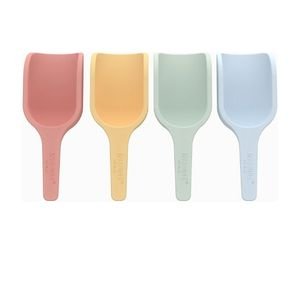
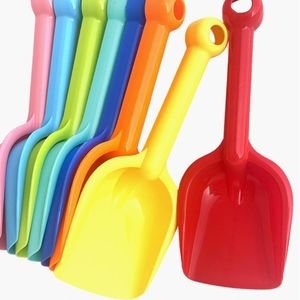
Run the same test on every scoop, cup, and toy that goes in the bin. Buttons on a toy, a loose googly eye, and the little lid from a spice jar all fail.
Small objects that hide in everyday fillers
A filler can pass as a whole and still leave small pieces behind. Foam blocks crumble, toy parts snap off, and pasta shapes break. Check the bin after every session, because the piece you miss ends up under the couch, right where a toddler will find it.
Whole nuts and popcorn are choking risks too, so keep them out of any food-based bin.
Loose grains like rice and oats are not solid objects, so the tube test skips them. Choosing age-appropriate materials means handling them differently, which comes next.
📖 In plain words
Choking hazard: any solid object, such as a bead, button, coin, or toy piece, that fits inside a toilet paper tube. Objects this size can block the airway of a child under 3. It is a quick test, not a guarantee, so keep foods like whole nuts and popcorn out of the bin too.
Age-Appropriate Materials: What to Offer, What to Watch, and What to Skip Before Age 3
Age gives you a starting point. Your toddler’s mouthing habits give you the real answer.
A one-year-old who tastes everything needs different materials from a nearly three-year-old who mostly scoops and pours. So think of age-appropriate materials as a range, from items that are fine even if tasted to items that should wait.
Start at the safe end. Move toward the middle only when your child scoops and pours more than they mouth, and only while you stay within reach. Step back any time the mouthing returns, which can happen with teething or tiredness.
The last group is different. Those are small objects that fail the tube test, other choking hazards, and a few things that are dangerous if swallowed. They stay out of reach of children under 3. For specific fillers in each group, see our [sensory bin fillers for toddlers guide on what works, what is safe, and what to skip].
When in doubt, pick the item that is safe even if it ends up in their mouth.
Non-Toxic Does Not Mean Edible: How to Choose Child-Safe Materials
A non-toxic label is not a permission slip to eat the product.
On most craft and play products, “non-toxic” means a small accidental taste should not poison a child. It does not mean the product is food, and it does not cover a big mouthful. The rules for that label also differ by country, so treat it as a starting point, not a guarantee.
“Taste-safe” is a different idea. It means the product is made from food ingredients, so a small taste is fine. Even then, a homemade dough can be very salty, and a toddler who eats a lot of it can get sick. Taste-safe products still need allergy precautions, which come next.
Three quick checks make child-safe materials easier to spot. Read the age on the package, and if it says not for children under 3, believe it. Leave out essential oils and strongly scented products, because essential oils are a real poisoning risk for small children. And skip glitter and loose craft bits, which are hard to keep out of mouths and eyes.
Keep the original packaging until the bin is empty, so the age label and ingredient list are there when you need them.
| Labeled “non-toxic” | Taste-safe |
|---|---|
| What it means: A small accidental taste should not poison a child. | What it means: Made from food ingredients, so a small taste is fine. |
| What it does not mean: That it is food, or safe to eat in quantity. | What it does not mean: That it is safe in quantity. Salty doughs and big mouthfuls can still make a toddler sick. |
| Common examples: Many store-bought doughs, crayons, and washable paints. | Common examples: Cooked, cooled plain pasta and homemade doughs. |
| Check first: The age on the package and the ingredient list. | Check first: Every ingredient, for your toddler’s allergens. |
Food Allergies and Sensory Play: Allergy Precautions to Take Before You Start
A toddler with a food allergy can react to more than what they swallow. For some children, touching a food and then licking their fingers or rubbing their eyes is enough.
That is why a pasta bin is not automatically a safe bin. Non-toxic materials can still hold allergens. A wheat-based dough is non-toxic and still a problem for a child with a wheat allergy. Child-safe materials for one toddler can be unsafe for another.
The fix is a short routine, not a ban on food fillers.
Use only foods your toddler has already eaten without trouble. A reaction is easier to trace when nothing in the bin was new.
Read the label on every packet, even ones you have used before, because recipes can change.
Wash hands after play and wipe the tray before the next session, so leftover residue does not travel to a mouth or eyes.
If your toddler has a diagnosed food allergy, ask your doctor or allergist before using any food-based filler. You can compare filler options in our [sensory bin fillers for toddlers guide], then check each one against your own allergy list.
Where allergens hide in sensory play
Known food allergy? Ask your doctor before using food fillers. Hives, swelling of the lips or face, repeated vomiting, or any trouble breathing: stop play and get medical help. Trouble breathing is an emergency.
How to Set Up a Safe Play Environment: Sensory Bin Safety and Slip Hazards
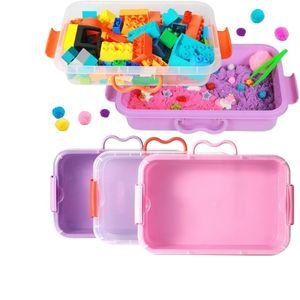
Most sensory bin problems start on the floor, not in the bin. Loose rice and oats roll under bare feet like tiny ball bearings, and one splash of water on tile is enough to send a toddler sliding. A safe play environment mostly comes down to where you play and what sits underneath.
Where the bin goes
Pick a spot away from stairs, doorways, and pets. It also helps adult supervision, since a bin near the kitchen door is harder to watch than one in the middle of a room. A low, wide bin with tall sides tips less than a narrow one.
What goes underneath
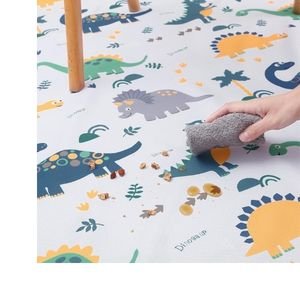
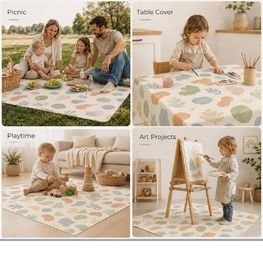
Put a tray, towel, or wipeable mat under the bin, and check that the floor is dry before you start. On a hard floor, sweep as you go instead of waiting until the end.
What stays out of reach
Keep older siblings’ small toys and anything that fails the tube test off the table. A younger toddler is often steadier in a high chair with the straps on.
Your setup check before every session
Pick a spot away from stairs, doorways, and pets.
Lay a tray, towel, or mat down and check the floor is dry.
Fill the bin only part way, so the filler stays inside when it gets scooped and tipped.
Seat your toddler somewhere low and stable, in a high chair with the straps on if they need it.
Keep wipes, a towel, and a small container for scooped-out items within your reach, not theirs.
Adult Supervision During Sensory Play: What Close Watching Really Looks Like
The biggest risk in sensory play is rarely the filler. It is the moment nobody is watching.
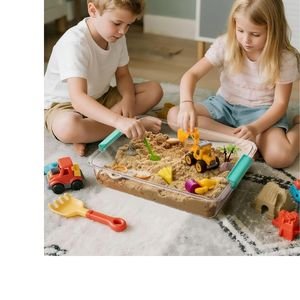
For children under 3, adult supervision means an adult within arm’s reach, with eyes on the child. Being in the next room does not count. Neither does scrolling while they scoop, and an older sibling is not a substitute. A toddler can get a fistful of filler into their mouth before you look up from the screen.
Close watching is simple. Sit at the bin with them. Watch their hands and their mouth. If the doorbell rings or the kettle whistles, take your toddler with you and put the lid on the bin. That one habit covers most of sensory bin safety.
Toddler safety also means ending the session when you can no longer give it your full attention.
⚠️ Watch Out: Water play
A toddler can drown in very little water, quickly and quietly. During any water play, stay within touching distance with your hands free and your eyes on your child. If you must leave, take your toddler with you. Empty every container as soon as play ends.
Sensory Overload and Sensory Sensitivities: How to Spot Overstimulation Early
Ten minutes in, a toddler who was happily patting the oats starts to fuss, turns their face away, and pushes the bin. That is overstimulation, and it is a signal, not bad behavior.
Sensory overload happens when a child gets more input than they can handle. Too many textures, too much noise, or too many new things at once can do it. Tired or hungry toddlers tend to hit their limit sooner.
How to dial it down
A sensory-friendly environment is a calm one. Offer one material at a time, turn off the TV, and end while your toddler is still happy.
Textures your toddler avoids
Never push their hands into a texture. Offer a scoop, let them watch you touch it first, and try again another day. Many toddlers have textures they dislike. If yours consistently avoids everyday textures or reacts strongly to ordinary sounds, mention it to your pediatrician.
The benefits in [our post on why sensory play matters for toddlers] only show up when a child is comfortable enough to explore.
Signs it is time to pause
Seeing several at once? Calmly end the session, offer quiet and a cuddle, and try again another day.
Sensory Play Rules and Boundaries Toddlers Can Actually Follow
How many rules can a toddler hold in their head? About three or four, said the same way every time.
Sensory play rules work when they are short and tell a toddler what to do, not what to avoid. “Don’t throw it” gives them nothing to act on. “Filler stays in the bin” does. Good sensory play boundaries for toddler safety sound like this: Filler stays in the bin. Filler is for hands and scoops, not mouths. We play at the bin, sitting or standing. If it feels like too much, we take a break.
Say each rule while you show it, then repeat it the same way every session. Toddlers learn boundaries through repetition, not one good explanation.
When a rule is broken, stay calm, move the filler out of reach, and redirect with “Let’s scoop.” If the oats hit the floor a third time, the bin closes for today. Ending is not a punishment. It is the boundary doing its job.
Rules work best alongside adult supervision, because you are right there to repeat them.
“Please don’t put that in your mouth, and try not to throw it, okay? We don’t want a mess.”
Why it fails: It names what not to do and gives no action.
“Filler stays in the bin. Mouths are for snacks.”
Why it works: It is short, positive, and said the same way every time.
Common Sensory Play Safety Mistakes and What to Do If Something Goes Wrong
Most sensory play safety mistakes are small habits, and good toddler safety mostly means fixing them.
The mistakes worth fixing first
Stepping away “for one second” is the big one. Adult supervision ends when you leave, and that is when a fistful of filler reaches a mouth. Take your toddler with you or close the lid.
Trusting a “safe” label without reading the age is next. The package will say if it is not for children under 3.
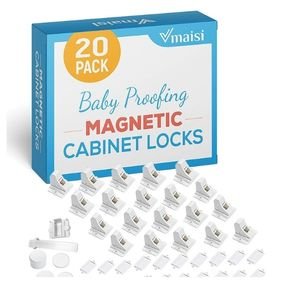
Then there is the quiet toddler. Silence often means mouthing, so keep watching when things go calm. Keep batteries, loose magnets, and other choking hazards out of the room entirely, not just out of the bin.
When to get emergency help
Choking and swallowed batteries, magnets, or water beads can turn serious fast. If your toddler is choking or struggling to breathe, call your local emergency number right away. If they swallow a battery, magnet, or water bead, get emergency medical care immediately, even if they seem fine. Do not wait for symptoms. For anything else swallowed, call poison control.
Take a child first aid and CPR class before you need it, and save both numbers in your phone today.
Take a child first aid and CPR class, and save your local emergency and poison control numbers in your phone.
Run the tube test on every tool and toy, every session.
Store batteries, magnets, and small objects high up or locked away.
Take your toddler with you if you must leave the room.
Leaving the room “for a second” during play.
Trusting a “safe” claim without reading the age on the package.
Using water beads or small objects with children under 3.
Waiting for symptoms after a swallowed battery, magnet, or water bead. Get emergency medical care right away.
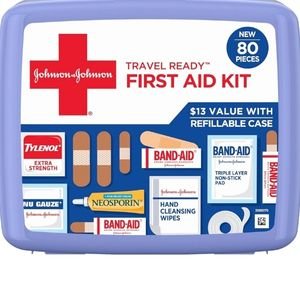
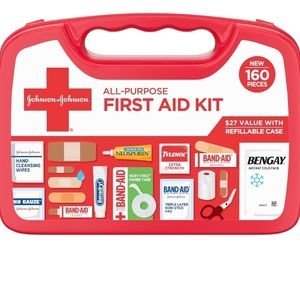
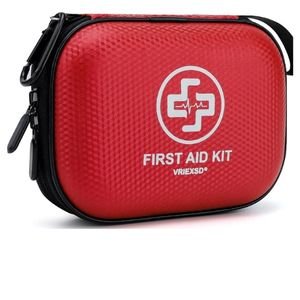
Quick Safety Fixes: Grab a Compact First Aid Kit for Sensory Play
Sensory Play for Toddlers: Quick Answers to Common Safety Questions
Q. Is a 12-month-old too young for a sensory bin?
Not necessarily. Many 12-month-olds enjoy sensory play when the materials are large, soft, or taste-safe and an adult sits right beside them. Try a shallow tray with a soft cloth and a big scoop, and keep it short. Skip anything that fails the tube test, and check for food allergies before using any food-based filler.
Q. What should I do if my toddler keeps putting sensory materials in their mouth?
Stay within reach and switch to taste-safe materials. Mouthing is normal at this age, so it does not mean you are doing something wrong. Calmly say “Filler stays in the bin,” move the material out of reach, and try again another day. If your toddler mouths everything, every time, skip dry fillers for now.
Q. How long should a sensory play session last?
Follow your toddler, not the clock. Some toddlers are done in a few minutes, and others stay much longer. End the session while they are still happy, or as soon as you see signs of overload like fussing or turning away. A short, calm session usually goes better than a long, frustrating one.
Q. How do I clean and store sensory bin materials safely?
Wipe the bin and tools after each session and let them dry fully. Store dry fillers in a sealed container out of reach of pets and toddlers, and throw away wet, cooked, or damp fillers after play, since they can grow mold. Replace any filler that smells off, looks fuzzy, or has been in a mouth or near a pet.
Q. Can toddlers with eczema or sensitive skin do sensory play?
Often yes, but go slowly. Test a new material on a small patch of skin first, and skip anything that leaves redness or a rash. Rinse and pat hands dry after play, since water play can dry the skin, and avoid scented products. If the skin is flaring or your toddler uses prescribed creams, ask your doctor first.
The One Rule to Remember Before Your Next Sensory Play Session
Sensory play safety for toddlers comes down to one rule: stay close, and check before you start. Everything else, from the tube test to the allergy check to the dry mat, supports that one habit.
You do not need special gear or a perfect setup. You need age-appropriate materials, a few minutes of preparation, and your eyes on your child. Start with one simple bin, watch how your toddler reacts, and add from there.
Before every sensory play session
Save this guide so it is there the next time you need to check a filler, a label, or a rule. A quick look is often all it takes.