
Affiliate Disclosure: This post contains affiliate links. If you make a purchase through these links, I may earn a small commission at no extra cost to you. As an Amazon Associate, I earn from qualifying purchases. Thank you for supporting CozyClan!
A lot of the “kid safe” sensory bin lists floating around online were never actually checked against choking hazard guidelines, and that is where most of the confusion starts. You searched for safe sensory materials for toddlers because you want a straight answer, not another list of forty filler ideas with no explanation of why each one made the cut.
Here is the honest problem: two lists can both say “toddler safe” and still disagree with each other. One site swaps dried beans for chickpeas and calls it solved. Chickpeas are still round, still hard, and still the right size to lodge in a toddler’s airway, so the swap does not actually fix anything.
This guide sorts sensory materials the way a real choking hazard check does, not by what looks cute in a bin. You will finish knowing exactly which dry and wet materials suit a child who still mouths things, which ones need an adult within arm’s reach, and which ones are not worth the risk yet.
Table of Contents
What Makes a Sensory Material Safe for a Toddler?
A material passes if it cannot choke, cannot poison, and cannot swell inside a child who swallows it. That is the whole test, and every material in this guide gets checked against those three things and nothing else.
Size and shape matter more than most parents expect. Anything that can fit inside a toilet paper tube, or that is round, hard, and about the width of a grape, counts as a choking risk for a toddler who still mouths objects. “Non-toxic” only promises the material will not poison your child. It says nothing about swelling or blocking an airway, which is how water beads pass the non-toxic label and still send children to the ER every year.
For everyday setup basics like where to place the bin and how closely to watch, keep reading, that’s exactly what this guide covers next.
How Do You Check Any Material for Choking Risk?
Use this same three question check on anything new, even a filler that shows up on someone else’s “safe” list.
Size
If a piece is small enough to slide through a toilet paper tube, treat it as a choking risk. That rules out whole grapes, popcorn kernels, and most whole beans.
Shape and Hardness
Round and hard is the worst combination, since it can plug an airway completely. Soft, flat, or long thin pieces are safer even at a similar size.
Does It Break Apart or Swell?
Press a piece between two fingers. If it crumbles into hard shards, or swells after a minute in water, it is not ready for a toddler bin yet.
If a material fails even one of these, wait until your toddler stops mouthing everything, no matter what a bin idea list promised.
The 3 second check
Edible, Taste Safe, or Not for Eating: What the Labels Mean
None of these labels mean the same thing, and mixing them up is how unsafe swaps end up in a toddler’s bin.
“Edible” means the material is real food, like rice or oats, and a mouthful will not hurt your child, though it is still a choking risk in the wrong shape. “Non-toxic” is a paint and craft term. It only promises the material will not poison anyone, so colored rice dyed with food-safe dye and craft sand dyed with non-toxic pigment both qualify, even though only one belongs anywhere near a toddler’s mouth. “Taste safe” gets used loosely on Pinterest and is not a regulated term at all, so check what the material actually is instead of trusting a label on a blog post.
For a longer list of filler ideas sorted this same way, see [Sensory Bin Fillers for Toddlers: What Works, What’s Safe, and What to Skip].
How Do You Choose Between a Dry or Wet Sensory Bin First?
Dry sensory bin materials work best as a starting point, especially while your toddler still mouths everything. A dry base spills, but a handful in the mouth passes right through, and refilling the container takes seconds.
Dry Base
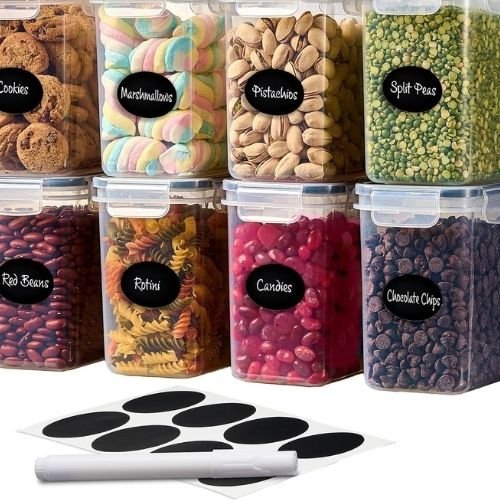
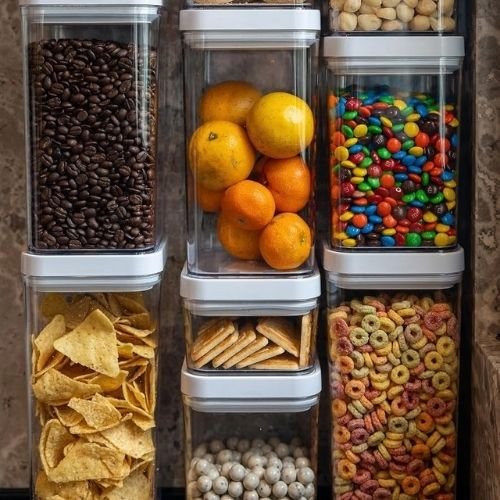
Rice, oats, and dry cereal pour, scoop, and pack down for hiding small toys. Nothing spoils, so the same batch works for weeks in a sealed container.
Wet Base
Water, ice, and oobleck add a texture dry materials can’t, resistance, cold, or that odd solid liquid squish. They also spoil faster and need a full wash after each use.
Cleanup and Storage
Keep dry bases in an airtight container between sessions. Make wet bases fresh each time and toss what’s left over, since damp grains and food-based fillers grow mold within a day or two.
| Dry Base | Wet Base |
|---|---|
| Best for a first bin or a mouthy toddler | Best once your child mostly keeps things out of their mouth |
| Sweeps or vacuums up in minutes | Needs a towel and a full bin wash after |
| Stores for weeks in a sealed container | Made fresh each session, then tossed |
Sensory Materials to Avoid: Why Water Beads, Instant Snow, and Raw Beans Stay Out
Three materials show up on nearly every list of sensory bin materials for toddlers, and all three fail the swallow test.
Water Beads
These start pea sized and swell to marble sized in water, exactly backward from what you want in a toddler’s mouth. Swallowed beads have needed emergency treatment because they keep expanding after they’re down.
Instant Snow
It’s made from the same swelling polymer as water beads, just in powder form. The non-toxic label refers to skin contact, not what happens if it’s swallowed and expands.
Raw Beans
Kidney beans, black beans, and pinto beans are classic choking hazards: round, hard, and sized to lodge in a small airway. Soaking softens them for cooking, not for play, so raw stays off the list regardless of age until your child reliably keeps things out of their mouth.
Water beads, any size or color.
Instant snow powder.
Raw kidney, black, or pinto beans.
Oobleck for that same squishy resistance.
Cooled, cooked pasta for a soft, squeezable piece.
Dry rice for that same pour and scoop feel.
The Best Dry Sensory Materials for a Toddler Who Still Mouths Things
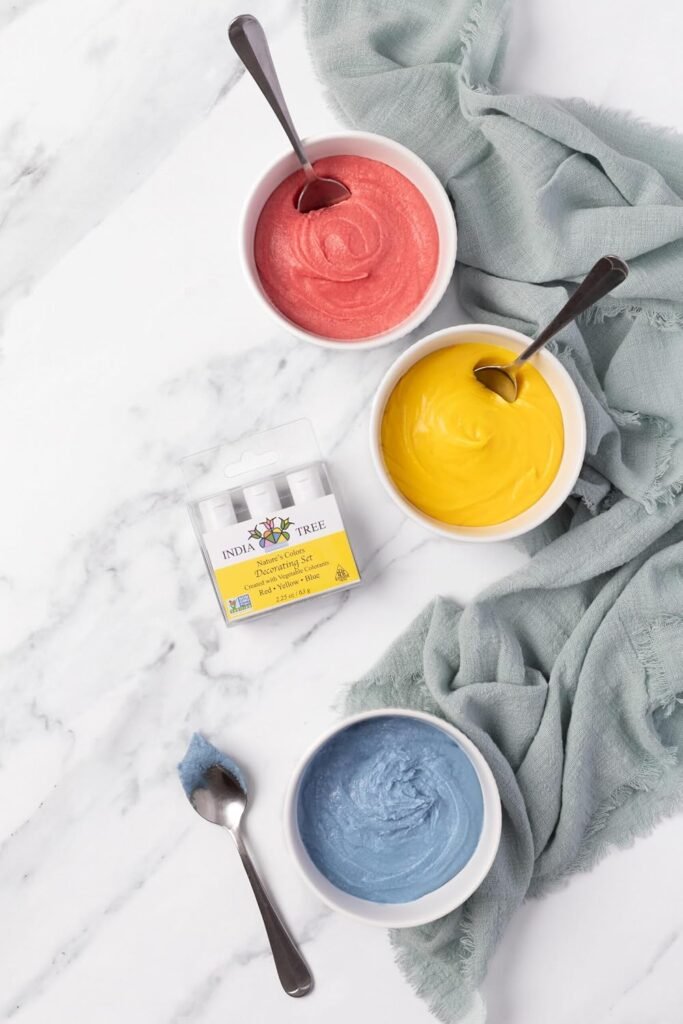
Grab a handful of dry rice and it’s obvious why this is the classic starter base: fine grains, no sharp edges, and it pours like sand.
Rice
Plain, dyed, or toasted, rice breaks apart under a bit of chewing instead of staying hard, which makes it age-appropriate even for a one year old.
Oats
Rolled oats feel softer than rice and are just as forgiving if a handful ends up in a mouth. Old fashioned oats work better than steel cut, which stays harder.
Cornmeal
Fine and powdery, cornmeal behaves more like sand than a solid piece, good for a toddler who likes pouring and burying toys.
Dry Cereal
Plain O shaped cereal is one of the more familiar edible sensory materials, soft enough to dissolve with a little saliva, and most toddlers already recognize it as food.
Before you pour a dry base
Dry Materials That Need an Adult Within Arm’s Reach
These four materials aren’t off the list, they just ask for closer supervision than rice or oats.
Dried Pasta
Small shapes like stars or wheels are fine once a child stops mouthing things, but bowtie and penne have enough surface area to lodge in a throat if swallowed whole.
Lentils
Flatter and smaller than beans, lentils are a step down in risk but still hard enough to need direct supervision rather than a glance from across the room.
Magic Sand
This craft sand is coated to stay dry underwater, and that coating is not meant to be eaten, so treat it as look and pour only, not a taste safe option.
Decaf Coffee Grounds
Used grounds are soft and low risk if tasted, but they stain hands, clothes, and grout, and still carry trace caffeine, so keep the amount small.
Popcorn Kernels, Chickpeas, and Dried Peas: When to Wait
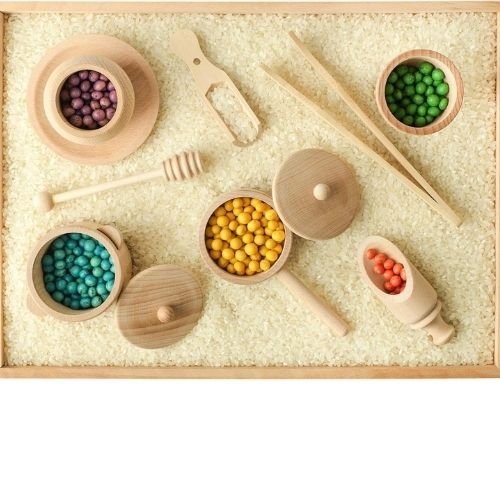
Popcorn kernels, chickpeas, and dried peas keep turning up as bean swaps online, and none of them solve what actually makes beans risky. All three are round, hard, and close to the exact width that can block a small airway, the same shape problem as the beans they’re meant to replace.
Popcorn kernels carry one extra risk: a stray kernel is small enough to miss on a floor sweep, which is how kernels end up in ears and noses as often as airways. Chickpeas and split peas are only a little more forgiving, just a touch smaller and duller, not a different shape.
None of these are off the list forever. Once your toddler reliably stops putting fistfuls of anything in their mouth, usually somewhere between three and four, they move from wait to fine with supervision.
⚠️ Watch Out
A kernel or pea missed on a floor sweep can still turn up in an ear, a nose, or an airway days later. Vacuum thoroughly after any bin that includes them.
The Best Wet Sensory Materials for Toddlers
Wet bases work best once your toddler mostly keeps things out of their mouth, since every material here is either water itself or a food they could genuinely eat a spoonful of.
Water and Ice
Plain water needs almost no setup, just a shallow tub and a few cups for pouring. Ice adds a cold, slippery texture and slowly turns into more water play as it melts.
Oobleck and Gelatin
Oobleck, a simple cornstarch and water mix, turns solid under pressure and liquid at rest, which is about the closest a toddler gets to a material that seems to change its mind. Gelatin cubes squish and jiggle without breaking into hard pieces the way ice can.
Pudding, Applesauce, and Cooked Pasta
All three are edible sensory materials in the truest sense, since a full taste test does no harm. Cooled, cooked pasta also gives a soft, squeezable piece that beats dried pasta for a toddler who still mouths things.
For the developmental payoff behind all this mess, see [8 Benefits of Sensory Play for Toddlers (And Why It Matters)]. For more setup ideas once your toddler is past this stage, see [Sensory Play for Toddlers: The Benefits, Types, and How to Start].
How Do You Set Up the Bin So It Stays Safe?
Supervision matters more than any single material choice, since even a fully vetted, age-appropriate material still needs an adult within arm’s reach for a toddler.
Put the bin on a tray, a bath mat, or a towel, not directly on tile or hardwood. Spilled rice or wet oobleck on a hard floor turns into a genuine slip hazard within seconds, for the toddler and for whoever’s crouched down next to them.
Check for food allergies before any edible base touches the bin, especially wheat in pasta or cereal, and nuts if a recipe calls for nut based flours. A sensory bin is still food contact for a child who mouths things, so treat it with the same caution as a snack.
Wet and food-based bins don’t get a second day. Rice left damp, or pudding sitting out, molds fast and should be tossed and remade fresh each session, not stored for next time.
Set the bin on a tray or mat, never straight on a hard, slippery floor.
Stay within arm’s reach the whole session, not just checking in from another room.
Confirm there’s no known allergy to anything edible going into the bin.
Toss and remake any wet or food-based bin fresh each session.
FAQ: Your Sensory Play Safety Questions Answered
Q. What should I do if my toddler puts filler in their mouth?
Stay calm and check what it was. If it’s an edible material like rice or oats, there’s no cause for concern. If it’s water beads, instant snow, or anything not meant for swallowing, call poison control or your pediatrician right away.
Q. When can a toddler start using a dry sensory bin?
Most toddlers can start once they’re sitting well and reaching for objects, often around 12 to 18 months, using edible, fine dry materials like rice or oats under close supervision. Wait longer for anything hard, small, or non-edible.
Q. Is a “non-toxic” label enough to make a material safe?
No. Non-toxic only means it won’t poison your child if touched or tasted. It says nothing about choking or swelling risk, which is why water beads and instant snow are labeled non-toxic and still unsafe for a toddler’s bin.
Q. Can I reuse rice or oats from a sensory bin?
Yes, as long as it stayed dry and wasn’t mouthed heavily. Store it in an airtight container right after play. If it got damp, was sneezed on, or sat out overnight, toss it and start fresh.
Q. How long can a wet or food-based bin stay out?
Plan on one play session, then clean up. Pudding, applesauce, oobleck, and damp rice start growing bacteria and mold within a day, so remake these fresh rather than saving them for next time.
Q. Is a sensory bin okay if my child has a food allergy?
Only if every material in the bin is checked against that allergy first. Wheat pasta, oats, and nut-based flours are common triggers, so swap in a safe alternative like rice or cornmeal instead of assuming a food-based bin is automatically fine.
The Bottom Line on Choosing Safe Sensory Materials
The rule that covers almost every material is simple: if it can choke, poison, or swell, it waits until your toddler stops mouthing things, no matter how many lists call it a fun swap.
Every material in this guide, from the classic rice base to the ones worth skipping, got measured against that same three-part test. Safe sensory materials for toddlers aren’t a fixed list you memorize once. They’re anything that passes size, hardness, and swell, which means the list you can reach for only grows as your child does.
Save this guide so it’s there the next time a new filler idea catches your eye and you want a quick check before it goes in the bin.