
Affiliate Disclosure: This post contains affiliate links. If you make a purchase through these links, I may earn a small commission at no extra cost to you. As an Amazon Associate, I earn from qualifying purchases. Thank you for supporting CozyClan!
Your toddler grabs a handful of dry rice, and by the time you turn around, it is under the couch, in the dog bowl, and somehow in your socks. That is the moment many parents decide sensory play is not worth the trouble.
But the mess is not part of the deal. Low mess sensory play keeps the learning, the focus, and the calm, and skips most of the sweeping. The trick is to change what goes in the bin, not to give up on the bin.
Big fabric pieces, chunky tools, and large objects stay where you put them. Your toddler still scoops, pours, hunts, and sorts. You still get ten quiet minutes.
The nine ideas below are built for real days with real time limits. Most use things you already have at home. If you want the bigger picture first, read up on the [benefits of sensory play for toddlers], then come back and pick one idea to try today.
Table of Contents
1. The 4 Part Formula Behind Every Low Mess Sensory Bin
Four parts. That is all it takes.
Most messy bins fail for one reason: the filler is small enough to escape. When every piece is large, nothing rolls under the sofa, and cleanup is one sweep into a bucket.
The formula is base, tool, container, and large objects. Change one part and you get a brand new activity with almost no extra work. Felt with a wooden spoon feels very different from scarves with tongs, even when the toys stay the same. Once you know the [types of sensory play], you will see this formula fits most of them.
Swap one part at a time and you will not run out of ideas.
The Low Mess Bin Formula at a Glance
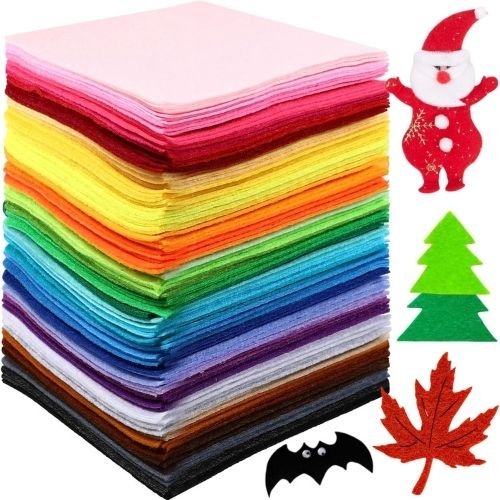
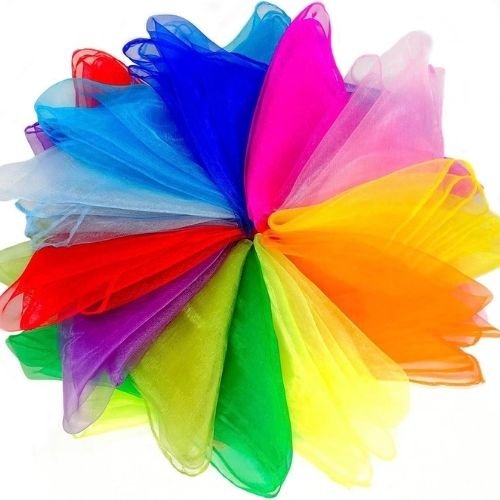
2. Start With Felt and Scarves Instead of Loose Fillers
Loose rice has one real talent, and it is travelling.
Fabric stays put. A felt sheet or a soft scarf gives your toddler something to touch, scrunch, and hide things in, and it does not bounce across the kitchen floor.
Three easy bases to start with:
- Felt squares in two or three colors
- Lightweight scarves
- A folded hand towel or washcloth
Check for loose threads and frayed edges first. Stay close whenever scarves are out, since long fabric and small children need an adult nearby. The guide on [how to choose safe sensory play materials] shows what to look for.
| Loose fillers | Fabric bases |
|---|---|
| Spreads across the floor | Stays inside the bin or on the mat |
| Needs a broom or vacuum | Shake it out or toss it in the wash |
| Tiny bits are easy to put in the mouth | Large pieces, still worth watching |
| Feels the same every time | Soft, silky, and bumpy options to compare |
3. Pick a Container With Tall Sides and a Wide Mouth
A good container looks a little boring. It has a wide opening, sturdy sides, and enough weight that it does not tip when a toddler leans on it.
Toddlers pour, dump, and stack. A narrow cup means spills. A wide one means objects land inside on the first try, and that feels like a win.
What works well:
- A large mixing bowl, since the sides are steady and the inside is easy to see
- A small bucket, which is easy to carry and tip out on purpose
- A shallow laundry basket, good for bigger toys and scarves
Skip anything with a tight lid or a sharp rim.
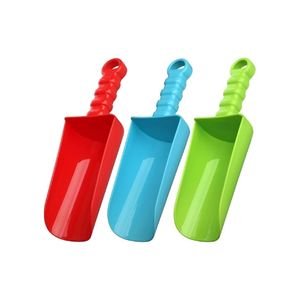
4. Give Little Hands Chunky Scoops Before You Try Tongs
Tiny rule: start with the biggest tool you own.
Scooping, pouring, and pinching are how toddlers build the hand control they use later for things like holding a crayon or a fork. That is one of the [benefits of sensory play] that parents often notice first. But small tools too early just lead to frustration, and then tossed tools.
Wooden and silicone spoons are easier to grip than thin metal ones. If your child keeps missing the target, stay on the current step for another week. It is not a race.
Move up when your toddler stops looking at the tool and starts looking at where the object needs to go.
Tool steps, easiest to hardest
Hands only. Let them grab and drop the big objects.
Chunky scoop or large cup. One hand, one big movement.
Large spoon. Now they need to aim and keep the object balanced.
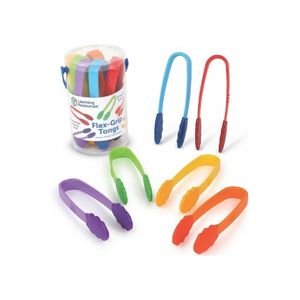
Toddler safe tongs. Save these for when scooping feels easy.
5. Collect and Sort Big Objects Into Cups by Color
It is almost dinner time and you need ten minutes. This is the game for that.
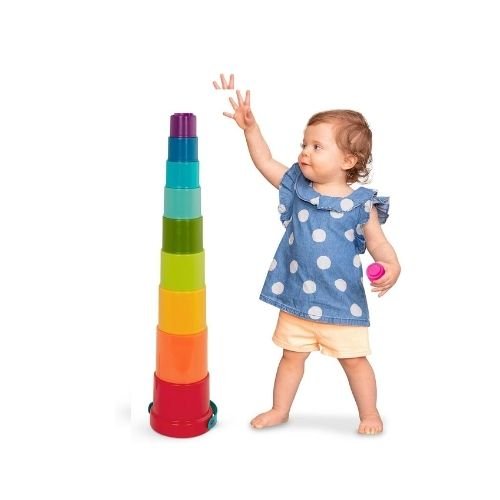
Set out two cups and a pile of big objects in matching colors, like large blocks or soft balls. Your toddler picks up a piece, looks at the cups, and drops it in. That is collecting and sorting, and it doubles as cleanup that looks like a game.
Say the color out loud as they play, but skip the quiz. If a red block lands in the blue cup, let it stay there.
Sorting also makes a clean ending, since every piece has a place to go home to.
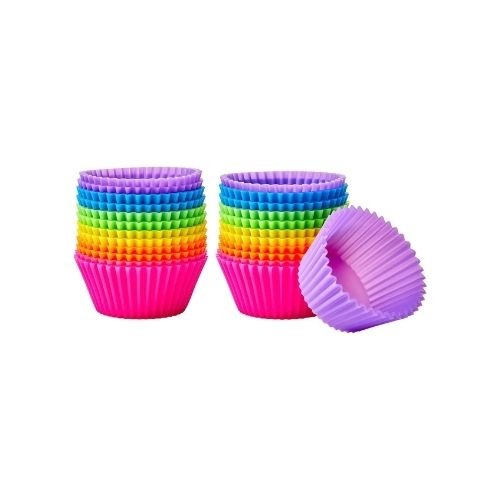
6. Add Fun Fillers and Toppings That Stay in the Bin
A plain fabric bin gets old by day three. Toppings fix that without adding mess.
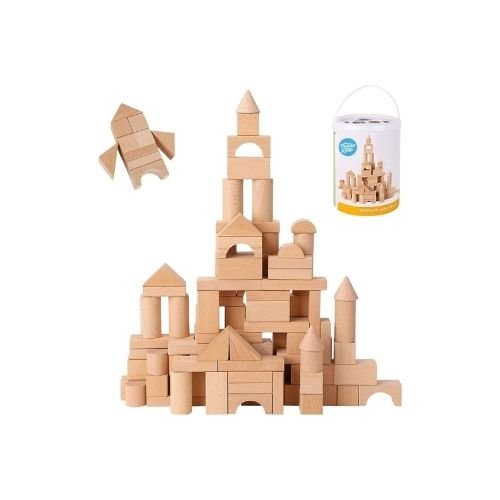
Pick pieces that are chunky enough to grab with a whole hand, and stay close for the first few minutes to see how your child handles them. The full list of what is safe and what to skip is in the guide to [sensory bin fillers for toddlers].
Use two or three toppings at a time, then swap them out next week. The bin feels new, and you buy nothing.
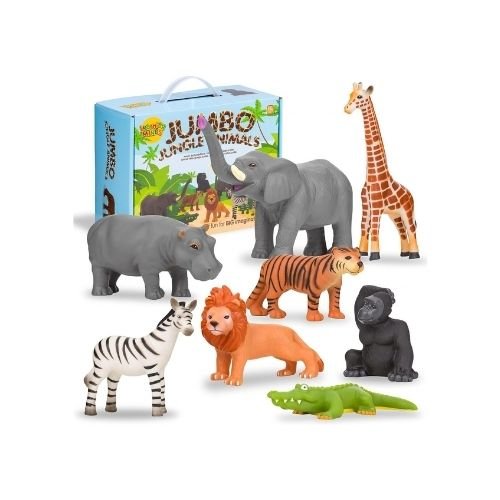
Big toppings to grab from around the house
7. Hide Toys in Scarves for a Rescue Mission
Wrap one large toy loosely in a scarf, drop it in the bin, and tell your toddler a friend needs help.
Start with a wrap they can open in one tug. Once that gets easy, add a second scarf or a soft, loose twist. The tugging is a workout for small hands, and the reveal at the end is where most kids grin.
Some toddlers love the pulling. Others wait for the reveal. Watch which one yours likes and lean into it.
Stay within arm’s reach the whole time, since scarves are long.
A toy sits in the bin. Your toddler glances at it and walks off to the kitchen cabinets.
The same toy is wrapped in a scarf. Now there is a puzzle to solve, a tug to pull, and a reveal to laugh at.
8. Set Up a Mess Zone Before Your Toddler Sits Down
Most parents set up the bin first and the floor second. Flip that.
Lay down a washable mat, an old bed sheet, or a big towel, then place the bin in the middle. Whatever leaves the bin lands on something you can shake out in the yard or toss in the wash.
Good spots to try:
- The kitchen floor, where a wipe-down takes seconds
- A large baking tray on a low table for a tabletop version
- A corner away from stairs and sharp furniture edges
Do a quick scan of the area before you call your toddler over.
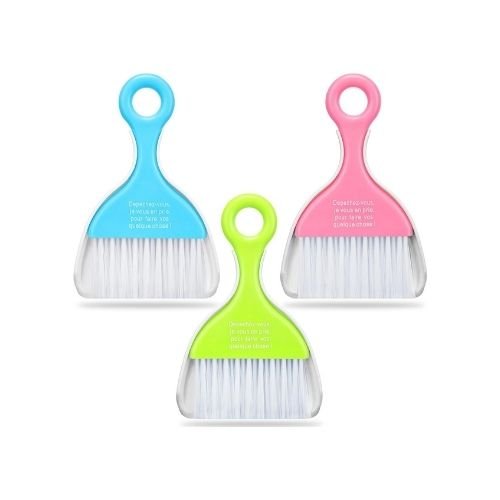
9. Reset in Two Minutes With a Cleanup Routine Toddlers Can Join
Cleanup is where good sensory sessions usually fall apart.
A steady routine takes the surprise out of stopping. Give a two minute warning, hand your toddler a cup, and turn the last round into the collect and sort game from idea 5. Fabric gets shaken out or goes in the wash. Objects go back into the container.
Keep the bin where your child can see it. Ending on a happy note makes the next session easier to start.
Give a two minute warning before you stop.
Let your toddler drop pieces into the bucket.
Use the same tidy up song every time.
Sweeping while they are still playing.
Taking the bin away with no warning.
Rushing through the whole reset alone.
Conclusion
You do not need rice, sand, or a cleanup crew to give your toddler a full sensory session. A soft base, a chunky tool, a wide container, and big objects cover almost everything on this list.
Start with one idea this week. Pick the one that fits your day, set it up on a mat, and let your toddler lead. If you are still deciding where to begin, the guide on [how to start sensory play with toddlers] walks through the first steps.
Low mess sensory play works because it is easy enough to repeat. Save this list for the next time you need ten calm minutes.
Keep every piece big, and the mess stays small.
Want more easy toddler play ideas? Save this pin to your sensory play board so it’s ready for your next rainy afternoon.