
A bag of craft bells costs less than a coffee and gives you a week of play ideas. The sound does the work — kids shake, drop, roll and chase bells without needing you to keep the game going.
These 12 jingle bell activities run from youngest to oldest, so you can scroll to your child’s age and stop there. Each one lists what you need and what to do in a few lines.
One thing first, and it matters: jingle bells are a choking hazard for children under 3, and the loose metal ball inside can come out of a damaged bell at any age. The ideas for ages 1 and 2 use bells that are sealed inside something or sewn down, never loose in little hands. Read the safety block before you open the bag.
⚠️ Read This Before You Open the Bag
Jingle bells are a choking hazard. Craft bells under about 32 mm fit through a choking-hazard test tube, and a cracked bell releases a small metal ball that is smaller again.
1.Under 3, or still mouthing things? Bells stay sealed in a container or sewn to fabric. An adult stays within arm’s reach.
2.Squeeze-test every bell. Loose seam, rattling ball or an opening loop means bin it.
3.Check the slit edges for roughness that could scratch small fingers.
4.Painted or glittered bells are not mouth-safe. Coatings chip.
5.Count them out, count them in. Lid on, jar up high.
Before You Start: Bell Safety in 60 Seconds
Standard craft bells (10–25 mm) are small enough to swallow. Jumbo bells (40 mm and up) are harder to swallow whole, but a cracked or crushed bell releases a small metal ball, so size alone is not protection.
Rules worth keeping:
- Under 3, or any child who still mouths objects: bells stay sealed in a container or sewn onto fabric, with an adult within arm’s reach.
- Check every bell before play. Squeeze it. If the seam is loose, the ball rattles out, or the little loop is bending open, bin it.
- Feel the slit edges. Cheap bells sometimes have a rough edge that can scratch.
- Don’t treat painted or glittered bells as mouth-safe. Coatings chip.
- Count bells out and count them back in. Nine out, nine in, lid on, shelf high.
If you want the wider picture on supervising messy and small-part play, our guide on sensory play safety for toddlers covers how to set up before you hand anything over.
What You Need (Most Ideas Use 3 Things or Less)
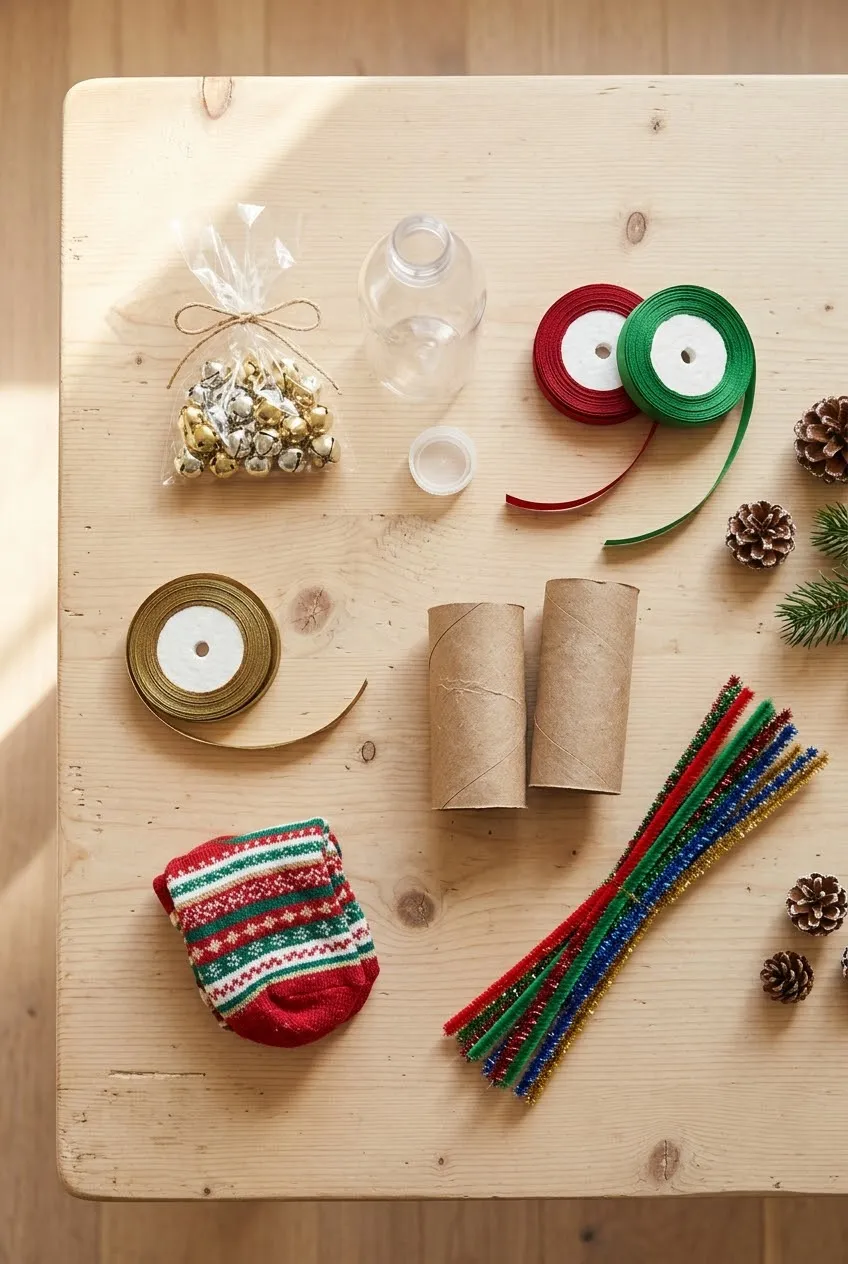
Core supplies:
- Craft jingle bells — a mixed bag of 25 mm and a few jumbo 40 mm
- A clear plastic bottle with a lid
- Cardboard tubes, a shoebox, an empty wipes container
- Ribbon, pipe cleaners, odd socks
- Strong tape, hot glue (adult only), needle and thread
Nice to have:
- Washable paint and a baking tray
- Paper plates and a hole punch
- A strong magnet, around 2 cm or larger
1. Sealed Jingle Bell Shaker Bottle (Ages 1+)
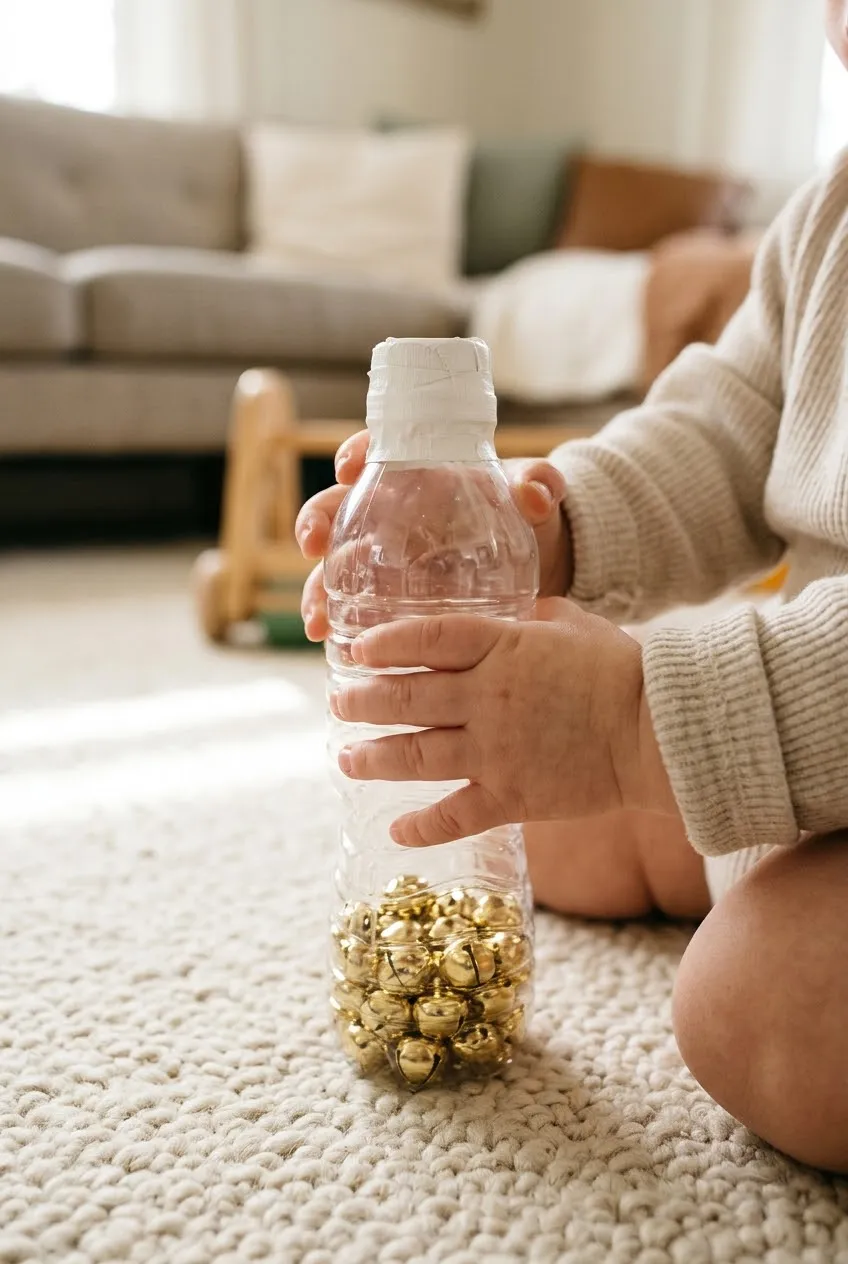
The first bell toy a one-year-old should meet, because they cannot get the bells out.
You need: a small clear bottle, 8–10 bells, hot glue and tape.
Drop the bells in, run hot glue around the cap thread, screw it on tight, then wrap the whole cap in tape. Let it cure fully before you hand it over.
Babies and young toddlers will shake it, roll it, and crawl after it. Keep the shaking at arm’s length from ears — a bottle of metal bells next to a small ear is louder than it sounds to you.
Never hand over a bottle with a cap that is only screwed on.
2. Jingle Bell Wrist and Ankle Bands (Ages 1+)
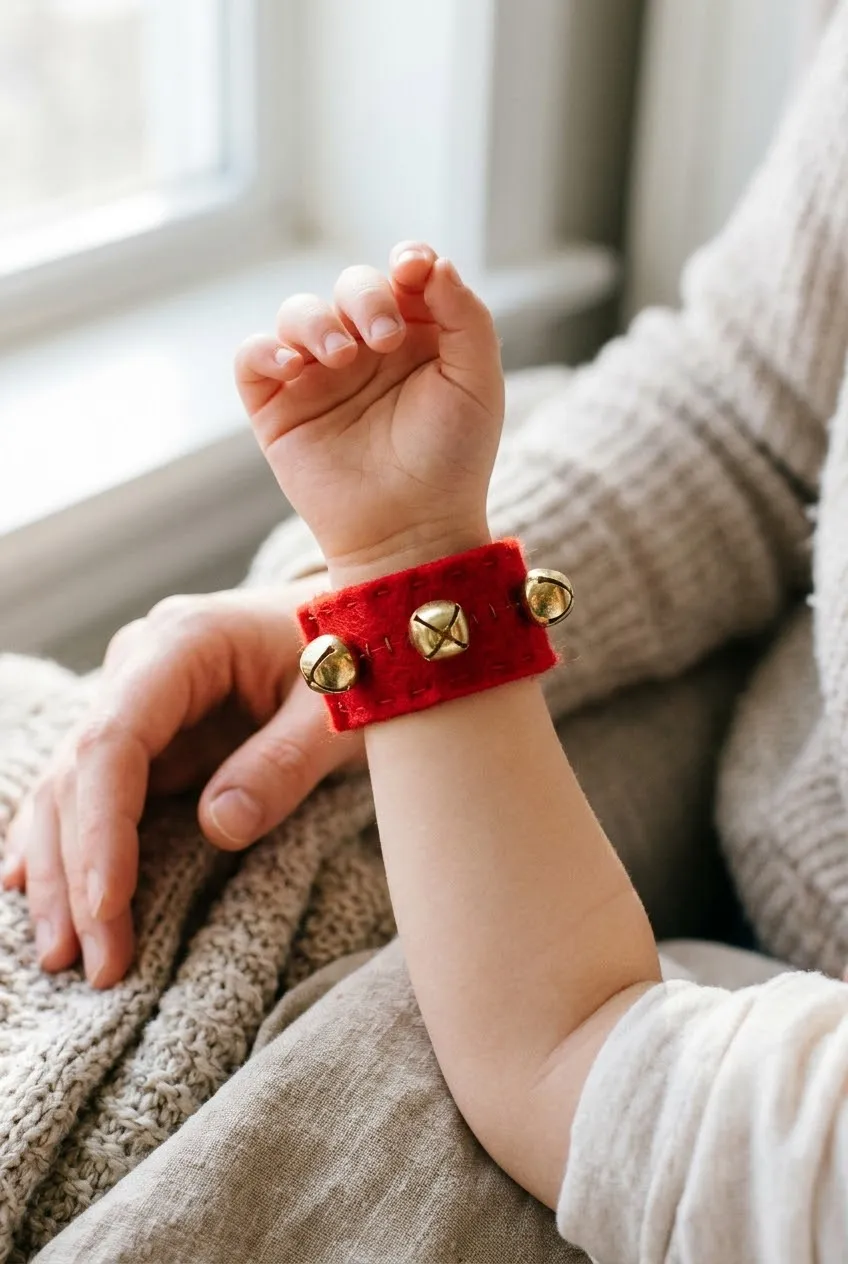
Bells that are attached to the child instead of held by them.
You need: wide fabric hair elastics or felt strips, 3 bells per band, needle and thread.
Sew each bell on through its loop with several passes of thread. Glue and tape both fail here — bells pull off, and a pulled-off bell goes straight in the mouth.
The band should slide on without squeezing. Check the stitching every single time before it goes on a wrist, and take the bands off before naps and car seats.
3. Stop and Go Jingle Dance (Ages 1+)
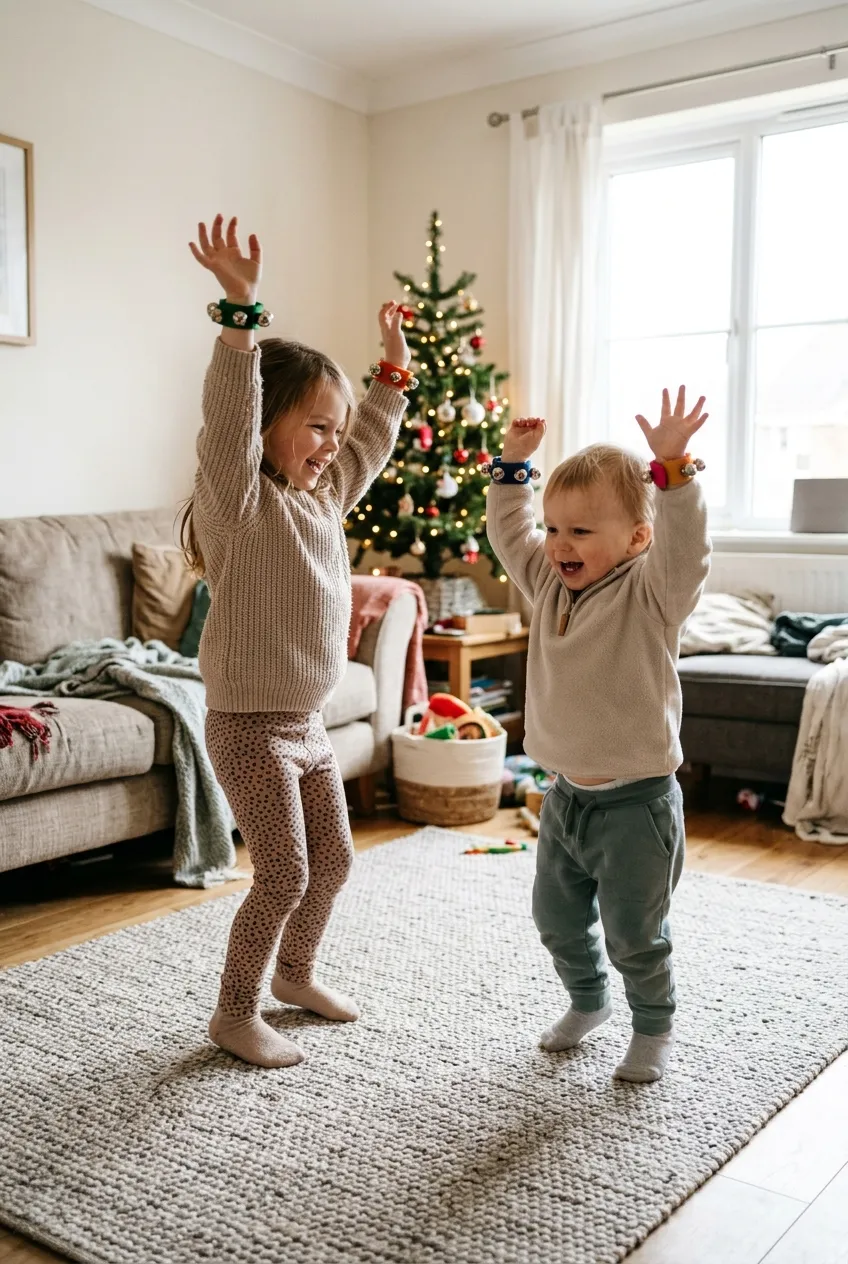
Zero prep, and it burns real energy on a cold afternoon.
You need: the bands from #2, or the shaker bottle, plus music.
Play a Christmas song, then pause it. Everyone freezes, and the bells go silent. Start the music and the jingling comes back.
One-year-olds will not freeze on cue, and that is fine — they notice the silence, which is the whole lesson. Three- and four-year-olds will police your freezing for you. More ideas in this style sit in our list of active indoor activities for toddlers.
4. Pull-Along Bell Sleigh (Ages 2+)
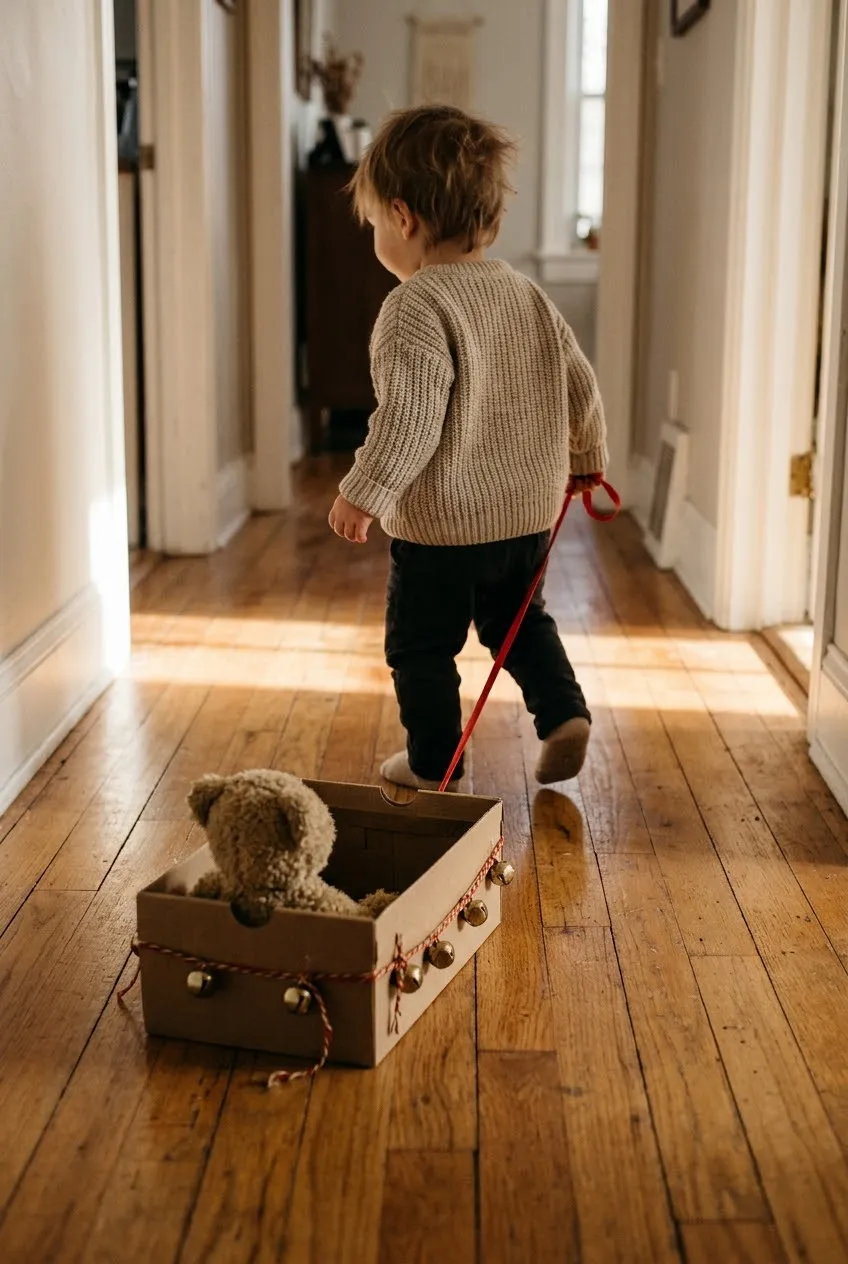
Pretend play plus a sound they control with their own walking speed.
You need: a shoebox or small basket, 1 m of ribbon, 4 bells, stuffed animal passengers.
Punch two holes in the short end of the box, thread the ribbon through and knot it inside. Tie bells along the sides with double knots, then tug each one to test it.
Load the passengers and let them pull it down the hallway. Walk slowly, jingle quietly. Run, and the sleigh gets loud.
Snip off and bin any bell that starts to work loose rather than retying it.
5. Jingle Bell Sock Toss (Ages 2+)
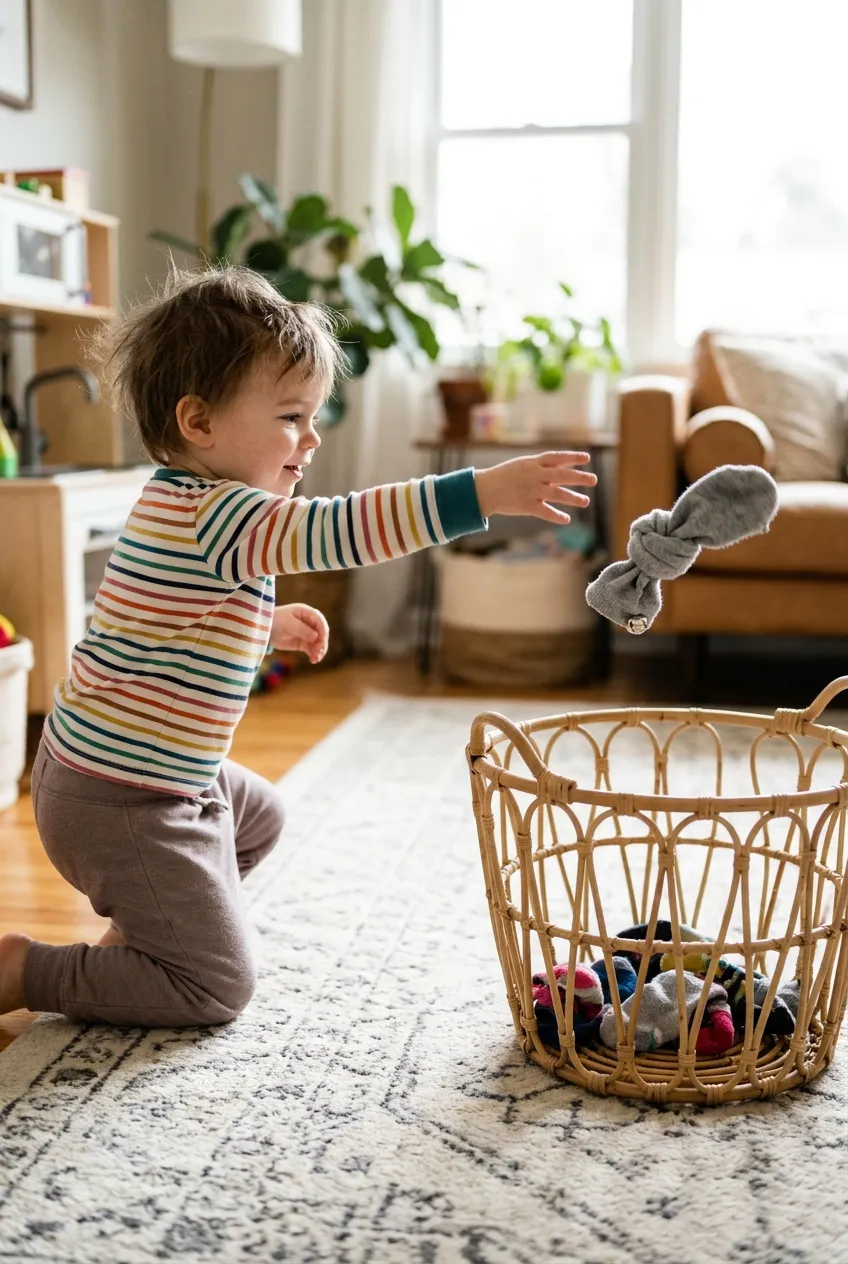
A soft ball that rattles, which makes aiming more interesting.
You need: one odd sock, 5–6 bells, a rubber band, a laundry basket.
Push the bells into the toe, twist the sock above them, wind a rubber band tight, then fold the cuff back over the band and knot it. The bells should be sealed in two layers.
Set the basket a step away and let them throw. Move it back one step each time they land it. Two-year-olds need the basket closer than you think.
💡 Tip: Turn the Volume Down Without Ending the Fun
Fabric muffles metal. Bells sewn to a felt band or sealed in a sock sound softer than bare bells on a tray. Use 3 bells instead of 8, keep sessions to short bursts, and never let a shaker be waved right beside a small ear.
6. Jingle Bell Roll Painting (Ages 3+)
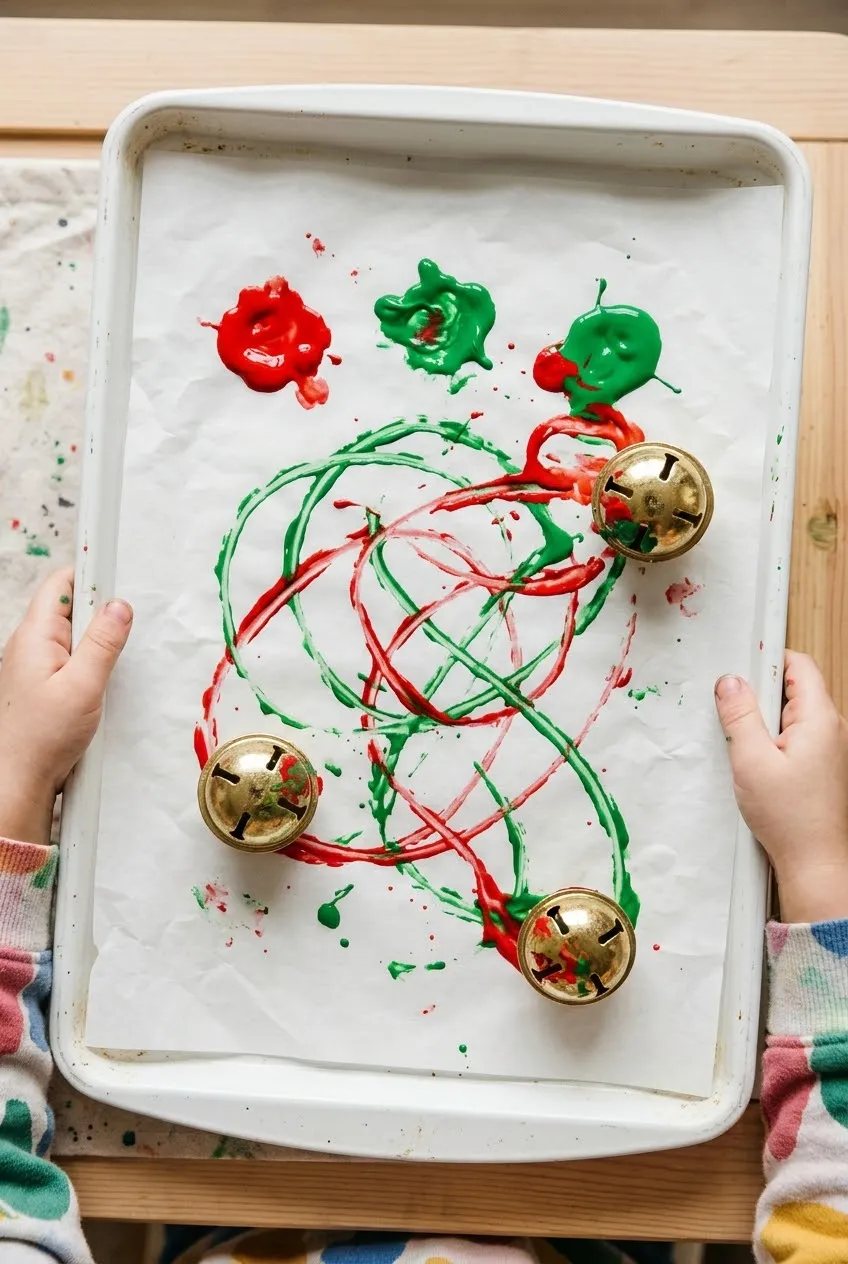
The bell makes a track and a noise at the same time, which keeps kids rolling long after a paintbrush would be abandoned.
You need: a baking tray or box lid, paper, 2–3 tablespoons of washable paint in two colours, 3 jumbo bells, a spoon.
Tape the paper inside the tray. Spoon small blobs of paint at opposite corners, add the bells, then let your child tilt the tray and listen to the bells cut lines through the paint.
Too much paint turns the whole page brown in under a minute. Start with less than feels right.
Rinse and dry the bells straight after — they rust.
7. Jingle Bell Drop and Post (Ages 3+)
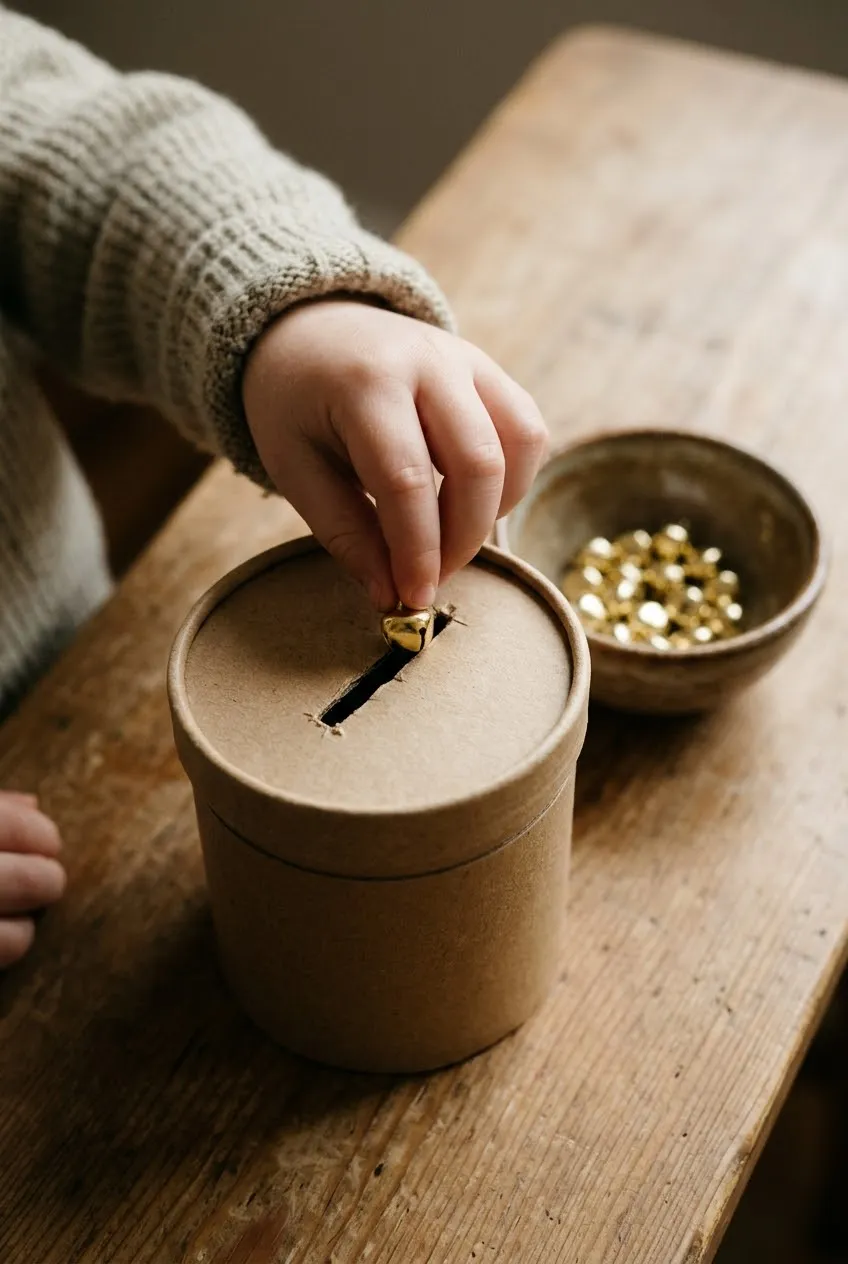
Quiet, repetitive, and genuinely useful for the pincer grip.
You need: an empty wipes container or coffee tin with a lid, 15–20 bells, a small bowl.
Cut a slit or round hole in the lid a little larger than one bell (adult job — the cut plastic edge can be sharp, so sand or tape it). Fill the bowl with bells.
Your child posts them one at a time, shakes the full container, pops the lid and starts again. Mine will do this for fifteen minutes.
Pair it with our fine motor Christmas tree activity for a quiet-morning combination.
8. Jingle Bell Ramp Race (Ages 3+)
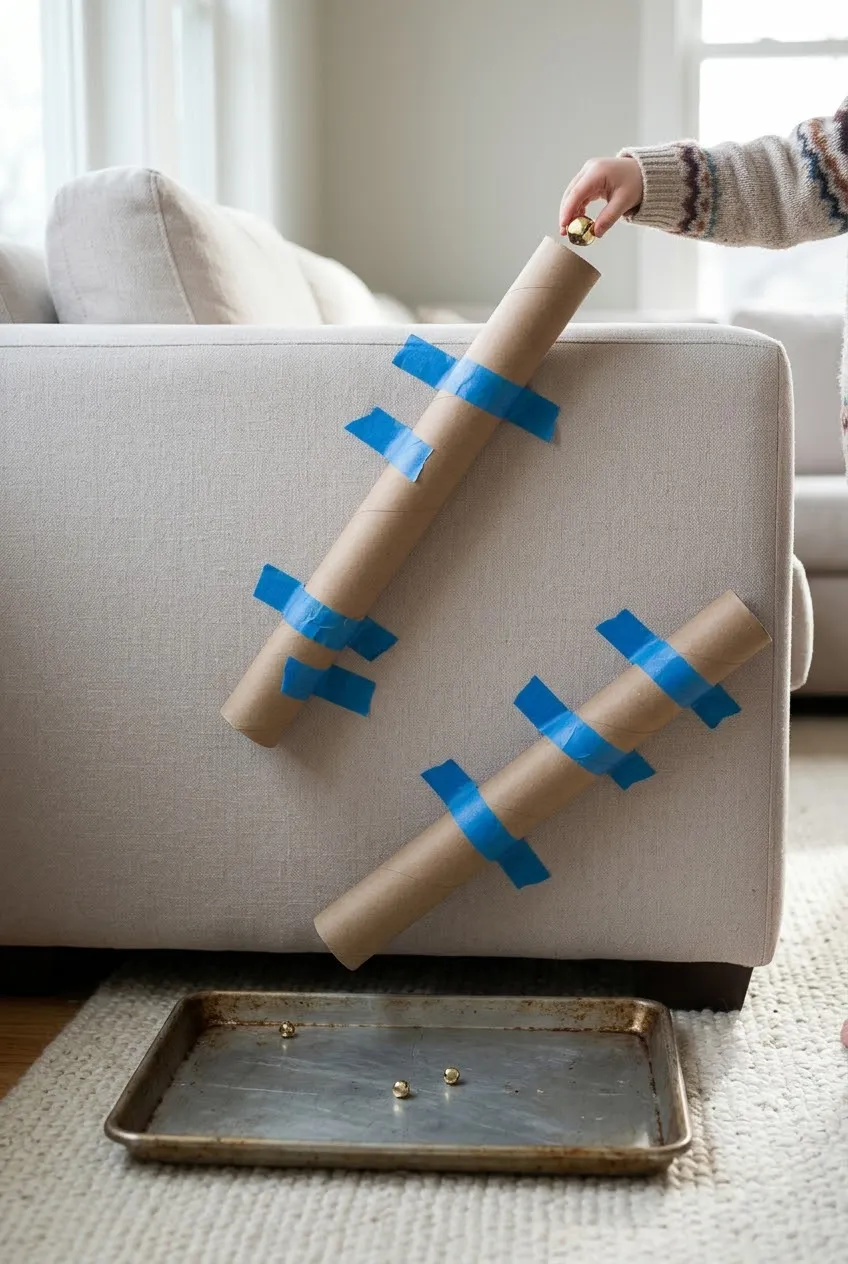
You need: 2 cardboard tubes, tape, a baking tray, 2 bells of the same size.
Tape the tubes to the side of the sofa at slightly different angles with the bottom ends over the tray. Drop a bell into each tube at the same moment and listen for which one lands first.
Then change one angle and race again. Steeper is faster, and kids work that out themselves after about four runs.
Variation: stand a cup at the bottom of one tube and score a point for each bell that lands inside.
9. Pipe Cleaner Jingle Wand (Ages 3+)
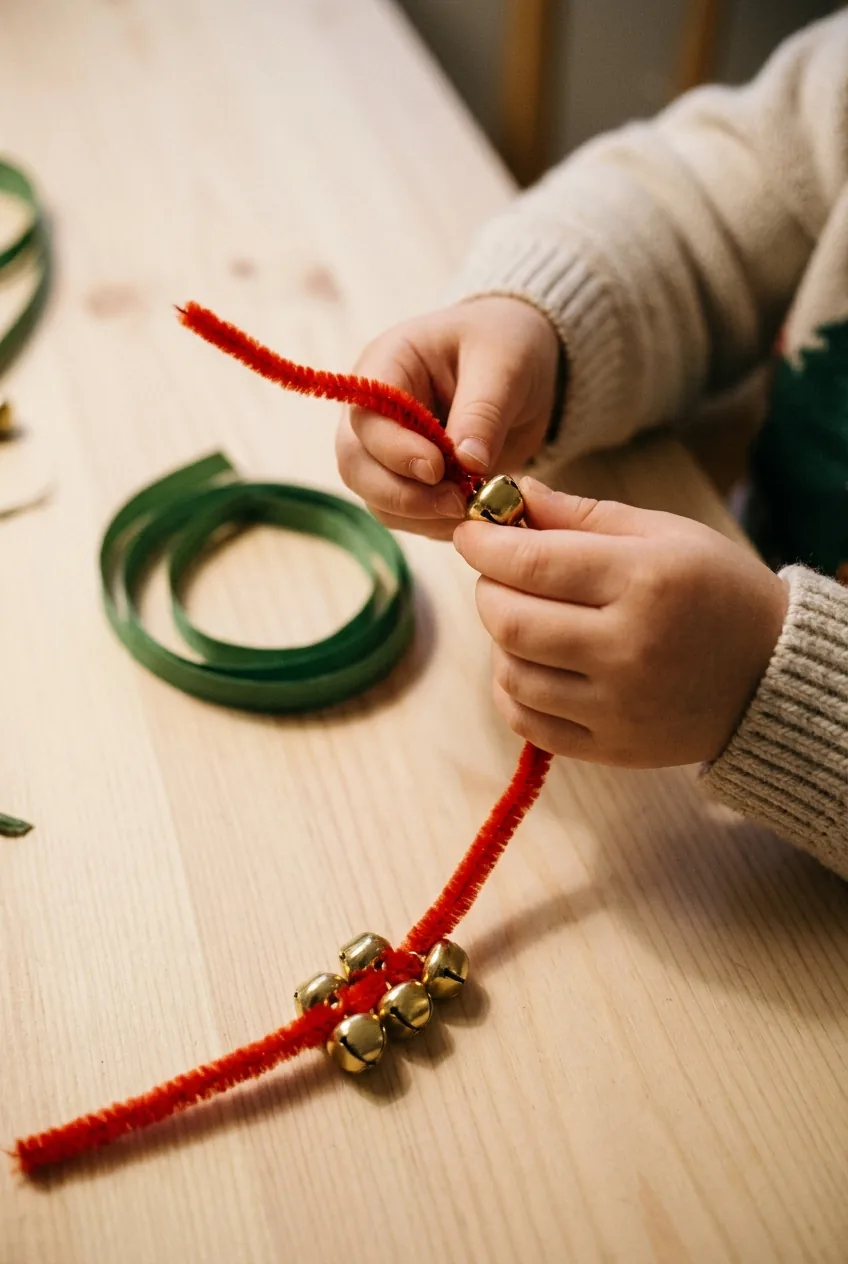
You need: 1 pipe cleaner, 5–8 bells with loops, a short ribbon.
Show your child how to push the pipe cleaner through a bell’s loop, then let them thread the rest. Twist the two ends together into a ring, fold the cut wire ends inward and tape them — pipe cleaner ends are genuinely sharp.
Tie the ribbon on as a handle. It becomes a shaker, a bracelet, or a tree decoration, depending on who made it.
Kids aged 4 to 6 who take to threading will enjoy the longer projects in our beaded Christmas ornaments for kids post.
10. Follow the Jingle Sound Game (Ages 3+)
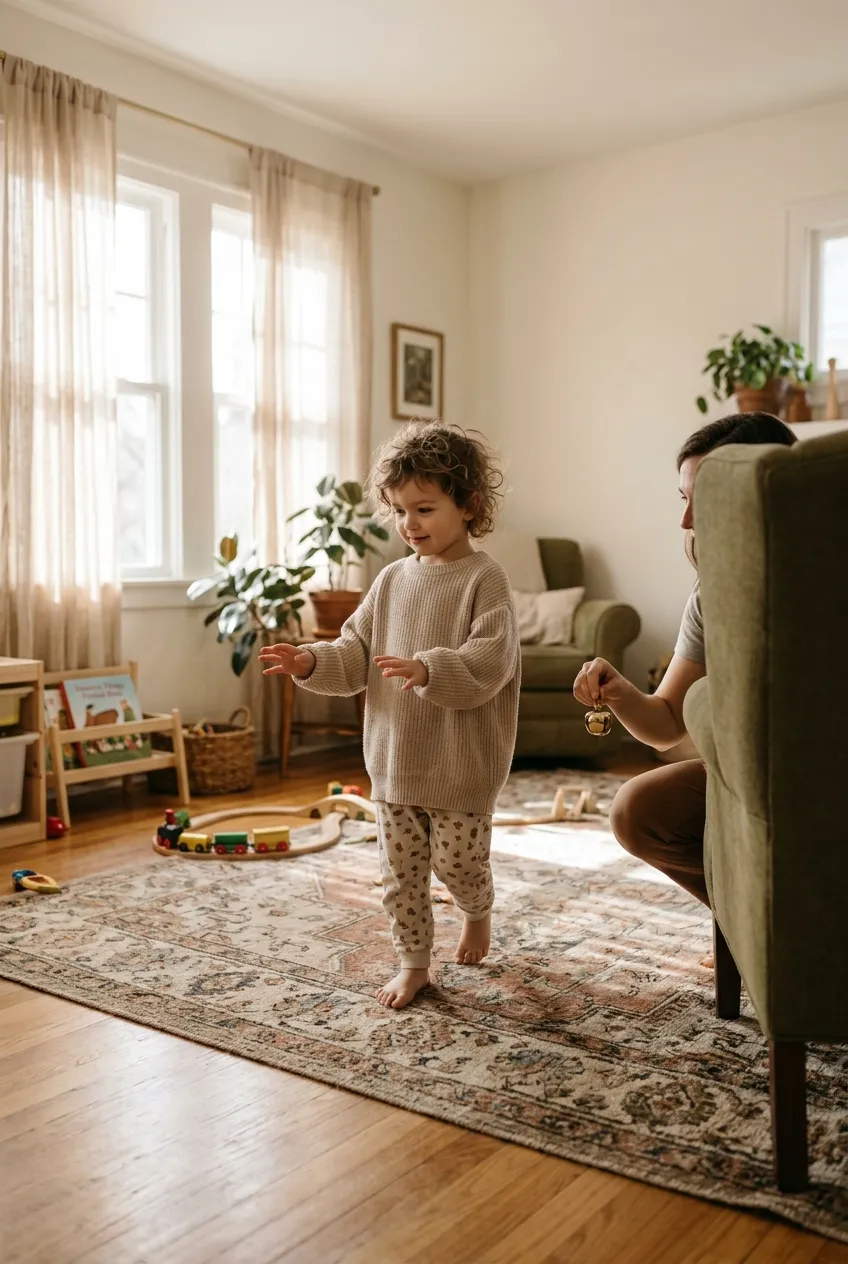
No prep at all, and it works in a hotel room or a grandparent’s living room.
You need: 1 bell.
Your child closes their eyes and counts to ten while you hide somewhere in the room with the bell. Shake it once every few seconds. They follow the sound until they find you.
Then swap. A three-year-old hiding behind a curtain, shaking a bell non-stop, is the funniest version of this game.
Shake less often to make it harder, or add a second hider with a second bell for two children.
11. Paper Plate Jingle Tambourine (Ages 4+)
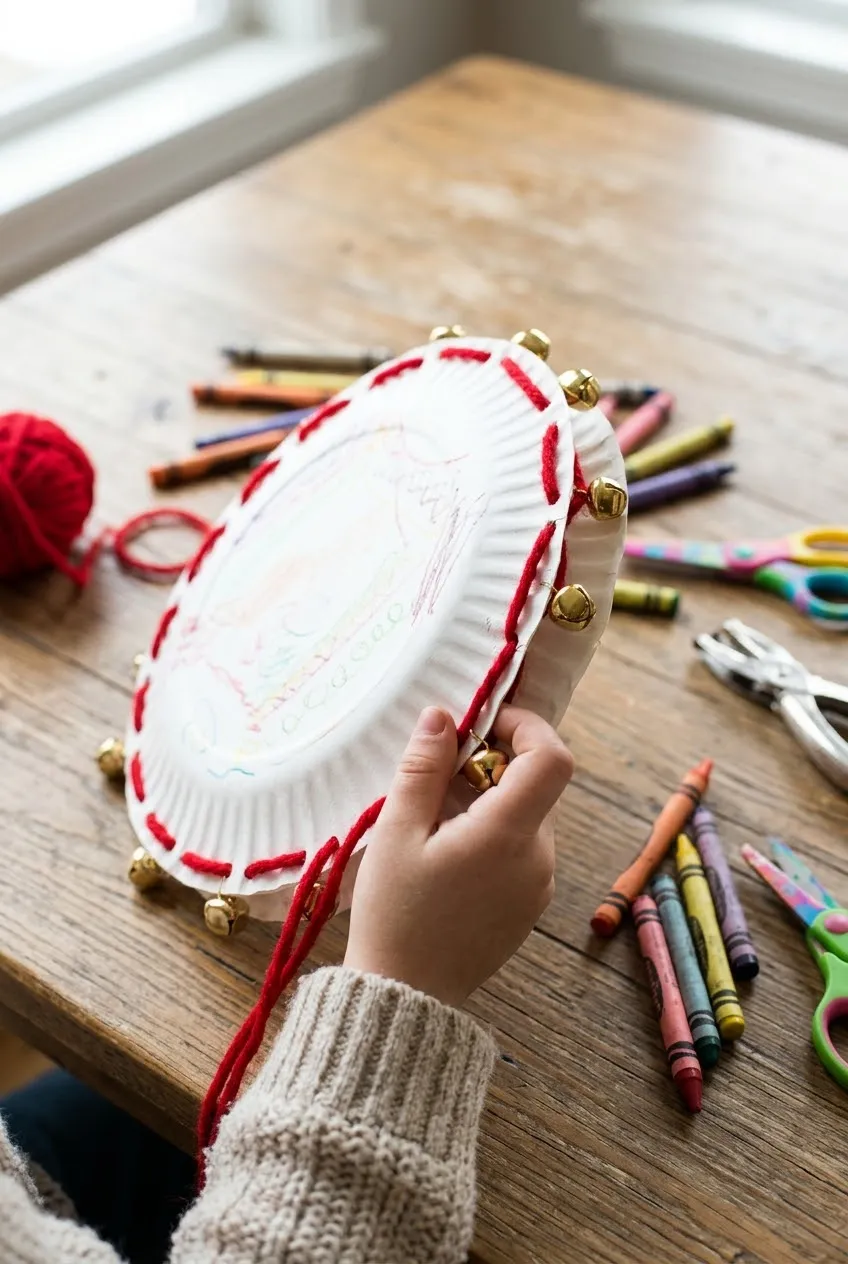
You need: 2 paper plates, 6 bells, a hole punch, 1 m of yarn, crayons.
Your child colours the undersides of both plates. Punch matching holes around the rim about 4 cm apart while they draw.
Hold the plates face to face and let them lace the yarn through, threading a bell on every second hole. Knot the yarn tightly at the end and trim the tail short.
Younger sibling version: staple the plates together with the bells sealed inside instead of threaded on the rim.
12. Magnet Fishing for Jingle Bells (Ages 4+)
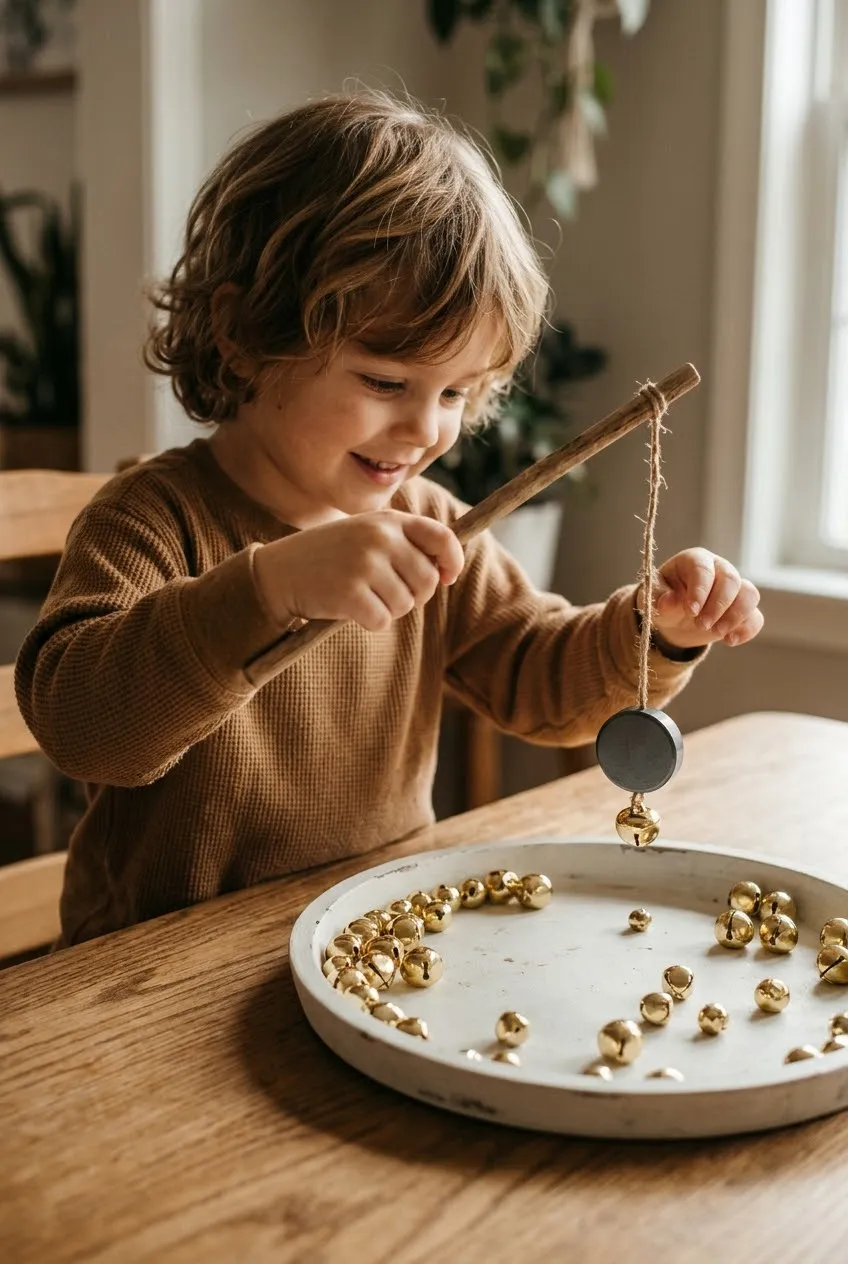
The best ending to a bell session, because the clean-up is the game.
You need: steel craft bells, one magnet 2 cm or larger, string, a pencil or stick, a tray.
Test your bells first — brass and aluminium bells will not stick. Tie the magnet to the string, tie the string to the stick, and tape both knots so nothing can come free.
Scatter bells across the tray and let them fish, counting as they go. Bells land in the tray, then the tray goes back in the cupboard.
Use one large magnet only. Small loose magnets are a far more serious swallowing risk than bells, and two swallowed magnets are a medical emergency.
Cleaning Up and Storing Bells
Wipe painted bells with a damp cloth and dry them completely before they go away, because craft bells rust from the inside once water sits in them. Don’t soak them.
Store everything in one lidded jar on a high shelf, not in the toy box. Bells belong in the same category as beads and buttons: out with you, away without you.
If your bells live near the tree, our guide on how to toddler-proof a Christmas tree covers the rest of that floor-level zone.
4 Mistakes That End Bell Play Early
Opening the whole bag at once. Fifteen bells across a living room rug is a counting nightmare. Pour out what one activity needs and close the bag.
Gluing bells instead of sewing them. Hot glue holds for about two days of toddler wear, then one bell goes missing and you spend the evening checking mouths.
Running bell activities right before bed. The sound is stimulating. These work best mid-afternoon, with something calm from our quiet indoor activities for toddlers list afterwards.
Mixing bells into a sensory bin for an under-3. Bells hidden in rice are invisible to you and findable by them. For that age, keep fillers large and visible — our Christmas sensory bins for toddlers post shows safer combinations.
FAQs
Wrapping Up
Pick one idea for tonight rather than planning all twelve. Most of these jingle bell activities take under five minutes to set up, and the sound keeps kids going with far less input from you than a craft does.
Start at your child’s age, check your bells, and keep the jar high when you’re done.
Save this to your Christmas play board so it’s there when the afternoons get long — and if your crew wants to make something instead, our simple elf crafts for kids and recycled Christmas ornaments are the natural next stop.