
Affiliate Disclosure: This post contains affiliate links. If you make a purchase through these links, I may earn a small commission at no extra cost to you. As an Amazon Associate, I earn from qualifying purchases. Thank you for supporting CozyClan!
Toddlers were not built to sit still, and most indoor days go wrong when we expect them to.
By mid-morning, all that energy has to go somewhere. It ends up on the sofa cushions, the kitchen floor, or your last nerve. A toddler who has not moved enough is a toddler who cannot settle, whether it is a busy weekday or a slow Sunday.
Moving is how toddlers learn to balance, climb, jump, and control their bodies. They do not need a big yard or fancy gear to get it. A rug, a strip of painter’s tape, and a few things from the laundry room are enough.
This list of active indoor activities for toddlers gives you 15 simple ways to get your little one moving. Each idea uses things you already have, works in a small space, and trains a different kind of movement. Some are loud and fast, and one is slow on purpose to help everyone wind down.
Table of Contents
1. Stick Painter’s Tape Lines and Hop Like a Frog
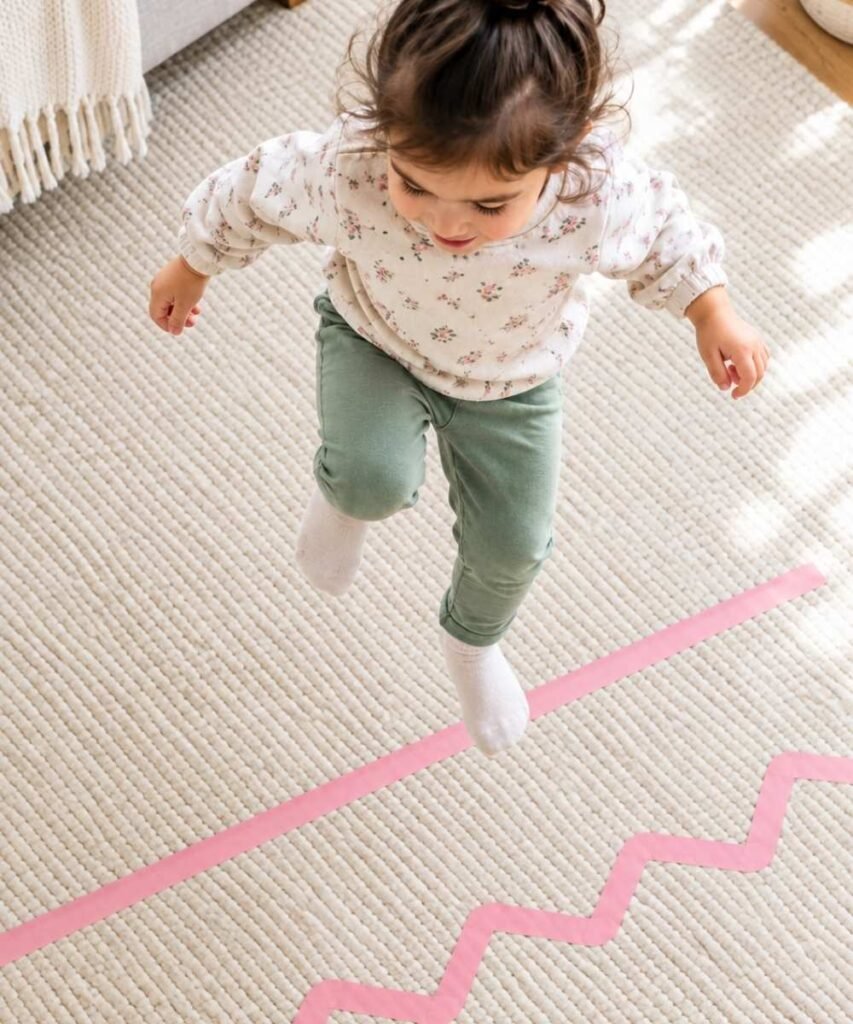
Here is the rule: if there is a line on the floor, a toddler will want to be on it.
Stick a few strips of painter’s tape on a rug or carpet. Make some straight, some wavy, and some zigzag. Then call out how to cross each one.
Many toddlers cannot jump with both feet yet, and that is fine. Stepping over, bunny hopping, and squatting down all count as movement. Cheer for whatever they try.
Peel the tape up slowly when you finish so it does not pull at the floor.
2. Follow an Animal Walk Trail Across the Living Room
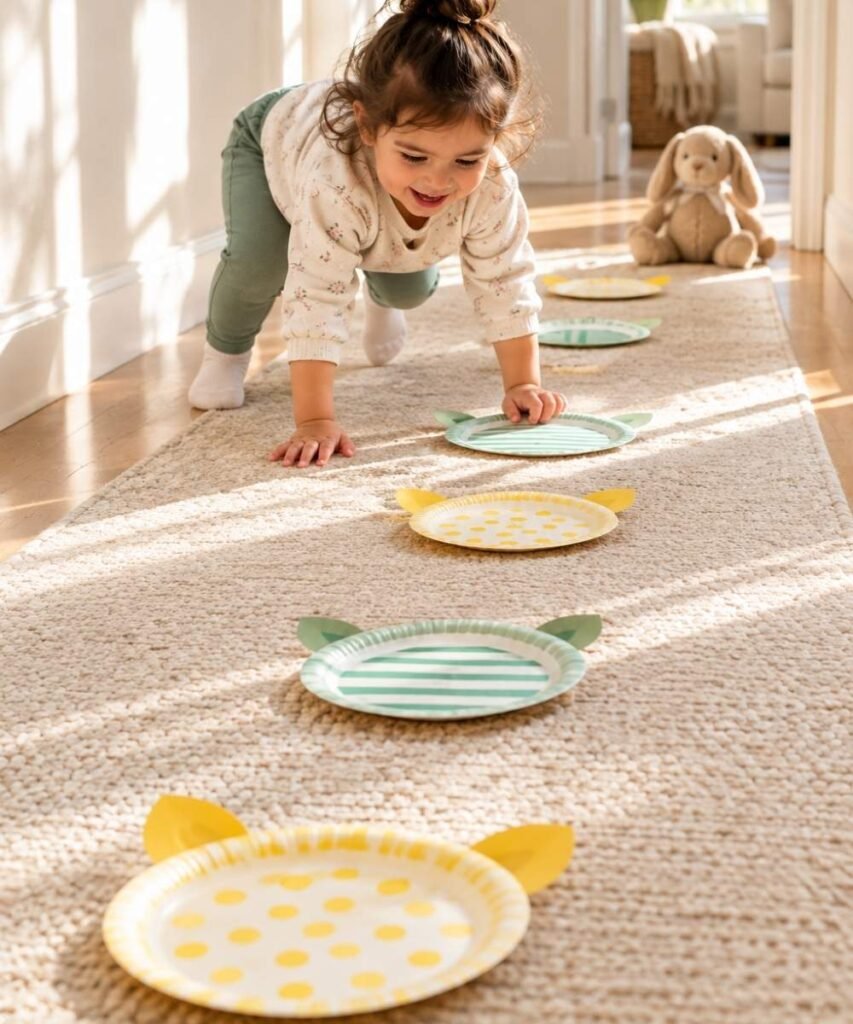
Start with the animals your toddler already knows. Say the name, show the move once, and let them copy it any way they can.
Then mark a trail with paper plates or sticky notes, one animal at each stop. Bears crawl on hands and feet. Elephants stomp. Snakes wiggle on their tummies. Ducks waddle with their bottoms low.
Keep each animal short. Toddlers switch interests fast, so a trail with lots of small stops holds them longer than one long crawl.
Let your toddler choose the next animal. It gives them a say, and you may get a surprise like a crab or a kangaroo.
How to build the trail
Tape one paper plate to the floor for each animal stop.
Say the animal name and act it out together for a few steps.
Let your toddler pick the next stop and add an animal sound.
3. Roll Like a Log Across a Blanket
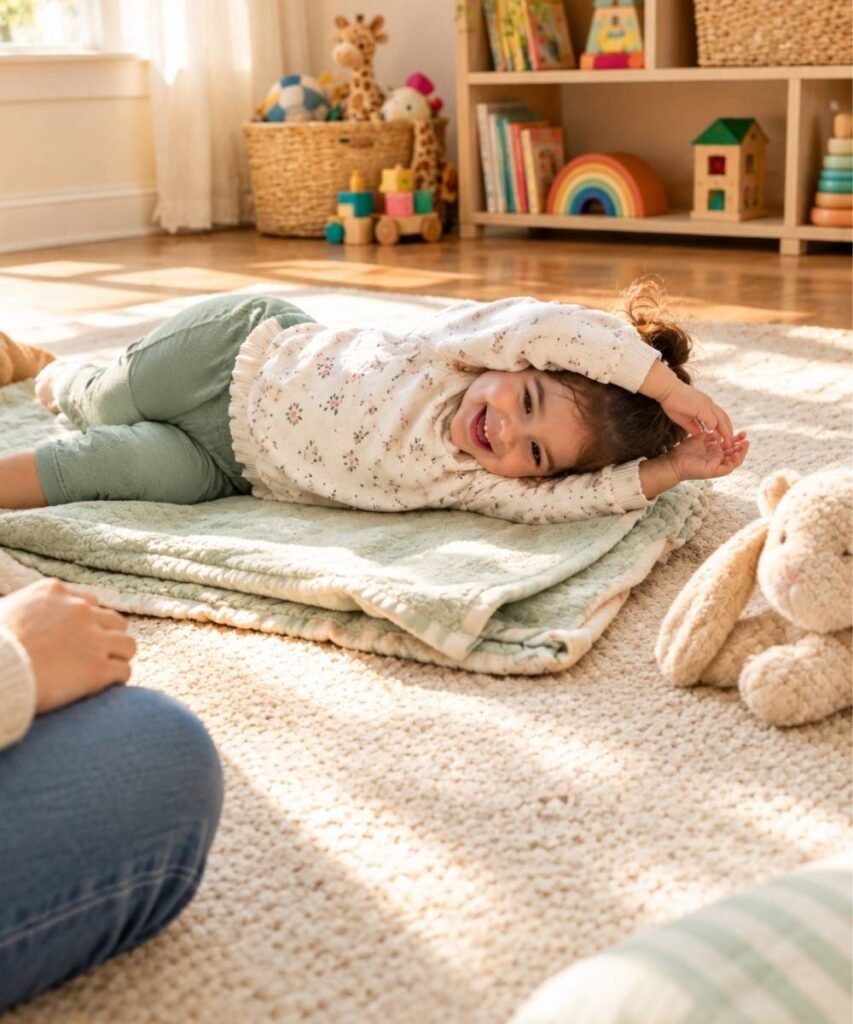
A folded blanket on the floor, a stuffed animal at the far end, and a toddler who suddenly has a mission.
Lay a soft blanket or play mat flat. Show your toddler how to lie down at one edge with arms stretched over their head, then roll toward the toy.
Rolling looks simple, but it asks the whole body to turn together, which is harder than it seems. It also gets giggles fast.
Stop after a few rolls and let them stand up for a moment. Some toddlers get dizzy quickly.
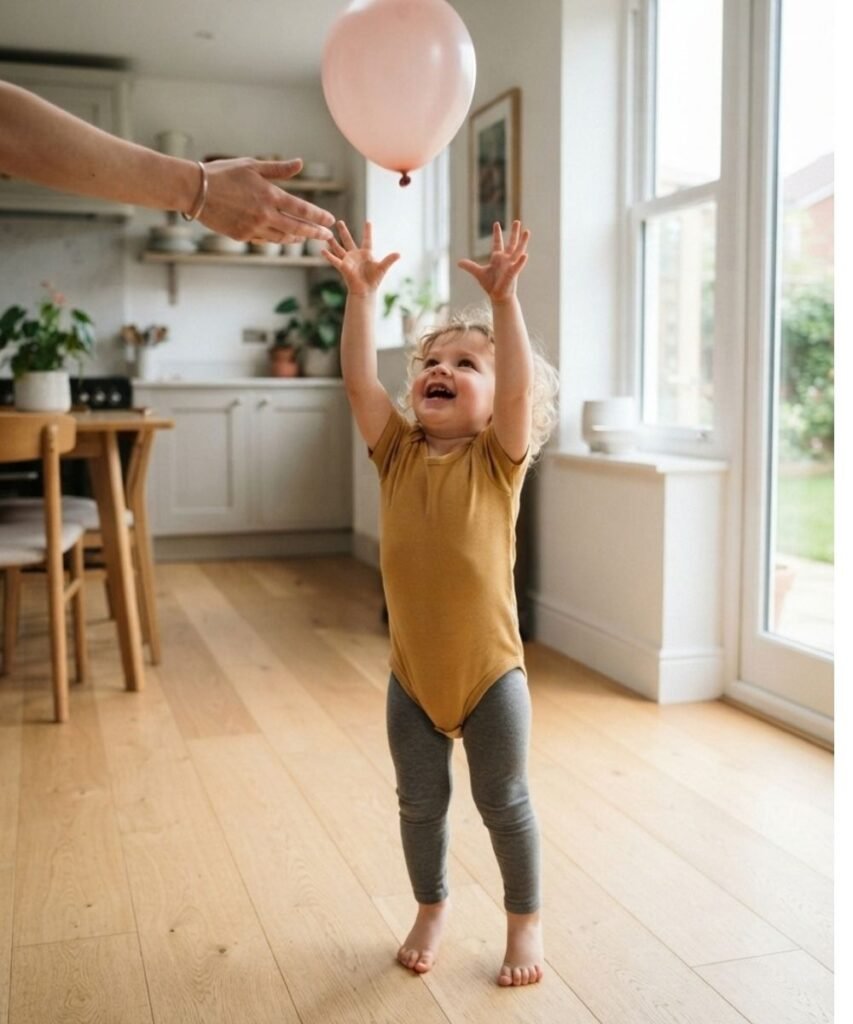
4. Keep a Balloon Off the Floor for as Long as You Can
Balloons drift down slowly, which gives small hands and feet extra time to reach them. A ball drops too fast for many little ones.
Toss the balloon up and count how many taps it takes to reach the floor. Then let your toddler swat it with a hand, then a foot, then a flat paper plate held in one hand.
Make it a team game. The goal is to keep it up together, not to win.
⚠️ Watch Out
Popped or uninflated balloon pieces are a choking hazard for toddlers. Stay in the room, blow the balloon up yourself, and pick up any scraps right away. Stop the game if your toddler starts chewing on it.
5. Kick a Soft Ball Between Two Chair Legs
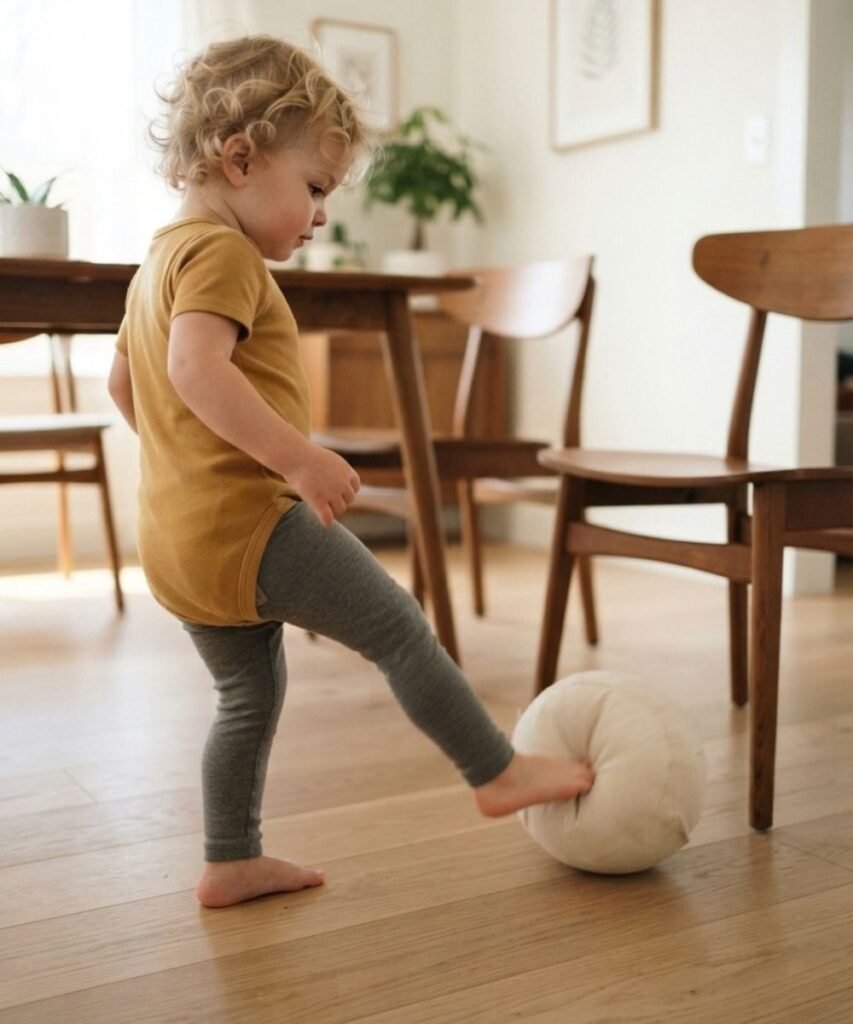
Kicking looks easy until a toddler tries to aim. Most start by walking into the ball and pushing it along, and that is normal.
Set two chairs a little apart and call the gap a goal. Use a soft fabric or foam ball, and stand your toddler a few steps back.
Cheer for any contact at all. Once they score often, slide the chairs closer together for a bigger challenge.
Use a soft fabric or foam ball.
Start with the goal a few steps away.
Cheer for any touch, even a nudge.
Hard balls near lamps and tables.
Correcting how they kick.
Long waits between turns.
6. Turn a Laundry Basket Into a Taxi for Stuffed Animals
Toddlers love having a job, and a taxi driver has one of the best.
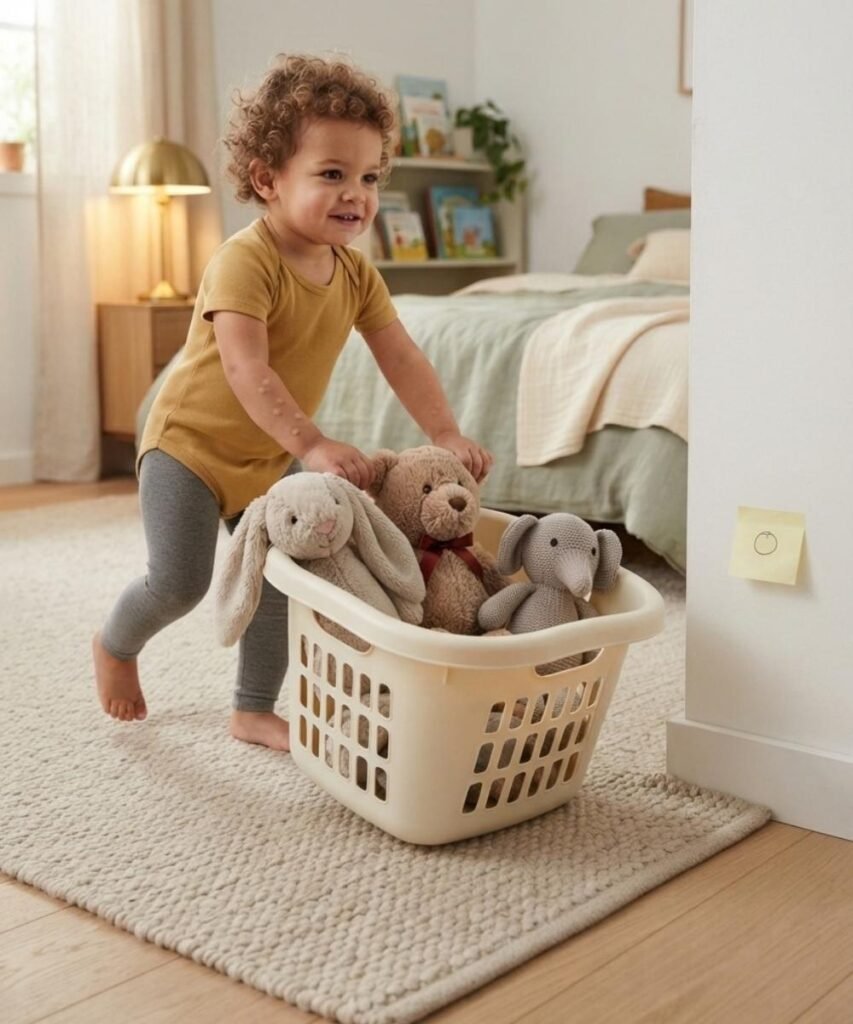
Line up three stuffed animals and ask your toddler to load them into a light laundry basket. Then the driving begins. They push the basket to a stop across the room, drop off one passenger, and go back for another.
Pushing a loaded basket takes real muscle, so it tires them out more than it looks. Start with one or two animals and add more as they get stronger.
Name the stops out loud, like the kitchen door, the bookshelf, and the sofa.
Taxi setup checklist
7. Wave Ribbon Wands to Slow and Fast Music
Ribbons trail behind a moving hand, so toddlers can see the shape their arms make. That makes them want to move bigger.
Tape short ribbons or strips of crepe paper to the end of a cardboard tube. Play a slow song and wave the wands in big, floating circles. Switch to a fast song and shake them quickly.
Then stop the music without warning and see how fast everyone freezes.
Keep the ribbons in the hand only. Never tie them around a wrist, neck, or toy.

8. Slide Across the Floor on a Blanket Ride
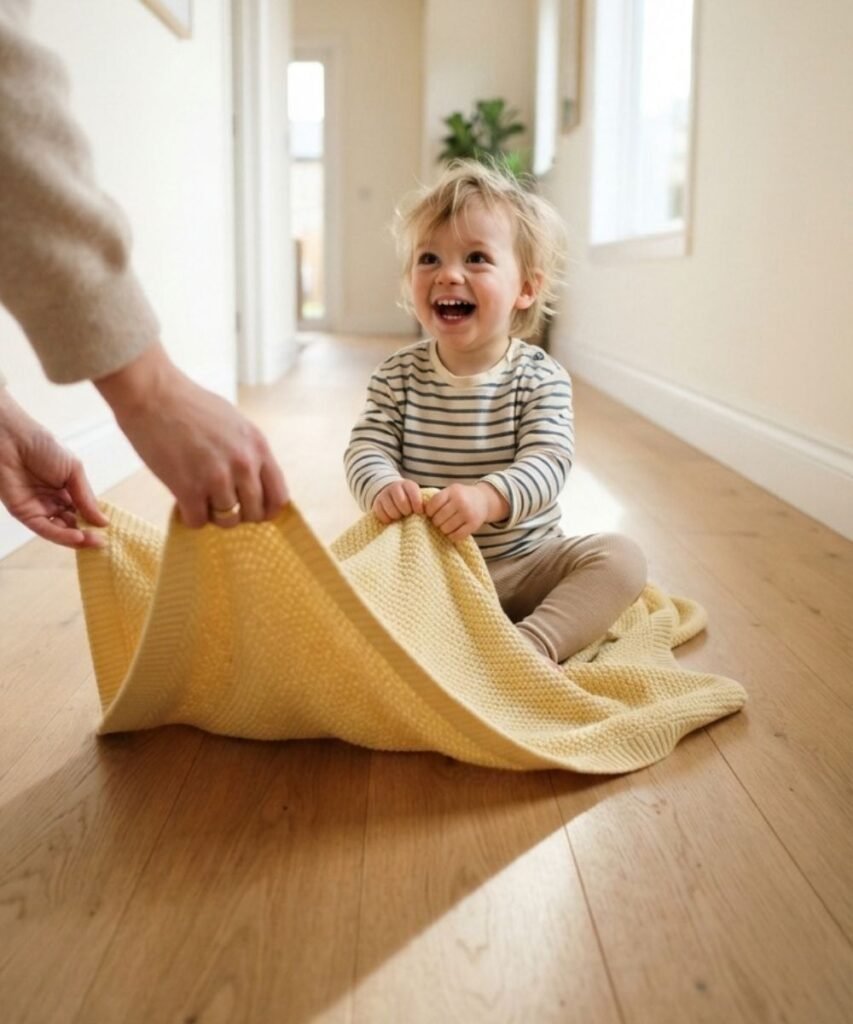
A blanket on a smooth floor is a toddler-sized sled. Sit your child in the middle, hold two corners, and pull slowly across the room.
Hard floors slide best. Carpet grips the blanket, so it turns into hard work for you.
Keep the speed low. A fast turn can tip a toddler over, and a bump into a table leg is no fun. Stay far from stairs and furniture corners.
Turn it into a magic carpet ride and stop to visit toys in different corners of the room.
| Floor type | What to expect |
|---|---|
| Hardwood | Slides best, so pull at a slow walking pace. |
| Tile | Very slick, so go extra slow. |
| Carpet | Grips the blanket, so skip this game here. |
9. Cross the Lava Using Paper Plate Stepping Stones
The floor is lava sounds like an older kid’s game, but toddlers can play a gentler version.
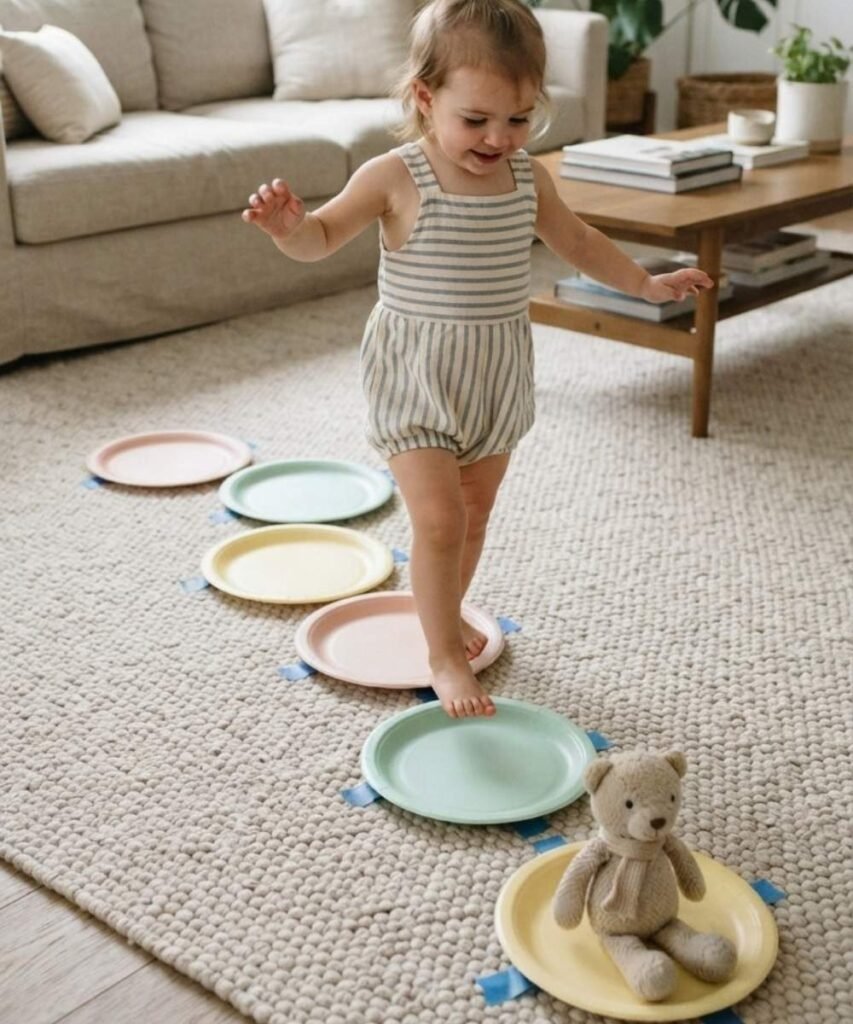
Scatter paper plates on a rug and call them safe islands. Your toddler steps or hops from plate to plate to reach a toy on the other side. Standing on one plate takes balance, so keep the plates close together at first.
Hardwood makes plates slide, so play on carpet or tape each plate down with a loop of painter’s tape.
Once they get the idea, spread the plates farther apart.
Plates sit close together, so every step is short and easy.
Plates spread farther apart, so your toddler steps wide or hops between islands.
10. Step Over and Crawl Under a Tape String Web
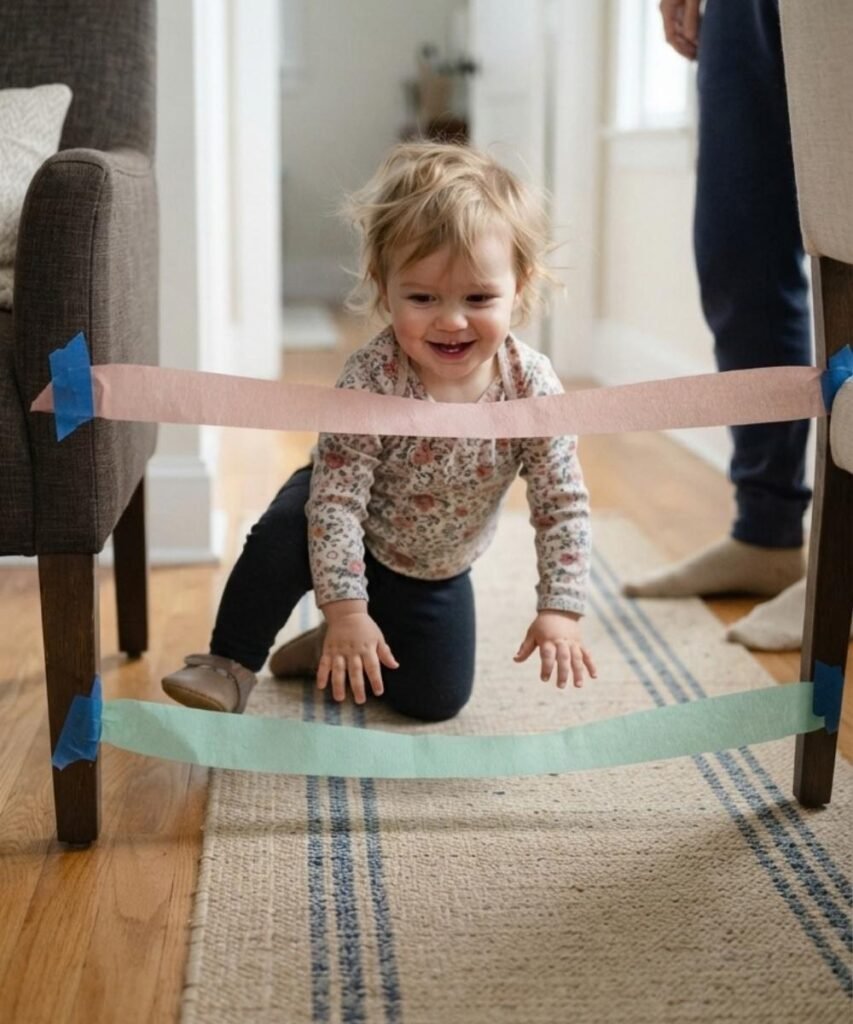
Most home obstacle courses are built for older kids, with lines too high and too tight for a toddler. Keep this one low and loose.
Tape crepe paper streamers between two chair legs or across a hallway. Put one low strip for stepping over and one a little higher for crawling under.
Stay close while they play. Give the crawlers a tiny cheer when they make it through, and let the walkers step over with big, silly lifts.
💡 Quick Tip
Use crepe paper, not string or yarn. It tears easily if a toddler pulls on it. Tape only the ends with painter’s tape, and take the web down as soon as playtime is over.
11. Hang a Paper Star Wall to Jump and Reach For
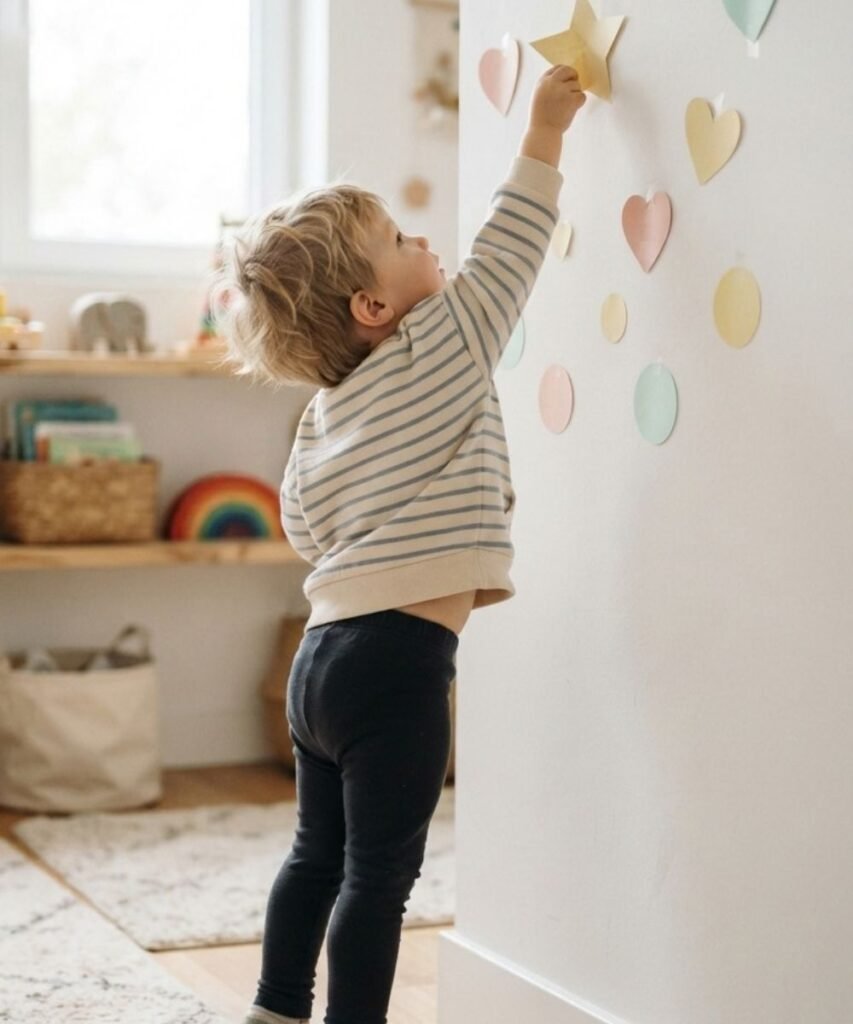
Reaching up high makes toddlers stretch and jump, and a wall full of paper shapes gives them a reason.
Cut stars, hearts, or circles from colored paper and tape them to a wall at different heights. Ask for one color at a time, like “Find a yellow star and pop it off.”
Use loose tape so the paper comes off easily and does not take paint with it. If a piece gets torn or chewed, throw it away.
12. Lift a Bedsheet Parachute and Pop the Stuffed Animals
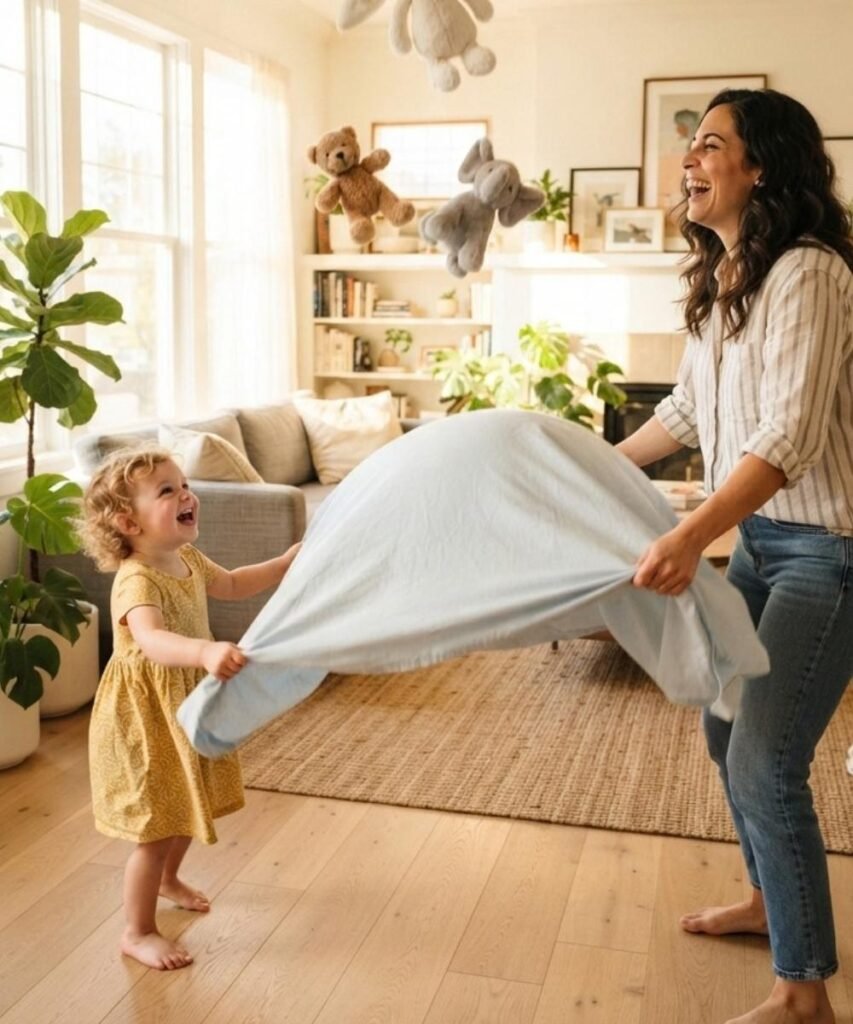
Parachute games sound like a preschool thing, but a bedsheet works at home with just two people.
Hold the edges together and lift up and down. Put a few soft toys in the middle and watch them bounce. Toddlers love seeing them “pop” up into the air.
When one flies off, your toddler runs to fetch it and the game starts over. Add a rule where everyone says “Up!” as the sheet rises.
Parachute checklist
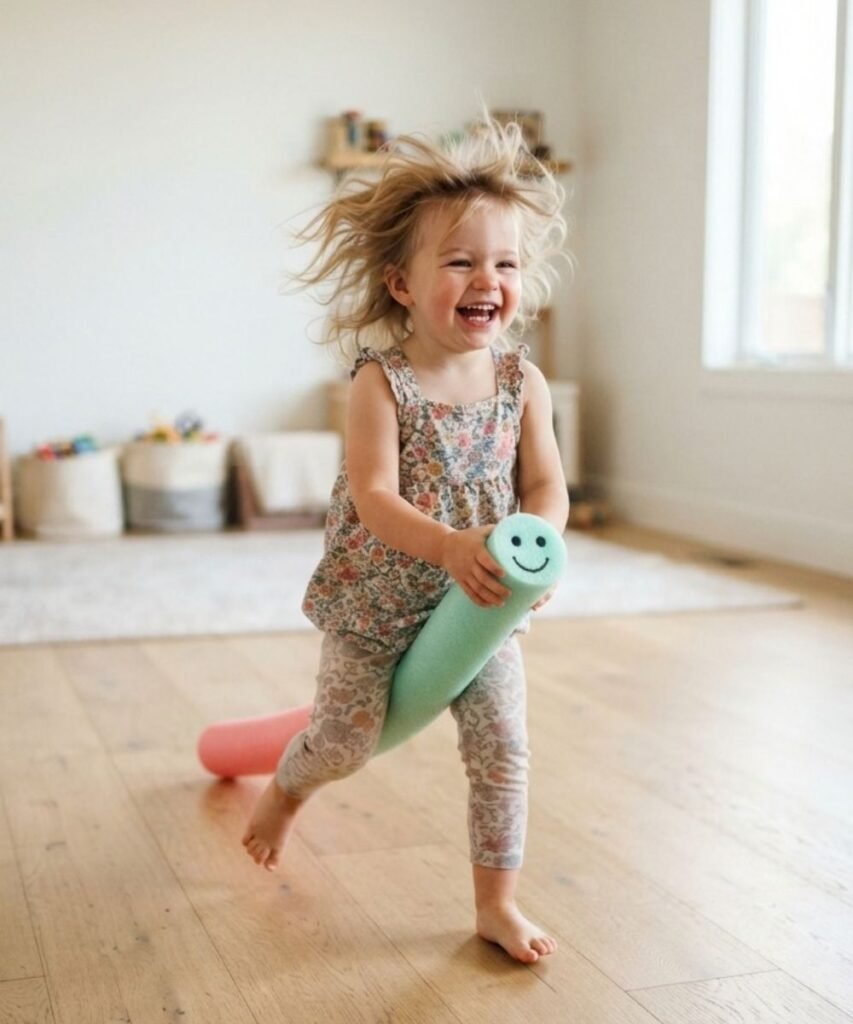
13. Gallop on a Pool Noodle Pony
One pool noodle can be a horse, a broom, or a dragon.
Toddlers love pretending, and a noodle is light enough for them to handle. Cut it in half if it drags on the floor. Tuck it between their legs, hold the front end, and let them gallop around the room while you add sound effects.
Clear the path before you start. Also keep an eye on the noodle end so it does not swing near anyone’s face.
The pony speed ladder
14. Go on a Bear Hunt Around the House
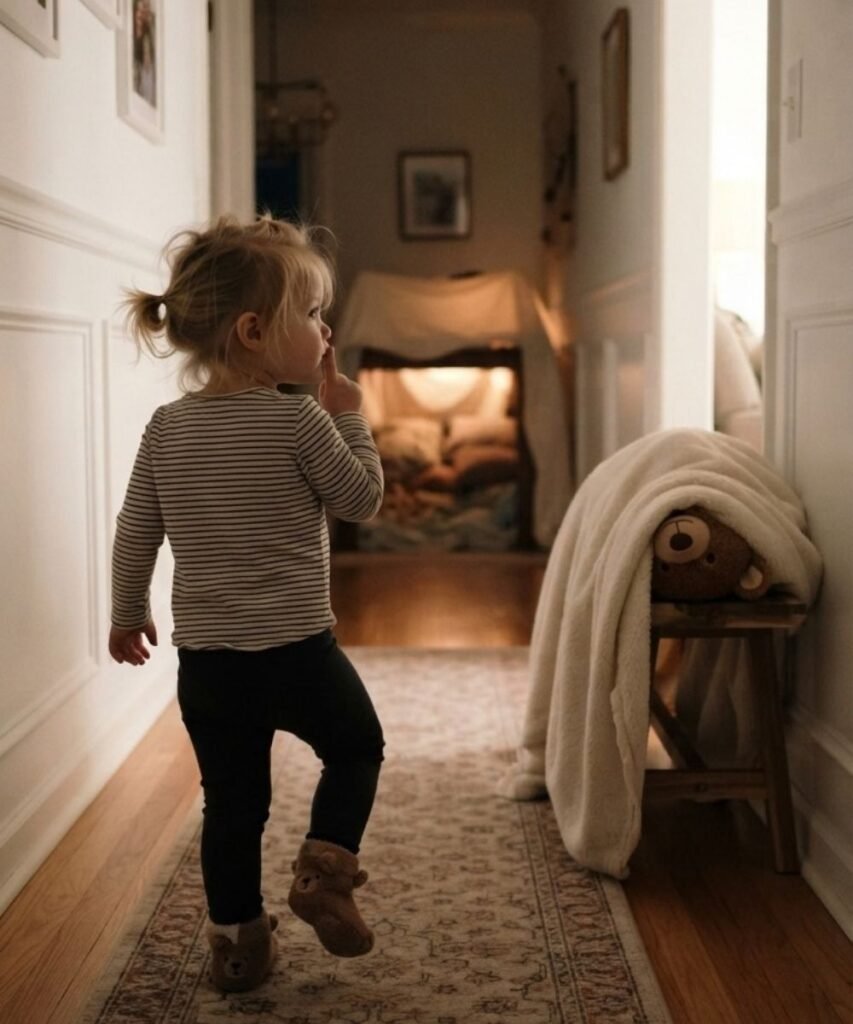
A hallway becomes a trail as soon as you say it is one.
Tell a simple bear hunt story, or read the classic picture book first and then act it out room by room. Each stop needs a movement and a sound.
Big actions work best for toddlers, like stomping, tiptoeing, and crawling. When you finally find the sleepy bear, which is a stuffed animal under a blanket, run back to the sofa as a team.
A simple bear hunt route
Kitchen doorway: stomp through pretend mud.
Hallway: tiptoe quietly so the bear does not wake up.
Under the table: crawl through the dark cave.
Living room: find the sleepy bear, then run back to the sofa.
15. Slow-Motion Sloth Walk to Wind Down
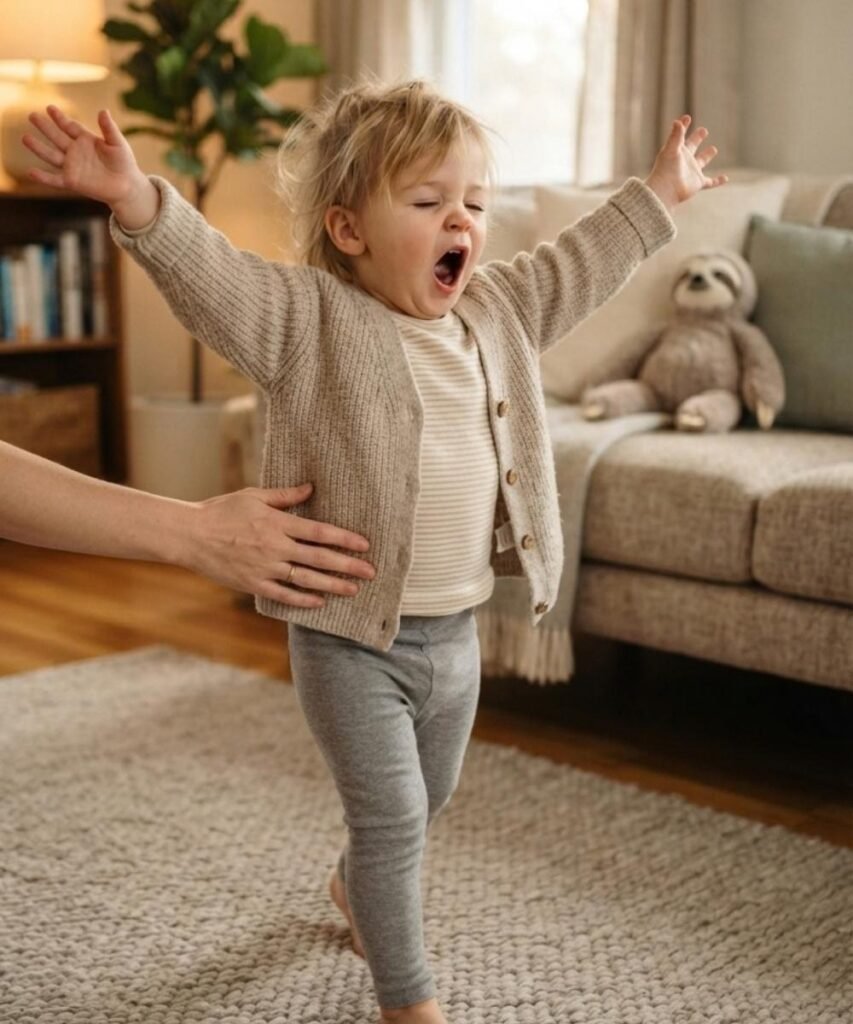
After all that jumping and galloping, a toddler’s body is still buzzing. A slow game helps bring it down.
Ask your toddler to be a sloth. Everything moves at half speed, from walking to reaching to blinking. Finish with a huge yawn and a big stretch.
Dim the lights and skip the loud music. This one works well right before nap time or story time.
Conclusion
Toddlers need to move every day, and a small home does not change that. With these active indoor activities for toddlers, a hallway, a rug, or one corner of the living room is all the space you need.
Pick one or two ideas at a time instead of running through the whole list. Keep the setup small, stay close, and follow your toddler’s lead. If they lose interest after five minutes, that is normal, so move on to the next one.
Want more ideas that work in any room? Browse our 30 easy indoor activities or the full list of calm, mess-free play ideas.
Pin this list to your Pinterest board so you always have a new way to get your toddler moving.